Uk politics

Ken Clarke contra mundum

From our UK edition

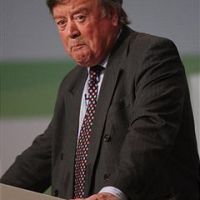
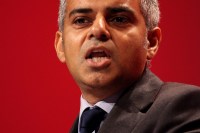
What to make of Sadiq Khan and Ken Clarke? As Pete has noted, Khan (and Ed Miliband) empathises with Ken Clarke’s instincts. But, as Sunder Katwala illustrates, Khan’s support is qualified. Khan gave speech last night after which he took questions. One of his answers was as follows: "It's no use us wanting to cuddle Ken Clarke - I don't want to cuddle Ken Clarke but perhaps others do - when he is part of a government which has got policies which will see the number of people committing crime going up." He was referring to alleged cuts to police numbers and devices such as the educational maintenance allowance, as well as the pressure on education and mental health in prisons. The implication is that prison works if you throw enough money at it.

Some context for those police cuts

From our UK edition

What's it to be? Take a pay cut, or lose your job? That, as David suggested earlier, is the question being posed by Theresa May to police forces – and it's a question that they cannot shirk. With the police budget being cut by 4 per cent a year, there have to be reductions of one sort or another. And if they don't come from pay restraint – along the broad outlines of Tom Winsor's review today – then there will no doubt have to be extra job losses. This is the argument that George Osborne set out in his 2009 conference speech, only now it's being deployed from government. Not that there won't be job losses as well. Conveniently enough, a memo from the Association of Chief Police Officers puts a number on it all, and has been leaked to the Guardian.

Theresa May’s unenviable challenge

From our UK edition

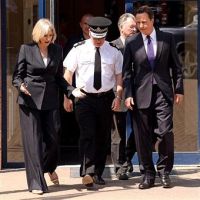
Many political careers have met a torturous end in the Home Office. And this morning, Theresa May began her struggle. She is taking on the "last great unreformed public service" and the opposition is formidable; so much so that the official opposition barely get a look in. The Peelers are marching on Downing Street. The Police Federation has declared itself ‘fed up’ with cuts – a perfunctory warning to the government. Vice Chairman Simon Reed indicated that the Federation feels the government is abrogating its duty of care to those who serve, a dextrous line forged by those opposed to personnel cuts to the armed forces.

What were the SAS doing in the eastern desert?

From our UK edition

When the official files are opened in 30 years time, we will see what series of decisions led the government to send a helicopter-born SAS team into eastern Libya when they could have sailed in on HMS Cumberland, disguised themselves as reporters or rung up Mustafa Abdel Jalil, Libya’s ex-justice minister who is said to head the “Transitional Government”. But it is easy to see how it happened. The perfectly sensible idea of sending a British emissary to Benghazi to make contacts must have clashed with bureaucratic protocol and the FCO’s duty of care arrangements. “What?” You can just imagine the officials exclaiming to the ministers. “You intend to send a single person to Libya. But what if he got killed? Or hurt?

A princely problem

From our UK edition

Tonight’s Six o’clock news had a long package on Prince Andrew that ended with Laura Kuenssberg reporting from Downing Street on the government’s attitude to the prince. The fact that the government is now so much part of this story is due to an unforced error on its part.   It was the briefing yesterday about how if more came out then Andrew would have to resign as trade envoy that pushed the government right into the middle of this sorry story. This set journalistic hares running and had everyone demanding to know what the government’s position was. The government, which had got involved in this story more through cock-up than anything else, quickly rowed back on Sunday's lines.

SpAd Wars

From our UK edition

Downing Street’s briefing that under-performing special advisors will soon be sacked has created a storm in the Westminster tea-cup. One SpAd pointed out to me the complete hypocrisy of a Number 10 that constantly stresses that briefing against colleagues is a sackable offence doing exactly that. Sacking under-performing SpAds will not be as easy as you’d think it should be. These advisors have, in most cases, been hand-picked by the Secretary of State who will be reluctant to give them up without a fight. SpAds in the rest of Whitehall also argue that the Downing Street operation itself is far from perfect.

The politics of Prince Andrew

From our UK edition

Uh-oh, the Prime Minster has "full confidence" in Prince Andrew as a UK trade envoy – the sort of endorsement that often means the direct opposite. In this case, though, I suspect that the line is more a hasty attempt to defuse some of the tension that has been building on this matter over the past few days. Only this morning, a Downing Street source told the Beeb that the Prince could be ejected from the role should any more revelations surface. Another suggested that "there won't be many tears shed if he resigns." And then there's the senior Tory putting it about that "there appears to be no discernible mental activity," on Prince Andrew's part. It has been – and continues to be – a right royal rumpus, to say the least.

Who watches the watchmen? | 7 March 2011

From our UK edition

There's a fuse-meet-flame quality to PoliticsHome's smart little scoop this morning. Our parliamentarians are already somewhat hacked off with IPSA, the body tasked with overseeing their expenses. So how will they react upon reading that IPSA spent £300,000 of taxpayers' cash on furbishing their London office? The watchdog's shopping list includes 25 cabinets (£2,295 each), 14 "relaxer loungers" (£465 each) and a table at £837. It sounds awfully like some of the MPs' claims that were so controversial in the first place. IPSA are defending the spending, citing "industry standards" and such. But, whatever, it just fuels the sense that they are an unduly expensive and convoluted answer to the question at hand.

Khan comes to Ken Clarke’s support (kinda)

From our UK edition

When it comes to the overall sway of British politics, Sadiq Khan's article for the Guardian is probably the most important of the day. We've heard Ed Miliband say before that, "when Ken Clarke says we need to look at short sentences in prison because of high re-offending rates, I'm not going to say he's soft on crime." But Khan's article, a summary of a speech he is giving later today, actually puts that sentiment into practice – and then some. His central argument is straight from the Hush Puppied One's playbook, particularly in its emphasis on the limitations of New Labour's policy: "Some claim crime fell because of the rise in the numbers imprisoned. But the relationship between crime rates and prison population is more complex than that.

How to build democracies

From our UK edition

Following the events in the Middle East, I have proposed a democracy review of UK bilateral relations and former Europe minister Denis MacShane has suggested that David Cameron set up a Foundation for Democracy Development in the Middle East and North Africa to "provide an all-party source of income, travel grants, and overseas seminars" It would make sense, I think, to do both in succession, starting with the review and then creating a new body that can undertake the work. However, instead of creating a UK-only organisation, the government should build on the links established with Turkey's government and set up a joint endeavour, chaired by William Hague and Ahmet Davatoglu, the Foreign Secretary's counterpart.

Cameron hugs his party

From our UK edition

David Cameron’s speech to the Conservative Spring Forum was one of the most Conservative speeches he has given in a long time. It was an address that was meant to reassure the party during what looks set to to be this government’s most difficult year. The Tory leader opened with a list of policy pledges delivered and they were all distinctively Conservative policies: making work pay, the EU referendum lock, teaching British history in schools, freezing council tax, capping immigration and doubling the operational allowance. There was further crowd pleasing material in a substantial section of the speech which attacked AV.

Why Ed Miliband’s getting it right on the cost of living

From our UK edition

George Osborne's budget, due in two weeks' time, will be billed as an agenda for growth. This is welcome, but a year late. The burning agenda now is the cost of living. It was our cover story for The Spectator last October: why fret about mild 1 percent-a-year cuts, we asked, when the real killer will be prices? Petrol at 130p a litre is only the most visible sign of this. Other horrors confront shoppers in the supermarket - salmon fillets up by a third, potatoes and butter by a quarter. When Alan Duncan speculated that petrol could hit 200p, he was on the right scent. While the BBC is talking about cuts and Osborne is talking about jobs, Ed Miliband is now talking about the cost of living - even helping to launch a Commission on the Cost of Living.

A post-Tunisian Foreign Office

From our UK edition

The Foreign Office has come in for a lot of criticism lately, following delays in getting Britons out Libya. Some argue that it is all William Hague's fault. Others that the department is unfit for purpose. Both of these views seem a bit unfair. The FCO managed to help Britons in Tunisia and Egypt, and only came up short when the company they had used failed to take off for Libya. True, there should have been a better contract in place – which would give the FCO alternatives – but that hardly translates into systemic failure. True, ministerial divisions between Jeremy Browne, in charge of consular affairs, and Alistair Burt, who runs Middle East policy, did not help. But that's probably inevitable.

Osborne’s political economy

From our UK edition

George Osborne’s speech to the Tory spring conference today showed the classic left-right way in which he wants to frame the political debate about the economy ahead of the Budget on the 23rd of March.  In a move straight out of the election-winning centre-right playbook of the 80s, he attacked Balls and Miliband as “Two left-wing politicians who don't understand anyone who wants to get up and get on, anyone who want a better life for their family, anyone who want to create wealth, and start a business, and create jobs, and leave something to their children.

The politics of planning

From our UK edition

The ruckus over sending a high-speed railway roaring through some of Southern England’s most prized back gardens might be dominating the headlines. But another, separate row over planning is brewing. Behind closed doors, ministers are straining to develop a coherent plan to build the new houses that Britain – especially the South East needs – in a way that is politically feasible. Whitehall is wrestling with how to reform a planning system that has led to more expensive housing and offices, developments that are often ugly and cramped, and soaring costs for everyone – the government included. Housing benefit costs more than the Home Office and Ministry of Justice combined. A shortage of supply has been a big factor driving house prices.

Harriet ‘shambolic’ Harman

From our UK edition

I've spent ten minutes reading the same passage and still don't understand what it means. It comes from Harriet Harman, quoted in the Independent, criticising the government's Libya strategy: "The response to the terrible events in Libya has been a shambles. The key to their shambolic response lies in their ideology. If your perspective is that government is a bad thing and you want less of it, you're not going to be on the front foot when the power of government is exactly what is needed." Do you get it? Is the Labour MP saying that her party would have harnessed the power of the state, principally the military, and ordered the bombing of Libya?

The economic case for HS2 explained

From our UK edition

Matthew Sinclair’s piece on high-speed rail makes two main criticisms, both of which have already been addressed in the material published earlier this week for the consultation – but I would like to explain our approach again here.   First, Matthew criticises our forecasts. He would prefer us not to forecast demand beyond 2026, but HS2 would be a long term investment and would bring benefits for successive generations over many decades. It would be absurd to forecast only 10 years ahead. Therefore, we have taken a longer term but still realistic view. Demand for long distance rail travel more than doubled between 1994 and 2009 – an annual growth rate of around 5 percent. We have predicted a far slower growth rate than this: approximately 1.4 percent.

Fuel for the fire

From our UK edition

On any normal day, a missive from Tim Farron to George Osborne – urging him to axe the planned rise in fuel duty – would be striking enough. On a day when the Lib Dems finished sixth in a by-election, it has a whole lot more piquancy to it. I'm not saying that the Next Lib Dem Leader™ is trying to cause trouble, or even hastening to shore up support. He has, after all, been dutiful in defence of the coalition this morning, and he has been highlighting fuel costs for some time now. But Lib Dem backbenchers clearly have some demands for the government – and now's the time for this one. Farron's point is that the Treasury can use some of it's stronger-than-expected incomings to stave off the hike.