Uk politics

Cable lashes out at Cameron

From our UK edition

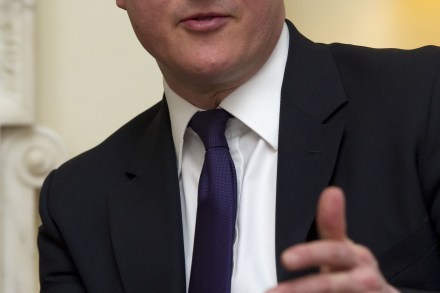
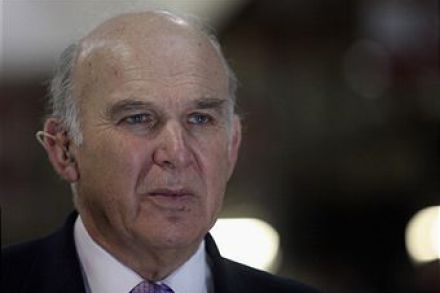
I wrote earlier that the immigration debate can bite back — and it's already done just that. Speaking this morning, Vince Cable has labeled the Prime Minister's speech as "very unwise," and at risk of "inflaming extremism." That, lest it need saying, is the same Vince Cable who's a member of Cameron's government. In theoretical terms, what this clarifies is the parameters of the Coalition Agreement. While almost every policy that Cameron highlights in his speech is part of that document, it seems that the Lib Dems don't have to agree with the way he sells them. The point is being made, this morning, that the idea of reducing net migration to its 1980s levels is very much, and very specifically, a Tory ambition.
Nothing new, but much to ponder, in Cameron’s immigration speech

From our UK edition

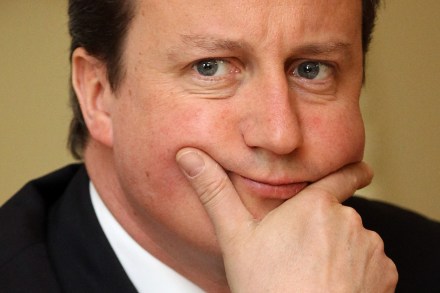
There is, really, little that is new in David Cameron's speech on immigration today. Besides one or two grace notes, almost all of its policy suggestions appeared in the Coalition Agreement: you know, all the stuff about a cap on immigration and a Border Police Force. Its rhetoric is strikingly similar to Cameron's last big speech on immigration in October 2007. So if he's not saying anything particularly groundbreaking, what is he saying? With the local elections only three weeks away — and on the back of the Lib Dems' newfound assertiveness — it's hard not to see this as an outreach exercise. This is one for core Tory voters, or perhaps those considering voting Ukip or worse. Which isn't to say that Cameron's speech is a Bad Thing.

Cameron needs to tread with care

From our UK edition

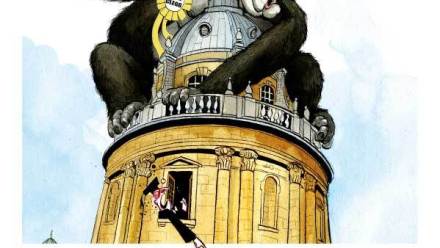
David Cameron’s Oxford gaffe is refusing to die down. Whenever I’ve called Tory MPs or other members of the Conservative family in the last few days, it has been the first subject they have wanted to raise. People are genuinely perplexed — and worried — as to why Cameron said what he said. As Pete pointed out earlier, Bruce Anderson — the commentator who is David Cameron’s longest standing media supporter — warns that the Prime Minister is fuelling fears of government encouraged discrimination against the middle classes. Another long standing Cameroon loyalist said to me earlier, that he now worried that Cameron just felt too guilty about his own upbringing to be an effective PM. I think these fears are, hugely, overblown.

The battle over universal benefits continues on the local front

From our UK edition

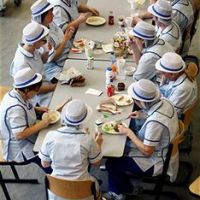
Here's a question for you: should free school meals (FSM) be given to all pupils, regardless of their parents' income? I ask because this is precisely what the Labour-led council of Southwark is proposing for its primary schools. As the Evening Standard reports, the councilmen’s thinking is that by giving "healthy" FSMs to every pupil, every day, they might help "reduce childhood obesity." Oh, and the measure will cost some £4 million a year. Even if we put aside the question of whether the local praetorians should — or even could — tackle obesity on behalf of middle-class parents, this is still needling stuff.

Two defining coalition reforms clash

From our UK edition

The big society is crossing swords with the localism agenda in Brent, north London. You may recall the Friends of Kensal Rise Library, a voluntary group that was being frustrated by Labour-led Brent Council. They are one of six community organisations in the borough who are unsuccessfully resisting the council’s decision to close 6 libraries. The council is adamant that the campaigners cannot succeed unless they raise sufficient funds independent of the council; the council leader, Labour’s Ann John, told the Kilburn Times: ‘If they can come up with a plan at no cost to the council then we will listen.

Lansley and Cameron in the firing line

From our UK edition

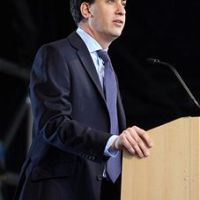
The coalition’s decision to ‘pause’ its NHS reforms has left an open goal for its opponents, and they’ve been busy tapping the ball into this empty net this morning. At its conference up in Liverpool, the Royal College of Nursing has, predictably but embarrassingly, declared that it has no confidence in the health secretary. Back in London, Ed Miliband has been making hay while the sun shines attacking both the bill and the pause. His refrain at his press conference this morning was ‘the answer to a bad bill is not to slow it down but to junk it.’ Miliband’s performance this morning was striking for him speaking at a level of policy detail that party leaders normally eschew.

Hague’s return

From our UK edition

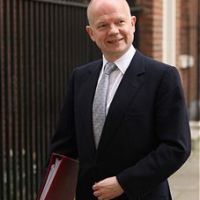
William Hague has had a good war. He began poorly, as the FCO struggled to evacuate Britons from Libya. But since then, the Foreign Secretary has showed deft diplomatic skill and leadership. The FCO has been focused on Libya and every able-bodied person has been drafted into duty, with diplomats now running the operation in No 10, and the Cabinet Office. On the Today programme, the Foreign Secretary batted away the idea, much loved by realists and pessimists, that because Britain did not know, with forensic detail, how exactly the intervention would end, it should not have become involved. There are many mountains still to climb.

Osborne enters the fray

From our UK edition

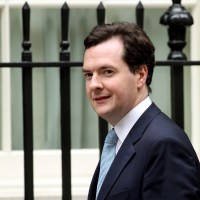
Seems that the Tories can be more assertive too. After remaining more or less silent on the matter since the coalition was formed, George Osborne has today given his take on the AV referendum to the Daily Mail — and he's far from kind towards the Yes campaign. "What really stinks," says the Chancellor, "is actually one of the ways the Yes campaign is funded." What he has in mind are the campaign's ties to an organisation that sells vote counting services, as revealed by Ed Howker in The Spectator. "I think there are some very, very serious questions that have to be answered." But, rather than just attacking the Yes campaign itself, Osborne also has some choice barbs for the Lib Dem part of it.

Another fight looms for Cameron over votes for prisoners

From our UK edition

Prisoner voting is back on the agenda. The European Court of Human Rights has rejected the British government’s appeal and declared that the coalition has six months to draw up proposals to change the law.   David Cameron now has to decide whether to ignore the Strasbourg Court or go against the will of his MPs, who voted overwhelmingly to oppose giving prisoners the vote in response to the court’s initial decision. In many ways, ignoring the court is the safer option. Tory MPs aren’t inclined to back down on this issue and if Cameron tried to make them he would create a lot of ill-will and take an awful kicking from the press.

A question of access

From our UK edition

When a Prime Minister gets his facts wrong as spectacularly as David Cameron did yesterday with his comment that  ‘only one black person went to Oxford last year’ everyone wonders why. Now, the simplest explanation is that it was a straight cock-up. One of the pitfalls of these Cameron Direct events is that errors can come out. Another theory doing the rounds this morning is that Cameron is giving a speech on immigration later this week, with some tough language in it, and so was trying too hard to show that he is anti-racist. But whatever the explanation, Cameron needs to be careful about how he approaches the university access issue.

Nick Clegg meets Gillian Duffy

From our UK edition

There's a new equation in British politics, and it's one that Nick Clegg came up against this morning: Politician + Rochdale = Gillian Duffy. The Deputy Prime Minister was quizzed by Gordon Brown's unassuming nemesis during his visit to the town earlier — and the results are in the video above. For what it's worth, he did fairly well, emphasising the pressing need to tackle Labour's poisonous fiscal legacy.

Panic over? Perhaps not…

From our UK edition

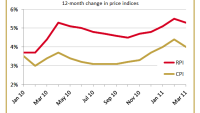
Is the inflation panic over? After rising for five consecutive months, CPI inflation went down by a 0.4 percentage points in March, to 4.0 per cent, taking the City by surprise. RPI inflation also went down, by 0.2 percentage points. The numbercrunchers at the Office for National Statistics put it down, largely, to a fall in food and drink prices. The cost of fruit is 2.7 per cent down on last March. The cost of bread and cereals, 2.6 per cent. Yet we shouldn't get ahead of ourselves. While this will certainly reduce the short-term pressure on the Bank to increase rates — as well as on the nation's pocketbooks — one month does not maketh a trend. The inflation debate in Britain is always carried out in the absence of a key metric: inflation forecasts.

Why the Vickers Review won’t harm the City’s global competitiveness

From our UK edition

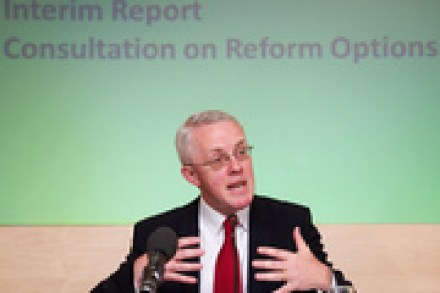
The headline measure in the Vickers Review—the need for a ring fence between retail and investment banking—should not harm the City’s global competitiveness as it only applies to banks with a UK retail operation. For everyone else, Vickers would leave London as a relatively good place to do business: far more certain than Hong Kong and less restrictive than New York once the new Dodd-Frank regulations are in place. In Conservatives circles tonight, there is a quiet confidence that the government will be able to accept the Vickers Review in full when it reports in the autumn.

What was Brown’s biggest mistake?

From our UK edition

“I have to accept my responsibility.” Who would have thought that Gordon Brown would ever breathe those words, let alone breathe them to a conference in America over the weekend? Our former PM has, it's true, suggested that his regulatory system was inadequate to the financial crash before now. But here he was much more explicit: “We set up the Financial Services Authority believing the problem would come from the failure of an individual institution. That was the big mistake. We didn’t understand just how entangled things were.” And that's event before he got onto the "responsibility" bit. I'll repeat it, just in case it didn't sink in the first time: “I have to accept my responsibility.

Cameron takes it to the councils

From our UK edition

Ignore what your council is telling you. So says no less a personage than the Prime Minister of our country, speaking at one of his freewheelin' roadshow events this afternoon. Cameron may have been referring specifically to the red tape being wrapped around Royal Wedding street parties, but it's still a pretty pugnacious point for a PM to make. Here's the full quotation, courtesy of the superb PoliticsHome: “I hope people are able to join in and celebrate and I am very much saying today that if people want to have a street party, don't listen to people who say 'it is all bureaucracy and health and safety and you cant do it.

The Vickers Review, acceptable to both halves of the coaltion

From our UK edition

The Vickers Review into the future of banking appears to have prevented a possible coalition row. The Tories and the Liberal Democrats have had different views on what to do about the banks, with the Lib Dems keener to break up the banks come what may and the Tories more worried about preserving the competitiveness of the City.   At the very start of the coalition there was a rather unseemly turf war between Cable and Osborne about who controlled policy on the banks, and many have expected a row to break out when he review reported. But, as we predicted on Coffee House back in February, the review has come up with a solution acceptable to both sides.

Beyond the frontline

From our UK edition

Labour's cartography department has been hard at work all weekend to produce this. It is, lest you haven't heard Yvette Cooper today, an "interactive web-map" of the job losses announced by police forces so far, all across the country. You can interact with it in ways that include clicking to view a larger version. So far as web campaigning goes, this is probably fertile ground for the Opposition. No one likes the idea of more crime — and "more crime" is often conflated with "fewer bobbies" in the public debate. Yet Labour's point is diluted, somewhat, by one simple fact: that their former Home Secretary refused to guarantee that police numbers wouldn't fall under his party.