Uk politics

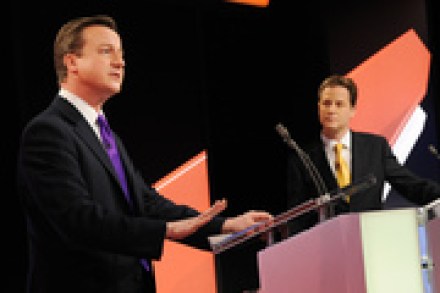
Cameron and Clegg pay tribute to their elders

From our UK edition

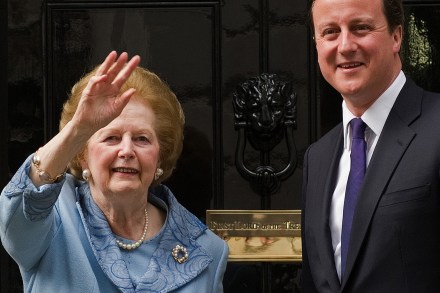
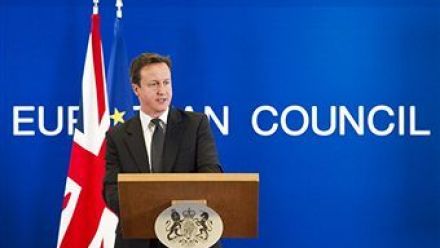
As you've no doubt deduced from the cover image on the left-hand side of this page, the latest Spectator is out today — and it's a soaraway double issue for Easter. By way of peddling it to CoffeeHousers (buy it here, etc.), I thought I'd mention one article among many. It's a celebratory list of some of the country's "most inspiring and influential over-80s," and it includes tributes to them from some rather notable under-80-year-olds. So we have Matt Ridley on David Attenborough, Alex Salmond on Sean Connery, Ian Rankin on P.D James, and plenty more besides. Anyway, there are two entries that CoffeeHousers might care to see in particular, so I've pasted them below: David Cameron on Margaret Thatcher, and Nick Clegg on Shirley Williams.

A question of leadership

From our UK edition

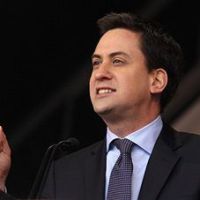
This morning’s speech on AV by Nick Clegg has prompted another round of Lib-Lab backbiting over whom is to blame for the troubles of the Yes campaign. In its leader column today, The Times (£) joins in on the Lib-Dem side, criticising Miliband for not having done more for AV. It even suggests that he’d be prepared to vote down a Yes vote in the Commons, something he specifically rules out in his interview with the paper today (£).   Unlike Clegg, Miliband can be relaxed about the result of the AV referendum. If AV is defeated, few in the Labour party will mind and the blame won’t attach to him. If the polls are right, David Cameron will be the only leader strengthened by the result of the referendum.

Clegg reaffirms the coalition’s wedding vows

From our UK edition

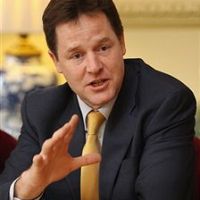
It's a funny thing, reading the speech on AV that Nick Clegg delivered to the IPPR this morning. It starts off as you might expect: putting some distance between his party and the Tories. Everything is Liberal-this and Liberal-that, while "conservatives" are cited as the opponents of change and choice. But then, from nowhere, comes one of the most brutal attacks on Labour that Clegg has delivered in some time. "For every £8 we are cutting they would cut £7," he quivers. "To deny that reality is to treat the British people like fools." The New Statesman's George Eaton has sifted through the numbers here, but the main point is simply the sheer force of Clegg's words.

The Libyan intervention needs to be stepped up

From our UK edition

The government is rightly proud of the Libya intervention. Not only did it save thousands of lives in Benghazi but it was conducted in way that learnt the lessons of the past. The Foreign Secretary took pains to get a UN resolution, making the mission legal, and kept the shape-shifting Arab League committed throughout. But unless the government is now  willing to unlearn the lessons of the past, and act both more unilaterally and even illegally, its multilateral, UN-sanctioned action may have been for nothing. For Misrata is now getting the punishment that had been planned for Benghazi. The town is being destroyed in a seige that looks like the shelling of Sarajevo.

Ed Miliband will hire tails for the Royal Wedding

From our UK edition

If you’re fed up with stories about what politicians will wear to the Royal nuptials, look away now — for I can confirm that Ed Miliband will wear a morning suit on the 29th of April. Miliband takes the view that a Royal Wedding is no time for gesture politics.   A Labour spokesman told me this morning that, "This wedding should be all about William and Kate. This is their big day. It is now clear that the appropriate thing is to wear a morning suit and that is what Ed will do."   But Miliband doesn’t actually own a morning suit. He will now be heading down to Moss Bros to rent one.    I hear that we’ll find out that Nick Clegg is deciding what he’ll be wearing today.

The profit motive would boost Gove’s Free Schools agenda

From our UK edition

The promise of Michael Gove’s Free Schools programme — as distinct from his Academies programme — is slow to materialise. What seemed like the government’s most radical and important reform has stalled as expected take-up has fallen far short of expectations. 350,000 new school places are required to meet increasing demand by 2015 — to address this, the Conservatives had set their sights on setting up 3,000 new Free Schools in nine years. But, so far, there have been just 323 applications, with only a handful due to open in September 2011, and the DfE capital budget is set to fall by 60 per cent to £3.4 billion by 2014-15. This constitutes a massive capital shortfall. A storm is gathering in education.

Obama’s budget: faster, but not further, than Osborne’s

From our UK edition

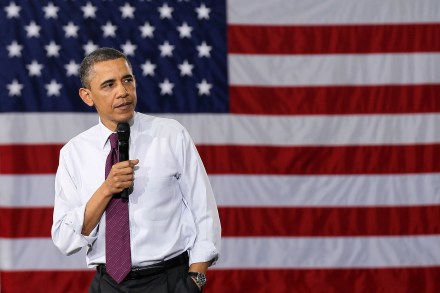
Barack Obama's budget plan has become a political debating point on this side of the Atlantic. Ed Balls set the ball a-rolling in an article for the Guardian this morning, which effectively claimed that the President isn't planning to cut the deficit as quickly as George Osborne is. "The truth is that it is Osborne himself who is isolated," is how he pugnaciously put it. But the Tories' Matthew Hancock has since responded — on Coffee House, as it happens — arguing that, actually, the Obama Plan is simpatico with what Osborne is doing. By way of hovering above the red-on-blue scrap, we thought we'd put together a comparison of Osborne's and Obama's budgets for the benefit of CoffeeHousers.

Ed Miliband by numbers, April edition

From our UK edition

It's just a single poll, sure — but Ipsos MORI's latest is still fairly eye-catching stuff. And this is why: it has the Tories level with Labour for the first time since October. Anthony Wells serves up a pinch of salt over at UK Polling Report, saying that this "unusual" result is most likely down to the weightings that are used. But, technicalities aside, any poll that puts the Tories close to Labour, at this stage in the political cycle, is going to be greeted cheerily by Cameron & Co. – and less so by Team Miliband. It's not all bad news for Ed Miliband, though. His personal ratings have improved since last month; a fact which deepens one of the conundrums of his reign.

The PM turns for his tailcoat

From our UK edition

The Prime Minister will now wear a morning suit to the Royal Wedding, Ben Brogan reports. Since I first revealed in the Mail on Sunday that he was planning to wear a lounge suit there has been a slew of complaints that this was not appropriate. Even Bruce Anderson — the columnist most sympathetic to Cameron — joined in the criticism today and used it to tell a broader story about the coalition’s problems.  Downing Street has now clearly listened and realised that the job of a Prime Minister on these occasions is not to make news. I think the issue acquired such salience because it became a question of authenticity.

The NHS furore rumbles on

From our UK edition

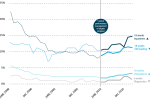
Another story to sour Andrew Lansley's cornflakes this morning: the King's Fund has released a "monitoring report" into the NHS which highlights, among other things, that hospital waiting times are at a 3-year high. The figures they have used are available on the Department of Health website — but unshackled from Excel files, and transcribed into graph form (see above, click for a larger version), they are now, it seems, a discussion point. The Today Programme tried to bait a couple of NHS chieftains on the matter earlier. The worst they could extract from either of them was that, "[waiting times] haven't got massively longer now, but people are worried about the future.

Labour are drawing the wrong lessons from America

From our UK edition

The global debate about how we live within our means is moving fast. I spent a week in Washington while Congress and the President hammered out their deal on this year’s budget. The deal was significant because all sides agreed on the need to cut spending now. After days of brinkmanship, they agreed to £38 billion in-year cuts. Significant, perhaps, because America has now started to tackle its huge deficit. But everyone agreed it is a small downpayment ahead of a much bigger debate to come.   What’s fascinating for us here is that President Obama’s proposals are to cut the deficit slightly faster than we are here. Congress would go faster still.

Councils can seriously damage your health

From our UK edition

There’s a fantastic post by Nicholas Timmins at the FT’s Westminster blog. Using the example of Enfield Council, which has just blocked moves to close failing wards in a local hospital, Timmins argues that councils commissioning healthcare is a recipe for disaster: ‘The reason council commissioning of care is a not a good idea is that it mixes representation without taxation. Councillors have democratic legitimacy. But they don’t raise the money for the NHS.

There are more attacks on Clegg to come

From our UK edition

As the chances of AV passing diminish, the Lib Dems are complaining with increasing volume about just how directly Nick Clegg is being targeted. Up to now, they have kept their concerns about what, they are calling, the swift boating of Nick Clegg relatively private. Last night, Chris Huhne said that he was “shocked that coalition partners can stoop to a level of campaign that we have not seen in this country before”. This morning, Paddy Ashdown has follow up on his phone call to Nick Robinson with a demand that David Cameron disassociate himself from the No campaign’s attacks on Clegg. This isn’t going to happen.

Tuition fees set to spoil summer

From our UK edition

Tuition fees are lowering in the distance, threatening the stability of the coalition. A straw poll by the BBC suggests that a majority (two-thirds) of institutions are planning to charge the full whack of £9,000 a year. It's unclear which universities the BBC contacted, but the results follow a developing trend. 39 universities have stated that they want to charge the full amount on all of their courses, which prompts the Guardian to claim that the potential average tuition fee currently stands at £8,679.20, well above the £7,000 predicted by the government, which has led to fears of a black hole in the universities budget. Above all, this threatens to destabilise the coalition.

Cameron quells the storm

From our UK edition

David Cameron turned in an emollient performance on the Today Programme this morning. He declined to stoke the coalition row over immigration, heaped praise on Vince Cable and stressed that the Liberal Democrats have been good coalition partners. Even when pressed on the question of whether Britain would block Gordon Brown from becoming director of the International Monetary Fund, Cameron spoke softly. The only line of questioning in the interview that discomforted the Prime Minister was when Evan Davis pressed him on why a localist government was placing restrictions on what local government could charge residents for recycling or rubbish collection.

Lansley needs to get his quiet friends talking

From our UK edition

Is Andrew Lansley hearing rather than listening? Dame Barbara Hakin, one of the Department of Health’s national managing directors, has written a letter to some GPs that suggests the pace of health reform will not be affected by the ‘legislative pause’. Hakin writes: ‘Everyone within the Department of Health is very aware of the support shown by the GP community to date and we have been struck by the energy and enthusiasm demonstrated in pathfinders across the country. Therefore, although the Government has taken the opportunity of a natural break in the passage of the Health and Social Care Bill, we are very keen that the momentum we have built to date should not stop.

Support for AV collapsing

From our UK edition

An ICM/Guardian poll suggests that 58 percent of those likely to vote will back the No campaign. The Guardian reports: 'Three-quarters of Conservatives are planning to vote will vote against, as will a small majority of Labour supporters. Only Lib Dem voters are firmly in favour, with more than two-thirds saying they will vote for the change. The Yes camp could still turn things around by winning over the 23% who say they do not know how they will vote, but this includes many people who say they may not turn out at all. Young people are more than twice as likely to favour AV as pensioners, but pensioners are more than twice as likely to vote as the young. Increasing youth turnout could determine the outcome.