Uk politics

Balls in fiscal isolation

From our UK edition

Ed Balls has long said that America is the right comparison for Britain when it comes to how to deal with the deficit, contrasting the Obama administration’s fiscally loose policies with Osborne’s plan for fiscal tightening. This comparison has always been flawed; the dollar is the world’s reverse currency which gives Washington far more fiscal flexibility than HMG. But, even leaving that aside, the Obama administration is now — albeit under Congressional pressure — about to start cutting.   By 2015, Obama’s plan will have reduced the US deficit by 8 percent of GDP. Osborne’s plan sees Britain reduces its deficit by 8.4 percent by 2015. Indeed, from next year the US will be tightening at a faster annual rate than Britain.
The government should recall parliament

From our UK edition

Today’s declaration (£) by Barack Obama, David Cameron and Nicolas Sarkozy that Nato’s operation in Libya will continue until Gaddafi leaves power marks a shift in their rhetoric and makes explicit that regime change is the war aim. This has led to calls to recall parliament, most notably from David Davis on the World at One, to debate this change. Parliament merely voted to enforce the UN resolution which was not a mandate for regime change. The government would be well advised to heed these requests. It would be the best way of maintaining the necessary political support for the mission. Now that regime change is the explicit war aim, the allies must will the means. To do otherwise, would simply guarantee a humiliating and debilitating stalemate.

Charting Labour’s future

From our UK edition

The Labour Party is still ambling in the wilderness – sure of its destination, but uncertain of the route. Its response to last year’s general election defeat has been silence, publicly at least. In the privacy of debating chambers however, the party is charting its potential renewal. These circles murmur that ‘the state has reached its limits’; or, in other words, that Fabianism, the dominant force in the post-war Labour movement, has been tested to destruction.

Oh what a lovely war

From our UK edition

The triumvirate of Obama, Cameron and Sarkozy have presented a united front to NATO and the Arab League and said there will be no respite in Libya. Writing to the Times (£), they say: ‘Britain, France and the United States will not rest until the United Nations Security Council resolutions have been implemented and the Libyan people can choose their own future.’ They also add that to leave Gaddafi in power would be an ‘unconscionable betrayal’, a marked shift in emphasis. It’s rousing stuff, designed to twist reluctant arms at the NATO summit in Berlin.

The coalition can’t go on together with suspicious minds

From our UK edition

Vince Cable’s attack on the PM’s speech today is just the latest elbow to be thrown in what has been a fractious few weeks for the coalition. The immediate cause of these rows has been the need for the Lib Dems to assert their distinctiveness before the May elections and tensions over the AV referendum. The Lib Dems, who feel that their leader is being ‘swiftboated’ by the Tory-funded No campaign, have been increasingly assertive in the last month or so. But there are dangers to this strategy. For one thing, it has eroded trust within the coalition. Ministers are now not being frank with each other because they don't want what they say in private, turning up in the papers.

Pickles’ many enemies

From our UK edition

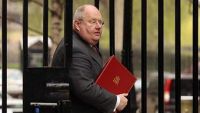
Eric Pickles was on Newsnight last night, in what looked suspiciously like an attempted ambush. Pickles repelled boarders, illustrating why he is one of the government's star performers. He was clear, answered questions directly and has total mastery of his brief. However, the clip gives a sense of the manifold political forces arraigned against Pickles: from Neolithic obscurantists to crazed localists to wary conservatives. The Communities Secretary needs all of his renowned pugilism to overcome these very diverse foes, but some of his supporters in town halls doubt he can last the course, such is the weight of opposition. Anyway, Pickles arrives on the scene at 8:40, after Iain Watson's excellent report.

Cameron’s other speech

From our UK edition

There is no rest for the Prime Minster. After delivering his speech on immigration in Romsey this morning, there was another to deliver, 62 miles away in Woking, this afternoon. This second CamSpeech of the day was billed as a scene-setter for the local elections — and so it proved. Rather than dwelling on a single policy area, the main purpose was to rattle through 101 reasons to vote Tory on 5 May. If there is anything to be taken from the text, it is just how upfront and unapologetic it is. There is little room for nuance, but plenty of room for sweeping, and forceful attacks, on Labour. This passage stood out: "I think we should remember how far we’ve come.

Cameron can make common cause to solve Europe’s immigration concerns

From our UK edition

Vince, it seems, is Vince. But Britain is not alone in struggling to arrest immigration. A mass of displaced North Africans is descending on Malta and Italy. The United Nations estimate that more than 20,000 people have already landed this year and many more expected. Neither Malta nor Italy can cope alone. On Monday, Malta called for the EU to invoke a 2001 directive that grants migrants temporary protection in cases of ‘mass influx’. Italy also petitioned Brussels to spread the physical burden. The EU did not acquiesce in either case, which especially outraged the Italian government: both Berlusconi and immigration minister Maroni said that the European Union stands and falls together, and they threatened to withdraw.

Pickles takes it to the Lib Dems

From our UK edition

Vince Cable’s remarkable criticisms of David Cameron’s speech on immigration are dominating the news. But in the papers today there’s a development in another intra-coalition dispute, Eric Pickles hitting back at all the Lib Dem talk of higher property taxes. The Telegraph reports on figures released by Eric Pickles’ department which show that prosperous areas pay far more in council tax than they receive back in services. His point is that the council tax burden already falls disproportionately on the well off and so layering another band on top or doing a revaluation that would push houses into higher band would be unfair. Pickles’ reading of the politics of this is acute.

Cable lashes out at Cameron

From our UK edition

I wrote earlier that the immigration debate can bite back — and it's already done just that. Speaking this morning, Vince Cable has labeled the Prime Minister's speech as "very unwise," and at risk of "inflaming extremism." That, lest it need saying, is the same Vince Cable who's a member of Cameron's government. In theoretical terms, what this clarifies is the parameters of the Coalition Agreement. While almost every policy that Cameron highlights in his speech is part of that document, it seems that the Lib Dems don't have to agree with the way he sells them. The point is being made, this morning, that the idea of reducing net migration to its 1980s levels is very much, and very specifically, a Tory ambition.

Nothing new, but much to ponder, in Cameron’s immigration speech

From our UK edition

There is, really, little that is new in David Cameron's speech on immigration today. Besides one or two grace notes, almost all of its policy suggestions appeared in the Coalition Agreement: you know, all the stuff about a cap on immigration and a Border Police Force. Its rhetoric is strikingly similar to Cameron's last big speech on immigration in October 2007. So if he's not saying anything particularly groundbreaking, what is he saying? With the local elections only three weeks away — and on the back of the Lib Dems' newfound assertiveness — it's hard not to see this as an outreach exercise. This is one for core Tory voters, or perhaps those considering voting Ukip or worse. Which isn't to say that Cameron's speech is a Bad Thing.

Cameron needs to tread with care

From our UK edition

David Cameron’s Oxford gaffe is refusing to die down. Whenever I’ve called Tory MPs or other members of the Conservative family in the last few days, it has been the first subject they have wanted to raise. People are genuinely perplexed — and worried — as to why Cameron said what he said. As Pete pointed out earlier, Bruce Anderson — the commentator who is David Cameron’s longest standing media supporter — warns that the Prime Minister is fuelling fears of government encouraged discrimination against the middle classes. Another long standing Cameroon loyalist said to me earlier, that he now worried that Cameron just felt too guilty about his own upbringing to be an effective PM. I think these fears are, hugely, overblown.

The battle over universal benefits continues on the local front

From our UK edition

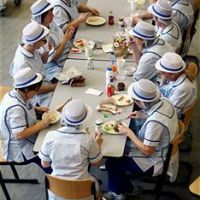
Here's a question for you: should free school meals (FSM) be given to all pupils, regardless of their parents' income? I ask because this is precisely what the Labour-led council of Southwark is proposing for its primary schools. As the Evening Standard reports, the councilmen’s thinking is that by giving "healthy" FSMs to every pupil, every day, they might help "reduce childhood obesity." Oh, and the measure will cost some £4 million a year. Even if we put aside the question of whether the local praetorians should — or even could — tackle obesity on behalf of middle-class parents, this is still needling stuff.

Two defining coalition reforms clash

From our UK edition

The big society is crossing swords with the localism agenda in Brent, north London. You may recall the Friends of Kensal Rise Library, a voluntary group that was being frustrated by Labour-led Brent Council. They are one of six community organisations in the borough who are unsuccessfully resisting the council’s decision to close 6 libraries. The council is adamant that the campaigners cannot succeed unless they raise sufficient funds independent of the council; the council leader, Labour’s Ann John, told the Kilburn Times: ‘If they can come up with a plan at no cost to the council then we will listen.

Lansley and Cameron in the firing line

From our UK edition

The coalition’s decision to ‘pause’ its NHS reforms has left an open goal for its opponents, and they’ve been busy tapping the ball into this empty net this morning. At its conference up in Liverpool, the Royal College of Nursing has, predictably but embarrassingly, declared that it has no confidence in the health secretary. Back in London, Ed Miliband has been making hay while the sun shines attacking both the bill and the pause. His refrain at his press conference this morning was ‘the answer to a bad bill is not to slow it down but to junk it.’ Miliband’s performance this morning was striking for him speaking at a level of policy detail that party leaders normally eschew.

Hague’s return

From our UK edition

William Hague has had a good war. He began poorly, as the FCO struggled to evacuate Britons from Libya. But since then, the Foreign Secretary has showed deft diplomatic skill and leadership. The FCO has been focused on Libya and every able-bodied person has been drafted into duty, with diplomats now running the operation in No 10, and the Cabinet Office. On the Today programme, the Foreign Secretary batted away the idea, much loved by realists and pessimists, that because Britain did not know, with forensic detail, how exactly the intervention would end, it should not have become involved. There are many mountains still to climb.

Osborne enters the fray

From our UK edition

Seems that the Tories can be more assertive too. After remaining more or less silent on the matter since the coalition was formed, George Osborne has today given his take on the AV referendum to the Daily Mail — and he's far from kind towards the Yes campaign. "What really stinks," says the Chancellor, "is actually one of the ways the Yes campaign is funded." What he has in mind are the campaign's ties to an organisation that sells vote counting services, as revealed by Ed Howker in The Spectator. "I think there are some very, very serious questions that have to be answered." But, rather than just attacking the Yes campaign itself, Osborne also has some choice barbs for the Lib Dem part of it.