Uk politics

Righting the wrong of sickness benefits

From our UK edition

He may no longer be an MP, but the spirit of James Purnell lingers on. It was, after all, the former Work and Pensions Secretary who introduced the Employment Support Allowance as a replacement for Incapacity Benefit in 2008, with the idea of encouraging people – the right people – away from sickness benefits and into the labour market. And now we have one of the strongest indications yet of just how that process is working. According to figures released by the DWP today, 887,300 of the 1,175,700 claimants who applied for ESA between October 2008 and August 2010 failed to qualify for any assistance – with 458,500 of them declared fit for work straight away, and 428,800 not completing their medical assessment. That's 75 per cent overall.
Cameron’s new cuts narrative

From our UK edition

Aside from the "Calm down, dear" drama, there was something else worth noting from today's PMQs: David Cameron trying for a calmer debate on the deficit. He admitted that his government is not really being that much more aggressive than Gordon Brown would have been. They're cutting £8 for every £7 that Brown and Darling proposed for 2011-12, he said. It's a line that Nick Clegg road-tested in his speech to the IPPR last week, and it represents a new and welcome strategy. To date, the rhetorical differences have been stark. The Tories have said: we’re the big bold cutters, Labour are deficit deniers. Labour has replied: your cuts are too deep and too harsh, and the GDP figures prove it.

What a carve up | 27 April 2011

From our UK edition

Blimey. That was a weird one. PMQs was trundling merrily away when the house was suddenly engulfed in a whirlwind of insults and accusations. Even now the row rumbles on across the blogosphere. Cameron arrived at PMQs looking genial and well-sunned. Quite a contrast with his sallow-faced opponent. Perhaps Ed Miliband’s bookish ways have kept him in the reading-room during the heat-wave while Cameron was roaming his herbaceous borders uprooting dandelions and other troublesome yellow-heads. The session began with the usual blend of opportunism and hypocrisy. Miliband demanded to know why economic growth has flat-lined in the last six months.

Temper, temper

From our UK edition

I have rarely heard the House as loud as it was after David Cameron’s ‘calm down, dear’ put down to Angela Eagle. The Labour benches roared at the Prime Minister and Cameron turned puce, while the Liberal Democrats looked distinctly uncomfortable. There is already a rather over-blown debate going on about whether the remark was sexist or not. But whether or not it was, it was certainly ill-judged. It was a tad too patronising and directing it at one of the more junior members of the shadow made it seem bullying. The Labour benches were heckling Cameron more than usual today, a result of him losing his rag with Ed Balls at PMQs last month. After today, they’ll turn the volume up another notch.

PMQs live blog | 27 April 2011

From our UK edition

VERDICT: To paraphrase that famous football cliché, this was a session of two halves. Cameron put in a confident performance against what should have been the trickier set of questions: on the economy. But when it came to Ed Miliband's second topic of choice, the NHS, it all went suddenly awry. The PM's arguments were unusually messy and convoluted, lost in themselves. And he only made matters worse with his Winner-esque exhortation at a Labour frontbencher, "Calm down, dear!" You can argue whether it was sexist of the PM, or not, particularly as it's not clear whom the remark was aimed at (although the smart money's on Angela Eagle). But it was, at least, a moment of frustration that played up to the worst Flashman caricatures of the PM.

What the GDP figures mean politically

From our UK edition

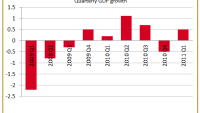
The coalition can breathe a little easier today. The economy returned to growth in the first quarter of this year, avoiding a double-dip recession. It expanded by 0.5 percent which is in the middle of City economists’ forecasts but below the OBR’s prediction of 0.8 percent. Recoveries are generally choppy and particularly so when coming out of a debt-induced recession.  Labour, though, will see these numbers as a further chance to claim that cuts have sucked the confidence out of the economy and that Britain is just bumping along the bottom. This, obviously, isn’t the whole picture. The deficit reduction plan has, crucially, kept the cost of borrowing low and enabled a continuing monetary stimulus.

Economy grows by 0.5 per cent in the first quarter of 2011

From our UK edition

So, we're not back in recession, and growth of 0.5 per cent in the first quarter of this year is in line with what many forecasters were predicting, but... It is hardly indomitable stuff. As Duncan Weldon explained in a useful post yesterday – in which he rightly picked me up on a loosely worded post of my own (since, cheekily, edited) – 0.5 per cent merely compensates for the shrinkage experienced thanks to the snow last year. Across the last two quarters, economic growth has effectively plateaued. It's as we were, Q3 2010. The politics of the situation is fissile, even if we are stuck in the murky area of not-recession-but-not-strong-growth. There will undoubtedly be more pressure on the Coalition, from all sides, to ramp up their efforts for growth.

Why I’m sceptical of all the early election talk 

From our UK edition

Something has undoubtedly changed in the coalition in the past fortnight. Even those at the centre, who have been most loyal to the concept of coalition, are now happy to complain about the other side and its behaviour. But I’m still sceptical of all the early election speculation which has been sparked by Jackie Ashley’s very clever Guardian column. The main reason why I don’t think it will happen is the Cameron brand. Ever since David Cameron became leader of the Conservative party, the top of the party has believed that the protection of the Cameron brand is essential to electoral success. Cameron has too much personally invested in showing that the coalition can work to let it fail. The coalition is now key to Cameron’s whole political persona.

The Tory-Lib Dem row could lead to a DPM’s department

From our UK edition

I have for a long time been sceptical of the idea that the AV referendum will damage the work of the coalition — even once the recriminations start to fly. Having seen it up close, I know how much effort both Tory and Lib Dem ministers actually put in to keep each other informed of their work and policies. Tory-led Departments often consult Lib Dems. And the PM and the DPM seem to have a better relationship than most of their predecessors had. They are certainly more ideologically aligned than Tony Blair was with John Prescott. Now Sam Coates says in The Times (£) that things are hitting the skids, with Tories deliberately blocking Lib Dems from gaining access to key documents and briefings. I don't doubt that this happens.

The coalition’s self-repair effort will meet backbench resistance

From our UK edition

This week, breakage. Next week, super glue. Given the noises emanating from Downing Street, there's little doubt that the Tory and Lib Dem leaderships are going to do a repair job on the coalition once the AV referendum has been decided. As Rachel Sylvester puts it in her column (£) today, "Mr Cameron and Mr Clegg have had several amicable meetings to discuss how to handle the fall-out from the referendum. Both agree that whoever wins should be gracious, and allow the lower to take a bit more of the limelight in the weeks after the vote." They will be looking for quick and easily triggered bonding mechanisms, not least to repel Labour's charge that the coalition is damaged goods. But the question is: what do those bonding mechanisms look like?

Labour spot the dangers and opportunities of the AV referendum

From our UK edition

By some dark magic, the Ghosts of New Labour have been roused from their political slumber. Over the extended weekend, we had news of Gordon Brown's new job and Alistair Darling's new book. Today, it is Peter Mandelson and Alan Johnson who are haunting the newspapers. Both give interviews  – one to the Independent, one to the Guardian – with the same purpose: to rally the vote in favour of AV. Mandelson's is even front page news. "This is our chance to hurt Cameron," reads the headline, underneath a portrait of the man whom Labour learned to un-love after last year's election. Both interviews suggest that Labour are catching up with some of the risks attached to next week's referendum.

Balls and Miliband to rescue Labour’s Scottish campaign…

From our UK edition

Can Ed Miliband and Ed Balls save Labour in Scotland? The two Labour heavyweights have decided to move in to rescue their party's disastrous campaign in Scotland — with Balls being sent up north to sharpen his party's teeth. A desperate measure for a desperate situation: Labour has not only blown a 10-15 point lead over the SNP in just a few weeks, but now languishes some 10-13 percentage points behind. A mammoth, humiliating defeat looms. Until now, Labour has liked to portray its campaign for the Holyrood elections as a totally Scottish affair: run in Scotland, organised in Scotland and led by Scottish politicians. Not any more.

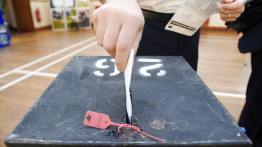
Exclusive: Yes to AV leaflets printed on ballot machines

From our UK edition

Chris Huhne’s decision to threaten the Prime Minister with legal action — as I mentioned earlier — is particularly curious because he must be well-aware of the conflicts of interest at work in the Yes campaign. After all, his partner, Carina Trimingham is a director of Yes! and the Electoral Reform Society. She has been involved in this referendum from the start. And Mr Huhne must, therefore, know why Conservatives, and plenty of others, feel nervous about the relationships between the Electoral Reform Society who are running the Yes campaign and their business arm, Electoral Reform Services, who are financing the Yes campaign.

A question for Chris Huhne

From our UK edition

You know a political campaign has gone terribly wrong when a Cabinet Minister threatens defamation proceedings against the Prime Minister. And that is precisely what happened this weekend, when Energy Secretary Chris Huhne began snarling in the Sunday papers. Stating that the Tory claim that the AV electoral system would cost more was “demonstrably untrue,” Huhne said: “It is frankly worrying if you have colleagues, who you have respected and who you have worked well with, who are making claims which have no foundation in truth whatsoever. If they don't come clean on this I am sure the law courts will.

Will Cameron help Clegg for the coalition’s sake?

From our UK edition

Politics has never really settled down since last year's general election — but it still seems especially convulsive at the moment. Only a few weeks ago, Clegg was caught on camera joking about his and Cameron's similarities. Only a few days ago, he was standing up, vigorously, for the coalition. Yet, now, both his rhetoric — and that of his party — has been dipped in acid and wielded against the Tories. And while there is some speculation about how much of the hostility is staged, and about which ministers actually mean it, the basic fact remains: the coalition is no longer a happy band, but increasingly a collection of rivals.

A campaign in the heartlands

From our UK edition

The AV referendum: it’s enough to make you long for the life to come. As James notes, this Easter Sunday has been shaken by the Lib Dems' righteous fury over the conduct of the campaign. Many will think this anger synthetic, but its virulence is striking nonetheless. Gone, it seems, is the bonhomie of earlier days, when ministers were surprised by how amenable they found each other. Perhaps they will now put aside childish things and trust in their better judgement. The AV furore is beginning to relegate the local elections, which might concern the government because these elections are paramount to its reform of local government.

Local hero fears complacency as Labour disintegrates

From our UK edition

The SNP have this morning been put a whopping 13 points above Labour in the Scottish Parliament race: on 45 percent and 46 percent of the vote in two separate polls. Given that they went into this election campaign somewhere around 35 percent, this represents a huge leap giving them a near-impregnable lead in the Holyrood race. And that's what's worrying them in SNP headquarters. Salmond's strategists, packed into a third-floor office suite behind the Scottish Parliament fear that – in the words of one senior Nationalist – “we have gone too early”. That Labour may now plausibly play the underdog card, and SNP votes may be inclined to stay at home thinking that it's in the bag.