Uk politics

The drug infestation in our prisons

Despite the focus on the government’s controversial plans to reduce the prison population, the troubled Prison Service continues to cause headaches for Ministers in another way — by failing to get on top of the security problems plaguing the estate In the 1990s, when Michael Howard was in Ken Clarke’s position, the concern of ministers was escaping inmates. The Prison Service has made huge strides on this, despite ongoing issues with the open prison estate and day-release of some inmates. But now the ever-present problem is lax internal security and especially drug-infestation. The jailing this week, for two years, of a prison officer based at Feltham Young Offenders Institution is just one example of the problem.

Your guide to tomorrow’s elections

In light of ICM's latest poll, Lib Dems might be relieved to hear that tomorrow isn't all about the AV referendum. But it's a meagre sort of relief: they're facing a drubbing in the local elections too. We've put together a quick guide to those elections, as well as those in Scotland and Wales, so that CoffeeHousers know what to look out for, and Lib Dems know what to fear. Here it is: England The main question hovering over England's local elections is: how big will Labour's gains be? There are around 9,400 seats up for contention, of which the Conservatives currently hold about 5,000; Labour, 1,600; and the Lib Dems, 1,900.

New ICM poll has No 36 — thirty six — points ahead

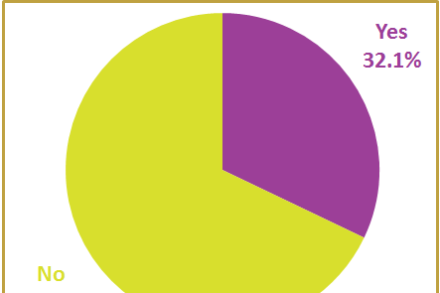
Tonight’s ICM poll is even worse for the Yes campaign than last night’s ComRes poll. The poll, in tomorrow’s Guardian, has Yes heading for defeat by a margin of more than two-to-one and in every single region of the country. The turnout adjusted numbers are No 68, Yes 32. If these last two polls are accurate, and it is difficult to estimate what the turnout will be tomorrow, it will be a monumental humiliation for Nick Clegg and the Liberal Democrats. Defeat on this scale would take Lib Dem nervousness about what the coalition is doing to the party’s brand to a whole new level. Indeed, its effect would be so destabilising that it would be hard to predict how this punch-drunk party would react.

A session of Dickens, Ernie the Milkman and Jack Dromey

There was an eerie, eve-of-battle calm about today’s PMQs. The real bust-up isn’t due till Friday. The votes will be in, AV will be out, Clegg will be down and Huhne will be calculating his next move. Before today’s session everyone expected Labour to co-ordinate an ambush and try to light Cameron’s ever-combustible fuse. But the chamber was under-populated and the opposition hadn’t troubled to devise a battle-plan. Miliband carried the fight to the PM. With an assured forensic performance he methodically built up the case against Cameron as a promise-breaker, a question-dodger and a budget-slasher. Cameron dealt with the assault by absorbing rather than repulsing it.

PMQs live blog | 4 May 2011

VERDICT: A sedate sort of PMQs today, particularly in comparison to the fizz and fire of recent sessions. The reason is simply the date: with the local elections tomorrow, much of the emphasis was on making a straightforward pitch for votes. Miliband's was to attack the "broken promises" of the coalition — a charge that, if not exactly new, is one he is deploying more and more. Whereas Cameron's was to emphasise that councils can make cuts while improving services — and that Tory councils have been particularly successful in doing so. Both men broadcast their messages today, without really scarring the other. The winners and losers will be better judged on Friday morning. 1231: And that's it. My short verdict soon.

Whatever the Lib Dems claim, Michael Gove will be voting No tomorrow

A senior Liberal Democrat is putting it about this morning that Michael Gove, the education secretary, will be voting for AV tomorrow. But a very close friend of Gove tells me that ‘this is categorically untrue. Michael will be voting to keep first past the post.’ This Lib Dem’s briefing strikes me as rather ham-fisted. One might even call it disorganised wickedness. UPDATE: Michael Gove is not only voting No tomorrow, he's getting out the vote for No. The education secretary, who has up to now stayed out of the referendum campaign, will be making phone calls to remind Conservatives to go out and vote No tomorrow from CCHQ this afternoon.

Is Chris Huhne proving coalitions don’t work?

This country's not used to coalitions. So when we got one we were sceptical. When it worked, we remained sceptical. When it worked really well, taking decisions that a majority Labour government dared not take, we began to come around to the idea. Most people seemed to accept that they could live with a coalition; that it had a certain utility. Now, we don't know what to think following the spat between George Osborne and Chris Huhne. Is this proof that the coalition cannot work or merely an example of the way coalitions work? There are certainly worse examples of inter-coalition war in countries that often have coalition governments.

Yes to AV on the ropes as the final round approaches

Thanks to this ComRes poll, the question floating around Westminster this morning is: how much?! You see, with only a day to go until the AV referendum, it has the No camp on 66 per cent, and the Yes camp on 34. That puts No a punishing 32 points ahead of its rival. Even allowing for the peculiarities of a bank holiday weekend – as noted by Anthony Wells here – it's still an astonishing gap. It augurs a landslide. Or does it? To my mind, much still rests on turnout and on the voting patterns of Wales, Scotland, etc. Yet there's no denying that Yes are up against it – and in a major way. Their problem, and the problem that they have faced throughout this campaign, is perfectly encapsulated by this morning's newspaper editorials.

The significance of today’s Cabinet bust-up

On the Today Programme this morning, David Cameron stressed that for all the tensions about the AV referendum, ministers were still capable of sitting round a table and working together. But within a couple of hours of saying this, Chris Huhne had destroyed this argument by using Cabinet to continue his attack about the tactics of the No campaign.   When the Energy Secretary is demanding that the Prime Minister and the Chancellor justify their behaviour to him it is impossible to pretend that it is business as usual. It is now indisputable that the fallout from the AV referendum campaign is having an impact on the functioning of the government.   What is also noteworthy is that Osborne didn’t try and defuse the conversation with a joke or anything like that.

Clegg’s implicit attack on the Tories

Up until a few months ago, David Cameron and Nick Clegg tried to avoid doing big set piece broadcast interviews on the same day. This was driven by a desire to both maximise the coalition’s dominance of the media agenda and to avoid having to give a running commentary on what the other had said. But this rule has gone out of the window as the AV referendum has got rougher and rougher. So, following on from their both doing separate interviews on Andrew Marr on Sunday, they both were on the Today Programme this morning. Clegg even told Justin Webb to ask Cameron about the split between the two of them on internships when he was on in forty minutes time.   Clegg isn’t, unlike Cable and Huhne, openly attacking the Tories. But he is doing so implicitly.

Huhne lays into Cameron and Osborne at Cabinet

At Cabinet this morning, I am told that Chris Huhne directly challenged David Cameron and George Osborne about the claims that the No campaign have been making. He asked them both in turn, if they were going to — or could — defend them. Osborne responded by telling Huhne that his behaviour was inappropriate and that Cabinet wasn’t the place for such disputes. The fact that this row broke out in Cabinet shows just how badly relations within the coalition have been damaged bv the AV campaign. That Huhne is leading the anti-Tory charge even within Cabinet will also stoke the rumours about what the Energy Secretary is planning to do after Thursday’s referendum.

John Humphrys makes the case for voting No to AV

Is AV too complex? Ask John Humphrys, who unwittingly made the case against switching system today, in conversation with David Cameron on the Today programme. It became clear that Humphrys believed that everyone's second preference vote would be counted under AV — and Cameron pounced. Here's the transcript: DC: If you go to an AV system you start counting some people's votes more than once. And you end up, in the words of Churchill... JH: No you don't. It simply isn't true that you count votes more than once. DC: Yes, you count all the votes. You start eliminating candidates, and you count people's second preferences. JH: And I have a second preference, as well as you, as well as anyone else. So you don't count some people's votes more than others.

How a degree of separation will strengthen the coalition

Almost a year ago, David Cameron and Nick Clegg staged their love-in at the Downing Street rose garden. As I say in the News of the World (£) today, this era is now at a close. When they come back from the 5 May elections, Clegg and Cameron have agreed that they cannot go on as before. An agreement has been struck for an amicable separation. Not divorce — the coalition will keep going. But Cameron and Clegg will put clear blue (and yellow) water between them and drop the pretence that they agree on everything. The coalition is about to enter its Phase Two.   Clegg’s analysis is that Phase One was, perhaps, too successful. His over-riding mission was to prove to a sceptical Britain that coalition governments can work and don’t lead to sclerosis.

Chris Huhne pitches to the left

We're used to AV platform-sharing by now — so it's not the fact that Chris Huhne has written an article for the Observer alongside Labour's John Denhan and the Green's Caroline Lucas that shocks. It's the words he then puts his name to. "Britain consistently votes as a centre-left country and yet the the Conservatives have dominated our politics for two-thirds of the time since 1900," begins the article. "No wonder David Cameron says the current system 'has served us well'," it continues. Although subsequent paragraphs are more conciliatory — claiming, for instance, that Tory voters in the north also suffer thanks to our electoral calculus — this is nonetheless a provocation to rile Huhne's coalition colleagues.

The AV scrap enters its final stage

There are, as James pointed out earlier, only five days to go until the AV referendum  — and that means both campaigns are priming their final appeals for our hearts, minds and votes. So just what will those appeals look like? Today has brought some indication. As Paul Waugh reveals over at PoliticsHome, the Yes campaign is planning to wheel Eddie Izzard — of course! — in front of the microphones. The comedian is going to take part in 16 events across the country this week. And as for the No campaign, ConservativeHome have pictures of their new poster campaign and promotional leaflet. It's the latter that really tugs at the ol' retinas: a shot of Nick Clegg outside No.

Purnell stakes out a new welfare battleground

I said a few days ago that the spirit of James Purnell lingers over the welfare debate in Britain. Well, you can now scratch out "spirit". The real-life, corporeal version of Purnell is giving a speech in Australia today — and, judging by its write-up in the Guardian, it is one that should have some resonance on this side of the planet. This is not just an address by a former Labour MP on where his party should go next — although it is partially that — but also the staking out of new ground on welfare policy. Whether you agree with it or not, it deserves some attention. So what does Purnell say? Much of it is a straight disavowal of New Labour's money-centric approach to welfare and poverty.

How the recriminations over AV’s defeat will change the debate over Lords reform

It is odd to think that only the second national referendum in our history is only five days away. The combination of the Royal Wedding and the failure of the campaign to grip the public imagination has condemned it to being ‘In Other News’, on this the final weekend before the vote. At the moment, No appears to be cruising to victory. The Yes campaign lacks both message and momentum. I also suspect that, asPaul Goodman says, the rest of the week will see debate about why it has all gone so wrong for Yes. One thing I expect we will hear a lot of in the coming days is electoral reformers bemoaning that they went for a referendum on AV rather than a proportional system.

A princely marriage

There are some things that Britain does better than any country in the world, and we saw one of them today. Two particulars will have jumped out at the tens of millions watching the Royal Wedding from overseas: the sheer splendour of our monarchy, and the depth of its popular support. HD television made the beauty of today's ceremony all the more breathtaking. If this were a movie, it would win an Oscar for best cinematography. The shots from the roof of Westminster Abbey were jaw-dropping, the camera angles throughout were perfect. But no less awesome was the sight of the thousands thronging the streets, or watching in Hyde Park.

Hain puts his foot in it

Crude politics has intruded on the Royal Wedding after all, and all courtesy of Peter Hain. The Shadow Welsh Secretary has complained — on Twitter, naturally — that the BBC's coverage of the event dwelt too long on David Cameron and Nick Clegg, and ignored Ed Miliband. "BBC airbrushing Labour like the Palace?" he asked leadingly. The Tory minister David Jones has since admonished him, "time, place, Peter." If Labour have much sense they'll play this down as efficiently as possible. Miliband, it is true, barely featured in the television coverage — but that's really beside the point. It is rarely smart politics to take on the Palace at any time. Yet on the day of the Royal Wedding it's just downright foolish.