Uk politics

The coalition’s 2015 problem

From our UK edition

The generals and the politicians are at odds with each other. This much has been clear since the run-up to last year's Defence Review, but it finds a particularly clear expression in the Telegraph's interview with Lt Gen James Bucknall today. Britain's most senior commander in Afghanistan may not say, in terms, that we should avoid a timetable for withdrawal from the country — but he skirts awfully close to it. "It is of utmost importance that we stay the course, that we stay as long as it takes to finish our job," he says, only a fortnight after David Cameron announced that 450 troops will be pulled out of the country this year. More specifically, Bucknall wants at least "two winters and two fighting seasons" without a diminished combat capacity.

Britain’s other, bigger debt problem

From our UK edition

And what about the other sort of debt? We spend so much time harrumphing about the national debt that an important point is obscured: personal debt, the amount owed by individuals, is even higher. I wrote an article on the subject for a recent issue of The Spectator, as well as the Thunderer column (£) for last Saturday's Times. But, really, a piece in the latest Spectator (subscribers here) by Helen Wood — the former prostitute who transacted with Wayne Rooney, as well as with a "married actor" who has slapped her with a superinjunction — puts voice to the problem in blunter fashion. "My mistake," she writes, "was to get into debt": "I borrowed £800 to go on holiday, followed by £500 to pay the rent — both from loan sharks.

Clegg’s ermine troubles

From our UK edition

Turkeys don't vote for Christmas, that much we know. But thanks to the wonders of modern science, we can now poll them on it. Today's Times carries a survey of the 789 peers who are entitled to sit in the Lords — of whom, 310 responded. It's not a huge sample size, but the results, you assume, are representative. 80 per cent oppose a wholly or mainly elected second chamber, including 46 per cent of Lib Dem peers. 81 per cent believe that the Lords works well as it is. And 74 per cent believe that it wouldn't be "constitutionally correct" for the Commons to force through a cull of the unelecteds by deploying the notorious Parliament Act.

In England’s green and pleasant land

From our UK edition

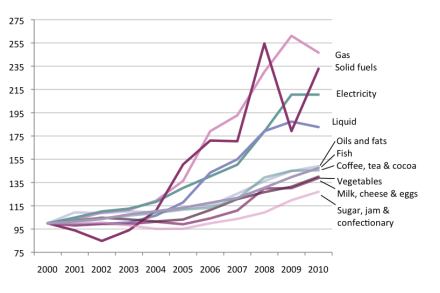
What do the TUC, heavy industry and the European Commission have in common? This is not the start of a bad joke; the answer is that they all oppose the government’s energy policy. Ten days ago, Tata (formerly British Steel) announced that it was to cut more than 1,500 jobs at plants in Scunthorpe and on Teeside. The directors later confirmed that their decision was influenced, in part, by the introduction of a costly carbon floor price at the last Budget. The floor price, which exists on top of levies imposed by the EU, has increased the burden of taxation on energy consumption to subsidise renewable energy research. In last week’s issue of the Spectator, Matt Ridley predicted how this policy will likely be an expensive fiasco.

Testing the health of the coalition

From our UK edition

Listening is seriously damaging the coalition’s health. The Sunday Mirror carries a report that chimes with a week of rumours in Westminster: the NHS reforms are going to be significantly diluted to appease warring Liberal Democrats. The Mirror adds that Lansley is likely to quit in protest. Matt d’Ancona argues, in his essential column this morning, that this is not a listening exercise but a ‘full blown carefully orchestrated retreat’. It is, if you will, a political version of the battle of Arnhem: the NHS reforms were a reform too far in this parliament, so tactical withdrawal is now imperative. Clegg and Cameron’s signatures are on the original White Paper.

Brennan comes to Balls’ aid

From our UK edition

To present the government side in the Shoesmith case, former minister Kevin Brennan MP has written an extensive defence of Ed Balls' decision to sack Sharon Shoesmith. Brennan's argument is predicated on Ofsted's report. Brennan writes: 'Faced with such a report, the Secretary of State had to act decisively. Anyone who doubts for a moment the decision Ed Balls took should look again at that report and its implications for the leadership of child protection in that borough.' Shoesmith has cast doubt on Ofsted's report, asserting that its authors had been leant on after they had conducted their research and found her department to be under pressure but in good order. The appeal to the Supreme Court will clearly have to test the independence of Ofsted's report.

Shoesmith strikes at Balls and executive power

From our UK edition

Sharon Shoesmith cut into Ed Balls on the Today programme this morning. She said: "Why don’t we ask Ed Balls why he acted on November 12, 2008 when he knew for 15 months that Peter Connelly had died and I was working with his officials, I was going to the government office, they were reading the draft reports. Haringey council knew all about it. We examined the conduct of our social workers, we found a disciplinary against them, but they weren't sacked - all of that was open and clear and on the table and everyone knew everything about that. It wasn’t until the spat in the House of Commons when David Cameron taunted Gordon Brown that everything changed overnight. That is the one occurrence that changes all of this story.

From the archives: Bush in London

From our UK edition

You may have noticed that Barack Obama came to the country on a state visit this week. But he wasn't the first US President to be extended an invitation from the Queen, oh no. George W. Bush beat him to that particular honour in 2003. Here are a couple of Spectator pieces from the time, the first the magazine's leader column, the second by Peter Oborne: Don't burn Bush, The Spectator, 15 November 2003 The Queen's state carriage has carried some pretty rum types over the years. Nicolae Ceauscescu took a break from murdering his countrymen to take a ride down the Mall in June 1978. In 1994 it was Robert Mugabe's privilege and in 1979 Kenya's President Daniel arap Moi - at a time when Moi's corrupt administration was bleeding his country of £00 million a year.

Off target

From our UK edition

Target culture. It's a pejorative phrase, and understandably so. As we discovered during the New Labour years, targets designed to encourage good public services can frequently do the opposite — replacing genuine care with box-ticking, and action with bureaucracy. I mention this now because of an article in this week's Spectator (do subscribe, etc.) by an anonymous Metropolitan Police officer. He describes how a target culture has skewed the work of the force and, in some cases, even the law itself. Here's one anecdote, which rather sums it all up: "I know of one instance in which a uniformed sergeant stole (or neglected to hand in) some confiscated cannabis.

Less listening, more talking

From our UK edition

There was an exchange on Question Time last night that may go some way to explaining why the government’s health plans are so mired. One panellist, media lawyer Charlotte Harris, said that she was very worried by the substantial cuts being made to the NHS’ budget. Large sections of audience greeted this with rapture. (From 44 mins.) Immediately, Tory Louise Bagshawe and Lib Dem Jeremy Browne tried to grab David Dimbleby’s attention. It fell to Bagshawe to correct Harris, pointing out that the government has increased spending on the NHS when Labour would cut. The audience responded with boos – more in disbelief than disagreement, incredulous that the Tories would do anything other than cut the NHS.

Michael Gove to appeal Shoesmith verdict

From our UK edition

Whitehall sources say Michael Gove will appeal the Court of Appeals judgement which decided Sharon Shoesmith’s dismissal was so ‘legally flawed as to be null and void’ to the Supreme Court. Although Gove recognises that Balls blundered in the way he dismissed her, he also believes that there are important constitutional principles at sake in this case about how Ministers make important and urgent decisions and what the role of the courts is in challenging such decisions. Gove wants the Supreme Court to consider these issues because of the huge importance of judicial reviews, which are being used repeatedly by opponents of the government to try and stymie its agenda.

Shoesmith in line for up to a million in compensation following sacking over handling of Baby P case

From our UK edition

Sharon Shoesmith, who was head of children services in Haringey at the time of the Baby Peter case, is set to receive a sum that could be as large as a million pounds in compensation. The Court of Appeal has ruled that the way Ed Balls, then the secretary of state, and Haringey took the decision to dismiss her was procedurally unfair to Shoesmith and so she was not lawfully removed, entitling her to compensation possibly including full pay and pension for the last couple of years.    Shoesmith might be legally entitled to this money. But given the circumstances in which she is receiving it and the institutional flaws exposed by Haringey’s approach to the Baby Peter case, the honourable thing to do would be to not accept it.

Tory MPs launch NHS reform counter-offensive

From our UK edition

Nick Clegg’s speech on the NHS today has fanned the flames of the Tory backbench rebellion on the issue. Tory MPs’ tribal instincts have kicked in and even those who were worried about the Lansley plan are now swinging behind it. As Nick Watt revealed earlier today, there’s currently a letter from Nick de Bois urging Tory MPs to set out their red lines on health service reform. One thing that Tory MPs keep repeating to me is that they are not prepared to see the Lib Dems ‘take the NHS backwards’. This is their most fundamental red line and it translates to a determination not to have the level of competition and private sector involvement in the health service reduced.

More freedom for some schools means better schools all round

From our UK edition

Academies, as CoffeeHouser knows, are booming. There were around 200 of them when Michael Gove became Education Secretary last May. Now, just a year later, and steaming well ahead of expectations, there are over 600. This is, as Benedict Brogan suggests in his Telegraph column today, one of the great successes of the coalition era — albeit one that owes a debt to Andrew Adonis, Tony Blair and all the school reformers that came before them. And it is a triumph of quality, as well as of quantity. The simple, overwhelming truth is that academies are, on the whole, better than the schools they replace.

Cable’s punditry could come unstuck

From our UK edition

"It's not imminent. But you can see this happening." So sayeth Vince Cable about the prospect of another global financial crisis, in interview with the New Statesman today. To be fair, you can see his point: there is a pervasive sense that the contradictions of the banking sector still haven't been fixed, and — as I have written recently — our economy, and economies worldwide, are still afflicted by debt of all varieties. But that's not going to calm those Tories who regard Cable as a combustive liability. In the weeks since the Lib Dems'  annihilation at the polls, the Business Secretary has increasingly reverted to his pre-coalition form: a professional commentator on the state of the economy.

Grading Obama’s visit

From our UK edition

It was a good state visit. Actually, it has been an excellent visit. Much better than George W Bush's and even Barack Obama's 2009 trip to London. The US president got his photo with Wills 'n' Kate. The Prime Minister got his presidential high-fives. There were some odd points. The personal chemistry between David Cameron and Barack Obama made the ping-pong match better than it would naturally have been. For, let's be honest, table tennis is not a natural US-UK sport. There were policy differences between the two leaders too, for example on Libya and deficit reduction. In the end, though, the way to judge visits is not to think about Evening Standard covers or how much of the Today programme was devoted to the US president, but to look at strategic issues.

Obama re-affirms the special relationship

From our UK edition

The speech was not a classic but Barack Obama's address to both Houses of Parliament covered the bases today. He started with a winning line, remarking that the previous three speakers in Westminster Hall had been the Pope, the Queen and Nelson Mandela which is either "a very high bar or the beginning of a very funny joke."   As is traditional in these kinds of speeches, Obama paid tribute to the special relationship, lauding it as the embodiment of the values and beliefs of the English-speaking tradition. He went on to say that both the British and the Americans knew that the "longing for human dignity is universal." Indeed, at times Obama sounded remarkably like the last president as he proclaimed his own freedom agenda.

The Wei forward for the Big Society

From our UK edition

The Big Society was dealt another blow with the resignation of Lord Wei yesterday. Sceptics will see this as a vindication of the concept's problems. Most people, however, won't notice that he has gone. The debate about the Big Society has long since become an elite sport, a jousting match between a determined promoter — the Prime Minister — and equally determined detractors in the media. Most people don't care, and it won't help or hurt the Tories at the next election. That's a shame. For the Tories could use a positive post-Thatcher narrative about their administration. They may not need it if the country returns to economic growth. But they might. However, the Big Society never worked for a number of reasons.