Uk politics

A special relationship | 22 May 2011

From our UK edition

The visit of President Obama on Tuesday has not yet inspired rapid British soul searching about the ‘special relationship’, not by comparison to David Cameron’s trip to America last July at any rate. After an awkward beginning, the Obama administration has been at pains to stress that America’s alliance with Britain is inviolable even in a changing world. The administration’s deputy national security adviser, Ben Rhodes, said “there’s no closer ally for the US than the UK” last week. But like all close alliances, the two parties have their differences.

Cameron should cleanse his Cabinet of the undead

From our UK edition

Chris Huhne "cannot be sure" whether he might, after all, have been driving his car that fateful night. Ken Clarke cannot be sure why he spoke about rape in that way. Andrew Lansley cannot be sure. All this we learn from the Sunday newspapers: three ministers are for the chop — it's just a matter of time. They will sit in the Cabinet death row alongside Caroline Spelman, unforgiven for her handling of the forests fiasco, and Vince Cable, caught on tape boasting about his “nuclear option” of resignation. This makes no fewer than five dead men walking — and that's before you think about the party chairmanship. As I say in the News of the World today, Cameron needs a clearout.

Conservative support to collapse at 6pm

From our UK edition

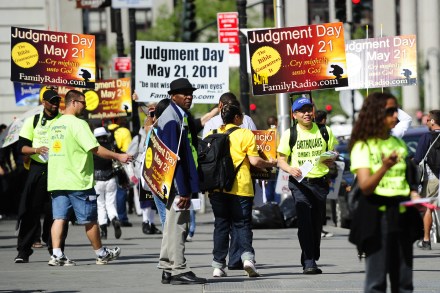
This evening, an event will occur that will make all the controversies and scandals of the last week seem somewhat irrelevant — at least according to American evangelical Harold Camping. He says that 6pm today is the time of the Rapture, as foretold in Thessalonians 4:17: all those "true believers" who accept Jesus Christ as their one true saviour will be taken up to heaven. For those of us left, we might wonder who will lead us through the "chaos and awful suffering" following both the loss of 40 per cent of the UK population and the earthquakes that will accompany it. Our Prime Minister — with his "sort of fairly classic Church of England faith" — would be gone.

Miliband’s “national mission” lacks a mission plan

From our UK edition

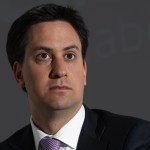
I didn't expect to be overwhelmed by Ed Miliband's speech to the Progress Annual Conference today, but neither did I expect to be quite so underwhelmed. This was meant to be his Great Exposition of how, as he put it his introductory remarks, Labour "will win the next election". But what we got was a straighforward list of some of the major themes of his leadership so far: the "squeezed middle," the prospects for young people, community breakdown, and so on and so forth. These are all worthwhile areas for debate, but Miliband has dwelt on them before now, and more persuasively — such as in his speech to the Resolution Foundation in February. Repeating them may help make the point, but it doesn't mean that Labour have any solutions.

Cable’s latest warnings and provocations

From our UK edition

My favourite part of the Guardian's interview with Vince Cable today? When the business secretary says that his sermonic prescriptions from during the crash are of "enduring relevance" now. But there's more to the article than self-aggrandisement, not least Cable's gloomy overview of the British economy. It's not quite the same as Alastair Darling's Guardian interview in August 2008, but there is a touch of that here. "I think it is not understood that the British economy has declined by 6 or 7 per cent — it is now 10 per cent below trend," says Cable, "Britain is no longer one of the world's price setters. It is painful.

Hugh Grant and Low Life

From our UK edition

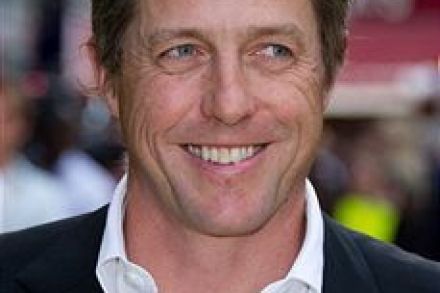
I’ve always rather admired Hugh Grant, so it was almost a pleasure to be beaten up by him on Newsnight last Friday. He was attacking the celebrity-hunting media, whereas I set out to defend free press and self-regulation of the media. If you’re going to have sympathy with any Hollywood figure, you’d have sympathy with Hugh: he’s a single man who has never tried to moralise, and has cameras pointing at him everywhere he goes. Besides, he made an impassioned and powerful case against the intrusion of the paparazzi — while yours truly was left defending the Press Complaints Commission. But I didn’t know, until I met him that night, that Hugh is also a Spectator subscriber — and has been for years.

Ken Bloke’s proposals are not so popular

From our UK edition

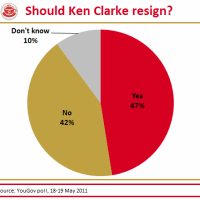
What do the public think of Ken Clarke after his gaffe on Wednesday? According to a YouGov poll conducted during the 48 hours since his comments, a slim pluarlity think he should resign from his post as justice secretary: Perhaps unsurpisingly, the majority of Labour supporters agree with their leader's call for him to go, although a majority of Tories and two-thirds of Lib Dems think he ought to stay. When it comes to the issue at the centre of the furore - reducing the sentence for someone who pleads guilty by up to half (as opposed to a third, as it stands now) - the public is much more set against Clarke: More specifically, 33 per cent say there should be no reduction in sentences at all for people who plead guilty, whatever their crime.

The World Service versus al-Jazeera

From our UK edition

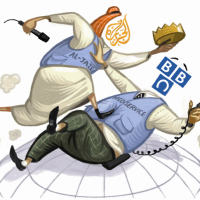
Yesterday’s debate on the future of the World Service was an unqualified success for its convener, Richard Ottaway. His motion received very extensive cross-party support and the MPs involved are confident of victory. As one source put it, “I haven’t met anyone – anyone – who agrees with that cut.” For its part, the government will “reflect carefully on the issue.” Parliament and Whitehall ring to anxious talk that cuts to the World Service will diminish Britain’s status abroad, and that less impartial state broadcasters, notably al-Jazeera, are capitalising on our withdrawal: al-Jazeera’s dominant coverage of the Arab Spring is a case in point.

Brown hasn’t contacted Cameron or Osborne about IMF job

From our UK edition

‘Brown makes pitch for IMF job with plea to rich nations to meet education pledges’ reads the headline on page 3 of The Guardian today. This is all part of a growing body of evidence that Gordon Brown really does think he is in with a chance of succeeding Dominique Strauss-Kahn. Certainly, the usual suspects are out and about talking up his chances. Realistically, Brown is not going to get the job. But if Brown really does want to have a go, it is bizarre that he’s not tried to contact either David Cameron or George Osborne to reassure them about how he’d behave if he got the job; Danny Finkelstein gave a typically well informed take (£) about Cameron and Osborne’s worries about how Brown would use this bully-pulpit on Wednesday.

No rights without responsibility

From our UK edition

The most recent official statistics show that 5.4 million adults and 1.9 million children live in the UK’s 3.9 million workless households. Through the Universal Credit, the coalition is taking a radical approach to tackle this, but it won’t be enough. The government’s own analysis estimates that it will move 300,000 households into work. But this will leave 3.6 million households behind, dependent on benefits and likely to pass worklessness onto the next generation. There are also timing worries. Unemployment and, in particular, youth unemployment are high on the political agenda (new statistics on NEETs will come out next week), but the Universal Credit will not be fully implemented for another seven years.

Miliband tries to explain himself

From our UK edition

As the weekend drifts closer, there is a case that Ed Miliband has just enjoyed his best week as Labour leader. Not really from anything he has done — although his PMQs performance had more vigour than usual — but thanks to the backwash from the Ken Clarke calamity. MiliE's spinners could barely have dreamed, even a few days ago, that their man would gain the the fiery approval of The Sun on matters of law and order. But that is effectively what they gained yesterday. "Labour is now tougher on crime," bellowed the paper's leader column, "than our Tory-led government." Even today their editorial laments, "so much for David Cameron's pledge to provide a young, modern government in tune with 2011 Britain.

Debt as a security concern

From our UK edition

Is Britain's growing national debt a matter of national security? In a speech this morning, Liam Fox said so. Sure, he said, you can protest at the defence cuts — but strength comes from having a strong economy and strong national accounts. "Those who are arguing for a fundamental reassessment of the Defence Review are really arguing for increased defence  pending. But they fail to spell out the  inevitable result — more borrowing, more tax rises, or more cuts elsewhere. The bottom line is that a strong economy is a national security requirement and an affordable Defence programme is the only responsible way to support our Armed Forces in the long term.

What has Ken done wrong?

From our UK edition

What has Ken Clarke done wrong — other than commit the political sin of making a media gaffe? Nothing. In yesterday’s now infamous BBC interview, he was simply attempting to explain his position on rape sentencing, which may or may not be the right one. It’s a difficult question — and, under some antagonistic interrogation, he stumbled and got flustered. “Rape is rape,” said the radio interviewer. "Not it’s not," the Justice Secretary replied. He later talked about “serious, proper rape.”   Bad phrasing? Certainly. Injudicious? Sure. But Clarke’s essential argument — that not all rapes are the same, that some rapes are worse than others — is quite obviously true.

Sex and Westminster

From our UK edition

Just who is Carrie Fox, the pseudonymous author of this week's Spectator cover piece? And, more to the point, who is the "political big beast" who once pinned her down and slathered his amorous intentions in her ear? (She declined). There's plenty of speculation on both fronts in Westminster today, so we thought we'd let CoffeeHousers in on the intrigue. The entire piece, featuring a complete bestiary of Parliament's sexual predators, has been made freely available here.

Clarke for the high-jump

From our UK edition

Dominic Grieve’s fate as shadow Home Secretary was sealed by a lunch at News International headquarters in Wapping. Grieve went to lunch with various Sun executives and rather than talking tough on crime he laid into the paper for how it covered the issue, claiming that it stoked fear of crime. The word then came back to Tory high command, via Andy Coulson, that the paper would not endorse the Tories as long as Grieve remained in that job. He was duly replaced by Chris Grayling in the 'pub-ready reshuffle' of January 2009 after less than a year in the job. So one can only imagine how Downing Street feels about this morning’s edition of The Sun. It starts with the front page headline: ‘Clarke’s a danger to women…He must go’.

Clegg adheres to the script on deficit reduction

From our UK edition

What a curious speech by Nick Clegg to the CBI last night. Curious, not because it was bad — but because, in straining to give a uniquely "liberal" justification for deficit reduction and the spending cuts, the Deputy Prime Minister actually crafted an address that most Tory ministers should, and would, deliver themselves. Take his "liberal analysis" of the last decade: "On a liberal analysis, the last decade represented the worst of all worlds. On the one hand: unchecked private debt; an unsustainable housing market; an overleveraged banking sector; overreliance on City-based financial services while other regions and sectors suffered neglect.

Keeping the States interested

From our UK edition

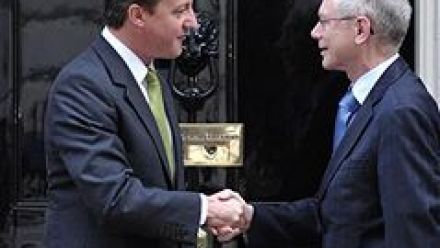
David Cameron has a good relationship with Barack Obama, which will be on display when the US president visits Britain shortly. They speak regularly and frankly and their senior advisers are in near-constant contact. The idea that the Lib Dems would foist a more "Love Actually" policy onto the coalition has come to naught. Yet Britain's influence in Washington has waned. This is no fault of the Prime Minister. In fact, his personal diplomacy has probably slowed-down the process. Instead it has to do with structural changes in the US: the coming to power of a "pacific" President, the importance of US-China ties, the emergence of the Tea Party.

Laws calls for unity — but faces trouble

From our UK edition

The personal and the political. They mesh to readable effect in David Laws' interview with the Times (£) this morning, his first since resigning from government last year. There are the observations about his personal life, about why he concealed his sexuality and the relief of having it out in the open. And there are the political ramifications that tumble on from that. We know that Laws came close to standing down as an MP when the scandal over his expenses first emerged, but here it is revealed that, "he would have quit as an MP last week had the commissioner rejected his explanation that his Commons claims were to protect his privacy, not to benefit financially.