Uk politics

The vanguard of the universities revolution?

From our UK edition

One new institution does not a revolution make. But there's still something a little revolutionary about the New College of the Humanities that is set to open, in London, in September 2012. Perhaps it's the idea behind it: a private university that charges fees of £18,000 a year (with bursaries available to those who can't afford that). Or perhaps it's the names who are fronting it: AC Grayling, Richard Dawkins, Niall Ferguson, etc. They will, apparently, be conducting tutorials themselves. The public academics, it seems, are pitching their tents on the private sector. Mary Beard lists some reasons no to get too excited here. This is, she says, little more than a US-style liberal arts college that won't offer science courses or post-graduate qualifications.

The return of the signature parade

From our UK edition

Oh dear, we're back to letter-writing again. 52 academic sorts — including the Labour advisor Richard Grayson and Blue Labour proponent Stuart White — have a letter in today's Observer urging George Osborne towards a 'Plan B' for the economy. They even sketch out, in less than 150 words, what that Plan B might look like. And, strangely enough, it has more than a tinge of Ed Miliband about it, including — and I quote — a green new deal; a focus on targeted industrial policy; the empowerment of workers; "unsqueezing" the incomes of the majority, and so on. I say we're back to letter-writing again, because it's all so reminiscent of one of the most unedifying episodes in the fiscal debate so far, from before last year's election.

Glasman sings the blues

From our UK edition

Maurice Glasman, a favoured thinker of Ed Miliband’s, has given an interview to someone called Filippo Sensi who writes for an Italian magazine called Europa. I sound a firm note of caution here because there is a distinct possibility that it's a spoof. Take Glasman on the etymology of Blue Labour: "There is a sense of bravery and tragedy in our position and that is one meaning of the word blue, that links Miles Davis with Picasso and Aristotle. It is not mentally ill or depressed to feel triste and out of that understanding can flow a deeper understanding of the world and a more durable courage in resisting it than a superficial optimism that is the definition of Berlusconi and the progressive left.

Why wasn’t Mladic arrested earlier?

From our UK edition

How did Ratko Mladic escape arrest for so long? Writing in this week’s issue of the Spectator (buy it here), Charlotte Eager remembers her nervous summers with the azure-eyed butcher, in the course of which she writes: "Why wasn’t Mladic arrested before? After all, British, French and US special forces wandered Bosnia freely for many years after the end of the war and he used to be spotted in restaurants, boils and all. The problem, according to some ex-SAS chums, was that our governments wanted Mladic to be taken alive. ‘That would not have been possible then,’ said one: back then, his thugs were still pumped up enough to die for him. Sixteen years after the war, the adrenalin has ebbed.

Charles Moore warns that the Downing Street machine isn’t working

From our UK edition

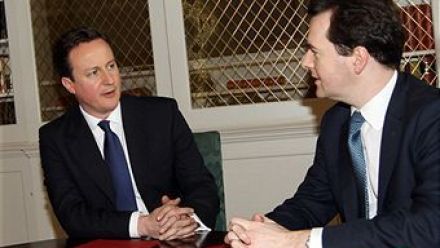
Charles Moore, Margaret Thatcher’s biographer, is one of the columnists most sympathetic to and best informed about what David Cameron is trying to do. So when Charles warns that the current set-up of Downing Street isn’t working for the Prime Minister, Number 10 should take notice. Charles’ worry is that the new Downing Street set up is insufficiently political, that policy and politics are being kept too far apart. I think Charles is right about this. The Number 10 policy unit is now made up mostly of civil servants or former management consultants who, by their very nature, aren’t intellectually or ideologically committed to the Cameron public service reform agenda.

Flying into a known unknown

From our UK edition

British Apache and French Tigre attack helicopters flew into action over Libya yesterday, the Ministry of Defence confirmed last night. As when news of the deployment first broke, parliamentarians and military talking heads have warned that this is an escalation of the conflict. Some MPs have called for parliament to debate the issue when it returns from recess on Monday. NATO commanders are at pains to stress that the scope of the operation has not changed. Lieutenant General Charles Bouchard, commander-in-chief of Operation United Protection, told reporters at his headquarters in Naples. “It’s an additional capability to pinpoint these [military] vehicles that are much more difficult to see from aircraft at high altitude.

The green consensus in action

From our UK edition

A couple of days ago, I wrote about the deleterious effects of political consensus on energy policy. A good example of this has emerged today. According to Politics Home, Luciana Berger and Caroline Lucas are seeking an amendment to the Green Deal to impose a target for domestic carbon reduction. A number of salient points emerge from this. First, it’s a fine instance of the obsession with targets; itself an indication that this area of policy is largely a top down initiative – driven by targets, taxes and penalties. The Green Deal, as it currently stands, is one of the few areas that put incentive before directive. The idea was to ‘nudge’ consumers into improving domestic energy efficiency.

Cameron’s European opportunity

From our UK edition

Jean-Claude Trichet’s speech yesterday proposing a ministry of finance for the eurozone (£) can be taken as setting out how the European Central Bank wants to resolve the eurozone’s problems. It is yet another example of how the European elite use crises to advance integration.   But just as important from a British point of view is Trichet’s admission that the overall package of changes he is talking about “naturally demand a change of the [EU] treaty". This, as Fraser has written previously, presents David Cameron with a glorious opportunity to take advantage of this moment to redefine Britain’s relationship with the European Union.

Not just a wily Fox, but a watchful hawk with time on his side

From our UK edition

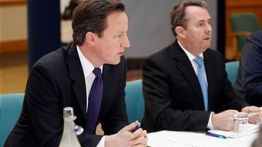
Liam Fox is fond of reminding us that he didn’t come into politics to cut the armed forces. A wistful look falls across his face when he says it – an indication of frustration as much as sincerity, a sense deepened by his letter of concern about the government spending so much more on international development. Opponents of Fox might characterise this as hypocrisy: he would reduce the size of the state without touching the armed forces, they say. His enemies in the Conservative party say that it’s typical of this “clever fool’s” intellectual indiscipline. Fox the military and fiscal hawk wants to “have it both ways”.

Moving towards more efficient public sector pay

From our UK edition

Data issued yesterday by the Incomes Data Services indicated that average pay settlements over the first quarter of 2011 in the public sector were close to 0 per cent. However, pay settlements in the private sector were closer to 3 per cent. Does this mean that Policy Exchange were wrong in a recent report to conclude that public sector workers are overpaid compared to their private sector counterparts? The basic answer is no. We highlighted that on a range of measures, workers in the public sector were overpaid compared to their comparators in the private sector. Even on our most conservative measure, which accounted for compositional differences in terms of age, location, hours, gender and qualifications, this gap was around 9 per cent.

Where we are in Afghanistan

From our UK edition

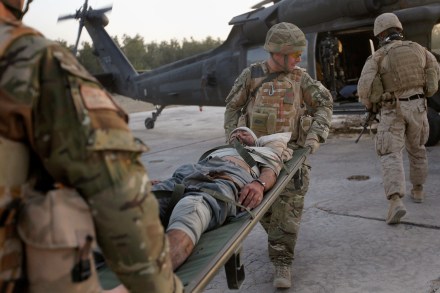
I wrote back in November that as we approached the July deadline when President Obama promised to start drawing down troops from Afghanistan, the tensions between politicians and military would re-emerge, as “the military ask for more time to get it right, and Obama tries to hold them to the deal he thought he made in late 2009”. This is now coming to pass, in London as well as Washington. I also argued that having some sort of public timetable for the troop drawdown was a reasonable solution, perhaps the only solution, to the politicians’ problem of balancing conflicting messages to different audiences in Afghanistan and at home.

Building a yellow-beating strategy

From our UK edition

If the Tories are to win an overall majority at the next election, they are almost certainly going to have to take some seats off the Liberal Democrats. Given that the Tories have problems in Scotland and the urban north, the party needs to win seats like Somerton and Frome.  This fact is why Tory MPs are paying such attention to a piece by Rob Hayward on Conservative Home. Hayward, a former Tory MP who has advised the party on the coming boundary review, points out that where the Lib Dems had an MP, their vote in the local elections pretty much held up.  This implies that removing Lib Dem MPs at the next election will be harder work than many Tories think.

The Lucifer Effect

From our UK edition

Today’s papers are full of comment on the brilliant Panorama exposé of care home abuse. But none have mentioned what jumped out at me: the parallels between this and the Stanford Prison Experiment. The way that the tattooed Wayne treated his mentally ill patients is sickening — but, to me, this is not just a story about human evil. It’s a story about how institutionalisation brings out the evil in people, and that this evil is far closer to the surface than we like to admit. Philip Zimbardo, a psychology professor at Stanford, randomly divided 25 volunteers to play the roles of prisoners and guards in a poorly-regulated, mock prison.

Lansley’s inflated sense of his own department’s spending

From our UK edition

The listening is over, now for the legislating. But if you're keen to find out how Andrew Lansley's health reforms will look in the end, then don't expect many clues in his article for the Telegraph today. Aside from some sustained hints about involving "town halls" and "nurses" in the process, this is really just another explanation of why the NHS needs to change — not how it will change. Lansley's central justification is one that he has deployed with greater frequency over the last few weeks: that, without change, the NHS will become too cumbersome and costly a beast.

The Tory euro-wars make a brief return

From our UK edition

The Europhilic ghost of Ted Heath is stalking the House of Lords, upsetting the passage of the European Union Bill, the bill containing the coalition’s EU referendum lock. Lord Armstrong of Illminster, who was PPS to Edward Heath between 1970 and 1975, is trying to introduce a ‘sunset clause’ to ensure that the bill lapses at the end of this parliament. (He is working with Labour whip Lord Liddle, although Labour insists that this is not party policy.) Another amendment has been tabled to guarantee that referenda are binding only if turnout exceeds 40 per cent. This could mean that Britain succumbs to legislative creep from Brussels because only major issues (such as joining the Euro) are likely to attract sufficient turnout.

Clarke’s crimes

From our UK edition

One of the Conservative leadership’s worries at the moment is that the party is losing its reputation for being tough on crime. So it won’t welcome today’s Daily Mail splash about how a prisoner was granted permission by Ken Clarke to father a child by artificial insemination.   Now, we don’t know the precise details of the case, meaning that it is hard to come to a firm judgement. But I understand that when he was justice secretary Jack Straw rejected these kind of applications. He was, one familiar with the issue tells me, of the view that prisoners should not be allowed to benefit from non-medically necessary NHS services.   One intriguing thing to watch is how Ken Clarke responds to this story.

More ermine troubles for Nick Clegg

From our UK edition

Tory backbenchers have been whispering to the Times (£), and their words will not hearten Nick Clegg. If the coalition pushes for Lords reform, one says, then about 50 of them will rebel. "If you were listing priorities for the Tories, I'm not sure you would put this at the top," another adds, "[it might be] bumped down by other priorities that come along." Much hinges on how eager David Cameron is to confront this resistance, and hasten a policy that was more or less writ into his party's manifesto. In the weeks following the AV referendum, the Tory leader has been happy for Clegg to act alone as the scourge of an unelected Lords. But, without support, Clegg could just look like the fall guy, there to take the heat for yet another Lib Dem disappointment.

The inflation battle heats up

From our UK edition

He left with a warning. "I think that there is a big risk emerging to the credibility of the Bank," said Andrew Sentance last night, on his final day as a member of the Monetary Policy Committee. And he continued, "If inflation does not come down in the way that the Bank is suggesting — and I think there is a big risk that is the case — then that is going to have a big knock on effect on the credibility of the bank's commitment to its inflation target." Sentance's views are unsurprising.

The growing need for a policy response to the ‘new inflation’

From our UK edition

There’s been much debate on these pages about the political implications of higher inflation. Ironically, this morning’s news of record food prices could relieve the pressure on the Bank of England Governor. His argument for caution when it comes to a rate rise is based on the claim that UK inflation is now being driven by events beyond the MPC’s control. Today’s figures reinforce that case, showing that global commodity prices remain a key driver of the rising cost of living in Britain’s households. The same argument doesn’t really work for the Chancellor, whose remit isn’t just to keep headline inflation down, but also to help households cope with the kind of inflation we’re now seeing – whatever its cause.