Uk politics

The coalition has to ‘reconsider’ another policy

From our UK edition

One of the many problems with the equalities act is that it requires a level of consultation and a number of equalities impact assessments that are not compatible with speedy decision making. Word is seeping out tonight that the coalition is now having to ‘reconsider’ its decision on Academy funding because the Treasury, the Department of Education and the Department for Communities and Local Government did not tick all the right boxes before announcing the new settlement. The reverse is the result of a legal challenge by various local authorities. But this is a pyrrhic victory as the likely result of it is that local authorities actually receive less money than they would have done because a whole set of decisions on Academy funding are now being rethought.

Even Ed knew he’d lost

From our UK edition

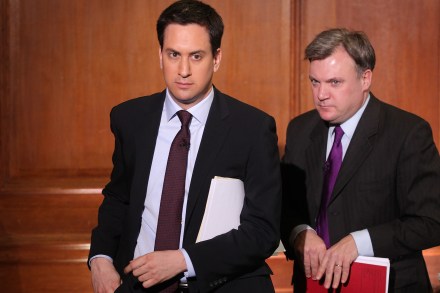
Cameron made history today. He gave the Speaker a genuine reason to call PMQs to a halt. Usually Mr Bercow pops up two or three times to shout down shouters and to waste time by ordering time-wasters not to waste time. But today protocol obliged him to stop proceedings. A half-hearted punch-up was in progress over government u-turns and the PM was defending his reforms by referring to his favourite Labour ally, the shadow health secretary. If he quotes John Healey much more often Cameron will owe him royalties. Ed Miliband accused the government of lengthening waiting times by abolishing Labour’s targets and Cameron countered by claiming that the figures were misrepresented regularly. "The opposition leader misled the house two weeks ago," said Cameron.

Policing the local and the national

From our UK edition

Today’s announcement on a proposed new National Crime Agency (NCA) is a key element in the government’s ambitious police reform agenda.  Recent political attention has focused on changes to police pay and conditions and budget reductions, but the structural reforms that Theresa May and Nick Herbert are pursuing matter more in the long-term.  And before it is dismissed as another attempt to create a “British FBI”, the background and rationale for the NCA is worth exploring. The NCA is much more than a rebranding of the Serious Organised Crime Agency (SOCA) – the troubled organisation set up by Charles Clarke.

Cameron’s easy ride

From our UK edition

Having u-turned on two more policies in the last two days, one would have expected David Cameron to have a hard time today at PMQs. But he didn’t. Ed Miliband never got going, turning in one of his worst PMQs’ performances. Cameron pithily summed up Miliband’s performance when he joked that ‘the best thing that can be said about his performance is he wasn’t thinking about politics on his honeymoon.’ Miliband’s performance today will add to the low-level grumbling about him among some Labour MPs and members of the shadow Cabinet. Miliband has a big speech coming up on Monday and he needs it to deliver a rationale for his leadership, to give it a purpose.

Retreating from Kabul

From our UK edition

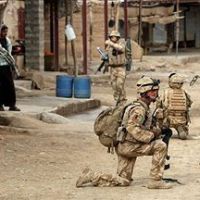
Britain’s former envoy to Kabul, Sherard Cowper-Coles, has written an op-ed about NATO’s coming withdrawal from Afghanistan in this morning’s Times (£). The unspoken analysis is that: having failed to defeat the Taliban unconditionally in battle, it will be hard to secure peace and stability. Like Matt Cavanagh, who wrote an extensive report on the situation in Afghanistan for Coffee House last week, Cowper-Coles says that NATO is split between ‘shooters’, who perpetually ask for one more ‘big push’, and politicians, who are seeking negotiated settlement and military drawdown.

Paxman trips up Balls

From our UK edition

Ed Balls walked into two traps on Newsnight yesterday evening. First, he seemed stumped when Jeremy Paxman asked him if he was praying that George Osborne was right. Paxman’s ‘gotcha point’ was that if Osborne isn’t right the country is in deep trouble and Balls wouldn’t want that. But Balls’ more serious slip was to say, “My view, though, is that the central outcome isn’t that we see a resumption of growth.” This, as coalition sources have been pointing out today, allows them to present any growth as a vindication of their strategy. For all the talk about the NHS today, the economy still remains the central battleground in politics. So far, the economic data has not been decisive one way or the other.

Cameron on a charm defensive

From our UK edition

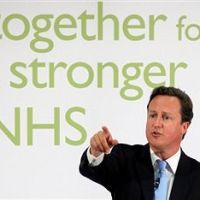
David Cameron is at his best when his back is to the wall. His speech on the NHS was largely as expected – a charm offensive designed to appease his warring coalition and reassure a fevered public. I’ll wager that he has succeeded; but reservations and pitfalls remain. Cameron recognises that competition is the stiking point for most Liberal Democrats, while the Tories insist on it. Competition will stay. He said, “New providers, more choice and competition raises standards and delivers value for money.” However, competition will not be unbridled. Cameron reassured doubters, “But let me clear, no: we will not be selling off the NHS, we will not be moving towards an insurance scheme.

Miliband offers with one hand and stabs with the other

From our UK edition

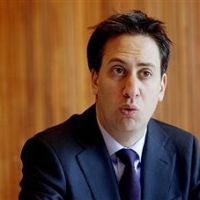
Ed Miliband delivered a speech at the Festival Hall this morning. A couple of strategic issues emerged from it. The first is that Labour has decided that the IMF is wrong: “This Government is going too far and fast, hitting families and making it harder to reduce the deficit.” This is not altogether surprising. Ed Balls’ recent article in the News of the World suggested that Labour will attack on the cost of living and youth unemployment, both of which may serve to slow the rate at which the deficit is reduced. As Fraser noted yesterday, Labour is aided by rising inflation, which is deepening the effect of cuts. However, Labour is still yet to admit to its role in the crisis or reveal how it would cut the deficit.

The need for a strong man to strong-arm the new counter-terror policy

From our UK edition

If the counter-terrorism strategy the government is announcing today is to succeed, it will have to overcome bureaucratic opposition and institutional inertia. As Dean Godson writes in The Times today (£), senior civil servants in the Office of Security and Counter-Terrorism are highly reluctant to accept the government’s new, more muscular approach to this issue and will go back to the old, failed way of doing things if given the chance. If the Prime Minister’s writ is going to run across government on this issue, he is going to need someone working from the centre with Cameron’s explicit backing whose sole role is to supervise the implementation of the policy — the Home Secretary has too much on her plate to expect her to do this task alone.

Preparing for a post-Gaddafi Libya

From our UK edition

The Libya intervention has been in operation for a few months and the rebels have been making gains, most recently in Yafran. But progress remains slow and perhaps it is time to look again at how the lessons of Bosnia, Iraq and Afghanistan might have a bearing on Libya. The first lesson is simple: assume the worst. If you think that a regime will collapse quickly, plan for it to last a long time. If you expect a peaceful transition, plan for a violent one. And if you hope that unarmed monitors will be enough once hostilities are over, prepare for a well-armed peacekeeping force to be deployed. Optimistic predictions of the post-Saddam Iraq encumbered the planning process and meant the US-led coalition was unprepared for the contingencies that arose.

Accentuate the differences

From our UK edition

This is an age of ideas, not of ideology. That is the thesis of Amol Rajan’s enthralling overview of the intellectual trends in contemporary British politics, published in today’s Independent. As part of the piece, Rajan has interviewed Maurice Glasman, who gives a far clearer account of 'Blue Labour' than he did during his recent comments to the Italian press. Communities must be organised to resist the caprices of capital and the dead-hand of the state. Resist is probably the wrong word because the aim appears to be, in Philip Blond’s celebrated phrase, the ‘recapitalisation of the poor’, which implies some form of empowerment. Rajan notes that Glasman holds a lot in common with Philip Blond’s Red Toryism and the Big Society.

The IMF delivers its verdict

From our UK edition

While Dominque Strauss-Kahn was in a New York court room, pleading not guilty to charges of sexual assault, his former IMF colleagues were delivering their verdict on the UK economy at the Treasury. The IMF are very polite guests and their report has provided some timely support for the coalition’s fiscal approach by declaring that there is currently no need for a Plan B. The Osborne operation has been quick to point out that even in various alternative scenarios the IMF set out in their report, they don’t call for more spending or smaller cuts. But there are things which the IMF says that won’t be music to Osborne’s ears.

Cameron’s health worries

From our UK edition

David Cameron has made the NHS his political mission. “I can do it (explain his priorities) in three letters: NHS,” he once said. It was a reassurance that the NHS was safe in his hands. His conviction doubled as a vital tactical stance to prove that the Tories were 'nasty' no more. So, the news that he is re-affirming his faith with an NHS pledge card is telling – a response to the fact that the public do not trust the Conservatives with the health service. It's back to square one. According to Benedict Brogan, the pledges simply reiterate that the Tories can be trusted with the NHS. There is no attempt to explain how reform will unfold, nor indeed whether it will unfold at all.

Counter-terrorism means stopping dealings with extremists

From our UK edition

The coalition’s counter-terrorism strategy will be published tomorrow. This rather delayed review has been the subject of some semi-public wrangling, Cameron and Clegg have given speeches setting out very different visions for it. But one thing to remember is that the test of the review's robustness isn’t just whether it stops government money going to extremists groups. It also has to lead to government, at all levels, stopping dealings with these groups, denying them the oxygen of recognition. Today’s Telegraph notes that 20 groups will lose their funding because the views they espouse are antithetical to British values. This is to be welcomed.

Osborne’s “flexibility” explained

From our UK edition

So what does George Osborne mean by "flexibility"? Do we hear the quiet sound of a gear change, prior to a u-turn? No, I'm told, it's Plan A all the way. And here are the details. The government's five-year departmental budgets (the so-called DEL limits) are set in stone. They won't change (in cash terms) until April 15, after which no figures have been set. If inflation continues to be high, then this will exacerbate the real effect of the cuts (Osborne has already seen trouble caused by with this as inflation has turned the tiny NHS budget increase into a tiny NHS budget decrease). The OBR reckons it may deepen them from 13 per cent to 19 per cent." What might change is the cost of debt and dole. This can't be budgeted for: you never know how many folk will claim.

Cable tries to keep everyone happy – apart from the unions

From our UK edition

When the GMB union invited Vince Cable to address their conference today, I doubt they wanted this: a warning that the government could legislate if the brothers decide to militate. The Business Secretary does add that "the case for changing strike law is not compelling," so long as industrial action remains limited. But, on the surface, this is still the firmest coalition attack on the unions since David Cameron and Boris wrote that angry article for the Sun in January. And it comes from the side of the coalition, the Lib Dems, who were thought to be opposed to taking on the unions in the first place. Perhaps Cable really is more ruthless on this than his reputation would suggest. The question, though, is of how the rhetoric will translate to reality.

Helping the kids be all right

From our UK edition

Tomorrow sees the publication of the report David Cameron commissioned on how to address the commercialisation and sexualisation of childhood. Thanks to a leak we already know most of what’s in the report. It proposes, among other things, that sexualized advertisement shouldn’t be displayed in places near where children go, that the watershed should be more strictly enforced, that lads mags shouldn’t be displayed at eye level and that it should be easier for parents to block access from home computers to certain internet sites. There’ll be those that dismiss these proposals as gimmicks or as too small to make a difference. But making the public square more family friendly is a noble purpose and something that it is appropriate for government to get involved in.