Uk politics

Labour’s blunt knives

From our UK edition

According to the Observer, and a slew of other papers, "senior Labour figures are believed to have put their leader on a timer to 'up his game' in the next few months if he is to avoid a full-blown leadership crisis later this year." Which reminded me of all this: 20 April, 2008 "The Prime Minister, who is battling a growing rebellion over his abolition of the 10p tax rate, has been given until the end of the summer to turn things round by backbenchers angry at a string of image and policy failures." (here) 24 May, 2008 "It is that Mr Brown be given until the end of July to prove himself and restore morale.

Labour is working towards a decade of Opposition

From our UK edition

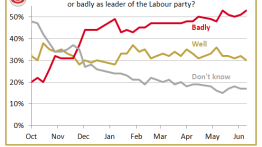
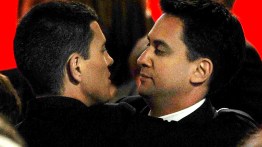
Is Ed Miliband finished? That's the implication of many of the papers today — and David is portrayed as waiting in the wings, ready to claim his rightful inheritance. Dream on. Ed Miliband’s leadership of the Labour Party is hardly in crisis. If there was an election today, he’d win a Labour majority of 34. Dull men can win surprising victories, as John Major demonstrated in 1992. The Times’ notion that he has until party conference to save his leadership is just as fanciful. Labour Party Conferences are neverscenes of grassroots rebellion. The Tories are the ones who lay on fights, and some just turn up to Tory conference for the political violence. Tories can (and do) get rid of leaders to liven up a wet weekend.

Burnham burns up

From our UK edition

Andy Burnham has caught up with Coffee House’s revelation earlier this week that the Treasury, the Department for Communities and Local Government and the Department of Education are going to have to review their position on academy funding because of a legal challenge.  Burnham is twittering, in typically hyperbolic terms, about the matter. But the reality of the situation is rather less dramatic. The coming changes will simply be a matter of preventing the taxpayer paying twice over for a service, once from the academy to the local authority (the new system) and once from the Department of Education to the local authority (the old system).

The Milidrama

From our UK edition

No paper has been more critical of Ed Miliband than The Times. So it is in some ways not a surprise that the paper’s leader column today declares that he has until Labour conference to save his leadership. But this ultimatum stokes the sense of drama created by the combination of the Balls’ leaks and the publication of the speech that David Miliband would have given if he had won the leadership. Expect to hear David Cameron quoting from both these sets of documents at PMQs regularly over the next few weeks. The challenge now for Ed Miliband is to make lemonade out of these lemons.

Your three-point guide to today’s Ed Balls files

From our UK edition

Less soap opera, and more policy grit, in today's batch of Ed Balls files. There is, for instance, a lot on Gordon Brown's proposed Bill of Rights (here, here, here and here), which is as ambrosia for future political historians, but is fairly turgid reading even for today's political anoraks. Likewise the charts and doodlings related to the structure of Brown's Downing Street. Yet some things do stand out. Here are a few of them: i) What the Treasury says, Brown didn't do. You've got to admire the Treasury's attempt to inject some realism into the fiscal calculus back in 2006. "Flat real" spending — i.e. public spending that rises only in line with inflation, and not more — will be the "rule rather the exception" in the years to come, they say.

What David Miliband would have said if he had become Labour leader

From our UK edition

Tonight’s Guardian scoop revealing that the speech that David Miliband would have given if he had been elected leader makes this one of the most difficult—and leaky—weeks for Labour since its election defeat. The line in the speech that will cause the most trouble for Ed Miliband is that David Miliband intended to create a commission on the deficit chaired by Alistair Darling and charged with creating a new set of fiscal rules, an admission that Labour got it wrong on the deficit which Ed Miliband has refused to give.

From the archives: New Labour’s civil war

From our UK edition

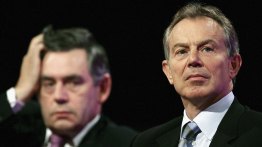
The Telegraph's publication of all those documents today has got everyone talking about that feud again. Here is what The Spectator's former editor Matthew d'Ancona had to say about the Blair-Brown wars when things were hotting up in the autumn of 2006: The great New Labour civil war, Matthew d'Ancona, 6 September 2006 Two days before David Cameron was elected Conservative leader, I asked one of his closest allies what the founding principle of Cameronism would be. He pondered the question. Would it, I wondered, be something to do with quality of life, the public services, the environment, social justice, nationhood? ‘Our starting point,’ he finally replied, ‘is that the Tory party can never beat Tony Blair.

The welfare revolution will require much time and effort

From our UK edition

Forget Balls, today brings one of the most significant moments in the life of the coalition so far: the launch of its Work Programme. The name may be commonplace but, as Fraser suggested earlier, the policy is revolutionary. Over the next year, around one million unemployed people will be enrolled on work schemes run by private companies and charities. Those companies will then be paid between £4,000 and £13,700 for every person they return to proper, long-term work. It is, evidence suggests, an effective and cost-effective way of getting benefit claimants back into the labour market — and it reaches those claimants that the state-run JobCentres can scarcely be bothered to reach.

How the coalition hopes to fix Britain’s economic dysfunction

From our UK edition

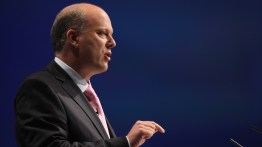
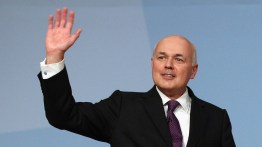
The largest welfare-to-work programme on the planet is launched today by Chris Grayling and Iain Duncan Smith. It’s not much of an exaggeration to say that the future of this country — and, perhaps, David Cameron – depends on its success. The lead article of this week’s Spectator looks at it, and we used various metrics — some of which puzzled David Smith of the Sunday Times. He understandably challenged our claim that 81 per cent of the new jobs created are accounted for by immigration. We had a Twitter "conversation" about it earlier this morning, but some things you can’t explain in 140 characters. So here is my argument: complete with data, sources and assumptions.

More to come?

From our UK edition

I understand another story concerning improperly obtained documents may break shortly concerning Ed Balls, his spads, a civil servant and a journalist at the FT. Whitehall is in a febrile mood.

Balls in the limelight

From our UK edition

The most important political consequence of the leak of the Project Volvo documents is that it reminds everyone in the Labour party of what a divisive figure Ed Balls is. Ever since the leadership contest, where his reputation as a plotter crippled his candidacy, Balls has been trying to soften his image. He has sought to present himself as a more collegiate figure. But this leak is a reminder of how Balls used to operate and why some people in the Labour party will do everything they can to prevent him from becoming leader. We now wait to see what emerges about how these documents made their way into the public domain and whether retaliation follows. For the other Ed the challenge is to find a way to move Labour beyond the factionalism of the past.

Your five-point guide to the Ed Balls files

From our UK edition

Intrigue, hilarious intrigue this morning, as the Telegraph releases a bunch of documents that clarify just how far the Brownites went to oust Tony Blair. They are, it is said, from the personal files of Ed Balls, and they are copious in both quantity and variety. From straightforward poll results to 31-page reports on how Brown is a Volvo not a BMW, this is a real insight into the numerous pathologies of party and government. Here's my five-point overview: i) The leadership coup in waiting. It starts only two months after the 2005 general election, and Balls' own ascent to Parliament, with a memo setting out the structure of Brown's leadership campaign team. And it soon crescendos.

Thieves of Westminster becoming more brazen

From our UK edition

Yesterday, Keith Vaz received a response to a written question he filed to John Thurso regarding thefts on the parliamentary estate. Having lost an iPad and a laptop from his office, Vaz was keen to see if petty crime is a problem on the estate. Thurso’s response appears to confirm that it is. The catalogue of listed crimes highlights wide ranging theft in Westminster over the past few years. There have been 106 reported incidents in the past six years alone, with a definite upward spike in the past year. A record 40 incidents have been reported so far in 2011, increasing rapidly as the year has gone by. Laptops were the most popular item to be stolen – with 31 reported as stolen, 25 in 2011 alone.

Blair is still a believer

From our UK edition

To an extent, British politics is still determined by whether or not you agree with Tony Blair. For more than a year, the coalition and the opposition have been debating whether to continue Blair’s public service reforms; this is a testament to his failure as Prime Minister as much as it to his success. Today, has given an interview to the Times (£), coinciding with the release of his memoirs in paperback. He uses it to question the Labour party’s current journey back into “nostalgia”. He says: “The attraction of a concept like Blue Labour is it allows you to say that there’s a group of voters out there we can’t reach at the moment, so what we should do is really empathise with their plight.

Sanctioning Gaddafi

From our UK edition

Yesterday, Foreign Office minister Alistair Burt went to Chatham House to explain the UK's Libya policy. It was a mildly painful experience. A particular gem: "Where we will end up nobody quite knows." Well-spoken Lindsey Hilsum easily skewered UK policy, talking of the "indecent haste" of the ICC investigation and raising the ICC's proposal to focus on a political deal. Sir Richard Dalton, an ex-mandarin, remarked that the "tone of optimism of the minister needs to be questioned further." Burt got a lot better during the Q&A, but the event did not make for a particularly compelling argument for what the UK is doing, which is a shame, not least because Alistair Burt can do better. More so as Libya policy may be in better shape now than it has been for weeks.

The turbulent priest

From our UK edition

“Nowadays politicians want to talk about moral issues, and bishops want to talk politics,” said Sir Humphrey. This week’s New Statesman has been guest edited by the Archbishop of Canterbury. In his lead editorial, Dr Rowan Williams has launched a brutally eloquent assault on the coalition for embarking on a programme of radical reform for which, he claims, there is no mandate. With particular reference to the health and education reforms, Williams says: “With remarkable speed, we are being committed to radical, long-term policies for which no one voted. At the very least, there is an understandable anxiety about what democracy means in such a context.

A missed opportunity to strengthen the Big Society in rural areas

From our UK edition

David Cameron came into power promising to deliver the greenest government ever and this week the government published its Natural Environment White Paper. In his article on this site, Richard Benyon – Defra Minister and long-time supporter of rural affairs – explains where he believes this White Paper will make a difference. From provisions to increase outside learning for school children, to recognising the hard work that rural businesses are already doing; there is much to be commended.    ‘The Natural Choice’ promises to repair the damage that has been done to the environment in the recent past and encourage greater involvement in helping nature prosper – the ‘Big Society’ in action.