Uk politics

Labour’s striking attack

From our UK edition

Quite some claim from Ed Balls, writing in the Sunday Mirror today. "Let's be clear what George Osborne's game is," he blusters, "he's trying to pick a fight about pensions, provoke strikes and persuade the public to blame the stalling economy on the unions." And it is a charge that Andy Burnham repeated on Dermot Murnaghan's Sky show earlier. I was on live-tweeting duty, and lost count of how many times the shadow education secretary used phrases such as "provocation," "confrontation," "playing politics," and "back to the 1980s." This, clearly, is an attack that Labour are determined to push as relentlessly as possible. George Osborne is politicking, they are saying, at the nation's expense. It is, at the very least, an intriguing gambit on Labour's part.

Cameron takes on bad dads

From our UK edition

It’s Fathers’ Day today — and David Cameron is marking it with an extraordinary attack on those dads who are AWOL. It comes in one paragaph of an otherwise excellent and moving piece for the Sunday Telegraph (albeit one that downplays the role of the taxman), in which he says that men leaving their family is "beyond the pale"; that such fathers should feel the "full force" of society; and goes as far as comparing them to drunk drivers. This is a brave move — in the Sir Humphry sense of the word — for three reasons. 1. Britain has more absent fathers than any country in the EU. That’s numerically: as a proportion, only in Estonia do single mothers compose a larger chunk of the electorate. Perhaps Cameron is appealing to single mothers here.

Why enshrining the military covenant in law might not be such a good idea

From our UK edition

Charles Moore’s column in the Telegraph today makes a very good case against enshrining the military covenant in law. As Charles argues, once the lawyers and the judges get their hands on it there could be a whole slew of unintended consequences. Judges could decide, for instance, that the court martial system does not offer soldiers ‘fair treatment’. Indeed, it is worth noting that the Major General, now retired, who drafted the covenant does not believe that it should be made law for precisely this reason. There’s no doubt that under the last government were expected to fight wars on peace time budgets and that spending on the military overall was too low. But putting the covenant into law is not the right solution to that problem.

Cameron vs Kirchner

From our UK edition

After stating the obvious at PMQs this week — that the Falklands would remain sovereign British territory as long as they want to be — David Cameron has come under heavy fire from the Argentine President, Cristina Kirchner. As today's papers report, she yesterday described our PM as "arrogant," and said his comments were an "expression of mediocrity and almost of stupidity". But there is nothing new in the British position, which has always been that there can be no negotiations over sovereignty unless and until such a time as the Falkland Islanders so wish.

Osborne throws his weight behind education reform

From our UK edition

Pete rightly points to Michael Gove’s interview in The Times this morning as the story of the day.  Some producer interests are objecting to Gove dismissing the exam system as ‘discredited’ and his plans to return A-Levels to being a proper preparation for undergraduate study. But there’ll be no backing down. A Gove spokesman tells me that ‘'The system is discredited and it needs fixing. The public know it and support change. If some don't like hearing that, tough. They'll find it much more unpleasant in ten years if we don't fix the system and they're working for Chinese billionaires who did maths at Harvard.' But, perhaps, the most important development on education reform this week was George Osborne throwing his weight behind it.

Gove keeps on going

From our UK edition

My gosh, Michael Gove is hyperactive at the moment. From his interview with James in the latest issue of the Spectator, to his recent announcements about failing primary schools and secondary school standards, this is a man who just cannot stop. So stop he doesn't. The Secretary of State for education is delivering yet another speech on Monday. And he has another interview (£), with Rachel Sylvester and Alice Thomson, in today's Times. The Times interview, if you can vault across the paywall, is a worthwhile read.

From the archives: Ed Miliband, before the leadership

From our UK edition

It has been a turbulent, ol' week for Ed Miliband — all the way from those Ed Balls files, through his most substantial speech so far, to that bruising Twitter appearance. By way of putting a full-stop to it all, here's an interview that our deputy editor, Mary Wakefield, conducted with him in 2007. This is MiliMinor, aged 37, and relatively carefree:  The charm of Ed Miliband, Mary Wakefield, The Spectator, 2 June 2007 Sitting opposite Ed Miliband MP in a large and airy office, the sort of office that befits the Minister for the Third Sector, I suddenly have the surreal impression that I’m at the doctor’s. It’s the medicinal green of the carpet but, more than that, it’s Ed’s demeanour.

Don’t dismiss Davies out of hand

From our UK edition

Touchpaper, meet match. That's the explosive situation engendered by Tory MP Philip Davies and his comments about disabled people this afternoon. His suggestion, made in the Commons, was that disabled people could work for less than the national minimum wage. And his justification? That the minimum wage "prevents those people from being given the opportunity to get to the first rung on the employment ladder." Charities such as Mind have since lambasted Davies for even broaching such a thing. The phrase "nasty party" is gushing around Twitter with tidal abandon. But before we pile on, it's worth noting that Davies has identified an issue that is more shades of grey than black-and-white.

How the Tories could capitalise on the eurozone’s woes

From our UK edition

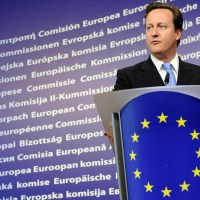
With events in Greece moving at pace, next week’s European Council meeting (which was scheduled to be a low-key affair) could be the place where attempts to resolve the crisis in the eurozone take place. I’m told that Number 10 has now woken up to this possibility and is doing some preparatory work on the matter.   But, frustratingly, there’s still no strategy for how David Cameron could use this crisis to advance the British national interest. As I wrote last week, if the eurozone countries decide that a solution will require a treaty change, then Britain has a veto over that — and could use the negotiations to secure various things that Britain wants from the EU.

Danny’s maths

From our UK edition

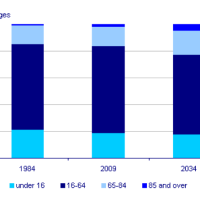
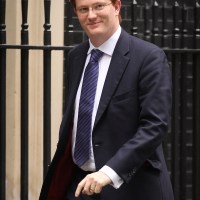
And so Danny Alexander has further angered unions by making it clear that "painful decisions" are needed to reform public-sector pensions, including raising the retirement age. But his proposals should no come as a surprise. Rapid demographic transitions caused by rising life expectancy and declining fertility mean that the proportion of old to young is growing rapidly. But when the Lib Dem minister says that "people are living much longer now," he is in fact underplaying how dramatic the change has been in the last decade. According to the Office of National Statistics, the proportion of people in Britain aged 65-and-over increased from 15 per cent in 1984 to 16 per cent in 2009, an increase of 1.7 million people.

Greece on the precipice

From our UK edition

Europe is a doom-monger's paradise at the moment. Riots in Greece; summary Cabinet reshuffles; meetings between Merkel and Sarkozy to save the single currency — and there's still the potential for things to get worse, much worse. If the Greek government defaults on its debts, then there's no knowing where the contagion will spread, only that it it will spread wide: from Spain and Portugal to markets across the world. Share indices have already been trembling at the prospect, although many of them rallied slightly today. One consolation, however scant, is that all this crystallises just what can happen to governments who operate beyond their means.

Alexander’s not for turning

From our UK edition

After the vacillations of recent days, the government could do with a show of hardheadedness — and Danny Alexander is delivering just that today. He is announcing the government's plans for public sector pension reform later, and they're exactly the sort of plans that will set the union bosses frothing: an increase in the public sector retirement age to 66, an increase in contributions, that sort of thing. But the Chief Secretary to the Treasury is unapolgetic. In an article for the Telegraph, he effectively says that this is a take-it-or-leave-it offer for the public sector. "It may be that those who oppose change think they can force the Government to change its mind," he writes, with his pen pointed accusingly at the unions planning strikes for next month.

Balls’ bloodlust gets the better of him

From our UK edition

Ed Balls’ problem is his killer instinct. If he were a Twilight vampire, he’d be a Tracker: someone whose uncontrollable bloodlust takes him to places he should avoid. His position on the deficit is so extreme — more debt, more spending — that he’s pretty much isolated now. People are mocking him. John Lipsky, the acting IMF chief came two weeks ago and rubbished Balls’ alternative (as Tony Blair did) — so Balls, ever the fighter, has today given a long speech where he sinks his fangs into Lipsky and says (in effect) "I’ll take on the lot of you!" But Balls is brilliant. Often George Osborne seems not to bother arguing, and instead seeking approval from an alphabet soup of external agencies ("I must be right, the ABCD says so!

General outspokenness 

From our UK edition

Recent wars have given rise to an unusual phenomenon in British civil-military relations: frequent, and often high-profile interventions, by serving or recently retired senior military officers in public debates. The latest has been the intervention of Britain's chief naval officer, Admiral Sir Mark Stanhope, who questioned the Navy’s ability to sustain the Libya campaign. Different prime ministers have dealt with this kind of outspokenness in different ways. Tony Blair was too weak to rein in Army chief Sir General Richard Dannatt, while Gordon Brown did not have the credibility, vis-à-vis the military, to do so either. David Cameron is different. He is at the height of his powers and determined that he, not the military leadership, should exercise command.

Gove goes forwards, while other reforms stall

From our UK edition

The good, the bad and the ugly of the coalition’s reform agenda are all on display this morning. The good is the quickening of the pace in education. As Michael Gove tells this week’s Spectator, the 200 worst primary schools will now be taken over by new management, 88 failing secondary schools are to be converted into academies and any school where half the pupils are not reaching the basic standard of five good GCSEs including English and Maths will be earmarked for a takeover. Gove’s aim is remarkably simple: he wants good schools to take over bad ones.   The bad is yet another delay to the public service reform white paper, the longer things stay in the Whitehall system the less radical they become.

Milburn withdraws the Blairite seal of approval

From our UK edition

Alan Milburn's article for the Telegraph this morning is a rhetorical blitzkreig against the coalition and their NHS reforms. From its opening shot that "The Government health reforms are the biggest car crash in NHS history," to its closing call for Labour to "restake its claim to be the party of progressive, radical reform," it is searing stuff. And no-one is spared, least of all Andrew Lansley and his "foolish bout of policy-wonking". Such fierce language is unusual, even by the standards of cross-party rough 'n' tumble. What makes it extraordinary is that Milburn is employed by the government to work on their social mobility agenda. The coalition's last report on the matter even expanded and prolonged his role.

Osborne to sell off the Rock

From our UK edition

George Osborne will use his Mansion House speech tonight to, in the words of one source, "fire the starting gun" on the sale of Northern Rock.   Robert Peston, who had the story first, reports that "The chancellor hopes that the sale of Northern Rock will send a powerful signal that the banking industry is on a path back to more normal conditions, following the crisis of three years ago."   In an attempt to maximise return for the taxpayer, the whole of the "good bank" part of Northern Rock will be sold off to a single bidder. This means that the whole issue of discounted bank shares, which splits Osborne and Cable, with the Chancellor in favour, doesn’t arise.

Ed Miliband volunteers for a kicking, gets kicked

From our UK edition

"First he denies his own policy, then he tries insults." So said Ed Miliband of David Cameron's performance in PMQs today. But I wonder what he'd say of the hundreds of Twitter users who went straight for the insults in a special Q&A with the Labour leader earlier. Urged on by Guido, plenty deployed the #AskEdM hash-tag to be rather unkind to MiliMinor. Here's a selection of some of the crueller, funnier and less comradely tweets: @MTPT: If a train leaves Paddington at 1136, carrying 200 commuters, what time will the RMT bring it to a standstill? @FelicityParkes: Where did Ed Balls touch you? Show us on the doll. @MShapland: hows your brother @Charlesm186: how many knives did you put in Tony Blair's back? @alexmassie: Was Brutus an honourable man? Discuss.

Why the battle of the bins matters

From our UK edition

The government is, rightly, receiving a monstering from the papers for its u-turns on weekly bin collections. But what is at stake here is more than just the issue of bins. The government’s failure to honour its promise on this matter casts doubt on whether ministers are strong enough and tough enough to impose their will on their departments. The two ministries dealing with the rubbish question are the Department of Environment, Food and Rural Affairs and the Department of Communities and Local Government. Both are run by Conservative Secretaries of State. If this was not enough, both the Secretaries of State involved — Caroline Spelman and Eric Pickles — are personally associated with the Tory policy on bins.