Uk politics

Inflation hits work incentives

From our UK edition

New inflation stats are out tomorrow and they’re expected to show further rises in CPI and RPI.  Aside from their brief peak in 2008, headline rates of inflation are now at their highest levels for 19 years.  That’s prompting more discussion about the way rising prices are playing out for Britain’s households, from a nice graphic in today’s Times (£) to a new report due out tomorrow from the IFS.  But one implication of today’s higher inflation environment is receiving less attention – the impact of rising prices on work incentives. Inflation and work incentives aren’t often mentioned in the same breath.
Miliband borrows from the Cameroons for his most substantial speech so far

From our UK edition

Thematically speaking, there wasn't too much in Ed Miliband's speech that we haven't heard before. The middle is still squeezed, the Tories are still undermining the "Promise of Britain", the bankers are still taking us for fools, and communities still need to be rebuilt. Even his remarks about benefit dependency bear comparion to those he made in February. But there was a difference here, and that was his punchiness. The Labour leader may not be the most freewheelin' orator in town, but the text he delivered was less wonky than usual, more coherent and spikier. It was even — in parts — memorable. You do wonder whether Miliband has learnt from the Cameroons. Much will be made of how his speech relied on the Blue Labour stylings of Maurice Glasman.

Osborne’s valuable weapon

From our UK edition

Paul Waugh is tweeting that Number 10 is stressing that, pace this morning’s front pages and Lord Freud’s comments yesterday, the benefit cap remains. This is not surprising: the benefit cap was always a statement of values more than anything else. As George Osborne said at Tory conference, it was designed to ensure that, “No family on out of work benefits will get more than the average family gets by going out to work.” The cap was designed to say something both about the Tories’ values and those of its opponents. If Labour opposed it, they would put themselves on the wrong side of the whole welfare/fairness debate. It is a classic wedge issue.

The day of the Lib Dem’s greatest ever triumph

From our UK edition

Or so they will try to claim. For today is the day when Steve Field, the GP doing the listening part of the NHS listening exercise, will release his report into the government's reforms. Judging from the convulsions of the grapvine, his recommendations will go something like this: more involvement for nurses and local officials, less private sector involvement and competitiveness, and a more relaxed timescale for introducing the changes. Although there are questions of degree hidden in that checklist, it is enough to have the Lib Dems heralding their "victory" for now. Paddy Ashdown was tapdancing across the airwaves yesterday, saying that Nick Clegg had "played a blinder". "Am I celebrating today?" he added, "Yes, I am, and I think the Liberal Democrats will be as well.

David Miliband should join the shadow Cabinet or quit British politics

From our UK edition

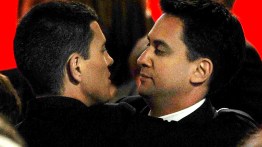
David Miliband’s statement today declares that he ‘wants no part’ of the ‘soap opera’ of leadership drama. But as long as David Miliband remains outside the shadow Cabinet and, therefore by definition, not doing everything he can to support his brother it will be easy for people to say that he is just waiting for Ed to fail. If David Miliband does not wish to be a focus for discontent with his brother but cannot bring himself to join the shadow Cabinet, then he should resign his seat. Only by leaving the Commons will he persuade some of his supporters that he is not the man who can — and will — take over if his brother is deposed. Personally, I do not think David would be doing any better than his brother.

A poll to compound Miliband’s woes

From our UK edition

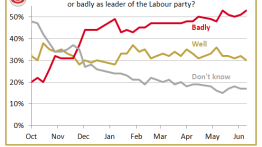
A YouGov poll for this morning's Sunday Times provides proof of mounting disgruntlement with the Labour leader. And not just among the public as a whole, but also among Labour supporters. Asked whether Ed Miliband is doing well or badly as leader, just 30 per cent say "well" (including a tiny 3 per cent who say "very well"), while 53 per cent say "badly" (including 21 percent "very badly"). The bad news for Ed is that the "well" figure has barely moved since just after he was elected, when almost half said they didn't know how well he was doing. Now an extra 31 per cent have formed an opinion of him, but without any net increase in the number thinking he's doing any good.

Labour’s blunt knives

From our UK edition

According to the Observer, and a slew of other papers, "senior Labour figures are believed to have put their leader on a timer to 'up his game' in the next few months if he is to avoid a full-blown leadership crisis later this year." Which reminded me of all this: 20 April, 2008 "The Prime Minister, who is battling a growing rebellion over his abolition of the 10p tax rate, has been given until the end of the summer to turn things round by backbenchers angry at a string of image and policy failures." (here) 24 May, 2008 "It is that Mr Brown be given until the end of July to prove himself and restore morale.

Labour is working towards a decade of Opposition

From our UK edition

Is Ed Miliband finished? That's the implication of many of the papers today — and David is portrayed as waiting in the wings, ready to claim his rightful inheritance. Dream on. Ed Miliband’s leadership of the Labour Party is hardly in crisis. If there was an election today, he’d win a Labour majority of 34. Dull men can win surprising victories, as John Major demonstrated in 1992. The Times’ notion that he has until party conference to save his leadership is just as fanciful. Labour Party Conferences are neverscenes of grassroots rebellion. The Tories are the ones who lay on fights, and some just turn up to Tory conference for the political violence. Tories can (and do) get rid of leaders to liven up a wet weekend.

Burnham burns up

From our UK edition

Andy Burnham has caught up with Coffee House’s revelation earlier this week that the Treasury, the Department for Communities and Local Government and the Department of Education are going to have to review their position on academy funding because of a legal challenge.  Burnham is twittering, in typically hyperbolic terms, about the matter. But the reality of the situation is rather less dramatic. The coming changes will simply be a matter of preventing the taxpayer paying twice over for a service, once from the academy to the local authority (the new system) and once from the Department of Education to the local authority (the old system).

The Milidrama

From our UK edition

No paper has been more critical of Ed Miliband than The Times. So it is in some ways not a surprise that the paper’s leader column today declares that he has until Labour conference to save his leadership. But this ultimatum stokes the sense of drama created by the combination of the Balls’ leaks and the publication of the speech that David Miliband would have given if he had won the leadership. Expect to hear David Cameron quoting from both these sets of documents at PMQs regularly over the next few weeks. The challenge now for Ed Miliband is to make lemonade out of these lemons.

Your three-point guide to today’s Ed Balls files

From our UK edition

Less soap opera, and more policy grit, in today's batch of Ed Balls files. There is, for instance, a lot on Gordon Brown's proposed Bill of Rights (here, here, here and here), which is as ambrosia for future political historians, but is fairly turgid reading even for today's political anoraks. Likewise the charts and doodlings related to the structure of Brown's Downing Street. Yet some things do stand out. Here are a few of them: i) What the Treasury says, Brown didn't do. You've got to admire the Treasury's attempt to inject some realism into the fiscal calculus back in 2006. "Flat real" spending — i.e. public spending that rises only in line with inflation, and not more — will be the "rule rather the exception" in the years to come, they say.

What David Miliband would have said if he had become Labour leader

From our UK edition

Tonight’s Guardian scoop revealing that the speech that David Miliband would have given if he had been elected leader makes this one of the most difficult—and leaky—weeks for Labour since its election defeat. The line in the speech that will cause the most trouble for Ed Miliband is that David Miliband intended to create a commission on the deficit chaired by Alistair Darling and charged with creating a new set of fiscal rules, an admission that Labour got it wrong on the deficit which Ed Miliband has refused to give.

From the archives: New Labour’s civil war

From our UK edition

The Telegraph's publication of all those documents today has got everyone talking about that feud again. Here is what The Spectator's former editor Matthew d'Ancona had to say about the Blair-Brown wars when things were hotting up in the autumn of 2006: The great New Labour civil war, Matthew d'Ancona, 6 September 2006 Two days before David Cameron was elected Conservative leader, I asked one of his closest allies what the founding principle of Cameronism would be. He pondered the question. Would it, I wondered, be something to do with quality of life, the public services, the environment, social justice, nationhood? ‘Our starting point,’ he finally replied, ‘is that the Tory party can never beat Tony Blair.

The welfare revolution will require much time and effort

From our UK edition

Forget Balls, today brings one of the most significant moments in the life of the coalition so far: the launch of its Work Programme. The name may be commonplace but, as Fraser suggested earlier, the policy is revolutionary. Over the next year, around one million unemployed people will be enrolled on work schemes run by private companies and charities. Those companies will then be paid between £4,000 and £13,700 for every person they return to proper, long-term work. It is, evidence suggests, an effective and cost-effective way of getting benefit claimants back into the labour market — and it reaches those claimants that the state-run JobCentres can scarcely be bothered to reach.

How the coalition hopes to fix Britain’s economic dysfunction

From our UK edition

The largest welfare-to-work programme on the planet is launched today by Chris Grayling and Iain Duncan Smith. It’s not much of an exaggeration to say that the future of this country — and, perhaps, David Cameron – depends on its success. The lead article of this week’s Spectator looks at it, and we used various metrics — some of which puzzled David Smith of the Sunday Times. He understandably challenged our claim that 81 per cent of the new jobs created are accounted for by immigration. We had a Twitter "conversation" about it earlier this morning, but some things you can’t explain in 140 characters. So here is my argument: complete with data, sources and assumptions.

More to come?

From our UK edition

I understand another story concerning improperly obtained documents may break shortly concerning Ed Balls, his spads, a civil servant and a journalist at the FT. Whitehall is in a febrile mood.

Balls in the limelight

From our UK edition

The most important political consequence of the leak of the Project Volvo documents is that it reminds everyone in the Labour party of what a divisive figure Ed Balls is. Ever since the leadership contest, where his reputation as a plotter crippled his candidacy, Balls has been trying to soften his image. He has sought to present himself as a more collegiate figure. But this leak is a reminder of how Balls used to operate and why some people in the Labour party will do everything they can to prevent him from becoming leader. We now wait to see what emerges about how these documents made their way into the public domain and whether retaliation follows. For the other Ed the challenge is to find a way to move Labour beyond the factionalism of the past.