Uk politics

Ed’s not dead

From our UK edition

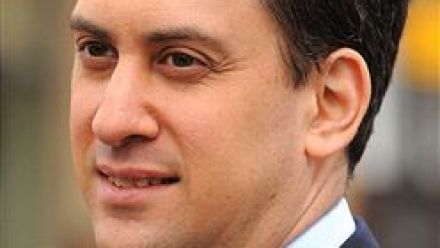
Crafty old Ed. After a week on death row, he was expected to arrive at PMQs and do the decent thing. Drink down a foaming cup of hemlock and depart the political stage for good. But Ed is made of sterner stuff than many of us realised. He was cunning, passionate and articulate today and his performance will have steadied the nerves of his anxious troops. It all began oddly. As soon as Miliband stood up he was greeted by a slightly over-done chorus of cheers from his backbenchers. This absurdity prompted a burst of satirical catcalling from the Tories. They knew this would be fun. Cameron would run rings around Dead Ed. Miliband’s team of researchers have earned their dough this week.

Miliband and the past

From our UK edition

Labour's simmering resentments and self-doubts have been boiling over recently — and today is no different. Compare and contrast The Sun's interview with Tony Blair with Andrew Grice's article on Ed Balls in the Independent. For Blair, Labour ought to be claiming more credit for their preparatory role in some of the coalition's reforms, such as the Academies programme. For Balls, they ought instead to be dodging blame for the state of the public finances. As Grice reports, "Ed Balls has rejected demands from allies of Ed Miliband that he admit Labour spent too much when they were in power." From the rest of the piece, the shadow chancellor's position sounds rather like that of John Wayne's Captain Nathan Brittles: "Never apologise.

PMQs live blog | 15 June 2011

From our UK edition

VERDICT: The specifics of today's exchange between David Cameron and Ed Miliband may have everyone rushing for this Macmillan press release, but the rhetorical positions were clear enough. There was the Labour leader, angrier and more indignant than usual, painting the government's welfare reforms as cruel and insufficiently thought-through. And there was the PM, painting his opponent as yet another roadblock to reform. Neither really triumphed, although their battle will most likely set a template for in future. The coalition has extensive public backing for its changes to the welfare system. So, Miliband's challenge is to attack certain aspects of them, without making Labour appear to be — as he put it on Monday — "the party of those ripping off our society".

Bring on the strikes

From our UK edition

An old boss of mine once said to me: when you start a new assignment, seek out a fight — and win it. The same advice should be given to incoming Prime Ministers. U-turns, as Mrs Thatcher knew, just create demand for more U-turns. If the government is willing to revise its NHS plans, then why not reopen the Defence Review, or alter the pledge to spend 0.7 of our national income on overseas aid (or at least abandon the questionable idea of legislating for it)? But seeking out and winning battles, while avoiding too many retreats, is not enough. To be great, a Prime Minister needs good enemies. Mrs Thatcher had great enemies in Michael Foot and Neil Kinnock. Tony Blair did too.

Osborne comes to a decision on the banks — but the story doesn’t end there

From our UK edition

In his speech to Mansion House last year, George Osborne asked a question of his frosted and cumberbunded audience: "Should we restrict or split the activities of banks?" In his speech tonight, he looks set to deliver an answer of his own. As Robert Peston reports, the Chancellor is to announce that the investment and retail arms of banks will be ringfenced off from each other, so that the dice rolls of the Masters of the Universe cannot tumble across everyday savers' cash. This does not mean a complete, Glass-Steagall-style separation between the two halves.

More than a soap opera

From our UK edition

David Miliband is considering a return to frontline British politics. At least that is what Andrew Grice has heard. He reports: ‘David Miliband is considering a surprise comeback to frontline politics in an attempt to end speculation about a continuing rift with his brother Ed. Friends of the former Foreign Secretary said yesterday that his joining the Shadow Cabinet was a "live issue" in his circle of political allies. "There is a debate going on. Some people are arguing that it would be better to be a team player than look as though he is sulking on the sidelines," said one source.’ Better for whom, I wonder?

Inflation: cock-up, not conspiracy

From our UK edition

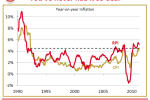
Britain has the worst inflation in Western Europe; this is today's story. CPI is 4.5 per cent and RPI is 5.2 per cent. This masks even worse rises which, as the IFS says today, hit the poor hardest. The price of a cauliflower is up 38 per cent to £1.26, potatoes are up 13 per cent to £1.54 a kilo. For millions, these are the most important metrics. Historically, it's pretty bad. You'd think a Bank of England legally mandated to keep CPI inflation at 2 per cent would be horrified at this, and start vowing to tame the cost of living. After all, this isn't just a statistic: it means everyone's savings and salary is worth 4.5 per cent less than it was a year ago. Inflation is, as Reagan said, as deadly as a hit man and as violent as a mugger.

Night of the generals

From our UK edition

Last night, Admiral Sir Mark Stanhope, the First Sea Lord, said that the aircraft carrier and the jump-jets that were scrapped in last year's strategic defence review would have made the mission in Libya more effective, faster and cheaper. His comments follow Robert Gates' assertion that Britain and France were struggling to lead the Libyan operation without substantial American support. It follows, in the mind of Stanhope at least, that defence cuts are impeding Britain's military capability. This morning, Rear Admiral Parry (rtd) supported Stanhope.

Those three little letters

From our UK edition

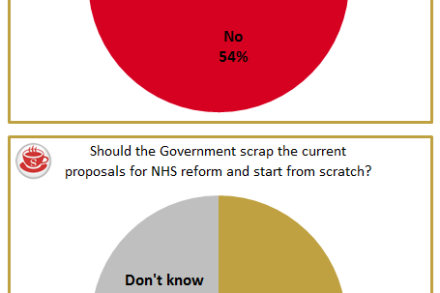
The NHS saga is over at last, or so the government hopes. The coalition is expected to adopt the recommendations of the NHS Future Forum, which have been delineated by panel member Stephen Bubb in this morning’s Times (£). Last night, the prime minister and his deputy addressed their respective parliamentary brigades and each claimed the credit for re-shaping Andrew Lansley’s bill for partisan gain. The political saga continues. The Lib Dems have been crowing over their victory; the Tories are licking their wounds –a voluble Conservative MP has told Philip Johnston that a ‘once in a generation opportunity to reform the NHS has been lost.

Government split over enforcing the Digital Economy Act

From our UK edition

The Digital Economy Act (DEA) is to be 'rebooted' before the summer recess, so that it can be brought into force next January. Digital policy expert James Firth explains how the Act is being brought forward by placing it before the European Commission, a process that was overlooked when the Act was passed during the 'wash out' at the end of the last parliament. He also hints at a possible division on this issue within the Department for Culture, Media and Sport (DCMS), suggesting that this new approach is "being driven personally by Jeremy Hunt". So it seems. Some of those who were privy to discussions at the DCMS say that Ed Vaizey, the minister tasked with the digitalisation of Britain, insisted that government should not be regulating the Internet.

Miliband borrows from the Cameroons for his most substantial speech so far

From our UK edition

Thematically speaking, there wasn't too much in Ed Miliband's speech that we haven't heard before. The middle is still squeezed, the Tories are still undermining the "Promise of Britain", the bankers are still taking us for fools, and communities still need to be rebuilt. Even his remarks about benefit dependency bear comparion to those he made in February. But there was a difference here, and that was his punchiness. The Labour leader may not be the most freewheelin' orator in town, but the text he delivered was less wonky than usual, more coherent and spikier. It was even — in parts — memorable. You do wonder whether Miliband has learnt from the Cameroons. Much will be made of how his speech relied on the Blue Labour stylings of Maurice Glasman.

Osborne’s valuable weapon

From our UK edition

Paul Waugh is tweeting that Number 10 is stressing that, pace this morning’s front pages and Lord Freud’s comments yesterday, the benefit cap remains. This is not surprising: the benefit cap was always a statement of values more than anything else. As George Osborne said at Tory conference, it was designed to ensure that, “No family on out of work benefits will get more than the average family gets by going out to work.” The cap was designed to say something both about the Tories’ values and those of its opponents. If Labour opposed it, they would put themselves on the wrong side of the whole welfare/fairness debate. It is a classic wedge issue.

The day of the Lib Dem’s greatest ever triumph

From our UK edition

Or so they will try to claim. For today is the day when Steve Field, the GP doing the listening part of the NHS listening exercise, will release his report into the government's reforms. Judging from the convulsions of the grapvine, his recommendations will go something like this: more involvement for nurses and local officials, less private sector involvement and competitiveness, and a more relaxed timescale for introducing the changes. Although there are questions of degree hidden in that checklist, it is enough to have the Lib Dems heralding their "victory" for now. Paddy Ashdown was tapdancing across the airwaves yesterday, saying that Nick Clegg had "played a blinder". "Am I celebrating today?" he added, "Yes, I am, and I think the Liberal Democrats will be as well.

David Miliband should join the shadow Cabinet or quit British politics

From our UK edition

David Miliband’s statement today declares that he ‘wants no part’ of the ‘soap opera’ of leadership drama. But as long as David Miliband remains outside the shadow Cabinet and, therefore by definition, not doing everything he can to support his brother it will be easy for people to say that he is just waiting for Ed to fail. If David Miliband does not wish to be a focus for discontent with his brother but cannot bring himself to join the shadow Cabinet, then he should resign his seat. Only by leaving the Commons will he persuade some of his supporters that he is not the man who can — and will — take over if his brother is deposed. Personally, I do not think David would be doing any better than his brother.

A poll to compound Miliband’s woes

From our UK edition

A YouGov poll for this morning's Sunday Times provides proof of mounting disgruntlement with the Labour leader. And not just among the public as a whole, but also among Labour supporters. Asked whether Ed Miliband is doing well or badly as leader, just 30 per cent say "well" (including a tiny 3 per cent who say "very well"), while 53 per cent say "badly" (including 21 percent "very badly"). The bad news for Ed is that the "well" figure has barely moved since just after he was elected, when almost half said they didn't know how well he was doing. Now an extra 31 per cent have formed an opinion of him, but without any net increase in the number thinking he's doing any good.