Uk politics

Miliband’s myopia

From our UK edition

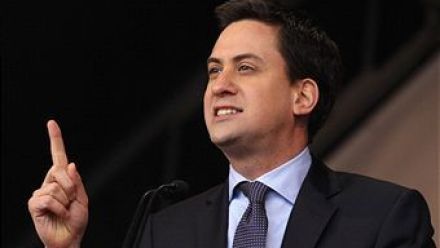
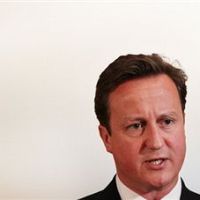
The Prime Minister declared war at PMQs today. Not once but twice in the same sentence. ‘We’re at war in Libya and in Afghanistan,’ he said, in a throwaway footnote to some ritual noises about his ‘huge respect for our armed forces.’ Until this historic moment Britain had been engaged in peace-keeping and nation-building in Afghanistan, and in civilian protection and tyrant-bothering in Libya. But now it’s official. We’re mobilised on two fronts. Ed Miliband might have made more of this but he was too busy mentally preparing himself for this week’s shock ambush. This week’s shock ambush wasn’t quite as shocking as it might have been because it had exactly the same three-pronged shape as last week’s shock ambush.

PMQs live blog | 22 June 2011

From our UK edition

VERDICT: Ed Miliband repeated the same tactic as last week, concentrating on a specific policy area to test Cameron's command of the details — and again it had the desired effect, although not quite so tellingly as before. The Prime Minister floundered and generalised on the issue of rape arrests, but managed to turn some of his discomfort back on the Labour leader, and ended their exchange sounding more confident than perhaps he was. He was then consideraby more surefooted throughout the backbench questions, particularly when it came to public sector pensions and to attacking Labour's unfunded VAT cut. But, on the whole, this was another session to relieve the pressure on Miliband. 1235: And so another session of PMQs ends. My brief verdict coming up shortly.

Boris versus Osborne

From our UK edition

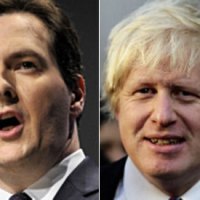
One of the staples of the Westminster summer party season is speculation about future leadership contests and so I rather suspect that Ben Brogan’s piece on the coming George Osborne Boris Johnson leadership contest will be much referenced in the coming weeks. Any speculation about a future leadership contest is, obviously, absurdly premature. If a week is a long time in politics, six years is almost a geological era. But the prospect of Obsorne versus Johnson is, as Tim Montgomerie puts it, so ‘delicious’ that Westminster Village people will take any excuse to talk about it. What makes the contest so appetising is that Osborne and Johnson’s strengths are so different. Osborne plans everything out, Johnson flies by the seat of his pants.

Public opinion on international aid isn’t where Cameron thinks it is

From our UK edition

Andrew Mitchell was recently informed that the public is split 50:50 for and against increasing the international aid budget to £12 billion in 2013. A YouGov@Cambridge poll for Politics Home suggests that he should get some better advice. The poll shows that while the public is indeed split fairly evenly on the general principle of aid (41 per cent in favour, 38 per cent against), when it comes to the government's promise to increase the aid budget by a third, those against outnumber those for by more than 2 to 1. The policy is by no means a Cameroon brainchild. In 1970 the United Nations set the target for government aid at 0.7 per cent of GNI; in 2004 the Labour government pledged to meet it by 2013 and in 2006 David Cameron signed the Tories up to that pledge.

America and Britain turn their minds to the (fiscal) cost of war

From our UK edition

Five-thousand, ten-thousand, or fifteen-thousand? That's the question hanging in the air as Barack Obama prepares to clarify his withdrawal plan for Afghanistan this evening (or 0100 BST, if you're minded to stay up). And it relates to how many of the 30,000 "surge" troops he will decide to release from the country this year. Washington's money appears to be on 10,000, with half of them leaving this summer and half in December. But no-one outside of the President's clique really yet knows. His final decision will say a fair amount about his intentions in Afghanistan, or at least about just how fast he wants to scram out of there. What's really striking, though, is the emphasis being placed on the bill for Afghanistan.

When u-turns matter

From our UK edition

When I asked one Tory how things were going the other day, he replied "we’re living by that Silicon Valley phrase: ‘fail fast and fail often’." His argument was that for all that we in the press work ourselves into a frenzy over u-turns, the public don’t much care about them and it is much better to get these things out of the way quickly.   When I challenged him that all these shifts made Cameron look weak, his rejoinder was that as long as the coalition stuck to its deficit reduction programme voters would know that it could hang tough when it needed to.   I suspect that this argument is half-right.

High-speed rail is an opportunity, not a waste

From our UK edition

Having spoken to civic leaders in Leeds yesterday about the impact of high-speed rail investment, I cannot recognise the world lived in by Matt Sinclair and the campaign against HS2. In the Midlands and the North, high-speed rail represents opportunity. Opportunities for business people to reach new markets, quickly, cheaply and with minimal hassle. Opportunities for bread-winners to reach new employers. Yes, it’s a massive investment. But the potential for our national wealth is also massive At the “Yes to HS2, Yes to Jobs” action days in Manchester and Birmingham, you felt some of this excitement among the businesspeople, civic leaders and young people who came out to show their support. You can see some of these people on our video above.

The myth of cuts

From our UK edition

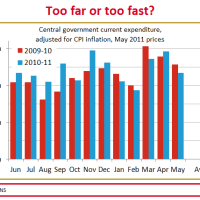
Last week, Ed Balls warned against the effect of George Osborne’s vicious, front-loaded cuts. Today, we have an update in the form of monthly state spending figures. In cash terms, a new record has been set in state largesse. The UK government’s current spending was £51.7 billion in May, up from £50.6 billion in May last year (the last month of Gordon Brown). George Osborne has so far outspent Gordon Brown every month that he’s been in the Treasury. Even adjusted for the runaway inflation, the Chancellor has on average outspent Brown during his first 12 months:     To fund this extra spending, the Chancellor borrowed £27.4 billion from the public for April and May. Labour chirp today that this is more than the £25.

Cameron muscles Clarke off the stage

From our UK edition

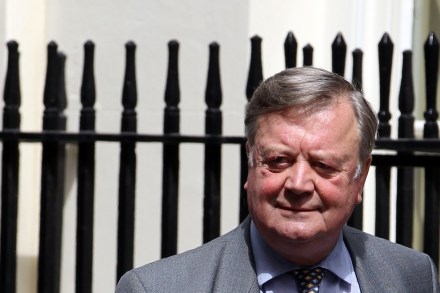
The toughening-up effort continued with David Cameron's press conference just now. There he was, at the prime ministerial lectern, not just announcing a stricter sentencing system than Ken Clarke broached a few weeks ago, but explaining why the government's change of mind was actually "a sign of strength". Out are the 50 per cent sentence reductions for those who plead guilty early. In is a commtiment to jail those caught using a knife threateningly, as well as a bundle of tougher measures all round. "Being strong is about being prepared to admit that you didn't get everything right the first time around," said Mr Cameron, again and again.

Lib Dems wary of “Tory traps”

From our UK edition

The government’s u-turn on sentencing reveals something quite important about the Lib Dems' approach to coalition. Despite having backed Ken Clarke in private, they have stayed as far away as possible from the issue in public.   The Liberal Democrats were determined not to put themselves on the wrong side of the public on this issue, to end up copping the blame for ‘soft sentencing’. As one senior Liberal Democrat said to me recently, "we’re determined not to walk into any bear pits. If there is a big flashing neon sign above something saying ‘Tory trap’, we’ve got to be disciplined enough not to fall into it.

Cameron gets tough

From our UK edition

Toughness, or at least the appearance of it, is clearly the theme of the week on Downing Street. After the vacillations over NHS reform, David Cameron seems to be going out of his way to sound that little bit more hard. There's the headline on the front of today's Times, for instance: "Cameron to Europe: not one penny more." And there was the PM's claim, yesterday, that a Tory majority government would be "tougher" on immigration and welfare. Even the recent hyperactivity of Michael Gove is, I'm sure, all part of the plan, given that schools reform is broadly one of the areas where the government will (probably) never apologise, never surrender. But the new hardline isn't just a straight one, oh no.

The limits of stigma

From our UK edition

As James says, it’s been a day of high passions here at The Spectator. He feels strongly that many of the problems in Britain are societal, and require a cultural shift. Maybe so. I disagree with James when he says a Prime Minister's role is to “lead society". I disagree. We pay him to run the government, not offer his advice (or, worse, condemnation) on how society is running itself. Sure, society is shaped by government incentives. Cameron can fix these. But shaping society by exhortation is not what we expect of limited government. Fundamentally, it confuses what I see as the natural pecking order. In Britain, the people pass judgment on politicians. Not the other way around.   Tim Montgomerie is on James’ side, and chastised me yesterday.

Cameron is right to use the bully pulpit of his office

From our UK edition

The normal Monday morning calm of The Spectator was disturbed today by an argument about David Cameron’s comments about fathers who go ‘AWOL’. I thought Cameron was right to say what he did, my editor didn’t. He felt that it wasn’t the Prime Minister’s job to moralise, and that him doing so was the beginning of a descent into totalitarianism.   The reason I think Cameron was right to speak out is that so many of the problems in this country are social or cultural. They can’t be solved by another piece of legislation or a government initiative.

Gove reaffirms his faith in free schools

From our UK edition

Invigorating, that's probably the best word for Policy Exchange's event on free schools this morning. Right from Sir Michael Wilshaw's opening address — which set out the reasons why he, as headteacher of Mossbourne Academy, is optimistic about education reform — to Michael Gove's longer, more involved speech, this was all about celebrating and promoting the new freedoms that teachers are enjoying. There were some specifics about the schools that are opening, and the numbers of them, but very little of it was new. For the first time in a week, Gove wasn't announcing policy, but instead referring back to it. Which isn't to say that this was an ornamental occasion — far from it. Sir Michael's "four reasons for optimism" were, by themselves, pretty noteworthy.

Boris’s one-two punch against the coalition

From our UK edition

Boris, we know, has never had any compunctions about distinguishing his views from those of the coalition government. Take his recent proclamations on the unions or on the economy, for instance. But his latest remarks are still striking in their forthrightness. Exhibit A is the article he has written for today's Sun, which — although it doesn't mention Ken Clarke by name — clearly has the Justice Secretary in mind when it exhorts that "it's time to stop offering shorter sentences and get-out clauses." And Exhibit B is his column for the Telegraph, which waxes condemnatory about Greece and the euro.

It’s not just about public sector pensions

From our UK edition

The bustle around public sector pensions has obscured an equally significant, pensions-related story today: the Sunday Telegraph's claim that George Osborne is considering sucking £7 billion from the pensions of higher earners. The way it would be achieved, reports Patrick Hennessey, would be to terminate the tax relief on pension contributions made by those in the 40 and 50 per cent income tax brackets. He adds that the Exchequer could spend the resulting funds on deficit reduction, or on notching up the basic state pension. At the moment, it sounds as though this is just one of those on-the-table type deals: an idea being passed around the Treasury, but not yet decided upon.

Profit could hasten Gove’s school reforms

From our UK edition

Michael Gove is giving a big speech tomorrow on free schools amid evidence that the policy is beginning to gather momentum. The papers report today that there have been 281 applications to set up free schools in the round that closed this month alone (sentence updated).   One of the best known of these planned free schools is the one being set up Tony Blair’s former strategist Peter Hyman. Ever since The Spectator revealed back in May that Hyman was planning to take advantage of the Tories’ reforms to start his own school, there’s been considerable interest in what Hyman is up to. In today’s Sunday Times he eloquently defends his project, arguing that free schools are just the logical continuation of Blair’s education reforms.