These strikes are wrong, ad nauseam
From our UK edition
Okay, as it's Friday, here's footage of that weird, repetitive Ed Miliband interview that has been bouncing around the blogosphere since yesterday:.
From our UK edition
Okay, as it's Friday, here's footage of that weird, repetitive Ed Miliband interview that has been bouncing around the blogosphere since yesterday:.
From our UK edition
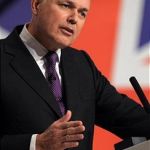
Before everyone gets too excited, Iain Duncan Smith is not saying in his speech today that immigration is a bad thing in itself. But he is saying that it has consequences, some of which impinge on native Brits. Many of these consequences are, as it happens, writ in the official statistics. As IDS highlights – and as Coffee House has detailed before – a good number of the jobs that sprang up during the New Labour years were accounted for by immigration; and there are signs that the process is continuing still. This is one of the reasons why the number of jobs in the economy can increase, while the dole queues barely shorten. Workers are imported, rather than nurtured.
From our UK edition
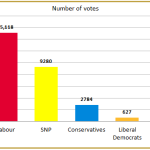
Amid all the union sturm und drang yesterday, it was easy to forget about last night's Parliamentary by-election in Inverclyde. But a by-election there was, after the death of the seat's previous Labour MP, David Cairns, in May. And the result was in some doubt, too. After the SNP's strong showing in last month's corresponding Scottish Parliamentary election, there was a sense, beforehand, that Labour's majority could be whittled down to naught. But, in the end, it wasn't to be. Labour won with a comfortable majority of 5,838 and a vote share of 53.8 per cent, albeit it down on the 14,416 and 56 per cent they secured in last year's general election.
From our UK edition
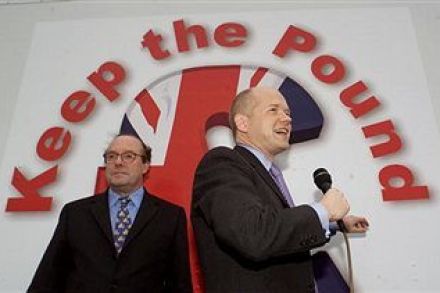
The Foreign Secretary finds himself in the rather unique position today of trying to deal with the consequences of a crisis that he largely predicted. In May 1998, William Hague gave a speech warning that the single currency would lead to social unrest as governments tried to cope with one size fits all interest rates. It is a reminder of how much Hague was swimming against the tide of bien-pensant opinion that Michael Heseltine claimed this prediction was so extreme as to drive the Tories off the centre ground. But what is, perhaps, more interesting than Hague’s vindicated view that the euro, in a crisis, would be the ‘economic equivalent of a burning building with no exits’ is his view on how European governments would resolve the problem.
From our UK edition
As any CoffeeHouser knows, the Spectator enthusiastically supports Michael Gove’s education reforms. But it’s always important to listen to opposing views – so we stepped outside our offices in Westminster to talk to some of the striking teachers. Some of their points, it must be said, were a little peculiar. “It was wonderful under Balls, a golden age,” said one “we’d like to get back to that.” But others were more realistic in their concerns. For example, they criticised Michael Gove’s inconsistency: the official government policy is that modular exams will remain, but he appeared on television this weekend saying that he intended to remove modular exams by 2012.

From our UK edition
Will Britain recognise Palestine as a state if, as planned, the matter comes to a vote at the UN General Assembly in September? Right now, the government says it has not decided. But if France were to push, the likelihood is that William Hague will order British diplomats either to accept or abstain from the vote. The strategic rationale for a Yes vote is obvious: at a time when Britain is waging war in Libya and rallying support against Syria and Iran, it would be disadvantageous to be seen by Middle Easterners as blocking Palestinian aspirations. And having accepted the case for Palestinian statehood in principle why not support it in practice?
From our UK edition
The Spectator hosted a debate at the Royal Geographic Society yesterday evening with a rather meaty motion: “Secularism is a greater threat to Christianity than Islam”. We have two reviews of the occasion. The first, by Kate Maltby, is below. Lloyd Evans' can be found here. Last night’s Spectator debate on the motion “Secularism is a greater threat to Christianity than Islam” was marked by a highly personal level of investment from the speakers, a sudden swing in the vote, and the uncharacteristic sight of Chair Rod Liddle acting as the most conciliatory person in the room.
From our UK edition
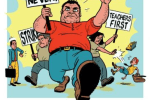
Shortly before Michael Gove organised a strike for journalists in Dundee, I crossed a school picket line with my mum, a teacher at my local school (Nairn Academy). She was a member of a teaching union, the PAT, that didn't believe in strikes, so when the school closed the two of us went in. It was a perfectly friendly affair: my teachers (and her colleagues) were at the gate, with no one else around. One of her colleagues handed her a leaflet and we went on inside. We never discussed politics at home, and I still have no idea what my mum thought about Thatcher (it was 1985). But then, she and thousands of teachers like her took the basic view that kids should not be dragged into disputes between adults.
From our UK edition
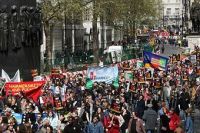
It's strange to think of the biggest, national walkout for years as a prelude to something even larger — but that's how some of the union bosses would have it today. Schools are shutting, civil servants are downing their keyboards, UK Border Agency staff are pausing their vigilant watch over our shores, and all the while the talk is of more to come. Christine Blower, the head of the NUT, tells the Times (£) that today is the "first phase" of a "coordinated campaign". Mark Serwotka — who appeared opposite Francis Maude on the Today Progamme earlier — warned yesterday that these are just the "opening skirmishes," and that, "If you won’t talk to us we will ensure the next national strike has three to four million of us.
From our UK edition
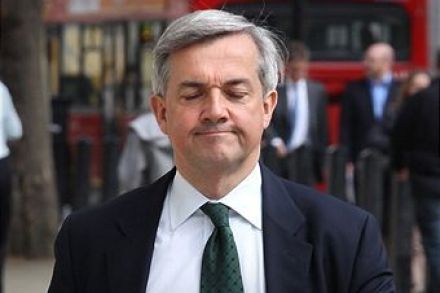
Roy Greenslade’s report in the Evening Standard that The Sunday Times will hand over to Essex Police the tape of Chris Huhne talking to his estranged wife Vicky Pryce that got the speeding points story motoring in the first place has revived speculation in Westminster about the future of the Energy and Climate Change Secretary. The Sunday Times’ report says that the tape contains Pryce telling Huhne that, ‘It’s one of the things that worried me when I took them; when you made me take the points in the first instance.’ Huhne, of course, has always denied that anyone ever took points on his behalf. It should be stressed that nothing has been proved any which way.
From our UK edition
In 1997 New Labour was not just a domestic programme; it was a foreign policy too. Known as the "Neue Mitte" in Germany, Blair's Third Way soon attracted such converts as the German chancellor, the French prime minister and the Danish leader. In the end, it produced few results for Britain, failing – much as Harold Wilson did in the 1970s – to curry favour for the UK through party political links with other leaders. But for a few years, much as New Labour looked across the Atlantic to the Democratic Party, so Europe's Social Democrats looked across The Channel. International recognition for his deficit reduction plan notwithstanding, David Cameron has no such effect so far. But some have been swayed by his domestic agenda.
From our UK edition
The mini Tory rebellion last night, 15 Tory MPs voted to allow couples to transfer their personal tax allowance, has further strained relations between the whips office and some backbenchers. One complained to me earlier that the whips had been overly heavy-handed in their approach, describing their behaviour as ‘quite terrifying’. Now, these things are in the eye of the beholder and I suspect that the whips involved just thought they were doing their bit to maintain party discipline. One other thing worth noting is that even those unhappy with the behaviour of the whips are going out of their way to say that the chief whip Patrick McLoughlin is not the problem, that he is courteous and respected. Rather, they blame some ‘middle-ranking’ whips.
From our UK edition
Superwonk Ed was back today. For the third week running he tried to nobble Cameron at PMQs by taxing him on some miniscule detail of policy. ‘Of the 163 statutory organisations in the health service’, asked Miliband, ‘how many will be left after the government’s top-down reforms?’ Cameron hadn’t a clue. And even at this early stage a sense of resignation was settling over the watching thousands. Trying to kick the PM with a footling facticule doesn’t play with the general public. It rarely makes the news. It has commentators reaching for lines of speed to keep awake. And the only people it excites are the opposition leader’s all-star team of fact-sifters, gaffe-spotters, Googlers and minutiae-mongers back at Labour HQ.
From our UK edition
Having been stumped by Miliband’s focus on detail in the past two PMQs, Cameron came prepared today. He was determined to highlight the fact that the Labour leader wasn’t asking about the big picture. So after Miliband had asked a series of questions about the nuts and bolts of NHS reforms, Cameron used his final answer to launch into Miliband. ‘He can’t ask about strikes because he is in the pockets of the union’, he started. He rattled off a series of other great issues of the day on which Miliband was silent, building up towards his conclusion with the line‘ he has to talk about the micro because he can’t talk about the macro.’ Then, the Speaker cut the Prime Minister off.
From our UK edition
Go go Gove, still trying to pack in the initiatives before summer recess. The focus today is on maths and the sciences, where the Education Secretary feels our students are falling behind. In a speech earlier, he set out a number of measures to help ameliorate the situation, including adding his name to City AM's appeal for bankers to donate to the Further Maths Support Programme charity. But, really, it was his more general remarks that caught the ear. He emphasised, for instance, the growing gap between us and the Asian nations: "At school, British 15-year-olds’ maths skills are now more than two whole academic years behind 15-year-olds in China.
From our UK edition
The appointment of Christine Lagarde as head of the IMF is a diplomatic victory for George Osborne. The Chancellor was one of her earliest supporters, was the first to nominate her and hit the phones hard on her behalf. She will be a useful ally for Osborne in this position especially given how choppy the global economic waters remain. But the UK government also used the IMF nomination process to do some diplomatic horse-trading. The government made it clear that UK support for Lagarde was contingent on Paris agreeing that Britain should have to play no part in the coming bailout of Greece. There will be those who argue that it is not ideal to have the head of the IMF come from a euro-zone country.

From our UK edition
Ed Miliband is learning. He has written a blog on Thursday’s strikes and it is plain that he has learnt from the errors he made during the March against the Cuts by associating himself with militancy. First, he places himself firmly on the side of parents who will be inconvenienced by Thursday’s strikes: “The Labour Party I lead will always be the party of the parent trying to get their children to school, the mother and father who know the value of a day’s education.” Miliband gives the unions and their members pretty short-shrift to be honest. He writes: “I understand why teachers are so angry with the government.
From our UK edition
The government is determined not to seem like the aggressor in the coming dispute with the unions. It wants to stress that it is being reasonable and David Cameron’s speech today to the Local Government Association will be a classic example of this strategy. At the same time, it is trying to put in place contingency plans so the country can carry on regardless of industrial action. Those close to the coalition’s negotiating team point to how a well developed plan to use the army in place of striking prison officers deterred the Prison Officers Association from taking industrial action over the ‘privatisation’ of a prison.
From our UK edition
After the failure of today’s meeting between union leaders and Francis Maude and Danny Alexander, Thursday’s strike now seems certain to go ahead. It’ll be the biggest test so far of the coalition’s ability to withstand industrial action. The coalition has constantly emphasised that it has contingency plans in place to deal with strikes. This Thursday will show us how good these plans are. Certainly, the more schools that are kept open, the less powerful the bargaining position of the unions will be. I understand that David Cameron will use his speech to the Local Government Association tomorrow to emphasise that the deal that the government is proposing on public sector pensions is reasonable and fair.


From our UK edition
There are, as the old adage goes, "lies, damned lies and statistics". I'm beginning to think the same about polls. Take the polls that Britons are not as keen on overseas aid as the Prime Minister. Some of the headlines attached to them are prone to exaggeration. For example, on the back of the poll, the Mail claimed that "one in four people say they will no longer give money to charities such as Oxfam and Save the Children." People may say that but they don't seem to mean it. For it turns out that the British public has actually increased its giving to Save the Children by nearly 10 per cent in the last year. And earlier this year, the public gave over £100 million to the Comic Relief Red Nose Day appeal – the largest sum raised to date.