Uk politics

Immigration is so much more than an electoral issue

From our UK edition

Further to Daniel’s piece about declining immigration in Europe, it is worth highlighting this passage from Iain Martin’s column in the Mail: ‘But once in Downing Street, Cameron was confronted by research from his personal pollster, Andrew Cooper, which confirmed the true extent of public concern about high levels of immigration. Ironically, Cooper was one of the very modernisers in the Tory Party who did not want Cameron to be tainted — as he saw it — by being seen as tough on immigration in the run-up to the election. But now he has changed his tune — and taken the Prime Minister along with him.

A reshuffle of the whips office?

From our UK edition

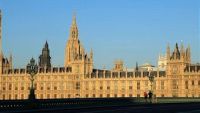
It is tempting to treat the whole circus animal affair in the Commons this week as just a big joke, the Palace of Westminster turned into the Palace of Varieties. Certainly, the sight of MPs vigorously arguing about the fate of four circus geese had a certain black comedy to it. But there might be at least one serious consequence of the vote, a reshuffle of the whips office. In Tory circles, there is a lot of chatter about a damning assessment of the state of the whips’ office penned by former Tory MP Paul Goodman for the Conservative Intelligence website, an offshoot of ConservativeHome. In it, Goodman writes about the future of the current number three in the whips’ office, Michael Fabricant.

Miliband: We can’t go on like this

From our UK edition

It’s odd how political leaders often address their parties in the clichéd terms of soap operas’ most tortured romances. Ed Miliband pre-trailed speech to the Labour’s National Policy Forum in Wrexham is replete with protestations of having grown apart and the need to listen and be more open with each other. “We cannot continue as we are,” he implores. But there is some substance to Miliband’s rhetoric of reconnection. He has already announced his intention to appoint his own shadow cabinet, which caused some consternation among Labour’s more reactionary elements.

Tax versus philanthropy 

From our UK edition

I was on the panel of Any Questions last night in Saltaire, the most beautiful town I’ve seen outside of the Highlands. Jonathan Dimbleby always warms everyone up with a test question, which lets the panelists make their mistakes early. The first question was this: the town of Saltaire was founded by a philanthropist, Sir Titus Salt. What can be done to make today’s rich pay their fair share? Lucky for me that it was not recorded, because I went on for ages. Sir Titus was living in an era before the welfare state, where welfare was provided voluntarily, by people in the community. Had he been alive today, the government would be confiscating 52 per cent of what he earned – thanks to George Osborne’s recently increased tax.

How to regulate the Internet?

From our UK edition

This week, the Open Rights Group launched a campaign against the proposed website blocking scheme between copyright holders and Internet Service Providers.  The campaign was launched on the back of a leaked document suggesting that a voluntary code for industry website blocking be introduced. The document was presented to Ed Vaizey, the relevant minister. Vaizey meets regularly with internet stakeholders to debate digital issues, including net neutrality, parental controls, and, of course, web blocking. These meetings are a vast improvement over the last government, which made technology policy decisions behind closed doors without much – if any – input from outsiders.

Britain makes new senior diplomatic appointments

From our UK edition

From the Number 10 website: The Prime Minister is pleased to confirm the following senior appointments: Sir Peter Ricketts, currently the Prime Minister’s National Security Advisor, to become HM Ambassador to France; Sir Jon Cunliffe, currently the Prime Minister’s Advisor on Europe and Global Issues, to become the UK’s Permanent Representative to the European Union in Brussels; Sir Kim Darroch, currently the UK’s Permanent Representative to the EU, to become the Prime Minister’s National Security Adviser; and Sir Peter Westmacott, currently HM Ambassador France, to become HM Ambassador to Washington. These changes will take effect from January 2012.

Solving the government’s aid conundrum

From our UK edition

Earlier this week, Jonathan Jones reported on the problems facing the government on international development spending.  Their plan to increase the DFID budget is deeply unpopular. Today we’ve released a new YouGov poll that sheds a lot more light on the situation, and suggests a way out whereby the government can still fund their most prized objectives but take the heat out of public anger on the issue. The first thing to understand is that the public doesn’t just resent any money being spent on international development. Freezing the budget is significantly more popular – with 69 per cent support and 12 per cent opposed – than scrapping it outright – with 43 per cent support and 33 per cent opposed.

Ancient hatreds mask Stormont’s current challenge

From our UK edition

Ignore the antediluvian hatreds for a moment. As Anne Dawson says, the recent violence in East Belfast was largely inspired by current economic distress. Northern Ireland’s economy is a serious cause for concern. Central expenditure per head is 25 per cent higher in Ulster than the UK norm and 70 per cent of Northern Ireland’s economy lies in the public sector according to parliamentary one estimate. Although the province has much to commend itself to business – competitive operating costs and excellent transport links serviced by substantial capital investment – private enterprise remains depressed. A report by PriceWaterhouseCoopers in March found that growth was negligible and that unemployment is running at 6.

Cameron: no more bailouts

From our UK edition

It’s another of those special Cameron victories in Europe: we’re in for a second Greek bailout, but not quite as much as we might have been. Britain will contribute a sum through the IMF; however, it will not be contributing to EU funds. Cameron has succeeded in ensuring that the European bailout will be conducted under the permanent European Financial Stability Facility (EFSF), to which only eurozone members are signatories. Although it should be noted that some Brussels experts doubt that the European Financial Stabilisation Mechanism (to which Britain has subscribed) could have been used in this instance, which further devalues the government's victory. Anyway, attention now turns to Greece and whether it will default.

Miliband tries to strengthen his hand

From our UK edition

Ed Miliband is to abolish shadow cabinet elections. Tony Blair, fearful of the reaction of the Parliamentary Labour Party (PLP), shied away from doing this. But Miliband has decided that it is a necessary move to give him the freedom to craft his own top team and to strike against the old, factional Labour culture. Miliband has asked Tony Lloyd, chair of the PLP, to hold a secret ballot of Labour MPs on the change before parliament goes down for the summer. If they approve, it will then be passed to the NEC with the process ending with a vote at conference. Under Miliband’s proposed new arrangements, the PLP will be represented in shadow cabinet by its elected chair.

Poll round-up | 23 June 2011

From our UK edition

We haven't dwelt on the polls very much on Coffee House recently, although we have flagged up some nuggets on Twitter. Here are some of the measures of public opinion that provide an interesting backdrop to Westminster's machinations: Labour in trouble despite poll leads Two weeks ago I reported on a poll that showed the extent of Ed Miliband's unpopularity. There have since been a few more polls to compound his unease. ICM found that he had worse approval ratings even than Nick Clegg: YouGov find that 58 per cent of the public think he's doing a bad job, but perhaps more worrying for "Red Ed" is that he even has negative ratings among the very people who won him the leadership election: trade union members.

A nation of shareholders?

From our UK edition

The great sleeper issue in British politics at the moment is what to do with the state owned bank shares. The money that could be generated by a sale of these bank shares is massive. The state’s stake in RBS is bigger than all the privatizations of the 1980s combined. Nick Clegg’s proposal (£) that everyone in the country be given shares in the banks is one option. But I suspect that would overly depress the value of the shares and would reduce the amount of money that the government would have in its pre-election war-chest. A more likely option is still a scheme where these shares are sold at heavily discounted rates to the public. I understand that this remains George Osborne’s favoured solution.

In defence of the Oxbridge interview

From our UK edition

Simon Hughes’ desire (£) to stop Oxbridge academics interviewing potential students is muddle headed as well as an attack on the right of these universities to run their own affairs. If the coalition wants universities to pick on academic potential rather than academic performance to date, then the interview is a crucial part of this process. Sitting down with an applicant gives academics a chance to assess how this student’s mind works, to ask questions that they haven’t been drilled for. It allows them to use their professional discretion in choosing to make, say, a lower offer to a pupil from an underperforming school who in the interview demonstrates that they have huge amounts off potential despite not having stellar exam results.

Gove steps in to keep the schools running

From our UK edition

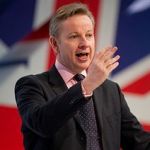
A letter is bouncing around Whitehall, and I thought CoffeeHousers might care to see a copy. It has been penned by Michael Gove, and is being dispatched to all headmasters today. It urges them to Keep Calm and Carry On during the impending strikes over teachers' pensions. "My view," pens the education secretary, "is that we all have a strong moral duty to pupils and parents to keep schools open, and the Government wants to help you achieve that." You can read the full thing below. While much of this missive is dry, dry stuff — certainly drier than Gove's usual prose — it's also quite revealing of the government's approach to strikes.

Why Belfast is ablaze

From our UK edition

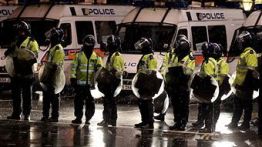
I live three miles away from where the rioting was happening in East Belfast last night, and heard the helicopters whirring overhead. It was the kind of sound that anyone living in the city hoped never to hear again. As a child, I'd lie in bed and hear bombs and sirens and helicopters — and we had all hoped that dark chapter had been closed. A tipping point of violence has now been reached. A press photographer has been shot, another given a fractured skull after a second night of riots. And in the aftermath, the blame game cacophony begins: Who started it? It was them. No it was them … ad infinitum on BBC Radio Ulster's Stephen Nolan Show. While the most important question in all of this is not addressed. Why is this happening? Why now?

World Service reprieve the latest step in FCO’s rehabilitation

From our UK edition

The BBC World Service has been reprieved. An additional £2.2m will be spent to preserve the Arabic service, in line with some of the wishes of Foreign Affairs Select Committee Chairman Richard Ottaway and Lord Patten, the chairman of the BBC and occasional consigliere to David Cameron. I don't share the Foreign Office’s sometime view that this is a ‘massive u-turn’, but it is a significant development. Opposition to cuts to the World Service budget came from across the House; but it originated from Tory backbenchers, who were very confident that they would secure a concession. The subsequent climb down suggests that Downing Street is prepared to consult with and act upon the wishes of the often recalcitrant Right.