Uk politics

Modernisation 2.0

One of the flaws of Tory modernisation was that it was never interested enough in pounds and pence. Social issues, the environment and public service reform were what the modernisers specialised in, not economics. But tonight’s Macmillan lecture by Nick Boles, one of the most intellectually influential modernisers, is devoted to the subject of how Britain’s global competiveness in the global economy can be improved. His argument is that: ‘What really threatens the general wellbeing of the British people is the stalling of productivity growth and the certainty that the next 20 years will expose them to competition that is vastly more intense than anything we have ever seen.

Cameron softens his stance on Europe — but who benefits?

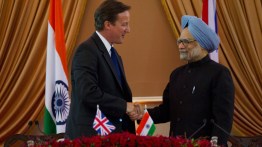
‘We will insist that the EU institutions — the court, the commission — that they work for all 27 nations of the EU.’ So said David Cameron, back in December, suggesting that he'd block Europe's ‘fiscal compact’ countries from using EU-wide institutions to enforce their, er, fiscal compact. But now this component of his ‘veto’ appears to have come to naught, and that veto is looking all the thinner for it. On the Today Programme this morning, William Hague confirmed that Britain wouldn't block the use of EU institutions, such as the court, for the fiscal union. ‘We're not intending to take action about that now,’ is how he put it rather resignedly.

The tuition fee effect, revealed

The coalition’s tuition fee rise will put young people from poor backgrounds off applying to university — or so we were told by Labour and the National Union of Students. But now we can actually put that claim to the test. UCAS today revealed how many of that first year group to be affected by the rise have applied to university. So what does those number tell us? Looking at the headlines resulting from the release, you’d be forgiven for thinking that Team Miliband have been vindicated. ‘University applications plunge 9% after tuition fees are trebled,’ proclaims the Daily Mail. ‘Thousands give up on university because of tuition fees,’ says the Telegraph. And the BBC: ‘UK university applications down as fees rise’.

Some numbers to encourage both halves of the coalition

Yesterday's YouGov poll for the Sunday Times had a few interesting nuggets buried beneath the top line (Lab 40, Con 39, as it happens). Here are some of the most topical findings: 1) Clegg’s tax proposals are very popular. 83 per cent support the Lib Dems’ policy of increasing the personal allowance to £10,000. This might explain the 12-point jump in Nick Clegg’s net approval rating since last week. And there’s strong support for the ‘mansion tax’ that Vince Cable’s been pushing since 2009. 66 per cent back ‘a new tax upon people with houses worth more than £2 million’ — something Clegg called for again last week — and 50 per cent support taxing those with houses worth over £1 million.

Peston: Hester will not take bonus

Stephen Hester’s decision to waive his bonus, revealed by Robert Peston just after 10 o’clock, will be a source of great relief to David Cameron and George Osborne. A story that could have dragged on for weeks, undermining their argument about fairness has just lost most of its potency. Ed Miliband, though, will be able to claim — with some justification — that it was the threat of a Commons vote on the matter that led to Hester renouncing his bonus. But this isn’t quite the end of this business. There’s now the question of what happens to the bonuses for other members of staff at RBS and then there is next year’s round. There’s also the whole issue of RBS’ status.

Labour seizes on Hester’s bonus

The issue of Stephen Hester’s bonus is going to carry on hurting the government. Labour has now announced that it will use an opposition day debate on 7 February to hold a parliamentary vote on the issue. The coalition will either have to lose, an admittedly non-binding vote, or whip its MPs to go through the lobbies in defence of Hester’s bonus. As Labour showed when it used the threat of a Commons vote to push Rupert Murdoch’s News Corp to abandon its bid for full control of BSkyB, the bully pulpit of Parliament can be extremely effective. These votes also bring out tensions within the two coalition parties. I imagine that Lib Dem MPs will be even less keen than Tory ones to support the Hester bonus.

A skewed response to a skewed question

‘A clear majority of people in Scotland now back independence, according to an exclusive poll for the Sunday Express. Using Alex Salmond’s preferred referendum question, the Vision Critical survey found 51 per cent would vote ‘yes’ with 39 per cent against. If such a dramatic result were repeated in the autumn of 2014, the First Minister would have an absolute mandate to negotiate an end to the Union with England.’ So runs the story. CoffeeHousers may have spotted two of the snags: the poll uses Salmond’s laughably loaded question, and seems to have been conducted by a chain of opticians.

The government’s Hester problem intensifies

First there was Fred Goodwin, now there's Stephen Hester. The chief executive of RBS is fast becoming the bête noire of the British banking system, thanks to his roughly £1 million share bonus which, we learn in the Sunday Times (£) this morning, may be topped up with an extra £8 million over the next few years. Little wonder that Iain Duncan Smith admitted on the Marr show earlier that there may be a severe public backlash, and that the government could suffer from it. He suggested that it would be better, for all concerned, were Hester just to forego the million. It's one of those debates where it's easy to see and understand both sides of the argument.

Alexander identifies Labour’s problem

Douglas Alexander may sometimes hide the meaning of what he says under a layer of jargon but he remains one of the more interesting political strategists on the Labour side. Alexander, a Brown long-marcher turned Blairite, saw before many of his colleagues the need for Labour to level with the public on cuts. He privately thought that Gordon Brown’s attempt to fight the last election on a reprise of the investment versus cuts strategy of ’01 and ’05 was a mistake. So, it is no surprise that Alexander, now shadow Foreign Secretary, is trying to use the opportunity created by Ed Balls’ acceptance of the need for a public sector pay freeze to try and move Labour into a better fiscal place.

Miliband hopes to put a cap on his welfare policy problems

A-ha! Labour have hit on a line on the benefits cap, and Liam Byrne is peddling it in the Daily Telegraph this morning. ‘Now, there are some people who are against this idea altogether,’ he writes, ‘Neither I, nor Ed Miliband are among them.’ The way he sees it, he goes on to explain, is that there should be a cap but it should be set locally, so that it could be higher than £26,000 in more expensive areas such as London, and potentially less in other areas. Bryne adds that there should be an ‘an independent body like the Low Pay Commission to determine the level at which it is set for different area.’ The Times has a useful article (£) by Roland Watson and Michael Savage, tucked away on p.

My week in Westminster

I'm presenting Radio Four's Week in Westminster this morning, on deficit wars, London wars, welfare wars, and another set of wars which no one has really discussed yet: the directly-elected police commissioners. There will be about 40 of them elected in November, and candidates are already emerging: Nick Ross (ex-Crimewatch), Colonel Tim Collins and London mayoral hopeful Brian Paddick. I interview two names that have been thrown into the frame, both former ministers and both women: Jane Kennedy (Labour) and Ann Widdecombe (Tory). I wanted to find out just how excited we should be about these elected police commissioners.

Osborne needs to come up with radical growth policies, and soon

When it comes to defending the free market, and making the case for fiscal sanity, there's scarcely anyone better than David Cameron. He was on superb form in Davos yesterday, giving much-needed blunt advice to the continentals. ‘Eurozone countries must do everything possible to get to grips with their own debts,’ he said. And he's right. The snag, as I say in my Daily Telegraph column today, is that Cameron's definition of getting to grips with debt involves increasing it more than Labour planned to, more than France, Germany, Italy or Portugal. On the first sign of trouble, his government gave up on its deficit reduction timetable – it will now halve the deficit over five years, whereas Darling promised to do it in four.

A matter of honour

Condemnation’s coming from all sides for the £963,000 bonus awarded to RBS’s Stephen Hester, on top of his £1.2 million salary. The most prominent denunciation came from Lib Dem Foreign Office minister Jeremy Browne on last night's Question Time: ‘I think there’s a sort of question of honour. Even if there is a contractual opportunity for him to have a bonus, it doesn’t mean he has to accept it. He’s already being paid more than £1 million a year. His total package now, means he gets paid in about three days what a soldier risking his life in Afghanistan gets paid in a whole year. And I think he should reflect on that.

Transparency marches on

It has been quite a few days for transparency in Westminster. First, Ben Gummer's ten minute rule bill for tax transparency — which would see every taxpayer in the country receive a statement detailing what they owe and what the money's being spent on — earned itself a second reading in the House. And now, today, the Department for Education releases its new ‘performance tables’ for secondary schools. You can sift through them here, and I'd recommend you spend at least a couple of minutes doing just that.

Abbott quits abortion talks, but will her contributions be missed?

Diane Abbott has, the BBC reports, walked away from the all-party talks on abortion because of the government’s proposals on counselling services. But others involved in the talks claim that Labour’s public health spokeswoman was not a particularly active participant. Abbott, who is not always the easiest of people to work with, had already irritated some of those involved in these talks. In the first meeting she, allegedly, took the opportunity to rest her eyes. She then apparently turned up half an hour late for the second meeting before missing the third one completely. When I put these claims to Abbott’s office, they said that they doubted they were true but they would check with the MP. But so far, there’s been no word back.

Dave in Davos

https://www.youtube.com/watch?v=iWDdpmS89LQ Reading Cameron's speech to the suits in Davos, one thing stands out: he's in no mood to stop ‘lecturing’ the eurozone, as Nicolas Sarkozy would put it. The whole thing is saturated with firm advice for our European brethren, from generalities such as ‘Tinkering here and there and hoping we’ll drift to a solution simply won’t cut it any more,’ to specific policies that the Continent should introduce so that it can ‘recover its dynamism’. He even found space to attack the ‘madness’ of a Tobin tax, as well as to hawk the coalition's deficit-reduction plan. It's the sort of advice that could, of course, put Cameron further at odds with his fellow European leaders.

Clegg echoes Obama’s message

Nick Clegg, this morning, advocating closing loopholes for the rich to pay for raising the income tax threshold: ‘Right now, because of loopholes and shelters in the tax code, a quarter of all millionaires pay lower tax rates than millions of middle-class households. Right now, Warren Buffett pays a lower tax rate than his secretary.’ Oh, all right, that wasn't Clegg. That was Barack Obama, in his State of the Union address on Tuesday night. But it's remarkably similar to what Clegg just said in his speech at the Resolution Foundation this morning.

A Lib Dem demand that the Tories should get behind

Remember those Lib Dem calls for a mansion tax at the weekend? I said at the time that, ‘the Lib Dems appear to be drawing more attention to which of their own policies they are fighting for within government, whether those policies make it to the statute books or not.’ Well, now they're at it again. Nick Clegg is giving a speech this morning in which he'll urge George Osborne to go ‘further and faster’ in raising the income tax threshold to £10,000 a year. It was the stand-out policy of the Lib Dem manifesto, so it's hardly controversial that Clegg should want to see it enacted ASAP. But it's still striking that he's making this appeal in public. A year ago, he'd have emphasised what the coalition was already doing to raise the threshhold.