Uk politics

So how much do you really like The Smiths, Dave?

From our UK edition

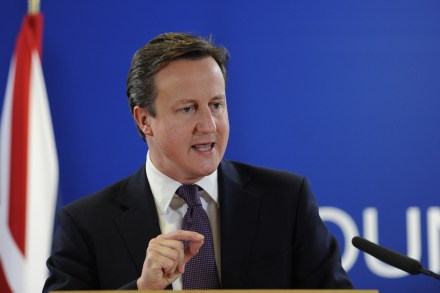
David Cameron's love of The Smiths has been tested numerous times, in the press, in person and at PMQs. But today, there's new dimension to the saga. Johnny Marr, the group's former guitarist, has announced he will delight fans and reform the band - but only if the Prime Minister steps down: 'We won't be reforming this week. Maybe if the government stepped down. If this government stepped down, I'll reform the band. How's that? That's a fair trade, isn't it? I think the country would be better off, don't you? I'll do it if the coalition steps down.' As a dedicated fan, it's certainly a tough call for Dave to make. Heaven knows, he must be miserable now.

Join The Spectator’s debate on immigration

From our UK edition

‘Immigration: enough is enough.’ That's the motion for The Spectator's next debate, and also a major concern for many disgruntled voters. The Tories are currently miles off course for achieving their aspiration of reducing net migration from the ‘hundreds of thousands’ to the ‘tens of thousands’ in this Parliament. Should they do more to meet it, so that the UK's economic and cultural fabric isn't frayed irreparably? Or should we be glad that that they're not, because immigration is a crucial ingredient for growth? These will be the questions at hand for our panellists, who are Dominic Raab, Frank Field and Kiran Bali speaking for the motion, and David Aaronovitch, Oliver Kamm and Jenni Russell speaking against.

The conflict over 50p has escalated once again

From our UK edition

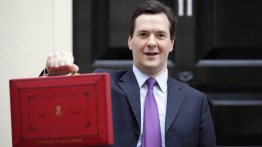
Just like fuel duty, George Osborne can't shake off the fury and discontent over the 50p tax rate. This morning, in a letter to the Telegraph, 537 bosses of small-to-medium-size businesses have called on the Chancellor to drop the rate. ‘The tax, which is in effect a 58p tax after national insurance is taken into account,’ they note, ‘puts wealth creators like us in a very awkward position.’   Usually, it's easy to be both sceptical and dismissive of these mass-signed letters. They tend to be party political constructs, such that another group of ‘experts’ will soon reply to profess the opposite. But this one is different, and could help cast the whole battle over 50p in a fresh light.

Grayling bows to the inevitable

From our UK edition

The changes announced to the work experience programme today have been designed to reassure the companies involved. Those on the scheme will now only face any benefits sanction if they commit the equivalent of gross misconduct. Once some big corporations started getting cold feet about the scheme some tweaks to it were inevitable. As Matt d'Ancona wrote on Sunday, corporate Britain has proved remarkably spineless in the face of attacks from a bunch of hard-line left-wingers. But the tweaks announced today by Chris Grayling — whose robustness on the issue has impressed Tory high command — maintain the purpose of the scheme. Offering those who are unemployed structure and a way back into the workforce are crucial in moving them from welfare into work.

When will Boris pull his finger out?

From our UK edition

What does No.10 make of Boris's campaign so far? Not much, judging by Alice Thomson's column (£) in the Times today: ‘Downing Street is worried. When the mayor came in with his Australian election strategist Lynton Crosby last week, they thought their plans were “underwhelming” and lacked a simple ‘retail offer’ for voters.’ This certainly fits in with what I've noted before: that Team Boris is being significantly quieter than Team Ken. Indeed, further research suggests that the current Mayor is trailing far behind his challenger in the all-vital Evening Standard campaign coverage.

What James Murdoch’s move tells us

From our UK edition

When Rupert Murdoch visited the Sun newsroom recently, eyebrows were raised by the fact that he was accompanied not by James Murdoch but Lachlan Murdoch. James Murdoch, who has never had his father’s emotional commitment to the newspaper side of the business, has now stepped down as executive chairman of News International, though he remains as deputy COO of News Corporation.   James Murdoch has not come out well of the various investigations into hacking. He has appeared to have been oddly uninterested in developments at the company. His performances in front of parliamentary select committees have left several questions unanswered. James Murdoch, though, will now have left News International before the Culture, Media and Sport select committee reports.

These NHS bouts are becoming more insipid by the week

From our UK edition

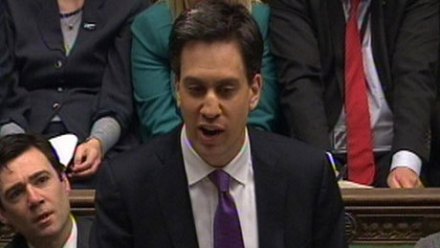
Health reforms again dominated PMQs today. That’s four weeks in a row. And the great debate, like a great sauce, has now been reduced to infinitesimal differences of flavouring. David Cameron repeated his claim that 8200 GP practices are implementing his policies. But, corrected Ed Miliband, that’s not because they love the reforms. It’s because they love their patients. He quoted a Tower Hamlets health commissioner who berated the PM for confusing reluctant acquiescence with whole-hearted endorsement. Fair enough. But this nicety won’t resonate beyond the tips of either men’s brogues. The rest of the bout was a repeat of last week’s effortful stalemate.

What will the UK’s proposed ECHR reforms actually come to?

From our UK edition

Two items of news that may unsettle stomachs in Euroland today: i) that Ireland is planning to hold a referendum on the new European fiscal treaty, and ii) that the UK is pushing — as April's European summit in Brighton approaches — for the European Convention on Human Rights to be rewritten so that national courts have greater discretion and power. The BBC's James Landale has more details on the latter here, but the basic point is that the government has circulated a ‘position paper’ that proposes injecting a few principles and particulars into the ECHR. One of these is ‘subsidiarity’, the idea that decisions should be made at the lowest level possible.

Romney: ‘we didn’t win by a lot, but we won by enough’

From our UK edition

https://www.youtube.com/watch?v=hzY8ppsAIdQ It'll be a relieved Mitt Romney and a deflated Rick Santorum who head to Ohio ahead of next week's Super Tuesday primaries. Romney scored an impressive 21-point victory in Arizona — exceeding the already high expectations for him there. This win provides him with a significant boost in the delegate count — a factor that becomes more important the longer the race drags on — as Arizona assigns all of its 29 delegates to the winner. But more important for Romney was the three-point margin he secured over Santorum in Michigan.

McCluskey versus the Olympics

From our UK edition

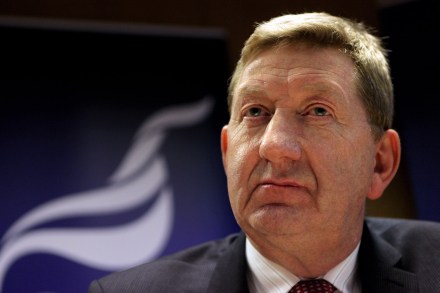
The declaration by Len McCluskey, the leader of Unite, that public sector unions should consider disrupting the Olympics is going to re-ignite the whole debate about union power. McCluskey tells Andrew Sparrow that ‘The attacks that are being launched on public sector workers at the moment are so deep and ideological that the idea the world should arrive in London and have these wonderful Olympic Games as though everything is nice and rosy in the garden is unthinkable.’ McCluskey’s ill-considered threat is a headache for Labour. Unite is Labour’s largest donor and the Tories are already calling on Miliband to denounce him. I suspect that the Boris campaign will be making the same demand of Ken Livingstone soon.

A tax battle that the government won’t be able to avoid

From our UK edition

The government is very pleased with itself today for closing a couple of tax loopholes such that Barclays will have to pay £500 million more to the Exchequer. And little wonder why. Not only does it support their rhetoric about a ‘tougher approach’ to tax avoidance, but — on the principle that ‘every little helps’ — it also hammers another few chips from the deficit. Broadly speaking, this sort of action is uncontroversial. In the battle of wits over taxation, the government is well within its legal rights to close loopholes, just as companies are well within theirs to exploit them.

So much for taking the politics out of the NHS

From our UK edition

So here we are again. At least Lord Justice Leveson had the humanity to give us a couple of weeks off whining celebrities, shifty ex-journalists and declaiming newspaper editors. From the Health and Social Care Bill there is no respite. The Bill is back in the House of Lords and Liberal Democrat guerrillas are wound up for a fresh assault on the lumbering mule train as it passes through. Does anyone care any more which bit of this battered and bleeding legislation has been chosen for further victimisation in this week’s shenanigans?

Osborne faces the fire over fuel duty

From our UK edition

Will fuel ever stop being a cause of political discontent? It was the fuel protests of 2000 that first tarnished Blair's electoral allure, according to some of the advisors who were around him at the time. It was a question about petrol prices that provided Gordon Brown with one of the most awkward moments of his premiership. And it was the same issue that punctuated the build-up to George Osborne's Budget and Autumn Statement last year, and now to next month's Budget too. The Mail, the Sun, Tory backbenchers and others are once again lobbying the Chancellor to act. Of course, there are clear reasons why fuel is always such a hot topic.

The private sector must be revived in Northern Ireland

From our UK edition

One quirk of the welfare reform debate is that many of the reforms won’t automatically apply in one of the parts of the United Kingdom with the worst welfare problems: Ulster. As Owen Paterson, the Northern Ireland Secretary, points out in a speech tonight, ‘Northern Ireland has proportionately one third more households living on out of work benefits as the rest of the UK’. He also notes that 1 in 10 of the population there are on Disability Living Allowance, double the UK average. But the Work Programme doesn’t apply in Northern Ireland and any welfare reform there will have to be done by the Executive. Paterson is now campaigning to make the case to local politicians for reform, for maintaining parity with the rest of the United Kingdom.

Gove: ‘I’d never run for leader’

From our UK edition

Michael Gove for leader? There have been several suggestions to this effect recently — not least from Toby Young in his debut column for the Sun on Sunday. But Tim Montgomerie today quotes one of Gove's advisors on ConservativeHome, saying that the education secretary has ruled himself out on the grounds that he doesn’t have the character for the job. This certainly squares with what Gove told me in September 2008. The interview was published here, but I’ve looked up my notes and can reprint his answer in a little more detail.   I put to him a Westminster rumour that he promised Sarah Vine, his wife, that he’d never run for leader. He threw his head back and laughed loudly.

Clegg shifts into NHS attack mode

From our UK edition

The letter from Nick Clegg and Shirley Williams to Lib Dem MPs and peers raises several interesting questions. The first of which is why did Clegg champion these health reforms back in the day? Four days after the first reading of the bill, the deputy Prime Minister had this exchange with Andrew Marr: Andrew Marr: 'Huge change to the NHS just coming down the line. Was that in the Liberal Democrat manifesto?' Nick Clegg: 'Actually funnily enough it was. Indeed it was.' Second, how does the Clegg-Williams claim that ‘This is not the Bill that we debated as a party last March’ fit with the Tory line that the amendments to the bill have largely been to deal with misunderstandings about what it allows?

Tories question Lib Dems’ commitment to post-election cuts

From our UK edition

The mood of this morning’s ‘Growth Forum’ hosted by the Free Enterprise Group of Tory MPs and the Institute for Economic Affairs was summed up by Kwasi Kwarteng’s introductory remark that to meet the OBR’s ‘ambitious growth targets’, the coalition ‘can’t just bumble along’. The headline news coming out of the event is Andrew Tyrie, the influential chair of the Treasury Select Committee, calling for it to be made clear that the government’s ambition is to get state spending down to 40 per cent of GDP. David Ruffley also caused a stir by saying that BIS and, possibly, DCMS should be abolished.