Uk politics

These NHS bouts are becoming more insipid by the week

From our UK edition

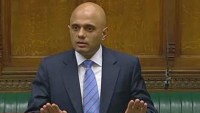
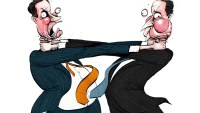
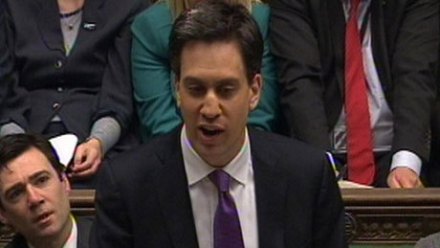
Health reforms again dominated PMQs today. That’s four weeks in a row. And the great debate, like a great sauce, has now been reduced to infinitesimal differences of flavouring. David Cameron repeated his claim that 8200 GP practices are implementing his policies. But, corrected Ed Miliband, that’s not because they love the reforms. It’s because they love their patients. He quoted a Tower Hamlets health commissioner who berated the PM for confusing reluctant acquiescence with whole-hearted endorsement. Fair enough. But this nicety won’t resonate beyond the tips of either men’s brogues. The rest of the bout was a repeat of last week’s effortful stalemate.
What will the UK’s proposed ECHR reforms actually come to?

From our UK edition

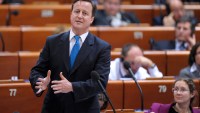
Two items of news that may unsettle stomachs in Euroland today: i) that Ireland is planning to hold a referendum on the new European fiscal treaty, and ii) that the UK is pushing — as April's European summit in Brighton approaches — for the European Convention on Human Rights to be rewritten so that national courts have greater discretion and power. The BBC's James Landale has more details on the latter here, but the basic point is that the government has circulated a ‘position paper’ that proposes injecting a few principles and particulars into the ECHR. One of these is ‘subsidiarity’, the idea that decisions should be made at the lowest level possible.

Romney: ‘we didn’t win by a lot, but we won by enough’

From our UK edition

https://www.youtube.com/watch?v=hzY8ppsAIdQ It'll be a relieved Mitt Romney and a deflated Rick Santorum who head to Ohio ahead of next week's Super Tuesday primaries. Romney scored an impressive 21-point victory in Arizona — exceeding the already high expectations for him there. This win provides him with a significant boost in the delegate count — a factor that becomes more important the longer the race drags on — as Arizona assigns all of its 29 delegates to the winner. But more important for Romney was the three-point margin he secured over Santorum in Michigan.

McCluskey versus the Olympics

From our UK edition

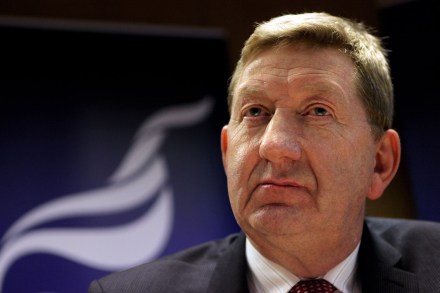
The declaration by Len McCluskey, the leader of Unite, that public sector unions should consider disrupting the Olympics is going to re-ignite the whole debate about union power. McCluskey tells Andrew Sparrow that ‘The attacks that are being launched on public sector workers at the moment are so deep and ideological that the idea the world should arrive in London and have these wonderful Olympic Games as though everything is nice and rosy in the garden is unthinkable.’ McCluskey’s ill-considered threat is a headache for Labour. Unite is Labour’s largest donor and the Tories are already calling on Miliband to denounce him. I suspect that the Boris campaign will be making the same demand of Ken Livingstone soon.

A tax battle that the government won’t be able to avoid

From our UK edition

The government is very pleased with itself today for closing a couple of tax loopholes such that Barclays will have to pay £500 million more to the Exchequer. And little wonder why. Not only does it support their rhetoric about a ‘tougher approach’ to tax avoidance, but — on the principle that ‘every little helps’ — it also hammers another few chips from the deficit. Broadly speaking, this sort of action is uncontroversial. In the battle of wits over taxation, the government is well within its legal rights to close loopholes, just as companies are well within theirs to exploit them.

So much for taking the politics out of the NHS

From our UK edition

So here we are again. At least Lord Justice Leveson had the humanity to give us a couple of weeks off whining celebrities, shifty ex-journalists and declaiming newspaper editors. From the Health and Social Care Bill there is no respite. The Bill is back in the House of Lords and Liberal Democrat guerrillas are wound up for a fresh assault on the lumbering mule train as it passes through. Does anyone care any more which bit of this battered and bleeding legislation has been chosen for further victimisation in this week’s shenanigans?

Osborne faces the fire over fuel duty

From our UK edition

Will fuel ever stop being a cause of political discontent? It was the fuel protests of 2000 that first tarnished Blair's electoral allure, according to some of the advisors who were around him at the time. It was a question about petrol prices that provided Gordon Brown with one of the most awkward moments of his premiership. And it was the same issue that punctuated the build-up to George Osborne's Budget and Autumn Statement last year, and now to next month's Budget too. The Mail, the Sun, Tory backbenchers and others are once again lobbying the Chancellor to act. Of course, there are clear reasons why fuel is always such a hot topic.

The private sector must be revived in Northern Ireland

From our UK edition

One quirk of the welfare reform debate is that many of the reforms won’t automatically apply in one of the parts of the United Kingdom with the worst welfare problems: Ulster. As Owen Paterson, the Northern Ireland Secretary, points out in a speech tonight, ‘Northern Ireland has proportionately one third more households living on out of work benefits as the rest of the UK’. He also notes that 1 in 10 of the population there are on Disability Living Allowance, double the UK average. But the Work Programme doesn’t apply in Northern Ireland and any welfare reform there will have to be done by the Executive. Paterson is now campaigning to make the case to local politicians for reform, for maintaining parity with the rest of the United Kingdom.

Clegg shifts into NHS attack mode

From our UK edition

The letter from Nick Clegg and Shirley Williams to Lib Dem MPs and peers raises several interesting questions. The first of which is why did Clegg champion these health reforms back in the day? Four days after the first reading of the bill, the deputy Prime Minister had this exchange with Andrew Marr: Andrew Marr: 'Huge change to the NHS just coming down the line. Was that in the Liberal Democrat manifesto?' Nick Clegg: 'Actually funnily enough it was. Indeed it was.' Second, how does the Clegg-Williams claim that ‘This is not the Bill that we debated as a party last March’ fit with the Tory line that the amendments to the bill have largely been to deal with misunderstandings about what it allows?

Tories question Lib Dems’ commitment to post-election cuts

From our UK edition

The mood of this morning’s ‘Growth Forum’ hosted by the Free Enterprise Group of Tory MPs and the Institute for Economic Affairs was summed up by Kwasi Kwarteng’s introductory remark that to meet the OBR’s ‘ambitious growth targets’, the coalition ‘can’t just bumble along’. The headline news coming out of the event is Andrew Tyrie, the influential chair of the Treasury Select Committee, calling for it to be made clear that the government’s ambition is to get state spending down to 40 per cent of GDP. David Ruffley also caused a stir by saying that BIS and, possibly, DCMS should be abolished.

What’s going on over the Lords — and where to read about it

From our UK edition

Finally, Lords reform becomes interesting: it could be the issue that splits the coalition. Lord Oakeshott's admission of this yesterday has made the newspapers today — but it will come as no surprise to Spectator readers. James Forsyth drew out these battle lines for his cover story last week, and it's worth reprising his arguments as the rest of the press has yet to catch up.   Self-preservation is a powerful force in politics. Even if the Lib Dem vote recovers, it's likely to do so in different constituencies, meaning most Lib Dem MPs are likely to lose their seats. As Lembit Opik’s music career demonstrates, it's tough to find work out there. Making it to a revamped Lords is their best option.

Raise the tax threshhold and let youth prevail

From our UK edition

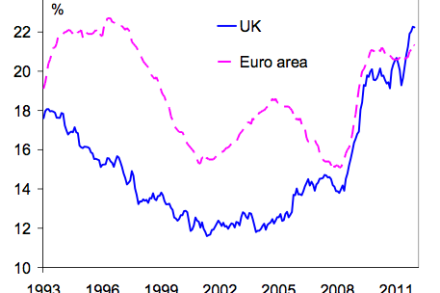
Youth unemployment is approaching crisis levels in Britain. For almost two decades, Britain’s more flexible labour market had favourable effects on youth employment. But the re-regulation of the British economy has narrowed the difference between our jobs market, and that of the continent. Meanwhile the British poverty trap has been strengthened by a dysfunctional welfare state: British workers can in some circumstances keep as little as 5p in every extra pound they earn if they find work. Who would break their back for less than 50p an hour? We’re paying people not to bother, so little wonder that most of the employment rise — in the last government, and under this one — is accounted for by a rise in foreign-born workers.

Europe’s latest tonic could worsen Osborne’s political problems

From our UK edition

Seems that the latest plan to fix the eurozone involves cooking up a pot of alphabet soup. Over in Mexico, G20 finance ministers are currently discussing whether to blend two existing eurozone bailout funds, the EFSF and the ESM, with some extra money from the IMF. They hope that this EFSF-ESM-IMF mix will add up to about £1.25 trillion of ready cash for failing eurozone economies. ‘Look at the size of our fund,’ they will then say, as they try to settle nerves across Europe and beyond. Details are lacking, but some things are already worth noting about this potential mega fund. First is that it seems to be coming about with permission from Germany.

The two types of Tory modernisation — and which one’s on the rise

From our UK edition

There have always been two types of Tory modernisers. Both wanted to talk about issues that the party had neglected — public services, the environment and the like. But the soft modernisers were more prepared to compromise ideologically, to go with the flow of the age. The hard modernisers’ interest, by contrast, was in applying Tory thinking to these areas. Michael Gove’s education reforms are, perhaps, the best example of hard modernisation in action. As Charles Moore puts it in the Telegraph today, ‘Mr Gove offers an attractive combination — complete loyalty to the Cameron modernisation, but a Thatcher-era conviction politics as well’.

The ruckus over Lords reform

From our UK edition

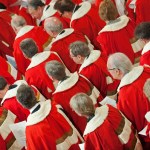
Both the Tory and Lib Dem manifestoes promised to reform the House of Lords, as did the Coalition Agreement, but the gulf in enthusiasm between the two parties is enormous. For many Lib Dems, this is of course — as Nick Clegg put it in December — ‘one boat that urgently needs rocking’. For many Tories, it is something to be ambivalent about, or to oppose. Which is why the politics around the ongoing Lords Reform Bill are likely to be so fraught. James has already written of how there are ‘more than 81 [Conservative] MPs prepared to vote against it.

Willetts tries to dampen the flames around Ebdon

From our UK edition

Siphoning the contents of two brains through one mouth and on to a single page will generally produce eclectic results. And that's certainly the case with David Willetts' interview with the Times (£) this morning. The universities minister manages to range across subjects that include Robert Falcon Scott, climate change, the Falklands and universities access. He even reheats one of his old theories about Feminism and social mobility in a way that (coupled with the interview's headline: ‘Moving on and up is very hard — and feminism is partly to blame’) makes it sound far more provocative than I think it's meant to be, and much weaker for it.