Uk politics

JET — three letters that spell trouble for the coalition

From our UK edition

JEET. That, according to Andrew Grice in the Independent, is the new 'buzzword' circling around Libdemville (population: 57 MPs, and a few others). And it stands for the issues that they want to keep mentioning whenever they can: jobs, education, environment and tax. Fair enough. Although it is striking that only one of these issues is unlikely to put them in close combat with the Tories. Both parties of the coalition support free schools and academies, and the Lib Dems are getting their pupil premium too, so education is relatively uncontroversial territory. But as for the others... Jobs. The conflict here focuses on the role of the state.

The role of Baroness Ashton

From our UK edition

Recent reports have suggested that David Cameron is interested in swapping Cathy Ashton’s job as the EU’s high representative for foreign affairs and security policy for another commission post. But sources close to Number 10 tell me this ain’t happening. Supposedly, Cameron was interested in swapping Ashton’s current role for the post of commissioner for the internal market, currently held by the Frenchman Michel Barnier. But, in reality, this was never on the cards for a whole host of reasons. Foremost of these was that Nicolas Sarkozy was never going to give up the French claim to this job just weeks away from a French presidential election.

Clegg rallies his party

From our UK edition

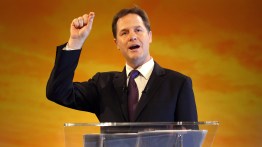
Nick Clegg pushed his members to ‘stop lamenting what might have been and start celebrating what is’ in his rally speech to the Liberal Democrat spring conference. He told them ‘now is the time to move on, to stop justifying being in government and start advertising being in government’. The debate over the Health Bill, though, threatens to dominate the conference. Clegg in his speech went out of his way to pay tribute to Shirley Williams, who is now on the leadership’s side on this issue, lauding the ‘outstanding work Shirley is doing in the House of Lords to protect our NHS’.  This was met with warm applause. But it was not rapturous, suggesting that the conference remains divided on the issue.

Ed Miliband turns back to Brown (again)

From our UK edition

At the end of last year, Ed Balls suggested that Labour would be ‘taking a tougher approach to conditionality [for benefit claimants]. If people can work, they should work.’ Now the party are starting to outline what that means. As the Independent puts it today, summarising a speech that Liam Byrne has given in Birmingham, ‘The unemployed would be guaranteed the offer of a job but could lose their benefits for six months if they turned it down, under a tough new policy on welfare planned by Labour.’ The paper characterises this as an attempt to ‘outflank the Tories on welfare,’ which is surely true. But the whole thing also reminds me of the Brown era.

The Lib Dems could kick up a storm over the NHS Bill

From our UK edition

Lib Dem spring conference is, perhaps, the most potent reminder of the cultural differences between the two coalition partners. In the Tory party pretty much the only thing that members get a real vote on is who the candidate in their constituency should be and who they want as party leader, even then that choice has been whittled down to two options by the MPs first. By contrast, the Lib Dems grassroots still get to determine the detail of party policy. The Health Bill’s problems really began at the last Lib Dem spring conference. It was a vote there that led to Nick Clegg seeking a whole host of changes which then led to the pause. As they say, the rest is history.   This Sunday’s vote on the Health Bill could be equally significant.

The Lib Dems are being urged leftwards

From our UK edition

If you didn't know that it's the Lib Dem spring conference this weekend, then you will after a quick rustle around the political pages. The yellow bird of liberty is splattered everywhere today — and in some instances it's causing trouble for the coalition. Take Exhibit A, Tim Farron's article for the Guardian. Farron is, of course, not one of the most Tory-friendly Lib Dem MPs out there, and neither is he a member of the government — but he's still rarely been quite so provocative as this. ‘We are in power now, sharing government with a party that unashamedly favours their people, the millionaires,’ he writes, ‘It's a serious business, so it's time we focused on our people — the millions who are not millionaires.

Why Cameron should pay heed to Romney

From our UK edition

Cameron flies out to Washington on Tuesday, and when he gets there he’ll have no need to play the infatuated teenager. The days of Gordon Brown-style adulation are over, and Cameron has a more mature, less needy relationship with Obama. The truth is that there’s precious little he can learn from Obama, but there might be a thing or two he can learn from Mitt Romney. I look at this in my Telegraph column today. Cameron has never loved America, in the way that so many people in SW1 do. He toured America in his youth, but had never been to Washington until he became Tory leader. Cameron is more interested in the West coast, the latest theories from California about how information can change government. But from Obama? Not so much.

Balls sidles up to the Lib Dems

From our UK edition

Oh look, Ed Balls has backed a mansion tax, saying in an interview with Nick Robinson that ‘If the chancellor wants to go down that road then we will support him... let's work together.’ But, never fear, it's not a completely non-partisan offer from the shadow chancellor. He does weave a divide with George Osborne, by adding that ‘The issue is what's the purpose? If the purpose is to help families facing higher tuition fees, higher VAT or higher fuel bills — for example boosting their tax credits — yes.’ In other words, the money should go towards Labour policies, or Balls will withdraw his hand of friendship.

The wealth transfer and where it’s going

From our UK edition

The last three years have been one big transfer of wealth from savers to borrowers. Thanks to record low interest rates, savers have gained little from tucking their money away in bank accounts, whereas borrowers have reaped the benefits. According to data from the Bank of England, mortgage holders paid interest of £1328 billion in the three years from 2008-2011, compared to £1897 billion in the preceding three years. That's a difference of £569 billion, or just over £50,000 for each of the UK's 11.2 million mortgage holders. Call it a stimulus if you like. But it's a stimulus that involves clobbering savers so that borrowers can buy a flatscreen TV at the end of the month. There are signs, though, that this transfer is slowing.

Nervous times for Clegg ahead of the Lib Dem spring conference

From our UK edition

This weekend’s Lib Dem spring conference is the next big political hurdle for the Health Bill. If the conference votes against the Bill, then it will create a huge political headache for the government and be a severe embarrassment to Nick Clegg. Talking to Liberal Democrats ahead of the vote on Sunday morning, I’ve been struck by how worried some Clegg supporters are that the vote might be lost. Now, this could well be expectations management. But there are more than a thousand Lib Dem members who have signed the Lib Dem petition against the bill. On balance, I think it is more likely than not that the leadership escapes a defeat.

Osborne eager to act on 50p

From our UK edition

The debate on the 50p tax rate is moving fast. I was told by one Downing Street source today that ‘it is now more likely than not that it goes in the Budget.’ Now, obviously, there is a big caveat here. The Budget is not yet agreed: this is all subject to change. But I understand that the Chancellor is pushing hard to at least set out the roadmap to its abolition on the 21st March. I also hear that the Prime Minister is nervous about quite how determined Osborne is to do this. Cameron’s worry is that a Budget that tackles the 50p rate will be remembered solely for that — which would risk reinforcing the Tories’ reputation as the party of the rich.

Labour’s PMQs strategy: the Super-Vulnerable Voter ploy

From our UK edition

A sombre and muted PMQs this week. Dame Joan Ruddock raised the issue of benefits and asked David Cameron if he was proud of his new reforms. Tory backbenchers cheered on the PM’s behalf. ‘Then would he look me in the eye,’ Dame Joan went on, ‘and tell me he’s proud to have removed all disability payments from a 10-year-old with cerebral palsy.’ This tactic — the Super-Vulnerable Voter ploy — is highly manipulative and highly reliable. But Dame Joan had forgotten something which Mr Cameron is unlikely to forget. Explaining his reform of the Disability Living Allowance he glared angrily at her. ‘As someone who has had a child with cerebral palsy I know how long it takes to fill in that form.

Afghanistan tragedy overshadows PMQs

From our UK edition

I have rarely heard the House of Commons as quiet as it was at the start of PMQs today. The sad news from Afghanistan was, rightly, weighing on MPs’ minds. The initial Cameron Miliband exchanges were on the conflict there with the two leaders agreeing with each other. In some ways, though, I wonder whether the country would not benefit more from some forensic debate about the strategic aims of the mission. However the volume level in the House increased when Joan Ruddock asked the PM if he was ‘truly proud’ of taking benefits away from disabled children.

Osborne backs the Beecroft proposals

From our UK edition

In a speech tonight, George Osborne calls on businesses to respond en masse to the government’s consultation on whether to exempt small businesses from unfair dismissal claims. The Chancellor will say: ‘And now we’re beginning a call for evidence on the case for a new compensated no-fault dismissal for our smallest businesses. Plenty of trade unions and others will be submitting their evidence for why we shouldn’t do this. If you think we should, and it will increase employment, then don’t wait for someone else to send in the evidence. Send it in yourself.’ The fact that Osborne is personally throwing his weight behind the Beecroft agenda is striking.

Ed Miliband just doesn’t get globalisation

From our UK edition

If you think things couldn’t get worse than Ed Miliband’s Five Live interview, read his speech on patriotism. It seeks to build on his ‘predators’ speech, which suggested a Manichean divide between bad companies and good companies. Labour MPs of Mr Miliband’s political heritage always place manufacturers in the latter camp. He hails the success of many of them. ‘You know better than I that this success has been achieved against the odds.’ I suspect they know better than he the effect that a 25 per cent devaluation has on exports. ‘Economic protectionism is what governments reach for when they don’t believe firms can compete. And we will never return to those days,’ he says – before doing just that.

The child benefit cut risks alienating striving families

From our UK edition

Why should someone on the minimum wage subsidise the childcare arrangements of someone on £100,000? So runs the argument for abolishing child benefit for higher-rate taxpayers. You can see why George Osborne went for this: in theory, we are talking about the best-paid 14 per cent. If he was going to cap benefits, he had to be seen to hurt the rich too. The 50 per cent tax was not enough; axing child benefit would be just the tool he needed to say ‘we’re all in this together’. The problem is that the 40p tax band is set far too low in Britain, and now takes in policemen and teachers. People who can not really be described as rich, especially if one earner is supporting a family and paying off a mortgage.

Ed gets another kicking

From our UK edition

Who let Ed Miliband out again? You’d have thought that Labour HQ would have learnt from the #AskEdM debacle but apparently not. Ed popped up on Radio 5 Live today following his Made in Britain speech to answer questions from voters. It’s hard to work out whether the callers were CCHQ staffers in disguise or ordinary members of the public, thanks to the extreme vitriol thrown at Ed. He had little of interest to say on the EU (he wouldn't have signed the treaty), child benefit (he can't promise to reverse the cuts) and Labour’s attitude towards business (he's pro-, apparently). Instead, the callers took the opportunity to attack him personally. As Dot Commons reports:  'They ranged from the biting...