Uk politics

What today’s Abu Hamza ruling means

From our UK edition

The European Court of Human Rights has ruled that five terror suspects, including notorious Islamist cleric Abu Hamza, can be deported to the United States — a decision welcomed by both David Cameron and Theresa May. Last year, Hamza and three of the other men appealed to the ECtHR against extradition to the US on a whole host of grounds — including that they might face the death penalty and that their trials would be prejudiced.

When it comes to personality, Boris will always win 

From our UK edition

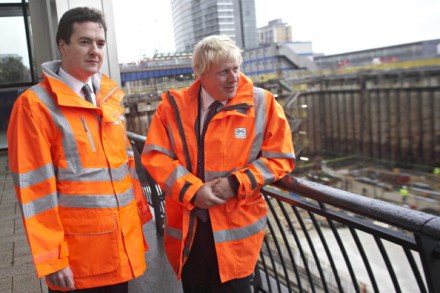
The fight for London Mayor election has well and truly descended into a clash of personalities. Policies have all but disappeared while candidates trade attacks in the press. The Guardian, duly unimpressed, has written a scathing leader attacking both sides for this strategy: ‘The early days of the London campaign have fallen well short of what the voters are entitled to expect. Almost everything has been focused on the egos, lifestyles and personalities of the two main candidates, Boris Johnson of the Conservatives and Ken Livingstone for Labour. Mr Johnson, arguably a better mayor than some feared but evasive and woolly on the detail as ever, has run a deliberately negative campaign with little vision.

Motorman returns

From our UK edition

  Guido Fawkes has caused a stir this morning by releasing a section of the Operation Motorman files, naming those News International journalists thought to have paid for private information. But so far, Guido's splash tells us little that we didn't already know: he has lots of information, but has only released the names of News International journalists. Back in July, Peter Oborne wrote a cover piece on the extent of all this for The Spectator entitled 'What the papers won't say', in which he said: 'The truth is that very few newspapers can declare themselves entirely innocent of buying illegal information from private detectives.

The teachers’ unions take on Ofsted, Osborne and Gove

From our UK edition

I counted five issues which the NUT conference suggested that teachers might strike over. But in a conference full of the usual bluster, the most noteworthy threat was not to cooperate with Ofsted inspections. Ever since the new chief inspector Sir Michael Wilshaw — who was hugely successful as the head of Mossbourne academy — announced that a merely satisfactory grade would no longer be regarded as good enough, the teaching unions have taken agin him. But not cooperating with Oftsed would be unlawful. Anyone who tried to block an inspection would be liable to prosecution and a fine. Another issue exercising the unions is George Osborne’s proposals for regional pay for the public sector.

Osborne’s tax avoidance clampdown

From our UK edition

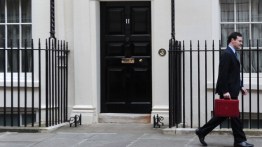
So, George Osborne has taken a look at the tax arrangements of some of the UK’s wealthiest people. And his reaction? ‘Shocked’, apparently — or so he’s told the Telegraph: ‘I was shocked to see that some of the very wealthiest people in the country have organised their tax affairs, and to be fair it’s within the tax laws, so that they were regularly paying virtually no income tax. And I don’t think that’s right. I’m talking about people right at the top. I’m talking about people with incomes of many millions of pounds a year. The general principle is that people should pay income tax and that includes people with the highest incomes.

The Tory leadership is still fighting John Major’s battles

From our UK edition

Bruce Anderson has written a typically trenchant piece today describing the Tory party’s treatment of John Major as ‘the most unworthy, the most shameful, period in Tory history.’ Based on both how close Bruce is to those around David Cameron and my own conversations, I would say that this is a verdict that many in the Tory leadership would agree with. Indeed, the way in which Major was treated by some Tory backbenches has informed — often with calamitous consequences — Cameron’s approach to party management. Take, for instance, Cameron’s effort straight after the election to neuter the 1922 Committee and turn it into the Conservative Parliamentary Party.

A few Easter questions

From our UK edition

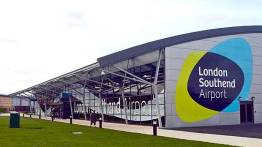
Apologies for my absence from this area: I took my two boys away for an uplifting week of cycling on a windswept and pretty Dutch island. I suppose they might have burned off a few more calories if I’d let them loose in the Rossebuurt for a few hours, but I’m getting respectable and middle class in old age. We flew back into Southend Airport, which was was an absolute joy: four minutes from disembarking we were out of the airport building. This may be the best use yet that anyone has thought of for Essex. A few questions about puzzling news stories which occurred whilst I was away: 1.) Why is Boris Johnson getting stick over his tax arrangements? (I know he has now declared all and is squeaky clean).

We need a crack down on tax avoidance

From our UK edition

After the Budget there was a lot of anger over the pasty tax and the granny tax. Another big rise — in tobacco taxes — didn't make as many headlines, because it wasn't much of a surprise. But for someone smoking a pack a day it almost wiped out the entire value of the rise in the Personal Allowance. Given that most smokers earn relatively low incomes, it was probably the most regressive measure in the Budget. The idea is that smokers are supposed to be grateful for this impetus to give up. Many will keep smoking though, and this will just be yet another strain on their household budgets. Some will respond by buying more from the illicit market.

The coalition split draws nearer

From our UK edition

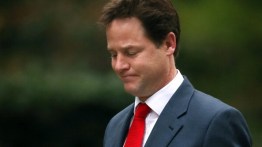
Why did Nick Clegg change his mind on the snooping bill? Because he can't afford to back something that his party rejects — like the NHS Bill. Over the next few weeks, we will see Clegg impaled on the horns of yet another policy dillema as the government decides what to put in the surveillance bill. The president of the Liberal Democrats, Tim Farron, has laid out his position in the Times (£) this morning: 'I am prepared to recognise that there is obviously a need in modern society with new technology to have a look at what needs to be given to the security services but only if it is absolutely clear there is universal access...but we are prepared to kill them, be absolutely clear about that, if it comes down to it.

Sadly, the 47p tax rate is here to stay

From our UK edition

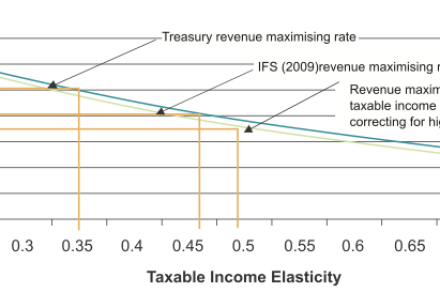
Nothing is more permanent than a ‘temporary’ government tax, as George Osborne is reminding us. When Alistair Darling proposed a 45p rate in 2008, even the Institute of Fiscal Studies said it would lose money – but Darling said it would be 'temporary'. Brown upped it to 50p, Osborne took it back down to 45p but the 'temporary' status has been revoked. The Sunday Times has today splashed on Osborne’s interview with Robert Winnett of The Daily Telegraph, where the Chancellor said 'I’m very happy with the 45p rate of tax. We’ve got it to a good place where it’s competitive.' Britain had the highest top rate of tax in the G20, now it has the third-highest.

Mr Cameron goes to Leveson

From our UK edition

One of the media’s vices is to assume that the public are as interested in stories about journalism as journalists are. This always makes me slightly reluctant to write about the Leveson inquiry - more fascinating for my trade than to anybody else. But the Leveson inquiry is about to enter its political phase which, I think, makes it more relevant. Politicians will start appearing before it from towards the end of next month and, as I say in the Mail on Sunday, David Cameron is scheduled to face the inquiry which he created in mid-June. Six other Cabinet ministers are expected to be summoned before the inquiry. For Cameron, this is going to be a tricky moment (think horses, Oxfordshire weekends etc).

Has Osborne fully considered his transparency promise?

From our UK edition

Will Osborne come to regret his new-found transparency zeal? This week's saga from the London Mayoral candidates highlights how financial disclosures can not be all they seem. For Osborne to fulfil his promise, we need full details of not just income and tax returns, but also assets in which they are stakeholders and companies through which they work. Brian Paddick's release is an excellent model to follow, as opposed to Ken Livingstone's decision to release just a few summary figures. If Team Miliband happened to be on the ball, there is also a great opportunity to pip the government with a universal full disclosure. This would be following Osborne's own lead — he oversaw the first such breakdown whilst in opposition.

Osborne’s Easter gift to Boris

From our UK edition

George Osborne indicating that he is open to him and other ministers having to publish their tax returns is testament to two things. First, the Tory leadership, who know how crucial a Boris victory in London is to the Cameron project regaining momentum, is keen to keep the pressure on Ken Livingstone over his tax affairs. They have no desire to let a row over whether they’ll publish theirs distract attention from the problems of Labour’s mayoral candidate. As Osborne himself stresses in the Telegraph interview, “The reason we are talking about this now is that this is a smokescreen for Ken Livingstone’s tax affairs. Let’s not take the focus off him.

Tinker, Tailor, Soldier, Tax Evader

From our UK edition

Rather than respond to CoffeeHousers in the comment thread of my blog earlier, I thought I'd do it in a post (and also take in some of the comments from Twitter and my Telegraph piece). I’ve been accused of "starting to sound like a leftie" - and for what it’s worth, I don’t sign up to the David Davis civil liberties agenda. Not all of it, anyway. I’m all for snooping if it helps catch murderers or jihadis. But what I don’t like is this age-old politicians trick of pushing a whole load of powers through in the name of ‘national security’ then, next thing you know, the council is trawling your email data.

The importance of sacking bad teachers

From our UK edition

The opposition of the National Union of Teachers to the government’s plans to make it easier to fire bad teachers is entirely predictable. The NUT has long placed the interests of the worst of its members above those of the children being educated in the state system. Given what we know about just how crucial good teaching is to a child’s educational achievement then it is absolutely vital that the coalition does push these changes through. One of the most important parts of these changes is ending the process by which bad teachers are simply shuffled around the system. Academy schools already have the power to vary pay. But, sadly, few are choosing to use it.

What is being done in the name of ‘national security’?

From our UK edition

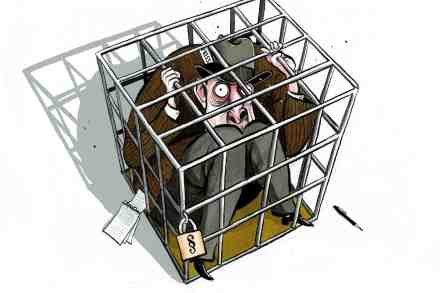
The liberty versus security debate has returned to Westminster, and it's just like old times. David Davis is having great fun beating up the government, except this time it's a Tory-led one. And as so often, Davis has a point. Much rot is spoken in the name of 'national security,' which can be used by the right as 'health and safety' is used by the left: a verbal trump card, to win any debate and justify any policy. So it has proved with this bun fight over the snooping powers about to go through parliament. It has split the coalition, and even the Tory party. In my Telegraph column today, I try to work out what's going on. First, what isn't going on: the idea that MI5 or MI6 want secret trials, or to read all our emails, is bonkers.

The implications of today’s tax releases

From our UK edition

I suspect that three important consequences will flow from the release today of the London mayoral candidates tax returns. First, voters will see that Boris Johnson’s rage at Ken Livingstone on Tuesday as being thoroughly justified. Second, they’ll see that Ken Livingstone, despite all his left-wing rhetoric, is the only one of the four main candidates to have tried to make his affairs tax efficient. The third consequence is that a precedent has now been set that politicians running for office should publish their tax returns. I’ll be shocked if one of the three party leaders doesn’t try and steal a march at the next election by volunteering to publish their information and challenging the others to do the same.

Transcript: Balls vs Alexander on tax credits

From our UK edition

On the Today programme this morning, Ed Balls aired his criticisms of the government's tax credit changes — which come in tomorrow. He was followed by Danny Alexander, who emphasised the £630 increase in the personal allowance and argued that the measures are necessary ‘to deal with Labour's economic mess’ and to create a tax and benefit system ‘which encourages and incentivises work’. Here's the full transcript of both interviews:   James Naughtie: Now, in every set of tax changes there are winners and losers and after today, the end of the tax year, people will be able to assess what the government’s changes to tax and benefits are going to mean for them.

How much tax do the mayoral candidates pay?

From our UK edition

So, Ken has now released his tax details. He hasn't gone as far as Lib Dem candidate Brian Paddick, who's published his full tax returns for the past three years. And there are also questions about what income Ken might not have included in his release. It's also not clear whether or not he's including National Insurance contributions, as the other two candidates are. But, based just on the figures each candidate has declared, here are the effective tax rates they've been paying: UPDATE: It seems Ken's campaign is trying to use our chart as proof that he isn't avoiding tax. But our figures for Ken are simply the amount he's declared he pays in tax divided by his declared personal income. It's what he claims his effective tax rate is, not what we claim it is.