Uk politics

The EU against new booze

From our UK edition

You don't expect to find so much politics in a booze mag, but there’s an intriguing story in a recent edition of the Drinks Magazine. Relations between Britain and Argentina have been very fraught of late, so the good folk at Chapel Down, the internationally renowned vineyard in Kent, decided to promote peace and goodwill by importing Malbec grapes from Argentina to make a special English wine, called 'An English Salute', to mark World Malbec Day, which took place on Tuesday. The vineyard planned to sell the wine in Gaucho, the chain of Argentine-themed steakhouses.

The coming schools crisis

From our UK edition

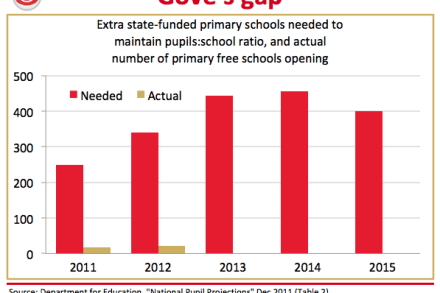
Michael Gove’s school reform is being overwhelmed by the surging demand for school places, I argue in my Telegraph column today. When the Education Secretary first draw up his ‘free school’ programme, he said in a Spectator interview that his aim — while radical — was simple.  ‘In your neighbourhood, there will be a new school going out of its way to persuade you to send your children there. It will market itself on being able to generate better results, and it won’t cost you an extra penny’ Choice is only possible when supply outstrips demand. But the latter is growing faster than anyone envisaged a few years ago.

The depth of Tory feeling over Lords reform

From our UK edition

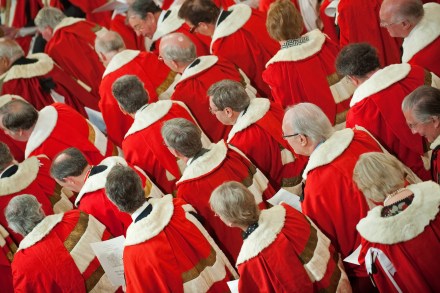
What should worry David Cameron about tonight’s meeting of the 1922 Committee on Lords reform was that it was not just the usual suspects who spoke out against it. The two MPs presenting the case against were members who have never defied the whip: Jesse Norman and Nadhim Zahawi. Those present were particularly struck by some polling data that Zahawi, who used to run YouGov, presented. It showed that when asked what issues were a priority for them zero per cent of the electorate mentioned reform of the Lords. Even when prompted, this number only rose to six per cent. But Zahawi’s polling shows that if reform does go ahead, almost two thirds of the public want a referendum on it.

ECHR reform won’t happen

From our UK edition

In Westminster, the debate about the European Convention on Human Rights and the European Court of Human Rights is all being seen through the prism of the Abu Qatada case. Undoubtedly, the whole debate over how many days had elapsed is something Theresa May and the Home Office would have liked to avoid. It has also come at a particularly unfortunate time for the government when people are prepared to believe it has been incompetent even when it hasn't been. But what, I expect, is more significant in the long term than Abu Qatada is the fact that the Brighton conference on the ECHR is not going to deliver the meaningful reforms that David Cameron wants. It is becoming increasingly clear that the aim of reforming the ECHR from within is a pipe dream.

Cameron approaches Lib Dems’ chief tormenter

From our UK edition

News is breaking at the Telegraph that Matthew Elliott — head of the TaxPayers' Alliance — is being considered for an adviser role in Downing Street. It would be strategic move by Cameron, and a bold one given Elliot's effective work on the Alternative Vote referendum. That campaign, which focused on Nick Clegg's shortcomings, is the greatest sore between the Prime Minister and his deputy, raising the question of how Lib Dems react to the news that their prime taunter has been being brought into the love nest of No.10. Many Conservatives will be heartened by the news, especially at a time when there is a brain drain sweeping across the coalition (with Richard Reeves' departure last night).

Cameron and the civil service coup

From our UK edition

We thought CoffeeHousers might care to read James’s political column from this week's magazine (on sale today), so here it is: There is a split in the Cameron circle. The divide is between those who think that the problems of the past few weeks have been a blip, one that will end when Boris Johnson wins in London, and those — including some of the Prime Minister’s closest friends — who fear the problems are symptoms of a disease that could cripple the government. At stake in this debate is the future strategic direction, and the potential success, of the Cameron project. The Prime Minister, ever the optimist, is in the first camp. He is inclined to think that he is experiencing a normal bout of mid-term turbulence.

The View from 22 — 19 April 2012

From our UK edition

For your listening pleasure, here is the second episode of The View from 22 podcast. Thanks for all the feedback on our first attempt, we've tried to take as much as possible into account this time. In this episode, Fraser and I speak to the Labour MP and historian Tristram Hunt about the teaching of history in schools. Freddy Gray discusses this week's cover on the runners and riders in the French presidential election. And James Forsyth reports on a deficit of politicians inside Downing Street . You can listen below with the embedded player or — best of all — subscribe through iTunes. As before, we'd love to hear what you think, good or bad.  The View from 22 - 19 April 2012.

Reeves resignation is bad news for Clegg

From our UK edition

The departure of his senior aide Richard Reeves is a major blow to Nick Clegg. Reeves, a relative newcomer to the Lib Dems, was far less focused on party structures than many of those in Clegg’s circle and instead concentrated on the party’s long term electoral prospects. Reeves’s view was that there was a space in British politics for a party that was classically liberal on economics and socially liberal on other matters. He wanted to turn the Lib Dems into a party that was as comfortable in government as in opposition. There will be those who want to read something political into Reeves’s departure.

A taxing PMQs for Cameron

From our UK edition

And on it rumbles. Last month’s budget seems to have created more niche-losers than any tax settlement in history. Those who feel deprived are still squealing about it. At PMQs today Ed Miliband took a swipe at the Prime Minister on their behalf. Billionaires get bungs, grannies get mugged. That’s the headline Miliband was aiming for but didn’t quite find. He adopted his best silent-assassin mode and politely asked the PM to confirm whether or not a bonus of £40k was winging its way into the wallets of Britain’s top earners. Cameron couldn’t switch subject fast enough. The Budget, he claimed, was all about cutting taxes for 24 million workers and lowering corporation tax to make us more competitive.

Let’s move the Lords to Manchester

From our UK edition

Andrew Adonis, one of the policy brains of the Blair government and now seated in the House of Lords, has a letter in tomorrow's edition of the Spectator responding to Neil O'Brien's cover article of last week. In it, Adonis suggests one way that the political class could help purge the Londonitis from its collective system: move the House of Lords to Greater Manchester. Here's the full text of the letter, for CoffeeHousers: Sir, As Neil O’Brien rightly says, London is New York, Washington and LA rolled into one, which is unhealthy for our national politics. So I have a serious suggestion.

Transcript: Nick Clegg on the budget and the local elections

From our UK edition

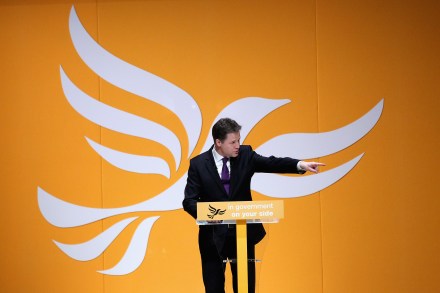
Here's the full transcript of this morning's Today programme interview with Nick Clegg: James Naughtie: Coalition government involves some pretty hard bargaining, some difficult compromises for both parties. You might think therefore that the opportunity of a local election campaign would be quite welcome, party leaders being themselves, talking to their own parties without having to worry too much about the other lot. But for Nick Clegg, leader of the Liberal Democrats, times are tough. He doesn’t even need to look at the opinion polls to know that. He said himself at the weekend that coalition life was a roller coaster and acknowledged that any government sooner or later found itself in a rut where every potentially good story turned into a bad one.

Unemployment is down but are prospects up?

From our UK edition

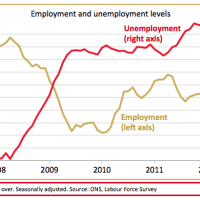
The government has fallen on today’s numbers showing employment up by 53,000 and youth unemployment down by 9,000. This is the first quarterly fall in unemployment for over a year. One coalition source describes the news as a ‘good reminder of what really matters, both economically and politically.’ Certainly, these figures will provide David Cameron with some protection in his first post-Budget PMQs. Ed Miliband won’t be able to make his usual jobs attack. But politically one of the key questions will be who is getting these jobs. One of the worries for the coalition is that a huge amount of the new jobs that are being created are going to foreigners, who are often more motivated than their British counterparts and have more experience.

QE comes to the fore

From our UK edition

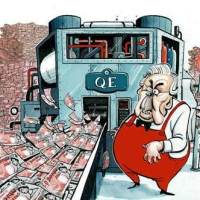
It's roughly seven months until George Osborne's Autumn Statement, so no better time to consider which political issues will come to the boil ahead of it. Fuel costs, I'm sure, will be one if them; because they never really go away, and the 3p rise in fuel duty will have just been implemented in August. But I'd say the safest bet is the finances of the elderly. If the furore over the frozen income tax allowance for pensioners didn't put that voting bloc at the forefront of Osborne's mind, then the demographics behind UKIP's poll jump will surely do the trick. He will be under severe pressure to act. Actually, I'm not mentioning this at random, but because a group of MPs is today calling on Osborne to do just that — act.

After Abu Qatada

From our UK edition

It has been a mixed news day so far as Britain's relationship with the ECHR is concerned. There's been the good stuff: Abu Qatada has been arrested and is set to be deported, with the government now confident that he can be shipped to Jordan without provoking the ire of Europe's legal class. And then there has been the less than good stuff: according to the Times, which has a leaked document in its possession, Britain's official proposals for reforming the ECHR have been diluted ahead of the Council of Europe meeting in Brighton this week. This outcome, as I suggested back in February, is hardly surprising — but it could nonetheless make life a little bit more difficult for David Cameron.

No ‘poll shock’, but some interesting findings nonetheless

From our UK edition

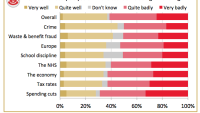
Despite the Times’s headline (‘Poll shock as new U-turn looms’), there’s nothing particularly surprising in the toplines of today’s Populus poll. It merely confirms the trends already exposed by other pollsters: a widening Labour lead (Populus has it at nine points, up from four last month) and increasing discontent with the coalition (Populus has the government’s net approval rating at minus 24, down from minus 3 in September). Beneath the toplines though, there are some interesting details.

Anders Borg: Europe’s best finance minister

From our UK edition

In the current issue of The Spectator I interview Sweden’s Anders Borg, perhaps the most successful conservative finance minister in the world — both in his economic track record, and the accompanying electoral success. His response to the crash was a permanent tax cut to speed the recovery. At the time, everyone told him it was madness. But Borg is unusual amongst finance ministers, in that he is a trained economist. To him, madness lay in repeating the formula of the 1970s and expecting different results. Last year, Sweden celebrated the elimination of its deficit. It’s perhaps worth mentioning a few other points which I didn’t fit into the interview. 1. Revenge of the nerds.

America’s version of the ‘tax the rich’ debate

From our UK edition

While the battle continues to rage over the government's plan to cap tax relief, on the other side of the Atlantic the US bill that inspired it has been killed. The ‘Paying a Fair Share Act 2012’ — more commonly known as the ‘Buffett Rule’ after billionaire Warren Buffett — failed to get the votes it needed to be debated in the Senate. It was backed by a majority of senators, with 51 voting ‘Yea’ to 45 ‘Nay’s, but fell short of the 60 votes needed to break a filibuster.