Uk politics

RBS next in line for Libor heat

From our UK edition

The Guardian has published an interview on its site with Stephen Hester in which the RBS chief executive predicts his bank is facing a huge fine for its part in the Libor fixing scandal. He says: 'RBS is one of the banks tied up in Libor. We'll have our day in that particular spotlight as well.' Hester can to a certain extent afford to be upfront about what is coming down the line for his bank. Even though it was clear from the start that there were other banks wading around in this swamp, Barclays took the majority of the flak as the first one to be fined. There might be another round of emails about bottles of Bollinger to feast upon, but the revelations will not be as shocking the second time around.


Ministers consider further planning reform

From our UK edition

Today’s papers are stuffed full of Olympic reportage rather than analysis of the GDP figures. But down in the bowels of Whitehall, a list of policy options to try and boost economic growth are being drawn up. Decisions on what to do will be taken after the Olympics but I understand that further planning reform is currently on the list. The coalition announced a new national policy planning framework in the Spring. But it was not as radical as George Osborne and the Treasury wanted it to be: opposition from heritage groups like the National Trust and various environmental organisations led to it being watered down. With the economy shrinking and construction in particular decline, though, the Treasury wants to come back to this fight.

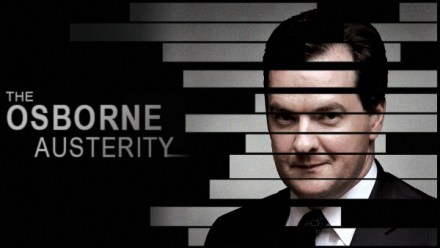
Osborne needs to give the Lib Dems sleepless nights on supply-side reform

From our UK edition

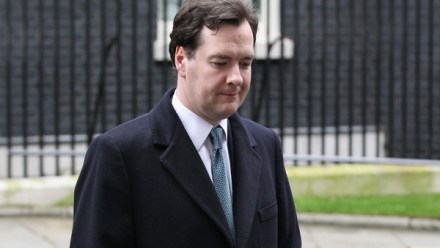
Ed Balls is doing very well out of the GDP figures that were released on Wednesday. The Shadow Chancellor is right to say that George Osborne is not yet doing the right thing with the economy. But that doesn't mean Balls' solution is the right one. Cuts should have been only one side of the deal, but as Iain Martin points out in today's Sunday Telegraph, the other side which should have kickstarted growth - supply-side reform - is not forthcoming because Osborne and Cameron are afraid of offending the Lib Dems. Similarly, James says in his column today that too often attempts to strike a balance between the supply-side reform that the Tories want and the demand-management favoured by Vince Cable means nothing is achieved at all.

Osborne seizes on S&P ratings relief

From our UK edition

You'd think that after the bad economic news of the past week, George Osborne might have reverted to submarine mode as soon as he possibly could, moving quietly under the cover of the Olympics. But this afternoon he has stuck a periscope up with this message: the world has confidence that Britain is dealing with its economic plan. It's a bold statement to make after Wednesday's GDP figures, and Labour has already mocked him for doing so, but Osborne is responding to the announcement overnight by Standard & Poor's that the UK will continue to enjoy an AAA credit rating.

Using the Olympics to turn a corner

From our UK edition

I suspect there’s a certain relief in Downing Street today. First, the opening ceremony passed off pretty well; no one is talking about G4S this morning. Second, Standard and Poor’s has reiterated Britain’s AAA credit rating despite the negative GDP figures this week. The government is hoping that the Olympics will help it turn the corner from the negative economic news of recent months. Over the next week or so, we’re going to see what one minister described to me as ‘the government’s industrial strategy’ in action. The Global Investment Conference at Lancaster House is meant to showcase the benefits of investing in Britain for specific sectors.

Unqualified teachers haven’t ‘irreparably damaged’ the private sector: why do state schools deserve anything different?

From our UK edition

The furore surrounding the news - which James broke on Coffee House this afternoon - that academies will now be able to employ teachers who are not qualified was so brilliantly predictable that we could have written the unions' press releases for them. Christine Blower of the National Union of Teachers slammed it as a 'clear dereliction of duty' and a 'cost-cutting measure that will cause irreparable damage to children's education'. Blower and her union colleagues are not clear why education will be so badly damaged by this, though. Top schools in the private sector regularly employ staff who have gone through no formal training at all. But parents have to pay for this privilege: it is not available to them in the state system.

Academies to be allowed to employ teachers without formal training

From our UK edition

The pace of reform in education has been stepped up again today. The model funding agreement for all new academies has now been changed by the Department for Education to remove the requirement for all teachers to have Qualified Teacher Status. Any existing academy will also be able to change its funding agreement to include this new freedom. This change might sound technical but its importance is that it means that academies will now be able to employ people who have not gone through a year of teacher training. Previously, an academy couldn’t have employed, say, James Dyson to teach design without him having done a year in a teacher training college. These new, more flexible arrangements should spur a change in the nature of teacher training.

Web exclusive: voters must punish the government if recall is dropped

From our UK edition

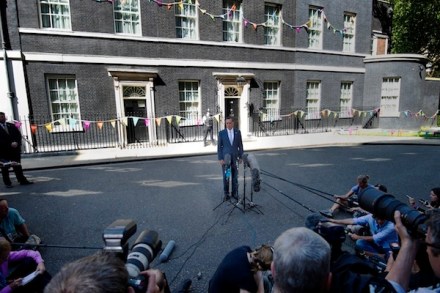
In his first statement as Prime Minister on the steps of No10 Downing Street, David Cameron said that “One of the tasks that we clearly have is to rebuild trust in our political system... yes, it’s about making sure people are in control and that the politicians are always their servants and never their masters.” One key promise in the Coalition Agreement to achieve this was to introduce a power of recall, allowing voters to get rid of sitting MPs and force by-elections where they feel they have been let down. The Government published a draft Recall Bill in December last year, and invited a Committee of MPs to scrutinise it. At first, it appeared to be one of those rare things; a political promise kept.

Olympic Boris

From our UK edition

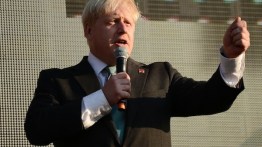
Boris Johnson is one of the few politicians in the world able to clamber up on a concert stage in Hyde Park, take the mic, and whip a crowd up into a frenzy as he did last night. If you haven't seen the Mayor of London sending Londoners wild with excitement while mocking Mitt Romney, it's well worth watching below: It's impossible to imagine any of the members of the Cabinet managing to carry any of this speech off with any dignity at all, let alone the panache that Boris possesses. A Ken Livingstone Olympic rally might have struck a rather different tone had London voted in a Labour mayor in May. When Boris solemnly stalked down a road in Clapham a year ago, waving a broom aloft, he managed to turn around the mood of a crowd which had just seconds before, been booing him.

The Romneyshambles road show

From our UK edition

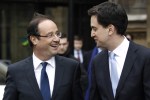
David Cameron broke with Downing Street tradition today by meeting Republican presidential candidate Mitt Romney. But Romney might now be wishing that, like François Hollande, he'd been snubbed by the Prime Minister until the elections were over. He started his day with forgetting Ed Miliband's name, calling him 'Mr Leader' instead when the two met. That wasn't too bad: it's not as if British people, or indeed the media, can remember what the Labour leader is called half the time, anyway.

Warsi cleared of expenses allegations

From our UK edition

The Lords Commissioner for Standards has cleared Baroness Warsi of allegations that she wrongly claimed expenses for staying rent-free with a friend. Now that this has been cleared up, and Sir Alex Allan has already exonerated her from any allegations of impropriety for allowing a business partner to accompany her, Warsi has a clean slate to present when it comes to September's reshuffle. The Prime Minister said that the Conservative Party co-chair would lead a 'big summer of campaigning for the Conservative Party' in the run-up to the police commissioner elections, but that still leaves the door open to a new task in the autumn. Paul Waugh reported yesterday on his blog that Warsi could take over as International Development Secretary, which he describes as 'in many ways her dream job'.

Lib Dems block further welfare cuts

From our UK edition

One popular prediction swirling around Westminster this morning is that part of the Government's response to the GDP disaster will be to cut more money from the welfare budget. After all, George Osborne told MPs in his Budget statement that there would need to be a further package of £10 billion cuts in welfare spending over the period of the next spending review, and the IMF has made similar noises, too. But I understand that this is not going to happen because the Liberal Democrats will not let it go through. Sources are emphatic that those at the top - Nick Clegg, Danny Alexander et al - have blocked the £10 billion of cuts for this parliament. 'It's just not going to happen,' says one senior party figure.

France shows up Labour’s economic plan

From our UK edition

Yesterday’s economic news reminds us of the need for the Government to continue to focus relentlessly on getting our economy moving – dealing with the debt crisis, boosting bank lending to the real economy, and ensuring sustainable long-term prosperity through radical economic reform. One of the key planks of the Government’s reforms is to make Britain’s tax system more competitive, ensuring that Britain is open for business, that we are a dynamic and an attractive place to invest in and to work in. Cutting corporation tax to the lowest rate in the G7 is one element of this plan. Cutting the top rate of income tax to level the playing field with our main competitors like New York is another. These market dynamics are lost on Labour.

The post-GDP sleeve-rolling begins

From our UK edition

David Cameron is using the Olympics today to strike a more upbeat tone after yesterday's GDP gloom. The Prime Minister is speaking at 10am at a global investment conference to pitch for business from 180 chief executives from around the world. Cameron will tell the conference that he is 'determined that Britain will be on of the great success stories' in rebuilding its economy, and will say: 'There will be no more passionate supporter of Team GB than me. But I've got a job to do this summer. And a big part of that job is to get behind British business… and do everything I can to help secure the trade and investment that will help get the world back to sustained, global growth.

The straightforward solution for mental health treatment

From our UK edition

Yesterday Nick Clegg published an ‘implementation framework’ for the government’s  mental health strategy. This follows his announcement in February 2011 of a ‘No Health without Mental Health’ policy, which has not been delivered and is now fragmenting under the changes being implemented to the commissioning structure of the health service. I have a special interest in this subject. About four years ago the failure of both the NHS and the private sector to deliver moderately competent mental health treatment (to me) nearly killed me; I was very ill with complex PTSD.

The work experience Chancellor

From our UK edition

Lord Oakeshott has just sparked some outrage by arguing on the World at One that George Osborne, who he described as a 'Chancellor on work experience' should be replaced by Vince Cable. He said: 'I do think that George Osborne, he's got no business experience, he's never worked outside politics, and you know, he's doing surprisingly well for a Chancellor on work experience, but really in a torrid time like this I think we do need the absolute best people available.' A now-backbench Lib Dem peer announcing he would like to see a Lib Dem leading the Treasury team isn't exactly the most surprising revelation. But what was interesting was the way Danny Alexander, who appeared a few minutes later on the programme, handled Oakeshott's suggestion.

Olympic strike averted

From our UK edition

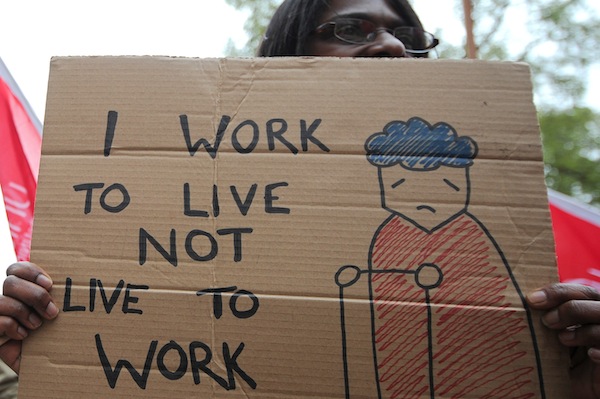
The PCS decision to call off the strike scheduled for tomorrow lessens the chances of a logistical nightmare of a start to the Olympics. It also means that the government’s challenge to the strike won’t be heard in court. Both sides are claiming victory in the dispute. Government sources are claiming that the union has backed down in the face of public opposition to an Olympic strike and the union is saying that it has won a promise that a certain number of new posts will be created. But the mere fact that this strike almost happened on such a low turnout will strengthen the hand of those in government who are pushing for a minimum threshold strike law. There is a feeling on the Tory side of government that they now have permission to move on this matter.

GDP figures show the economy needs fundamental reform

From our UK edition

Today’s GDP figures are far worse than expected. They mean that the economy has now shrunk for three consecutive quarters. The figures have destroyed the optimism created by the fact that employment and tax revenues are rising. Politically, these figures are undoubtedly a blow to the coalition. Labour is out trying to pin the blame for the continuing recession on the government’s economic policy. The Treasury is countering that the figures confirm that ‘the country has deep rooted economic problems’. In a sign, though, of how serious the GDP fall is, the government is conspicuously avoiding suggesting any external reasons for it — such as the Eurozone crisis, the weather etc. What is clear is that the economy needs fundamental reform.