Uk politics

Miliband wins the boundaries battle

From our UK edition

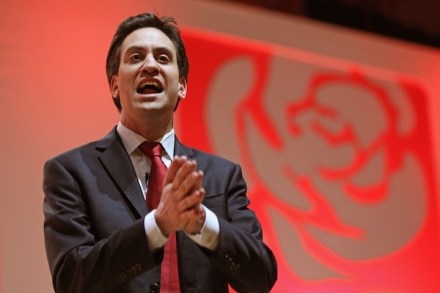
The biggest winner of the coalition spat over Lords reform and boundaries is, undoubtedly, Ed Miliband. The electoral hill he has to climb to be Prime Minister has just been reduced in size significantly by the fact that the next election is likely to be fought on the existing boundaries. A lead over the Tories of just three per cent would deliver him a majority. In quite a turn-around from last year, Miliband will go to his party conference as the most secure of the three leaders. But Miliband will soon face a problem, albeit a high quality one. At some point in the not too distant future, the media will start to treat him as a likely Prime Minister. This means that his policy positions will be examined with a far greater level of scrutiny than they currently are.

Cameron confirms boundary vote

From our UK edition

David Cameron has confirmed this lunchtime that the boundary reforms will be pressed to a vote. Describing the plans that the Lib Dems are now set to reject as 'sensible', he said that they would be 'put forward' to MPs. As James reported yesterday, Conservative sources are not yet conceding defeat on this, hoping that something might turn up to ensure their passage through parliament. But the vote will lead to the extraordinary spectacle of Lib Dem ministers walking through the 'no' lobbies with Labour and then, according to party sources, resuming their positions on the front bench without any censure because these are exceptional circumstances. The Prime Minister gave a nod to this today when he told BBC Wales that 'every party will have to make up its own mind how it votes'.

Cesspits and the City

From our UK edition

It's becoming difficult to predict just when the period of remorse and apology for bankers really will be over. Bob Diamond claimed that it had finished in January 2011, and found to his cost this summer that this was not true. The Libor scandal that cost the Barclays boss his job wasn't the only unpleasant thing to crawl out of what Vince Cable described as the 'cesspit' in the City of London, though. Today Standard Chartered's shares fell by 16 per cent following allegations from US regulators that the bank had covered up £160bn worth of transactions with the Iranian government. And at Southwark Crown Court this morning, Jessica Harper, head of fraud and security for digital banking at Lloyds bank admitted a £2.4 million fraud.

Multicultural Britain, Olympic Games, Danny Boyle – Spectator Blogs

From our UK edition

Back from holiday and it seems just about the only "controversy" at these splendid* Olympic Games lies in Danny Boyle's exhuberant opening ceremony. According to its critics it was multi-cultural crap or pap or something. And, of course, in one sense it was a hymn to multi-cultural Britain. Why else would Boyle have begun with choirs in Northern Ireland, Scotland, Wales and England (spliced with rugby footage) if not to remind the audience (in London and further afield) that the United Kingdom is not quite the same thing as England. Of course, that's not what the critics of multi-culturalism really mean when they sneer at "multi-culti" tripe and political correctness "gone mad". One of the problems with discussing these matters is the difficulty of defining and agreeing on terms.

How the Lib Dems could be truly mature in government

From our UK edition

Nick Clegg's decision to scupper boundary reviews in retaliation for the failure of his Lords reform programme is the very opposite of 'mature' government. It is the politics of the sand pit: you have annoyed me, so I'm going to kick your sandcastle down. It's his way of putting a horse's head in Cameron's bed, and the public will be appalled. The coalition has entered a new, destructive phase where Lib Dems will now pride themselves on what Tory measures they can frustrate or destroy (O Levels, profitmaking schools etc).

Boundaries and Lords reform: what the two parties said

From our UK edition

The Liberal Democrats have spent the past few months building up to yesterday's announcement that they would trash the boundary reforms following the failure of the House of Lords Reform Bill. As so much of the arguments this morning focus on whether the party is justified in voting down the changes to constituencies, I've taken a trip down memory lane to review the key statements from both parties from before the 2010 general election right up to this morning's Today programme interview with Jeremy Browne. Coffee Housers can judge for themselves whether or not Lords and boundaries are linked. The Liberal Democrat manifesto: Change politics and abolish safe seats by introducing a fair, more proportional voting system for MPs.

Cameron continues to stick to boundary reforms

From our UK edition

Perhaps the most intriguing part of Nick Clegg’s decision not to support the 2015 boundary changes as a ‘penalty’  for Lords reform not happening is that Downing Street is insisting on pushing on with the matter. I’m told that Number 10 will ‘do everything we can to persuade everyone we can to vote for them.’ When I put it to this senior Cameroon that this was futile given that with Lib Dem ministers and MPs voting against, there was no chance of getting it through the Commons, the source said ‘is it feasible [to get the boundary changes through], yes'. There are two possibilities here. One is that Cameron is pursuing a Micawber strategy, hoping that something will turn up which will allow him to get these changes through.

Victory for ministers on ‘slave labour’ schemes

From our UK edition

Ministers were relieved today when the High Court ruled that the Work and Pensions Department's back-to-work schemes are not 'forced labour' and do not breach human rights. The case had been brought by two people: Cait Reilly and Jamieson Wilson, who argued that the unpaid schemes they had been put on violated article four of the European Convention on Human Rights. Ms Reilly, 23, was given 'unpaid menial work' at Poundland, while Mr Wilson, 40, was told that he would be required to undertake 30 hours' unpaid work each week cleaning furniture. Both had been subjected to sanctions for refusing to take part in the schemes, and were facing losing their jobseekers' allowance for six months, too. Had the DWP lost the case, its back-to-work schemes would have been ruled invalid.

The Lib Dem penalty for a ‘breach of contract’ on the Lords

From our UK edition

In his statement to the press this afternoon in which he confirmed that the Liberal Democrats were throwing the towel in over reform of the House of Lords, Nick Clegg tried to paint his party as the 'mature one'. He said the coalition agreement was 'a contract that keeps the coalition parties working together in the national interest', and added: 'My party has held to that contract even when it meant voting for things that we found difficult. The Liberal Democrats are proving themselves to be a mature and competent party of government and I am proud that we have met our obligations.' Later he pointed out that it was not his party that had caused the Lords reforms, and therefore the boundary reforms too, to fail.

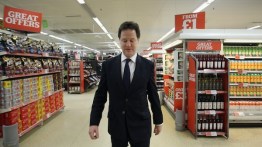
What is in Nick Clegg’s shopping basket for the Lib Dem conference?

From our UK edition

Now that Lords reform is entirely off the agenda, Nick Clegg faces the complicated task of negotiating a policy battle to keep his party happy. Pursuing AV and an elected House of Lords were core to Clegg's justification to his party for power, so he now has to find something significant to avoid 'going naked' to his conference in September. We'll find out more in the next hour about what the Lib Dems' intentions are for the boundary reforms, which they have linked with Lords reform, but Clegg will want other policy victories, not just battles, to show he is delivering. These are some of the likely policies the Lib Dems may now push for: More representation in the government Likely.

Boris’ political haymaking abilities

From our UK edition

What really excites Tory donors and MPs about Boris isn’t the antics on a zip wire but his ability to make Conservative arguments in an appealing and commonsensical way. The latter is the quality that Boris himself values most in politicians: it was the reason he gave for backing Ken Clarke for the leadership in 2001 despite their differences on Europe. On the Today programme this morning, Boris managed to make Conservative political hay out of the Olympics without sounding like a crass partisan.

Louise Mensch resigns

From our UK edition

Louise Mensch's local paper reports this morning that the Conservative MP will this morning announce that she is resigning her seat after struggling to balance family life with the demands of parliament. The Northamptonshire Telegraph reports Mensch saying: 'I am completely devastated. It's been unbelievably difficult to manage family life. We have been trying to find a way forward with the Prime Minister's office but I just can't spend as much time with my children as I want to.' Mensch had told the Guardian last September about the pressures she was experiencing on her family life, and she left a select committee hearing with James Murdoch early to collect her children from the school run because she'd promised them she always would do on a Thursday.

Danny Alexander: Triple A rating isn’t the be-all and end-all

From our UK edition

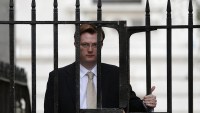
'I am proud to be part of a UK government that has re-established our country's financial credibility. And the credit rating agencies rate the UK as triple A. The low interest rates today of 1.8 per cent are a consequence of this.' Those were the words of Danny Alexander, chief secretary to the Treasury, back in June. He was echoing what his colleagues in the Treasury have been saying throughout this Parliament: that the UK's credit rating is a testament to the successful economic policies of the coalition. George Osborne was quick to capitalise on the announcement by Standard & Poor's at the end of July that the UK would maintain its triple A status. Which is why an interview that Alexander gave this morning to the Today programme sounded rather odd.

The morning-after for Borismania

From our UK edition

If yesterday was the peak of enthusiasm for Boris Johnson's hopes for the Tory leadership (Guido noted that every broadsheet commentator discussed the Mayor of London in their Saturday columns), then today is very much the morning after. The first sobering voice came from William Hague as he popped up on Sky News to warn Boris against a leadership putsch. 'Boris is doing a great job as Mayor of London and people love him the more they see him, and that's great… but I think it is true to say - and certainly it is true for me - that I hope and believe that we are not looking for a long time for any new leader of the Conservative Party.

The pressure is on for David Cameron

From our UK edition

Aside from the party conferences, two big set piece events are looming large in Downing Street’s thinking: the coalition’s mid-term review and the autumn statement. Both of these are expected to be heavy on economic measures as the coalition tries to get growth going again in the face of the headwinds coming off the continent. I understand that extra runways at Stansted are being considered in an attempt to boost aviation capacity in the south east. David Cameron is also trying to boost the enterprise agenda of Margaret Thatcher’s favourite Cabinet minister Lord Young. He brought forward a meeting on it scheduled for September 5th to Thursday last week. He’s demanding that government departments do more to help entrepreneurs and cut red tape.

What the government should do to tackle honour violence and forced marriages

From our UK edition

It has taken the police nine years to secure convictions for murder against the parents of 17 year old Shafilea Ahmed. Murdered by her parents in an honour killing, they spun a web of lies to conceal the true circumstances of her death for years. A wall of silence surrounded the case until 2007 when police finally made a breakthrough, and charged the parents. Cases like Shafilea's occasionally capture the public attention and then recede from popular consciousness, but what can authorities do to end honour based violence and forced marriages? There was a distinct lack of political will under the last Labour government to tackle this problem.

Pushing the boundaries | 4 August 2012

From our UK edition

The conventional wisdom about the consequences of the failure of Lords reform is that the Liberal Democrats will wreak their revenge for the Conservatives' 'breach of contract' by scuppering the boundary changes. Over the past few months, the party has taken great pains to link the two reforms, and now that it is clear that the first will not go through, all focus is on the second. There is much that still needs to become clear about how this will work; the biggest question of all being how Lib Dem ministers can vote against the changes without being sacked. But don't expect the whole party to troop through the 'no' lobby on this issue.

The Boris bandwagon poses little threat to David Cameron, for now

From our UK edition

One of the criticisms of the idea of Boris Johnson as a potential Prime Minister is that he doesn’t look the part and isn’t serious enough. The argument goes that it is all very well for the Mayor of London to jape around, but quite another thing for the Prime Minister to (Phil Collins produced a very punchy version of this point of view (£) in The Times this week). But as Charles Moore argues in his column, this argument misses that ‘conventional politics is now failing more comprehensively than at any time since the 1930s, and that Boris Johnson is the only unconventional politician in the field.’ It is precisely because Boris does not conform to what is expected of a modern politician that he appeals.