Uk politics

A nice new row for the coalition

When Nick Clegg announced he was giving up the struggle on House of Lords reform, he named a number of policy areas that could fill the huge legislative void left by the collapse of the plans to overhaul the upper chamber. One of them was banking, and the Deputy Prime Minister told journalists it might be worth examining whether it was possible to go further than the Vickers proposals on this area. Today’s Financial Times fleshes out what going further might entail. Vickers had originally proposed banning the retail operation of a bank from selling interest rate and currency swaps, but this was dropped in the white paper on banking

Usain Bolt, tax campaigner

Living legend Usain Bolt is an unlikely mascot for those who campaign for reform of our tax system, but by confirming that he will continue to avoid competitions in the UK because of the amount of tax he would have to pay, he’s now the poster boy for the movement. If he attended races here, he would be taxed 50 per cent on his global sponsorship and endorsement earnings, and on any appearance fees he receives. The Treasury granted an exemption for the Olympics to ensure athletes would not stay away because of the hit on their earnings. ‘As soon as the law changes, I’ll be here all the time,’

Bercow calls ‘no-hopers’ to order

John Bercow’s interview with the World at One was guaranteed to raise a few hackles across Westminster, and he certainly delivered on that by attacking ‘totally low-grade, substandard’ ‘no-hopers’ in the media. But well as revealing that he told his mother to stop reading the Daily Mail after reading something unpleasant about him in the newspaper, the Speaker also made some other interesting comments about his own role. He defended his decision to allow Chris Bryant to brand Jeremy Hunt a ‘liar’ during an Opposition Day debate on whether the Culture Secretary’s dealings with News Corp should be investigated, saying ‘it was uncomfortable and unpopular, but correct’ because the clerk

Fares rise brings fresh cost of living woe to Tories

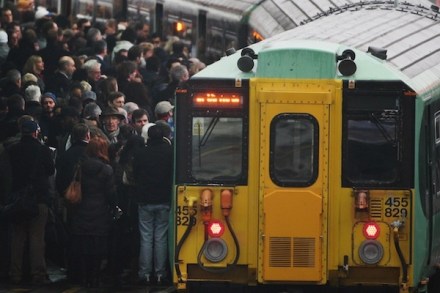
This morning’s announcement that the retail prices index rose to 3.2 per cent in July, up from 2.4 per cent in June, means commuters will see a 6.2 per cent rise in their train fares in January. Fares rises are currently calculated using RPI + 3 per cent. Analysts had predicted RPI would be 2.8 per cent, which means tickets will be even more expensive than originally expected. Don’t forget rail fares already saw an average 8 per cent rise at the start of this year. Some tickets will rise by a further five percentage points if other fares on a network are kept lower as a balance. Before he

Herbert’s ‘boring waffle’ betrays unease on police commissioners

‘That’s just boring waffle!’ shouted Evan Davis on Radio 4 this morning when policing minister Nick Herbert refused to give direct answers to his questions on the turnout expected in the police and crime commissioner elections. Herbert repeatedly argued that ‘any turnout will confer greater legitimacy’ than the current system of unelected police authorities. But his repeated refusal to pin down any figure for the percentage of voters who will trudge out of their homes on a cold and possibly rainy November evening to vote for the commissioners betrayed an unease about how well these elections are going to work out in practice. Herbert and his colleagues will know that a

Lib Dems toy with airport plans

The Liberal Democrats published the agenda for their autumn conference today, and one of the motions on the paper is on ‘a sustainable future for aviation’. Conference will debate the motion, tabled by Julian Huppert, on Sunday 23 September, and you can read it in full here. In essence, it rejects new runways at Heathrow, Stansted and Gatwick, and calls for UK aviation policy to be based on: accessibility from north and south, growth with the UK’s carbon budgets, minimal impact to the local population, minimal impact on the local environment and maximum hubbing potential. This is not surprising, but if conference approves the motion in full, it will make

Labour plays a sensible game on school sport

It would be wrong to say that David Cameron has had a bad Olympics. After all, the Games went extremely well, both in terms of logistics and Britain’s wonderful medal haul. The Prime Minister is not responsible for the bouncy mood of the country at the moment, but he’s also not having to answer aggressive questions from the media about an awful security breach, total gridlock in central London or worse. But the Prime Minister did rather let himself down by being drawn into the inevitable debate about sports provision in the state education sector during the Games. That discussion started so early into Britain’s rise up the medal table

The economy needs more than the Olympics to perk it up

We won’t know the economic impact of the Olympics until the GDP figures for the third quarter of this year are released, but today both Boris Johnson and Downing Street tried to strike an upbeat note. In his Telegraph column, the Mayor of London writes: ‘As we marvel at what they have done, and the general success of the Games so far, I want to issue a general word of caution to the Olympo-sceptics, who will be itching to return to their gripes. They will say there will be no increase in sporting participation, and no economic benefits, and that we will not succeed in regenerating east London. Well, just

Voters doubt coalition will survive to 2015

If the coalition leaders had hoped that announcing the demise of Lords reform during the Olympics would mean the government would enjoy a slightly easier ride, a poll released this morning by The Guardian suggests they were wrong. The ICM poll found that only 16 per cent of voters now believe the Conservatives and Liberal Democrats will stay in partnership until 2015. This has fallen from 33 per cent two weeks ago. Overall, 54 per cent of voters believe the government will collapse before the next general election, and only 19 per cent think the two parties will pull apart a few months before the election in order to campaign

Bookbenchers: Philip Davies MP | 12 August 2012

Over at the books blog, Tory MP Philip Davies has answered our Bookbencher questionnaire. Davies is the present holder of the Readers’ Representative at the Spectator’s Parliamentarian of the Year Awards. He believes that 1984 is the book that best describes now; and he would rescue the three volumes of Margaret Thatcher’s autobiography from the burning British Library. Davies is known by some as the ‘darling of the right’, but after this he should be nicknamed The Gruffalo.

Political games

Whilst everybody is enjoying the spectacle of the greatest Games on earth there is one group of people who are doing their level best to spoil it. If there was a gold medal for petty political nitpicking up there on the podium would be the anti-independence politicians and commentators. In rhetoric reminiscent of Labour claims that devolution would kill the SNP ‘stone dead’, time and again over the last two weeks we have heard claims the SNP are opposed to Team GB and that every medal marks a death blow to Scottish independence aspirations. They condemn the Scottish Government for wishing our Scottish athletes well. They then criticise us when

The runners and riders in the Corby by-election

Ed Miliband knows that the Corby by-election is going to be a crucial test for his leadership. If he wins, it will be his first constituency gain since he became leader and serve a nicely timed blow to David Cameron’s autumn relaunch. Expectations are high: Bradford West aside, Miliband has managed to increase Labour’s share of the vote in every by-election held in this parliament so far. If he loses, it will be seen as a bitter blow: voters normally punish the party that caused an unnecessary by-election. With a slim majority of 1,895, the Tory candidate faces an uphill battle to hold the seat. If Labour can’t take Corby when the government is trailing

CLG vs National Trust, round 2

Now that David Cameron has jumped on board the Treasury bandwagon in wanting to revise the National Planning Policy Framework, it’s looking like the Communities and Local Government department is going to be pitched into battle with the National Trust and other anti-development campaigners yet again. It’s not just that CLG ministers might be wary of opening up old wounds with organisations whose members tend to be Conservative voters, but that they already feel planning reform is truly done and dusted. CLG sources point to the fact that out of the 480,000 units with outstanding planning permission, work has not yet started on 226,000, more than 81,500 are on hold

Cameron digs a hole on school sports

The Prime Minister today criticised schools for filling their compulsory two hours of weekly sport with ‘sort of Indian dancing classes’. He said: ‘Now, I’ve got nothing against Indian dancing classes but that’s not really sport.’ Now, dancing isn’t really sport, is it? It’s dance. But it gets the heart rate going like the clappers, improves core strength, balance, and co-ordination. Dancing was good enough for the Great British swimmers, who took up ballet before the Olympics to improve their technique. Just up the road from Downing Street are the Pineapple Dance Studios, founded by a former model who lost three stone from dancing. David Cameron would do well to

Give profit-making schools a chance

Rick Muir, an associate director of the IPPR, published a paper this week called ‘Not For Profit: the role of the private sector in England’s schools’ in which he argues against allowing commercial companies to play a greater role in the delivery of taxpayer-funded education. As a contributor to a recent book published by the IEA called ‘The Profit Motive in Education: Continuing the Revolution’ — which takes the opposite view — I feel duty bound to respond. The first thing to be said is that Muir is not a rabid opponent of education reform. He’s pro-academy and pro-free school. Indeed, it’s hard to find anything of substance that Michael

Libor isn’t working

The Financial Services Authority’s Martin Wheatley will take one of the first steps to cleaning up the banking industry’s reputation after the Libor scandal today when he publishes an initial discussion paper on his review of Libor. Wheatley is likely to confirm what it appears Sir Mervyn King, his deputy Paul Tucker and Angela Knight of the British Bankers’ Association already suspected back in 2008: that Libor as it currently stands is ‘no longer fit for purpose’. The FT reports that Wheatley will suggest scrapping Libor altogether and replacing it with a rate based on actual trades that would be overseen by a new independent body. This would remove the

People’s Pledge pulls voters in to support EU referendum

Holding a vote on the European Union in the middle of the summer holidays and while the Olympics are in full swing seemed to rather stack the odds against the People’s Pledge campaign. But when the results of the two votes in Hazel Grove and Cheadle came through this evening, the turnout in these two marginal constituencies was just as stunning as the outcome itself. Both constituencies saw a 35 per cent turnout, with 88.5 per cent of Hazel Grove residents voting in favour of a referendum on Britain’s membership of the European Union, and 86.6 per cent supporting a plebiscite in Cheadle. That’s a bigger turnout than we saw