Uk politics

Sacked minister spills the reshuffle beans

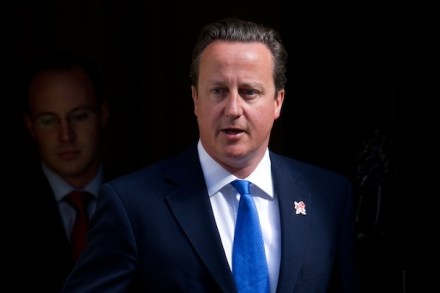
In tomorrow's Spectator, an anonymous former minister recounts their experiences of David Cameron's reshuffle. They describe the walk in to see the Prime Minister - through the back entrance where the cameras cannot see ministers arrive - and the way the Prime Minister tries to placate them by explaining that there are '303 someone elses' that he needs to keep happy. You can read the full copy below, or in the magazine from tomorrow: Divorce is something I have yet to experience personally but Dave’s reshuffle has set me up nicely for any future threat to my own nuptial bliss. Out of the blue comes the call. It’s Dave’s office. ‘We need to talk — can you come over?
Our debate on welfare reform is a dismal scandal – Spectator Blogs

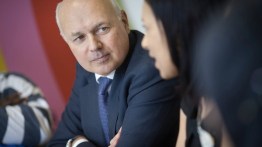
On balance, Iain Duncan Smith's spell as Tory leader can't be remembered as an unmitigated success. Be that as it may, sometimes there are second acts in political lives and, just occasionally, these are worth celebrating. IDS is one example of this. Nevertheless, even a man as palpably decent and well-meaning as IDS doesn't always pitch his argument about welfare reform in the best, most sensible or plausible fashion. This is unfortunate, not least because it allows his opponents to question his good faith. And good faith matters in politics. Especially when you're attempting to overhaul welfare. At the best of times this is a sensitive issue requiring a deft touch. And these are not the best of times.

James Brokenshire’s assurances on the snooping bill only raise further concerns

What do you do if a regulator has failed? Leave them unreformed and instead give them greater powers? That is the line Home Office Minister James Brokenshire is arguing. The regulator in question is the Interception of Communications Commissioner and the powers relate to online monitoring. For the Draft Communications Data Bill would not only give the government far more scope to monitor what we do online, but Brokenshire also argues we should be reassured that a large part of these new powers would be monitored by that Commissioner. However, take a look at the record and what you see is a failed regulator.

Re-arranging the desk chairs on the Titanic

New Tory Chairman Grant Shapps has taken the dramatic step of reinstalling the general election countdown clock in CCHQ to remind staffers that there are only 959 days until voters deliver their verdict on the Conservatives' time in government. Shapps has also got something else planned, which is to rearrange the desks. I understand that he told the 1922 committee last week that he wants to make Tory party press officers sit next to the researchers who cover each specific policy area so that they can feed one another information effectively. Currently they sit on different banks of desks. One CCHQ veteran points out to me that Shapps' exciting desk move plan isn't exactly new.

The Myth of the European Court of Human Rights’ “War on Britain” – Spectator Blogs

You rarely hear people defending the European Court of Human Rights. It is, according to British mythology, a meddlesome beast populated by dimwit judges of dubious foreign provenance whose rulings are invariably ninnyish, ignorant and intolerable in equal measure. I prefer to think of the court as the last protector of individual rights often threatened by hostile governments. Sometimes that hostile government is our own. The court - and really this cannot be stressed often enough - offers protection from the state. Restraining government's worst instincts is a noble calling and if our judges cannot or will not do it then praise be that the european justices are not so feeble-minded. As for the charge the European court is unelected and unaccountable.

The coalition’s tax trade-off

James Kirkup has an intriguing story today about how the Liberal Democrats are prepared to see inheritance tax scrapped, or the threshold raised, in exchange for the introduction of higher council tax bands. This suggests a way in which the Liberal Democrats could claim to have got a ‘mansion tax’ while the Tories could say they had made progress on their commitment to raise the inheritance tax threshold to a million pounds. In the run up to the Budget, the Chancellor was prepared to accept higher council tax bands in exchange for scrapping the 50p rate. However, the Prime Minister and the local government secretary Eric Pickles were both opposed to the idea. I understand that the DCLG remains highly sceptical of any changes to council tax.

A bad bargain: we should give up nationwide pay bargaining

Imagine what would happen to the Greek economy if a European trade union managed to secure the same salaries for Greece’s public employees as for their German counterparts. If that sounds like a bad idea to you, then consider the fact that in Britain we already have this arrangement across our country's regions. Nationwide pay bargaining imposes a limited salary range for all public sector jobs of a given type across our country, so that local pay cannot vary to reflect local conditions. Think about the North East. This is our Greece, a region where house prices and private-sector wages are lower than elsewhere. The national bargain means that in the North East public employees will be relatively overpaid. In contrast, the South East is our Germany.

Gove develops interim GCSE plan

One of the biggest gripes about Michael Gove's GCSE reforms from those on board with the changes is that they won't come into effect until after the 2015 election. Supporters wonder why there is such a lag between ministers reaching agreement about scrapping an exam that they currently believe is not fit for purpose, and pupils sitting down to take the new qualification. The answer is that it was part of the deal that was reached with Nick Clegg, who was initially upset about the direction of the changes. The Independent reports today that Gove does have an interim plan, though. To underline the fact that he has little faith in existing GCSEs, he is encouraging state schools to put their pupils through IGCSEs instead.

Philip Hammond’s tarnished relations with military top brass fly into the open

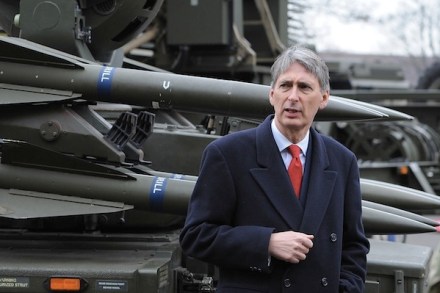
Talking to diplomatic sources this evening, there’s a depressed recognition that the Taliban and its allies have scored a major victory in forcing Nato to scale back joint patrols with Afghan forces. Here, the government has mishandled the news. Number 10 is trying to deny the strategic importance of this shift, while the normally sure-footed Philip Hammond made a series of clumsy answers to questions in parliament. Part of the problem is that Hammond was sent to the Ministry of Defence not for his interest in military matters but for his commitment to balancing the books. In private, he says that he hopes his legacy will be a genuinely, balanced MoD budget—and he does appear to be making impressive progress towards that goal.

We need to hear more from Tony Blair on Syria

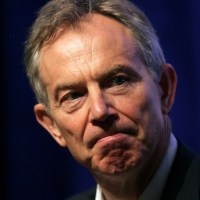
Conventional wisdom suggests that Bashar al-Assad’s Syrian regime will crumble from within if given enough time. That’s the reasoning which has, in part at least, prevented Western governments from intervening in the conflict so far. Tony Blair challenged proponents of that view yesterday. 'People say inevitably he will go. I don't think it is inevitable, actually, unless we are prepared to make clear our support and solidarity for those people who are struggling against what is a very, very brutal repression now,' he told Radio 4's Today programme. Although Blair isn’t necessarily advocating military intervention, he does think we should be exploring military options more thoroughly. This is the conundrum facing Western governments.

David Cameron should take a leaf from Andy Flower’s book

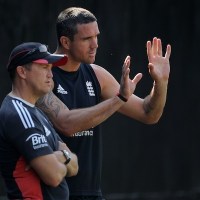
Kevin Pietersen might be lurking in India while England start their test series in the country, but as of today, the batsman and part-time off-spinner knows the only starring role he'll be playing will be in a commentary box. He was left out of the squad by head coach Andy Flower and the England and Wales Cricket Board after sending friends on the South African team allegedly derogatory text messages about his then captain, Andrew Strauss. The South African team have refused to disclose what those messages said, but their spirit is not dissimilar to some of the insults that members of David Cameron's squad have been broadcasting over the airwaves recently.

Grayling shows his mettle as Justice Secretary

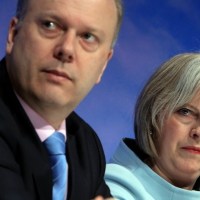
Chris Grayling's appointment as Justice Secretary in the reshuffle was the move that pleased Conservative MPs almost above anything else. Today he showed the House of Commons why his is a popular appointment. Announcing the government's intention to appeal against the European Court of Human Right's ruling that indefinite sentences breach human rights, Grayling said this: 'Of course the ECHR ruling this morning was very much about the issue of rehabilitation, something I feel very strongly about, something that needs to be clear and present within prisons as well as after prisons. 'However, I'm very disappointed by the ECHR decision this morning. I have to say it is not an area where I welcome the court seeking to make rulings.

The government will not snoop on your every move

Nick Cohen (‘Nowhere to hide’, 15 September) raises some interesting points about the double-edged nature of the internet. I agree with this sentiment, although not for the same reasons. Yes, the World Wide Web has brought about massive benefits, allowing people to communicate and connect in ways never before imagined. However it also has a down side. And this is that it affords criminals and those who wish to do us harm the same new ways to communicate and connect. It is this that concerns me, rather than Mr Cohen’s claim that it will allow, through our Communications Data Bill, the government to monitor your every move. This argument is based on a fundamental misunderstanding of the Bill.

Lib Dems play whac-a-mole on welfare cuts

The Liberal Democrats are playing a game of whac-a-mole on welfare at the moment: each time they think they've blocked one cut they don't like, another one pops up. Last night a mole they'd already whacked a year ago appeared again: decoupling benefits from inflation. The Newsnight scoop is that Whitehall is considering ending inflation-linked rises for many benefit payments - although the word is that this would not include payments to those with disabilities. This would be part of efforts to cut a further £10 billion from the welfare bill, which the Lib Dems oppose overall. Last winter the Lib Dems blocked a similar move from the Treasury, which had proposed uncoupling benefits from the inflation rate, which was 5.2 per cent for that September.

‘Denuded’ Work and Pensions committee sheds little light on Universal Credit

The Work and Pensions Select Committee was much denuded this evening, chair Anne Begg told the guests: its membership had either been promoted in the reshuffle or had personal crises to attend to. In the end Begg was joined by Andrew Bingham, Stephen Lloyd, Teresa Pearce and Glenda Jackson to interrogate Iain Duncan Smith and Lord Freud about the implementation of universal credit. Their questions seemed rather denuded, too: not of detail, for these MPs do truly know their stuff when it comes to welfare reform, but of a sense of the bigger picture. During the hearing, which lasted nearly three hours, the Work and Pensions Secretary and his Welfare Reform Minister explained how they planned to encourage claimants to manage their claims online.

Scottish independence referendum will be a single-question affair

'I don't think we can have a referendum on independence unless we have a single question'. Michael Moore was unequivocal this afternoon: the 2014 referendum on Scottish independence will be a single-question vote, or it won't happen at all. The Scottish Secretary made his determination quite clear when he appeared before the Scottish Affairs Select Committee, bandying about phrases such as the referendum is of 'huge political importance', it has to be 'fair and clear' and both sides are 'willing and able to come to an agreement'. He was upbeat about the progress of initial talks with Alex Salmond's administration, telling the MPs that he believed a deal on the terms of the vote could be struck as soon as 22 October.

The English Baccalaureate Certificate is coming regardless of what happens in 2015

There’s much speculation today that Labour’s decision to oppose the coalition’s GCSE replacement the EBC means that the new exams will never happen. The argument goes that if the Tories aren’t in government, Labour — or a Labour-led coalition — would simply keep GCSEs going. (This depends on Labour continuing to oppose the new exams which they may not if they prove to be as popular as some pollsters expect them to be). But keeping GCSEs going is nowhere near as simple as it sounds. The exam boards will now turn nearly all of their attention to winning the one available English Baccalaureate Certificate contract for each subject.

Keeping it simple: getting the Universal Credit back on track

Universal Credit, a giant effort to weave together all the fraying strands of welfare policy, is now unravelling fast. It all seemed so simple and intuitive when the idea was floated. Pay people more when in work than when on benefits, roll the myriad of benefits and tax credits into a single benefit, reduce the colossal claims process for individuals; and unearth some administrative efficiencies to boot. So intuitive, in fact, that the Opposition supported the underlying principles of the Universal Credit. Recent debate suggests that achieving this simplicity is proving ferociously complex.