Uk politics

Lib Dem conference: Vince Cable attacks the “headbangers”

From our UK edition

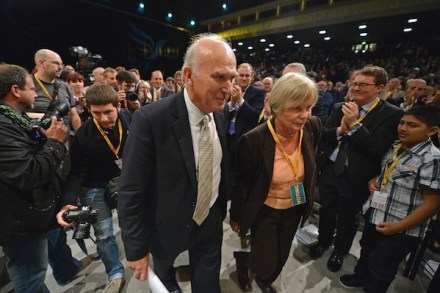
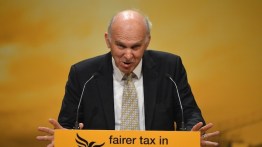
Never a man to avoid confrontation, Vince Cable decided to tackle gossip about his conversations with Labour head on when he appeared on stage at the Lib Dem conference this lunchtime. He has 'excellent communications with politicians across the spectrum', he joked, then reached into his pocket for his phone, joking that he had a message from Ed. He followed the same pattern as Tim Farron in criticising Labour's record in government, just to make clear that the Lib Dems are fervently independent, rather than hankering after partnership with one party or another. But it was interesting that the majority of mentions for other parties in the Business Secretary's speech were limited to criticism of Conservative 'head bangers'.

Lib Dem conference: The battle for the soul of the Liberal Democrats

From our UK edition

The Liberal Democrats are a party facing an identity crisis. During their many years in opposition, they had a slight all things to all men quality. But now they are in government, they are rapidly becoming defined in the public mind. How to respond to that is a question that they have been grappling with for the past two years. In a packed and over-heated fringe meeting last night, Nick Clegg’s former director of strategy Richard Reeves provided his answer—which is, although more starkly stated, the leadership’s. Reeves’ argument is that the party should become a Liberal party of the radical centre. In other words, he wants to take off the Social Democratic hand brake. Reeves makes this case with verve and one can see the political space he’s talking about.

Confirmed: Boris Johnson is a jellyfish

From our UK edition

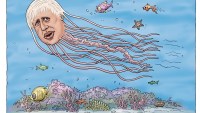
I've long believed that Boris is a particularly powerful blond jellyfish, swimming along under the radar, looking quite harmless, before delivering a series of painful stings to an unsuspecting victim. Normally the poor recipient of these verbal stings is David Cameron, whose face now forms a classic mask of horror whenever the Mayor approaches, knowing that not only will he be upstaged as Prime Minister by the Mayor, but also stung in the process by a sugary yet deeply patronising reference to 'Dave'. But today it's Nick Clegg, treading water at the Liberal Democrat conference, who gets stung. Boris' column this morning in the Telegraph is full of praise and flattery, while managing to undermine the Deputy Prime Minister rather spectacularly.

Andrew Mitchell fails to kill Gategate story with new public apology

From our UK edition

'I've apologised to the police, I've apologised to the police officer involved on the gate, and he's accepted my apology. I hope very much that we can draw a line under it here.' Andrew Mitchell hoped that his public apology outside those Downing Street gates that caused him such grief last week would mean Gategate would start to fade away.

Lib Dem conference: Tim Farron discovers his coalicious side

From our UK edition

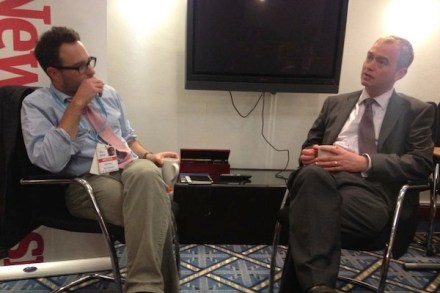
Distinctive not destructive — that's Tim Farron's view on how the Liberal Democrats can redefine themselves within government. Speaking to the New Statesman after his muted conference speech today, the Lib Dem president blamed the media's narrow perception of the coalition for a misunderstanding of their partnership with the Tories. Tantalisingly, he made reference to a potential partnership elsewhere: 'We're either seen as cats in a sack or having a love-in. No one seems able to understand that this is a just a business arrangement...a relationship that could exist with another party' Sadly, Farron made no reference to whom exactly that might be with.

Lib Dem conference: Danny Alexander and Oliver Letwin get cosy

From our UK edition

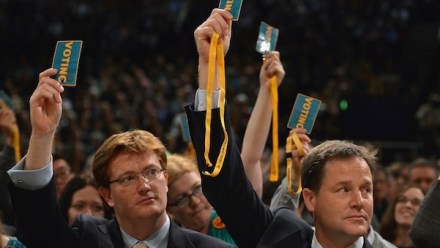
The big joke at the Social Market Foundation and TUC fringe this evening was that two of the panelists could have delivered one another's speeches. Those panelists were Oliver Letwin and Danny Alexander, who were both speaking about the government's economic plan, its infrastructure policy and how to achieve growth. When Danny came to speak, he told the audience that he agreed with and could have delivered all of Letwin's speech, and that the only thing the pair disagreed on was Europe. Alexander being so wonderfully cosy with Letwin might be a good thing for the coalition - and Letwin is know for being a Lib Dem-ish Tory. But it's a strange thing for the chief secretary to the Treasury to admit at his own party conference.

Lib Dem conference: Nick Clegg says spending plans may be ‘re-jigged’

From our UK edition

There is something very Liberal Democrat about Nick Clegg’s Q&A session with party members at conference. There’s a distinct mix of familiarity, fondness—the loudest applause came for the announcement that today is Nick and Miriam’s 12th wedding anniversary and policy debate. In response to a questioner who claimed that Danny Alexander was more right wing than ‘Peter Osborne’, Clegg was keen to stress to members that the coalition’s fiscal plans were more flexible than they are given credit for.

Lib Dem conference: Lib-Lab fringe praises pluralism

From our UK edition

Day one of the Lib Dem conference, and the Tory jokes have started. At a lunchtime fringe event, of Labour and Lib Dems, the lights suddenly faded out and the room was plunged into darkness. 'This must be the Tory cuts!' said Ming Campbell, and the panel discussion continued by the gloomy light of the fire escape signs. It was a fairly jovial affair, but the mixture of names – Sir Ming, Jon Cruddas, Jo Swinson and Andrew Adonis – raised the deadly serious proposition of a Labour-Lib Dem coalition after the next election.

Lib Dem conference: Tim Farron keeps it muted

From our UK edition

Tim Farron's speech to this year's autumn conference was rather muted compared to his effort in Birmingham last year. The Liberal Democrat president did take the opportunity to attack both Labour and the Tories, of course, because that is his job, but he did not talk about Conservatives speaking 'drivel', or about divorces. He described Labour's record in government as '13 years of a Labour government: what a mandate, what a disappointment', and delivered the obligatory Liberal Democrat attack on the banks.

Lib Dem conference: Clegg will accept further welfare cuts but wants to squeeze rich more

From our UK edition

The opening act of any party conference is the interview for Sunday morning TV and Nick Clegg made clear to Andrew Marr that the welfare budget is ‘not immune from further savings.’ He also said that he was confident that he could persuade the Tories to agree to further ways to make the ‘rich’ pay more. But under pressure from Marr, he couldn’t provide any details on what form this new tax might take. In an attempt to damp down the continuing chatter about Vince Cable’s conversations with Ed Miliband, Clegg said that he was in regular touch with both Milibands, Tony Blair and Peter Mandelson.

Coffee House Interview: David Hall-Matthews calls for Clegg to ‘get smarter’ at coalition

From our UK edition

David Hall-Matthews is the chair of the left-leaning grassroots grouping within the Liberal Democrats, the Social Liberal Forum. He explains his qualms about the way Nick Clegg is currently handling the coalition relationship to Coffee House readers, and calls on ministers to be bolder in calling for 'adjustments' to the government's economic policy.   As the coalition agreement was hammered out between the Liberal Democrats and the Conservatives in May 2010, the grassroots machinery in the party was swiftly cranking to life. Four leading members of the Social Liberal Forum, then just a small group within the party comprising over a hundred members, raced to London to discuss their strategy as their party joined forces with an old enemy.

Rallying the Liberal Democrat faithful

From our UK edition

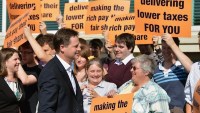
One of the striking features of the opening rally at Liberal Democrat conference was how it was figures from the left of the party who attacked Labour most vigorously. Simon Hughes, the deputy leader, scolded those who think that governing with Labour would be easy; pointing out that the parties are at odds on nuclear power, Trident, civil liberties and a whole host of other issues. While the party’s president Tim Farron demanded that Labour apologise for the expensive failure of the NHS PFI projects, the Iraq war and a whole host of other issues. Nick Clegg himself was on fairly confident form. He began with a couple of gags about his unlikely chart success.

Don’t expect Nick Clegg to throw too many rocks at the Tories in Brighton

From our UK edition

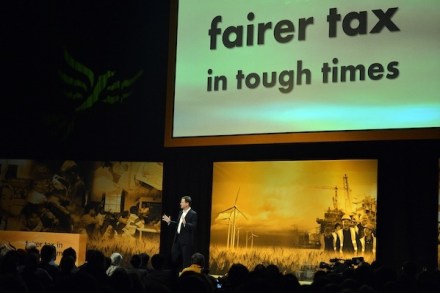
The Lib Dem round of pre-conference interviews today shows where the party wants to look distinctive. It is tax ‘fairness’, greenery and social mobility on which it has decided to set its stall. One thing worth noting, though, is that Nick Clegg’s interview in The Independent does not rule out future welfare cuts. He tells Andy Grice that 'We are not going to do an across-the-board, two-year freeze of all benefits during this parliament'. This leaves the Liberal Democrats plenty of room for manoeuvre ahead of the autumn statement on December 5th. I expect that we won’t hear too much bashing of his coalition partners from the deputy Prime Minister himself at this conference.

David Laws to announce increase in pupil premium

From our UK edition

The first minister up on the stage at the Liberal Democrat conference this afternoon is new education minister David Laws. He has an announcement which will please those in the audience: the party's flagship pupil premium will increase from £600 to £900 per child. This is what he is expected to say: 'I can announce today that next year the Pupil Premium will increase again. It will rise from £600 to £900 per child. Last year it paid for over 1.8 million pupils. Just think what we have done with that policy. A secondary school with 1,000 pupils, a third on the Pupil Premium, will be receiving around an extra £300,000 next year due to this Liberal Democrat pledge being delivered.

Andrew Mitchell’s Gate-gate: haven’t we all been there?

From our UK edition

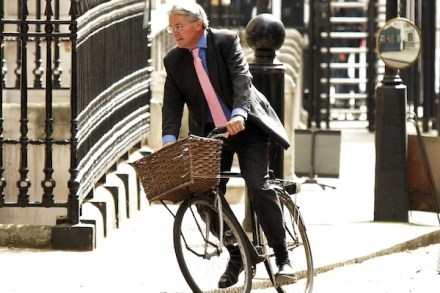
All right, he’s eaten dirt. Andrew Mitchell, Chief Whip, has now apologised to the Prime Minister and apologised profusely to the policeman he may or may not have called a pleb. In a statement today – prudently, he declined offers of radio interviews – Mitchell admitted that he 'did not treat the police with the respect they deserve' when on Wednesday evening one of them refused to allow him to ride his bicycle out of the Downing Street gate and directed him instead to the pedestrian one. In the outburst that followed, he is said to have told the man that he didn’t run the government. Well, that makes two of them; neither does the Chief Whip.

Alex Salmond’s wind farm delusion

From our UK edition

Last year, in an interview with the Today programme, the chief executive of National Grid told the show’s no doubt stunned listeners that they would have to get used to not having electricity as and when they wanted it. That here in the developed world we should be wondering whether the lights will be going out in a few years time, whether our children will go to bed in the cold or whether we will spend our evenings shivering around log fires is rather amazing. That our political leaders have achieved this — if achieved is the right word — in the face of the shale gas revolution with its promise of cheap and abundant energy for centuries to come is truly extraordinary. How have we come to this?

Borrowing figures are good and bad news for the government

From our UK edition

Today's public finance statistics are another case of good news/bad news for the government. First, the good news: the ONS revised down its estimate for government borrowing in the last fiscal year (2011/12) from £125 billion to £119.3 billion. That's £6.7 billion below the OBR's estimate in March this year, and means that the coalition succeeded in cutting the deficit by 25 per cent in its first two years (29 per cent in real terms). But the bad news comes when you look at the current fiscal year. The ONS estimates government borrowing for August at £14.41 billion — roughly the same as August 2011 (£14.37 billion). These estimates do tend to end up being revised heavily — by an average of £1.

Nigel Farage’s real strategy

From our UK edition

Nigel Farage’s very public willingness to explore a UKIP-Tory electoral pact in exchange for a pledge from David Cameron to hold a referendum on EU membership is, I suspect, designed to achieve two things. First, it is meant to flush out Cameron. If Cameron declines the offer, Farage will be able to claim that only UKIP are the only party to vote for if you want an In/Out choice on the UK’s EU membership. It’ll undercut the Tory offer of a renegotiation referendum. Second, by floating the offer he makes it more likely that individual Tory MPs and candidates might sign up to the offer themselves, pledging to back an In Out referendum in exchange for no UKIP challenge.