Uk politics

Nick Clegg wins PMQs cheers from the most unlikely of MPs

From our UK edition

I have rarely seen Nick Clegg enjoy Prime Minister's Questions as much as he did today. Freed from the tyranny of the binder of answers, Clegg answered the questions in a confident and confrontational manner. The usual jeers from the other side of the House didn’t put him off his stride today. One thing that was striking was how often Clegg referred to the Lib Dem-inspired coalition move to raise the income tax thresholds. The Liberal Democrat leadership is convinced that this policy is beginning to pay dividends for the party and that they’ll receive the credit for the big increase in April. Clegg also took the chance to take several jabs at Labour.

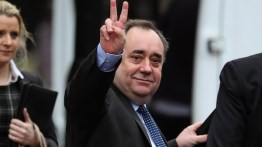
Alex Salmond, Scotland’s longest serving First Minister

From our UK edition

So Alex Salmond has achieved the feat of becoming Scotland’s longest serving First Minister. This is a notable achievement. After all, he has avoided the fate of one of his predecessors – resigning in disgrace – and another: being defeated at the ballot box. Salmond has just served as Scotland’s First Minister for 2001 days, or five and half years, just eclipsing the term served by Jack McConnell between 2001 and 2007. But even he would agree that the field to contest this landmark is not a large one. Scotland has only had four first ministers since 1999. The first, Donald Dewar, lasted just a year before his death in 2000. The second, Henry McLeish, also lasted a year before resigning over an office expenses scandal.

MPs push for more children to be taken into care

From our UK edition

As the number of inquiries into allegations of child abuse in institutions from the BBC to the NHS grows, a cross-party committee of MPs has today recommended that more children be taken into care when social services suspect they are being abused and neglected. The Education Select Committee's inquiry into the child protection system found that children were left for too long in damaging situations, and called for an urgent review of how the system can meet the needs of older children. The report, published this morning, said: 'There is evidence that children have been left too long in neglectful situations.

US election 2012: Obama’s victory is a relief for David Cameron

From our UK edition

David Cameron welcomed Barack Obama's re-election in the early hours of this morning, tweeting: 'Warm congratulations to my friend @BarackObama. Look forward to continuing to work together.' He later released this statement: 'I would like to congratulate Barack Obama on his re-election. I have really enjoyed working with him over the last few years and I look forward to working with him again over the next four years. There are so many things that we need to do: we need to kick start the world economy and I want to see an EU-US trade deal. Right here in Jordan I am hearing appalling stories about what has happened inside Syria so one of the first things I want to talk to Barack about is how we must do more to try and solve this crisis. Above all, congratulations to Barack.

Nadine Dorries suspended from Tory party

From our UK edition

Tory sources have confirmed that Nadine Dorries has had the whip withdrawn until she returns to Westminster to explain to the chief whip why she has gone on 'I'm a Celebrity, Get Me Out of Here!' Her constituency association was shocked by the revelation, which appeared in this morning's papers, and a number of Conservative MPs have been suggesting she should resign as an MP. Dorries' justification is that the programme reaches a far wider audience than Parliament usually does, but this is the latest in a long string of what teachers might call 'challenging behaviour' from the Tory MP.

David Cameron is out to warn of the nuclear threat from Iran

From our UK edition

David Cameron is using his Middle East tour to remind Gulf States about the tremendous threat Iran’s nuclear ambitions pose to the region. This was something he touched on yesterday in Abu Dhabi during a questions and answers session with students, but expect it to form a very substantial part of his discussions with the Saudis today. After the Israelis, no one is more perturbed by the idea of Iranian nuclear arsenal than Saudi Arabia. The House of Saud worries about Iranian influence expanding into the Gulf and is unlikely to watch such a development with passivity. Rather than develop their own, the Saudis will simply buy one from Pakistan sparking a nuclear arms race in the region. Qatar and Egypt will quickly develop their own programmes.

Sacked ministers make trouble at Treasury questions

From our UK edition

Treasury Questions was a little quieter than usual today: George Osborne is away and so Ed Balls left the questions to his colleague Chris Leslie. The Shadow Chancellor didn't say entirely quiet, though, gradually turning a warm shade of pink as he barracked away while perched on the opposition front bench. Labour landed very few blows today: Rachel Reeves continued the attack on the EU budget, Leslie tried rather ineffectually to talk about borrowing, and backbenchers made a few grumbles. The two really interesting questions came from the coalition benches: and more specifically, from two sacked ministers.

Liverpool Care Pathway: what went wrong?

From our UK edition

The recent media storm over the Liverpool Care Pathway has obscured the progress doctors and nurses have made over the past decades in the UK in improving care for patients who are near death. Since the LCP was developed, patients in busy hospitals and other institutions are  less likely to be left to die in pain and discomfort. The Pathway itself is simply a framework which reminds professionals to consider, and document, the process of care for people in the last days of life. Without it, some professionals may struggle to shift their focus to important aspects of care such as comfort measures, pain control, communicating with, and supporting, the family, carers and friends.

David Cameron’s tricky tour of the Gulf

From our UK edition

David Cameron is on a tricky tour of the Gulf states this week. It's not so much that he's trying to sell arms to the countries he visits: 300,000 British jobs do depend on the defence industry, with 65,000 relying specifically on arms sales. But he is having to tread very carefully on the subject of human rights. Arab countries are uneasy with the way Britain has embraced the Arab Spring, while Britain remains uneasy about those countries' record on how they treat their subjects. This morning, in an interview with the BBC's Frank Gardner, the Prime Minister sought to reassure critics that he will raise rights records with the leaders he meets, but that there was nothing wrong with trying to sell Typhoon jets to Dubai and Saudi Arabia.

Cameron and Clegg locked in staring contest on boundary reforms

From our UK edition

Nick Clegg and David Cameron still can't agree over the future of the boundary review, and their continuing stalemate led to legislation on individual voter registration being shelved indefinitely in the House of Lords. An amendment to the Electoral Registration and Administration Bill tabled by Labour's Lord Hart and backed by Lib Dem Lord Rennard would have delayed the changes until 2018 - in line with Nick Clegg's pledge of revenge this summer that the review be delayed until after the 2015 election. The problem is that Cameron didn't know about the amendment until his staff read about it on Paul Waugh's blog, and he apparently lost his rag with Clegg as a result.

Headmistress Hodge grills HMRC on tax avoidance

From our UK edition

Ever since Margaret Hodge took over the chairmanship of the Public Accounts Committee, its evidence sessions have become rather lively: more like a fearsome grilling from the headmistress than a slow-moving chinwag with a group of MPs hoping for the next division bell. Hodge was on terrifying form today as senior officials from HMRC sat down to take evidence. She directed her teacherly wrath in particular at Lin Homer, chief executive and permanent secretary of HMRC, who gave the bulk of the evidence on the department's work in tackling tax avoidance. Homer appeared rather shell-shocked by the onslaught, like a pupil trying to explain why she wasn't wearing a tie and had rolled her skirt.

Is David Cameron struggling to keep up with public opinion on Europe?

From our UK edition

Over the past two weeks, the government has been desperately trying to harden its position on the European Union to match public opinion. David Cameron has been rather bullish with his plans to opt out for 130 EU law-and-order measures and the veto threat over the budget, despite being outfoxed by both Labour and his backbenchers on the latter. Has it been successful? As Isabel reported yesterday, the voters of Corby, Witney and Doncaster North are not entirely happy with the Conservatives’ current position and new national polling reflects a similar attitude. This weekend’s YouGov poll compares public attitudes today towards the EU to this time last year.

Ed Miliband talks a good game on the Living Wage

From our UK edition

Ed Miliband's One Nation circus moves on to tackle low pay this week, with the Labour leader calling for more companies to pay their staff the Living Wage of at least £7.20 an hour. One of his most striking proposals comes from the Resolution Foundation's Commission on Living Standards, which is to force top companies to publish details of what proportion of their staff are paid below the living wage. Though Miliband isn't hinting at raising the statutory minimum wage to meet the living wage - clearly acknowledging the adverse impact that this hike could have on job creation when the economy remains so fragile - he still wants to name and shame organisations which fail to sign up to a voluntary scheme.

Iain Duncan Smith: the UK should ‘have it all’

From our UK edition

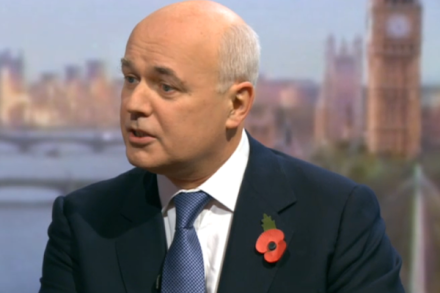
Iain Duncan Smith was strangely vague this morning when Andrew Marr asked him whether he thought Britain could survive outside the European Union. He said: 'I'm an optimist about the UK. I've always been involved with our trade with our European partners which we will always be doing whatever this relationship is, and the Prime minister will talk about that in the future… We're a member of the European Union, that gives us benefits but we have to figure out where that's going. But in the world we are a global trader already, we're more of a global trader than any other country in Europe. So I hate this argument that says, you know little Britain outside, or… We can both be within our trading relationships within Europe, we can also be a fantastic global trader.

UKIP are being taken more seriously but they have got to cut out the unforced errors

From our UK edition

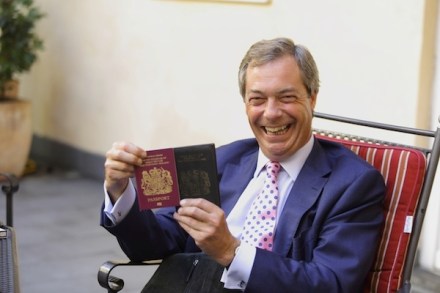
With UKIP regularly challenging the Liberal Democrats for third place in the polls, the party is now beginning to be treated with the seriousness it deserves. In an interview on the Sunday Politics, Nigel Farage made his usual, spiky case for leaving the European Union. Farage argued that he wants a free-trade deal with the rest of the EU and that the other countries would agree because ‘they need us more than we need them’. Even if Farage is right on the numbers, there’s a major doubt if the rest of Europe would be inclined to cut a deal in the wake of a British exit: a country leaving and then prospering outside would be very damaging to the European project.

David Cameron tries to drum up interest in the Police and Crime Commissioner elections

From our UK edition

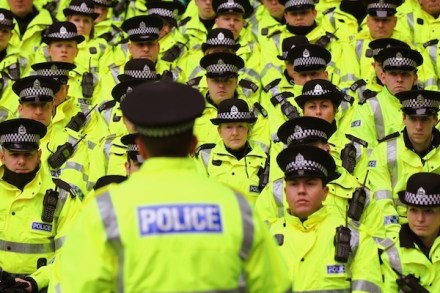
David Cameron spent yesterday campaigning for Conservative Police and Crime Commissioner candidates in Bedfordshire and Leicestershire. The visits, though, received scant national attention: the only coverage I’ve spotted so far is on page 33 of The Times. Talk to ministers and they maintain that the Police and Crime Commissioner elections are more visible out in the country than they are in London, where there’s no contest. They argue that the capital-centric nature of the media explains why the press keep writing the elections off as a damp squib. There is, I suspect, some truth to this charge. But an average turnout of only 20 percent would still not be impressive.

Can Labour avoid another Bradford West?

From our UK edition

There’s no such thing as a safe seat in a by-election as Bradford West demonstrated. But it would still be a major shock if Labour lost Rotherham, a seat they’ve held since 1933. But the three by-elections coming up after Corby—Middlesborough, Croydon North and, now, Rotherham—will test how much Labour has learnt from the Bradford West experience. In all three seats, Labour has a large majority and no obvious challenger. Respect are already trying to repeat their by-election success, selecting Lee Jasper—the former Ken Livingstone adviser and chair of the London Race and Criminal Justice Consortium—in Croydon North. Respect have already declared that he’ll be 'targeting' black voters.

Denis MacShane’s defiant resignation statement

From our UK edition

After being told he faced a year's suspension from the House of Commons and immediate suspension from the Labour party, Denis MacShane has announced that he is stepping down as an MP. He released this statement this afternoon: 'In the light of the Parliamentary Commissioner’s decision supported by the Committee of Standards and Privileges to uphold the BNP complaint about expenses claimed in connection with my parliamentary work in Europe and in combating anti-semitism I have decided for the sake of my wonderful constituency of Rotherham and my beloved Labour Party to resign as an MP by applying for the Chiltern Hundreds or as guided by the House authorities.

How teachers felt forced to ‘cheat’ on GCSE English marking

From our UK edition

Ofqual's final report, published today, on the GCSE English marking row, underlines why the qualifications need an overhaul and makes extremely awkward reading for the teachers who were so upset by their pupils' results this summer. It concludes that the redesigned English GCSE was 'flawed', and that teachers felt under pressure to over-mark coursework to a higher grade than it deserved. The report suggests there was a culture of over-marking which led to other teachers doing the same: 'While no school that we interviewed considered that it was doing anything untoward in teaching and administering these GCSEs, many expressed concerns that other nearby schools were overstepping the boundaries of acceptable practice.