Uk politics

The government could repeat its West Coast Mainline mistake with HS2

From our UK edition

This Monday Transport Secretary Patrick McLoughlin faced the House of Commons to make a second statement on the fiasco surrounding the West Coast Mainline rail franchise.  Reporting on the initial findings of an inquiry into what went wrong, the Transport Secretary said the conclusions made ‘uncomfortable reading’ and showed, amongst other failings,  a lack of transparency in the process, inconsistencies in the treatment of bidders and technical flaws in the modelling. While these revelations raise huge concerns about the internal working at the Department for Transport, I was glad to see the Transport Secretary approach his department’s shortcomings with openness and transparency; I commended his approach during the statement.

PMQs: David Cameron needs to show he has control of EU vote

From our UK edition

At PMQs today, David Cameron will need to go some distance to meet his backbenchers and head off a government defeat tonight on the EU budget. He’ll need to say that he personally would like to see the EU Budget reduced and that if other countries are prepared to agree to that, he’d be delighted. But that the one thing he’ll guarantee is that he’ll veto any real terms increase. He’ll also need to take the fight to Labour on the matter, pointing out how Blair gave up a chunk of the rebate for the vaguest of promises on CAP reform. Part of the reason that Europe votes keep causing Cameron so much trouble is that Number 10 goes into Maastricht mode every time one comes along.

Change at Number 10

From our UK edition

Gabby Bertin is one of David Cameron’s long-marchers; she has been with him since he won the leadership in 2005. Bertin has acted as his political spokeswoman for the last seven years, pushing the Cameron message and dealing calmly with the inevitable crises and mishaps. Few people know what Cameron thinks as well as Bertin does and are as prepared as her to tell him when he is going wrong. Cameron, for his part, values Bertin’s ability to, in his words, ‘see round corners.’ But in a fortnight’s time, she goes off on six months maternity leave. I understand that Susie Squire, currently running the press operation at CCHQ, will step into Bertin’s shoes.

Lord Heseltine blasts government’s growth strategy

From our UK edition

Appointing Lord Heseltine to lead a review of the government's growth plan was a risky decision as not only was he always going to say exactly what he thought, but he was also going to say it from his own particular interventionist stance. It was originally a Steve Hilton idea, and the PM's guru must be enjoying reading what Heseltine has to say from the comfortable distance of a sabbatical in California. The report, No Stone Unturned in Pursuit of Growth, is as honest as ministers might have expected, pointing out that business believe that 'the UK does not have a strategy for growth and wealth creation', criticising an 'inertia' over airport policy, and warning that 'continuing as now is not an acceptable option. The world will not stand still - and nor must we'.

Why David Cameron can threaten to veto the EU budget

From our UK edition

When in 1996 the US Congress threw out Bill Clinton’s Federal budget they precipitated a partial shutdown of the US Government. However, anyone looking at the growing prospect of a UK EU budget veto and cheerfully imagining Eurocrats being shut out of their offices on 31 December 2013 will be disappointed. Because when it comes to EU budgets, a veto is not quite a veto - the EU will continue one way or another to claim its dues. Nethertheless, a UK veto is not meaningless. Not least because, as we have set out here, the scenarios that could play out after a UK veto may not be that much worse for the UK than those already on the table (including, ironically, the UK’s own suggested 'freeze').

‘Meeting? What meeting? I wasn’t there!’ Vince Cable forgets key growth committee

From our UK edition

Business Secretary Vince Cable bewildered a select committee this morning by telling members that a new sub-committee, the Growth Implementation Committee, was yet to meet, before later backtracking and announcing that it had in fact met twice. When asked by Labour MP Anne McKechin why the much-lauded new sub-committee, which was launched in September, had not yet had a meeting, Cable replied: ‘I can’t tell you why that committee has not been convened yet’ but that he would endeavour to find out. Later in the meeting however, Cable appeared to retract his previous statement, saying that he wanted to ‘correct the record’, as he earlier ‘couldn't recall meetings of the committee.

The View from 22 – Battle of the Chancellors special

From our UK edition

The Spectator hosted a packed-out debate last night on the motion — 'George Osborne isn't working: we need a Plan B' — and you can now hear the outcome for yourself. As Isabel reported earlier, it was an evening of intense discussion and disagreement, so we have recorded the entire evening for you to listen at your leisure.

Tory whips in a flap over EU budget rebellion deploy Rees-Mogg

From our UK edition

At this morning's Cabinet meeting, ministers discussed tomorrow's debate on the EU budget, which is shaping up to be a big row. MPs I have spoken to who have either signed or are considering putting their names to the amendment calling for a real-terms cut in the budget have found their whips to be in quite a flap about the issue. Even though it might be convenient for the Prime Minister to use a vote in parliament calling for a cut as a weapon at the budget summit itself, the party leadership is clearly sufficiently nervous to have pushed for a rival amendment from Jacob Rees-Mogg and Peter Bone.

Battle of the Chancellors: hope v fear

From our UK edition

At the Spectator debate on the economic consequences of Mr Osborne last night, Andrew Neil repeated JK Galbraith’s line that 'economic forecasters exist to make astrologers look good.' The impressive Conservative MP Jesse Norman countered with 'an economist is a man who knows 17 ways to make love to women – but no women'. Lord Oakeshott, I think, joined the mockery by pointing out that every forecast from the Office of Budget Responsibility had been wrong. Its consistent incompetence, its steady state of stupidity, its unerring unreliability, made it a surprisingly useful institution, however. Whatever it predicted you could be sure the opposite would occur. How we laughed. But political commentators are no better.

Battle of the Chancellors: We don’t need a Plan B

From our UK edition

Nearly a third of the audience at last night's Spectator Battle of the Chancellors debate arrived not knowing whether George Osborne's plan was working or whether a plan B was in order. It was all to play for, and the six speakers attacked the task with quite some gusto. Former Labour Chancellor Alistair Darling kicked off the debate by looking back to his own time in the Treasury, telling the audience that this was a crisis of the banking system by using an alarming anecdote of a conversation with a senior banker in the midst of the 2008 crisis. 'He said, "I just want to give you some confidence, some reassurance: my board met last night and we agreed from now on we will only take risks we understand.

Tony Blair’s ‘Grand Bargain’ for Europe: elect a President

From our UK edition

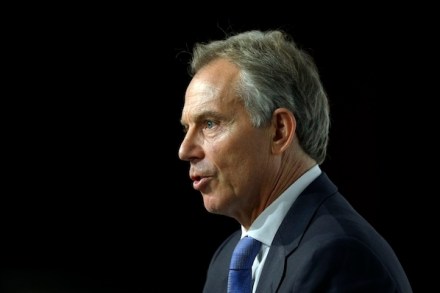
Tony Blair gave a speech today in which he proposed a 'Grand Bargain' to revive the European Union. One of the proposals in this grand bargain is - and Blair is clearly speaking entirely without self-interest - that there be an elected president of the European Commission or European Council. The former Prime Minister told the Council for the Future of Europe in Berlin: 'Let me make a few quick reflections. A Europe-wide election for the Presidency of the Commission or Council is the most direct way to involve the public. An election for a big post held by one person - this people can understand. The problem with the European Parliament is that though clearly democratically elected, my experience is people don't feel close to their MEPs.

Why David Cameron isn’t proposing a cut in the EU budget

From our UK edition

Cutting the EU budget is a very good idea. Much of it is spent inefficiently and its priorities are all wrong, 40 percent of it goes on agriculture. Given that a cut would also be popular with voters, why doesn’t David Cameron propose one? The reason is that there’s virtually no chance of getting agreement to it. If there’s no agreement, the EU will move to annual budgets decided by qualified majority voting—stripping Britain of its veto. But Labour’s tactical positioning in calling for an EU budget cut has been, as Isabel said earlier, extremely clever. It has left Cameron defending a complicated position which puts him on the wrong side of public opinion and many of his own MPs.

The test of Ed Miliband’s One Nation brand

From our UK edition

Labour has been pushing its One Nation branding campaign with quite some gusto in the past few days. Stephen Twigg announced at the weekend that 'One Nation Childcare' could include co-operative nurseries, and today Ed Miliband has given a speech on what One Nation means for mental health services, with the party launching a mental health taskforce. As well as trying to drop in as many mentions of the phrase as he could into his speech to the Royal College of Psychiatrists, Miliband continued to make direct links with One Nation's founder, Disraeli. He said: 'But just as Disraeli was right back in the nineteenth century that we could not build One Nation unless we addressed public health, so it is true today we cannot build One Nation unless we all speak out about mental health.

What today’s Trident announcement is really about

From our UK edition

When Nick Harvey was sacked in September's reshuffle, leaving the Ministry of Defence without a Liberal Democrat minister, anti-nuclear campaigners and the SNP claimed the move put the future of the review into alternatives to the current Trident nuclear deterrent in doubt. To underline the review's security, the party announced at the start of its autumn conference two weeks later that Danny Alexander would lead it instead. But though the review may be continuing, it appears rather insecure in one crucial respect, which is whether anyone will actually pay it the blindest bit of attention. Today Philip Hammond announced a further £350 million of funding for the design of a new generation of nuclear-armed submarines.

Cameron outfoxed from right and left on EU budget

From our UK edition

David Cameron now appears to have been outfoxed by his own backbench and the Labour party on the European budget. A Downing Street spokeswoman confirmed this morning that while the opposition and a group of rebellious MPs will campaign for a real-terms cut in the multi-annual budget, the Prime Minister remains committed to negotiating for a real-terms freeze. The spokeswoman said: 'His position is a real terms freeze: there has not been a real terms freeze in the multi-annual budget in recent years. That's what we are committed to negotiating for.' As I blogged earlier today, moves are afoot within the Conservative party to push for a real-terms cut, and there is now no backbench motion supporting the Prime Minister.

A living wage misses the point of poverty

From our UK edition

We all want there to be some new quick fix for tackling poverty and a ‘living wage’ is the latest fad in this area of simplistic marketing slogans. The reality is far more complex. It is great that KPMG and many other companies are doing well enough that they can afford to pay their employees well. But some companies are barely surviving. In industries such as electronics manufacturing there are huge success stories, but there are also plenty of tiny family run factories that have struggled to survive offshoring –for companies like this paying their staff more simply isn’t an option.

EU budget: Cameron’s leadership under pressure

From our UK edition

David Cameron is already irritating European leaders with his refusal to support any real-terms increases in the multi annual EU Budget, but this week, the Prime Minister is going to come under pressure to go even further and force a real-terms cut. This morning, he has Ed Balls and Douglas Alexander breathing down his neck, with a piece in the Times arguing that a cut is 'difficult but achievable with the right leadership and the right approach from the UK'. In his own party, Liam Fox says it is 'obscene' to 'even increase for inflation the inflated wages of the eurocrats' and is arguing in a speech today that weaker members of the eurozone should leave the currency at the same time.

Will David Cameron grant Northern Ireland control of corporation tax? – Spectator Blogs

From our UK edition

Monday morning in dreich late October. What more appropriate moment to ponder the questions of corporation tax and Northern Ireland? The question of whether the Northern Ireland Assembly should control the rate of corporation tax payable in the two-thirds of Ulster for which it is responsible won't go away, you know. Nor, despite the fact that the London press has paid little attention to it, is this some local matter of no importance to the rest of the United Kingdom either. On the contrary, David Cameron's decision on this seemingly-arcane or merely local matter is more important than it seems and, in fact, one of the more significant questions demanding his attention right now.