Uk politics

Ken ‘clarity’ Clarke says EU budget veto would be ‘absurd’

From our UK edition

Wise gamblers could do worse than to place a hefty bet every time Ken Clarke expresses an opinion that he'll have to clarify it shortly afterwards. The minister without portfolio said at a Policy Exchange event this morning that it would be 'absurd' for Britain to go to Brussels intending to veto the EU budget. He said: 'It's absolutely ludicrous to go there intending to veto. It's just absurd. 'Every one of the 27 member states has a veto. What they've got to do is reach a negotiated situation. Of course people have a veto. Any government will veto if it goes too far in one direction or the other.' And a little later, he duly clarified his remarks: 'The clear meaning of what I said was that we cannot go intending to exercise a veto before we actually arrive.
Denis MacShane’s career with Labour is over as he faces suspension over expenses claims

From our UK edition

The Committee on Standards and Privileges has recommended this morning that Denis MacShane be suspended as an MP for 12 months after he submitted 19 false expenses invoices worth £12,900 over four financial years. The committee's report, which you can read in full here, concluded: 'We accept that Mr MacShane is widely acknowledged for his interest in European affairs, and the funds he claimed could be said to have been used in supporting that interest. Those activities may have contributed to his Parliamentary work, albeit indirectly. He has expressed his regret, and repaid the money wrongly claimed.

The fiscal nimbyism that still terrifies the Tories

From our UK edition

If you're the tax personality of the year, as David Gauke is, the pressure's on when you give an interview to be as lively as possible. Gauke's interview with the House magazine today doesn't disappoint, with the Exchequer Secretary accusing those who oppose the child benefit cuts of 'fiscal nimbyism'. He says: 'I think there’s a lot of people who are in favour of reducing the deficit but then when it’s something that affects them there can be a degree of fiscal nimbyism. The reality is that every section of society is having to make a contribution. 'We can’t pretend that there can be sections of society which we can completely protect from deficit reduction.

Sir Howard Davies makes himself at home in the long grass

From our UK edition

The chair of the government's airports commission was refreshingly honest about the purpose of his review when he appeared on the Today programme this morning. Sir Howard Davies said: 'I have reflected quite hard on the criticisms about long grass that the Mayor of London and Michael Heseltine say, that this is booted into the long grass. So how can you make best use of your time in the long grass? What I think we can do is do a lot of the preparatory work. I think we can do that so that when a new government comes into office in 2015 when they make a decision it will have a flying start. I aim to to be a really expert piece of work looking at how you think about airport capacity which I hope internationally will be leading edge.

The hardcore Tory rebels and their new friends

From our UK edition

There is now a hardcore of rebels in the Conservative party who have defied the government on three key votes. The 37 MPs below have rebelled on the EU referendum vote, the House of Lords Reform Bill, and the EU budget. The question for the whips and the Prime Minister now is do they write these MPs off their Christmas card lists as forever-rebels, or do they launch a charm offensive that could melt even the steely heart of Peter Bone? I blogged yesterday about some of the problems that the Conservative leadership is creating for itself in terms of party loyalty, and while Bill Cash is hardly going to become chief whip, there may be others in this group who aren't beyond rescue.

Nick Clegg’s opposition to renegotiation could risk the UK’s EU membership

From our UK edition

Nick Clegg this morning fell into the usual 'all or nothing' fallacy on Europe. He said: 'As soon as we start talking about repatriation, we descend into the in-versus-out debate.' But the Deputy Prime Minister is wrong: the in/out debate is already underway, and rather than seek to defend the unpopular status quo, Nick Clegg should back renegotiation as the best option for those who wish to put the UK’s membership on a stable democratic footing. But instead of attempting to address the causes for the EU’s unpopularity, the inflated budget, democracy deficit and bureaucracy etc. Nick Clegg sought to channel the debate into his own in/out debate where the problems of ‘out’ justify doing nothing about the problems of ‘in’.

Clegg enrages eurosceptics with ‘false promise’ attack on plan to return powers from Brussels

From our UK edition

One of the key challenges for David Cameron this autumn is to address his policy on Europe. A big speech is expected before European leaders meet in December, with some in the Conservative party hoping it will come as soon as next week in order to boost Tory chances in the Corby by-election. But because the Prime Minister is offering definition for his own party on the EU, the other party leaders must do the same. Nick Clegg's speech today set out where he stands, and he didn't mince his words.

Ministers ward off Tory revolt on crime compensation

From our UK edition

The government has just managed to ward off another possible revolt in the House of Commons from Tory MPs. It failed earlier this autumn to get a revision of the Criminal Injuries Compensation Scheme through a delegated legislation committee when four Conservative MPs present refused to support it. The revised scheme will see half of all those seriously injured following a violent crime receiving no compensation at all and nearly 90 per cent of victims receiving less money. So John Redwood, Angie Bray, Jonathan Evans and Bob Blackman threatened to rebel, leading to Justice Minister Helen Grant withdrawing the legislation from the committee. Grant brought the legislation before committee again this morning, but this time there were different MPs considering the plans.

What next for the gutter press?

From our UK edition

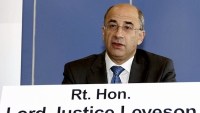
Lord Leveson will be publishing his recommendations for the future of press regulation very soon, and those on both sides of the debate are getting nervous. The Hacked Off campaign has a letter in today's Financial Times opposing plans for continued self-regulation of the industry that is signed by 26 professors in journalism, law and politics. The letter attacks proposals by Lord Hunt and Lord Black for self-regulation which would be underpinned by contracts between the regulator and the publisher which would be enforceable through civil law. It says: 'We do not believe these proposals to be in the best interests of journalists and journalism.

Nick Clegg: There is not a cigarette paper between me and the PM on EU budget

From our UK edition

The morning after the government's defeat on the EU budget, Nick Clegg has offered his own advice on the British negotiating position. The Deputy Prime Minister gave a speech to Chatham House in which he said that pushing for a real-terms cut in the budget - which is what 307 MPs including 53 Conservative rebels voted for last night - is 'unrealistic'. Clegg framed his attack on this negotiating position by focusing on Labour rather than Tory MPs. He said: 'Yet it was Labour who agreed to the last long-term EU budget settlement, which saw a major jump in EU spending and lost part of the UK’s rebate in exchange for virtually no real EU spending reforms.

The View from 22 — the fight for press freedom and an EU problem for Cameron

From our UK edition

What effect would any form of statutory regulation have on the press in this country? In this week's cover feature, Nick Cohen writes that if the Leveson Inquiry recommends strong measures to curtail the press, they will not be practical thanks to the constant evolution of the media industry. On this week's View from 22 podcast, Nick explains the problems of defining who exactly is the press and who are journalists: 'You can't say what a newspaper is and you can't say who a journalist is. When I started in journalism, people used to say it was a trade, not a profession...that was true in theory but false in practice — you couldn't be a journalist unless you worked for a state or private media conglomerate.

Don’t blame the whips for the EU budget revolt: the problem is higher up

From our UK edition

What is striking about this evening's revolt on the EU budget is that it was organised at lightning speed by the rebel camp. Mark Reckless and Mark Pritchard only tabled their amendment on Monday morning, whereas the rebellion of the 81 over the backbench motion for an EU referendum took weeks of careful planning. This time round, in just three days, the shadow whipping operation managed to stir up 53 MPs prepared to troop through the 'yes' lobby in favour of the call for a real-terms cut. The whips themselves are already saying that they know the blame will land on Sir George Young's head when they believe it wasn't his fault. And even those who were the most enthusiastic signatories the Reckless/Pritchard amendment disagree that the whips should take the flak.

Government suffers humiliating defeat on EU budget

From our UK edition

The government has just suffered an embarrassing defeat on the EU budget. The rebel amendment, which called for a cut rather than the real terms freeze David Cameron is proposing, passed by 307 votes to 294. There are, I think, three significant consequences of tonight’s vote. First, it has been yet another reminder that David Cameron can barely control his party when it comes to Europe. We’re waiting for the precise number of Tory rebels tonight but it seems like about 50 MPs defied the whips. This means that if Labour is prepared to join with the Tory rebels, it can overturn the coalition’s majority.

EU budget: Focus on Labour’s chutzpah

From our UK edition

The opening exchanges of the Commons debate on the EU budget were, on the whole, rather good for the Prime Minister. They involved Greg Clark making a concerted attack on Labour's 'opportunist' decision to call for a real-terms cut and to support Mark Reckless' amendment calling for just that. Without irony, Chris Leslie then told the Chamber that Clark was being 'partisan' in his speech. This put Clark and the backbenchers sitting behind him on the defensive. The debate became about Labour rather than the government's own stance on the issue. Loyal MPs including Nadhim Zahawi pressed Leslie on whether he himself would back a veto at the budget summit if European leaders failed to agree a freeze or a cut. Clark asked him directly whether he would do so.

PMQs sketch: Ed Miliband poses as the king of the jungle

From our UK edition

Ed Miliband had fun with his dressing-up box today. At PMQs he tried on all kinds of disguises in the hope of scaring the government. First Europe and the EU budget negotiations. Miliband’s approach here is full of cunning and dishonesty. He called for ‘real terms reduction’ even though he knows full well that a freeze is the best the government can hope for. But by suggesting an impossible tactic he can claim that David Cameron has missed a trick. ‘Rank opportunism,’ declared the PM, ‘and the country will see through it.’ He reminded us of Labour’s record at the negotiating table seven years ago. Back then Ed Milband and his colleagues were happy to pitchfork great flapping bales of cash onto the EU money-pyre.

Tensions grow over government green policy

From our UK edition

While the major tensions at today's Prime Minister's Questions were around the Tory party and Europe, another split within the government - this time between the two coalition parties - was visible too. Ed Miliband used his second set of questions to attack the Prime Minister on the Heseltine review, which he linked to John Hayes' comments about wind farms to the Mail and the Telegraph. Hayes had told journalists that 'enough is enough' on wind farms, adding that 'I can't single-handedly build a new Jerusalem but I can protect our green and pleasant land'.

David Cameron reassures MPs that he’d prefer a cut in EU budget

From our UK edition

The Prime Minister needed to reassure his own side at PMQs today on the EU budget and give his whips something to work with. He largely did that, saying almost immediately that his position was that at best, he’d like it cut and at worst, frozen. That Cameron has said he’d like it cut will give those of his backbenchers who stick with him tonight some cover. They’ll be able to say that they’re supporting the government which already wants a cut. Ed Miliband’s decision to lead on the issue and try and use it to paint Cameron as ‘weak’ has also made the issue more partisan. I suspect that a few Tory MPs who might otherwise rebel will balk at walking through the lobbies with Ed Balls.