Uk politics

Tory MP in battle with ministers over ‘snooping bill’ safeguards

From our UK edition

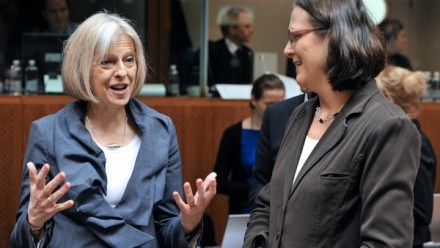
Coffee House has learned that a Tory MP is engaged in a fight with the Home Office on safeguards for its proposed 'snooping bill'. The fate of the Draft Communications Data Bill could be decided on Tuesday when a cross-party committee reports back on the legislation. Nick Clegg is already reported to be considering dropping the Liberal Democrats' support for the Bill, and the joint committee's report is expected to take a negative view of the proposals. One Liberal Democrat member, Lord Strasburger, told Home Secretary Theresa May that the proposals for monitoring internet users' records were a 'honeypot for casual hackers, blackmailers, criminals large and small from around the world, and foreign states'.

Will he, won’t he? Ed Miliband makes noises about benefits war

From our UK edition

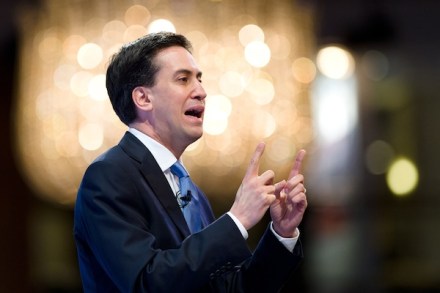
Ed Miliband is ready to wage war with David Cameron and George Osborne over the Welfare Uprating Bill, which will see benefits rise by 1 per cent a year, rather than in line with inflation. The Labour leader has been talking tough in the papers this morning, with a piece in the Sunday Mirror in which he says: 'We should be tough on the minority who can work and try to avoid responsibility. But there comes a moment when a government is exposed for who they are. That happened to David Cameron and George Osborne this week. 'They showed they are not fit to govern because they played political games with people's livelihoods. They said they were cutting benefits for the next three years and the mood music was that it was a way to punish the 'shirkers and scroungers'.

Starbucks protests: We need political power to reform the tax system

From our UK edition

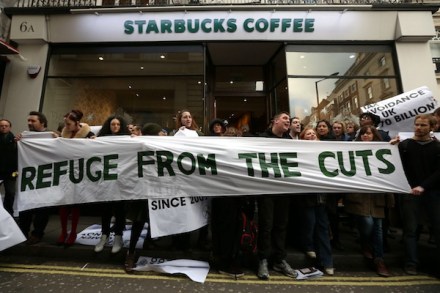
UK Uncut is holding its day of action against Starbucks today, with more than 40 demonstrations across the country in the chain's coffee shops. The group's sit-ins aim to highlight the chain's tax avoidance strategy which has led to it paying just £8.5m in corporation tax since 1998, despite sales of £3bn in the UK. While it's not a bad thing that tax avoidance is moving up the agenda, there are probably more fruitful ways that those irritated by tax avoidance can spend their time, rather than making life a bit awkward for some poor barista who has no involvement in their employer's tax affairs.

Jeremy Heywood, just call him very influential

From our UK edition

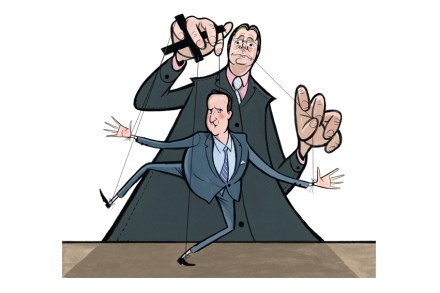
The main topic of conversation in Whitehall today has been The Guardian’s profile of the Cabinet Secretary Sir Jeremy Heywood. One particular passage has raised some eyebrows in several ministerial offices: He believes, they say, that reports of his power are overstated and the very suggestion that he might be making decisions on behalf of politicians makes him "cringe". He prefers to describe himself, they say, as simply very influential. Heywood, and this irritates some in Number 10, briefs journalists personally. He is known to be particularly concerned about his image. I’m told that after The Spectator cover depicting him as the PM’s puppet-master, there was much discussion over what should be done to finesse things.

David Cameron backs gay marriages in church

From our UK edition

This week marks seven years since David Cameron was elected leader of the Conservative party, and he has celebrated the occasion by making an announcement that will certainly keep things lively among his MPs and grassroots. Joe Murphy reports in the Standard today that he will allow religious groups to host same-sex weddings in their places of worship. The Prime Minister made clear this lunchtime that he would allow a free vote, appearing on the lunchtime news to say: 'I'm a massive supporter of marriage and I don't want gay people to be excluded from a great institution. But let me be absolutely 100% clear, if there is any church or any synagogue or any mosque that doesn't want to have a gay marriage it will not, absolutely must not, be forced to hold it.

Do teaching unions not trust head teachers?

From our UK edition

Michael Gove had a very good autumn statement: not only did he get £1bn for new free schools and academies, but he also got performance-related pay for teachers. Gone will be the days of automatic rises and pay based on length of time served, replaced by rises based on merit as in many other professions. As James notes in his column this week, accepting the recommendations of the School Teachers' Review Body is a 'full-bore assault on union power'. So, unsurprisingly, the unions are terribly upset by the change. Chris Keates, general secretary of the NASUWT, released this response: 'The war on teachers waged by the Coalition government continues. The value of a national pay framework has been recognised by other pay review bodies but the STRB appears to be seriously out of step.

Number 10 coy on Royal Charter proposal for press regulation

From our UK edition

Newspaper editors are under pressure to come up with a new system of press regulation that works, and the Prime Minister is under pressure to show that he is taking the need for a new system seriously, rather than just bowing down to media bosses. So is a Royal Charter the solution that would ensure the new press watchdog would remain independent of and tough on the newspapers? Reports have surfaced in the press that Oliver Letwin is mulling over the idea as a way of avoiding statutory underpinning while giving assurances about the new regime. The Economist reports: 'Oliver Letwin, the minister in charge of squaring this awkward circle, has suggested that another upstanding body could verify the new set-up, without resorting to statute.

Osborne’s ghost of Christmas future

From our UK edition

There was plenty to welcome in George Osborne’s budget, from the proposed corporation tax cut to scrapping the 3p fuel duty rise. But to read Jonathan’s seven-graph summary is to realise that Osborne's 2010 plan is not now enough. I look at this in my Telegraph column today. Here's a festive summary of my pain points:- Osbrownism - the ghost of Christmas Present  Osborne’s words – tough on deficit, dealing with debt – are very encouraging. The figures: not so much. The main features of Osborne’s plan are identical to the Brown plan he inherited.

For the Autumn Statement, stability: for the mid-term review, ambition

From our UK edition

After months of squabbling and not-so-civil war, the coalition now appears to be functioning again. This is one immediate consequence of George Osborne’s Autumn Statement. The Chancellor was allowed to present a package to the House that had not been leaked earlier by coalition partners in an act of preemptive spin. This matters not only for the orderly proceeding of affairs of state but also because the Autumn Statement was the first of a two-part coalition effort to seize the political initiative. The second will come in the new year with the publication of its mid-term review. Time is running out for further radical reform. The Autumn Statement was limited in its ambitions, and the mid-term review will be the last chance.

Eric Pickles and the looming Tory split over the ECHR

From our UK edition

Eric Pickles is one of the few characters in contemporary British politics. In an interview with The Spectator this week, he chides Vince Cable for not deregulating enough, admits that he gets ‘occasionally irked’ by George Osborne’s impatience on policy, and reveals that ‘‘I was asked by a senior member of the government, two weeks after the National Planning Framework had come into being, why it hadn’t worked.’ But Pickles also gives us a glimpse of a coming Tory split. He says that it is ‘ridiculous’ that individuals can appeal their cases all the way to the European Court of Human Rights in Strasbourg. He wants to stop this, which would require Britain leaving the jurisdiction of the court.

The strivers vs scroungers battleground

From our UK edition

Welfare will be one of the key battlegrounds at the next general election, and George Osborne's Welfare Uprating Bill will certainly be one way the Conservative party can prod Labour on what is a hugely awkward policy issue for the party. It accelerates the internal debate about how Labour can appeal to the electorate on the issue of welfare while staying true to its own core beliefs, and, Tory strategists hope, will cause some ructions. While the party appeared united in Manchester at its autumn conference in September, it faces hard times ahead as it tries to answer some of the big questions about what a Labour welfare state would look like.

Ugandan Asians are part of Britain’s secret weapon for success

From our UK edition

Few people who were alive 40 years ago will forget the scenes of thousands of Ugandan Asians arriving in Britain after being expelled from their country by dictator Idi Amin. Between 1972 and 1973, nearly 40,000 Ugandan Asians came here. Many originated in India and had British overseas passports, and the then Prime Minister Edward Heath said our country had a moral duty to help them. Amin had forced them to leave everything. But he could not make them relinquish their skills, their determination and their resilience - all of which they brought here in abundance. So 40 years later we are not commemorating the terrible circumstances of their departure from Uganda; we are celebrating the enormous contribution they have made to the UK.

Labour aims to change political dynamic around benefits uprating

From our UK edition

It now looks almost certain that Labour will vote against the 1 per cent uprating for most working age benefits. Labour is pointing out that because this also includes tax credits, most of the people hit by this will actually be in work. The party hopes that this changes the political dynamic around this subject. But, as a Liberal Democrat minister pointed out to me last night, the coalition can portray any attempt to uprate by more than 1 per cent as special treatment for those on benefits. The minister stressed that public sector pay was only going up by 1 per cent and the threshold for the 40p rate was, again, only being increased by 1 per cent. The other thing the coalition will hit Labour with is how they would pay for uprating by more than 1 per cent.

If Britain loses its AAA rating, Osborne will lose one of his key attack lines

From our UK edition

George Osborne's admission that he will not meet his target to have debt as a percentage of GDP falling by 2015/16 has serious consequences for one of his central messages. The Autumn Statement has led credit ratings agency Fitch to warn of a possible downgrade. The agency said: 'Missing the target weakens the credibility of the fiscal framework, which is one of the factors supporting the rating.' Ratings agencies aren't the be-all-and-end-all by any means, and Osborne could quite easily point to just how wrong they were before the crash, giving collateralised debt obligations high ratings. But the problem is that the Chancellor tends to wheel out their approval to shore up his own position, pointing to the UK's AAA rating as a sign that he is pursuing the right economic policy.

Autumn Statement: How long can we keep skating on thin bond market ice?

From our UK edition

In today’s Autumn Statement there was some great news on jobs and fuel duty, but it’s surrounded by a surreal atmosphere. We must still beware the bond market. Employment is at a high with 1.2 million private sector jobs created since early 2010. Youth unemployment is falling - we’re doing much better than our neighbours. Government is living beyond its means to the tune of £108 billion, down from £159 billion in 2009-10. Fuel duty has been frozen at merely eye-watering levels: those of us who campaigned for it will now have to defend the consequences. Billions will have to be found from somewhere else. We’re told the Government still has an even chance of balancing the books within five years but it will take an extra year before the debt is falling.

Autumn Statement sketch: Sub-arctic Chancellor warms up the Commons

From our UK edition

From our sub-arctic chancellor this was a rip-roaring performance. Using all the arts perfected by Gordon Brown, he dazzled the house with his Autumn Statement. A chancellor should never be entirely candid. His job is to blame others for failure, to take credit for all successes, (no matter what their true origin), to engender confidence in the future and to attract cautious applause. George Osborne did all this. The bad news came out first. There were sharp intakes of breath as he revealed that the economy had shrunk by 6.9 per cent during the credit crunch. And he offered a personal confession which, in accordance with tradition, was masked in flowery statistical language.

Autumn Statement: Lord Oakeshott claims George Osborne dances to donors’ tune

From our UK edition

The Liberal Democrats are keen to use today to show that Coalition works, but Lord Oakeshott is in a less charitable mood. I've just had a chat with him about George Osborne's explicit rejection of the mansion tax in his statement today as 'intrusive'. The former Lib Dem Treasury spokesman in the House of Lords says: 'I'm not withdrawing anything I have said about the Tories and the mansion tax. Intrusive is exactly what taxes on high-end tax dodgers have to be. George Osborne has performed a screeching handbrake turn on Tory donors' orders.' Nick Clegg's aides have been trying to labour the proalition point in their briefings , though.

Autumn Statement: George Osborne moves into a stronger position

From our UK edition

There’s a sense of satisfaction among Tories, and Osborne allies in particular, this afternoon. First, the Autumn Statement didn’t all leak out in advance. Instead, the Chancellor had some news to make on the day—notably the cancelling of the 3p fuel duty rise and a further increase in the personal allowance. Second, it has drawn political battle-lines that they believe favour them. Labour now has to decide whether to accept the coalition decision to up-rate most working age benefits by only 1 per cent for the next three years. This saves more than two billion pounds by 2015-16 and will, judging from previous polling on welfare, be popular. But Labour MPs don’t like it, and even Ed Balls himself could be seen shaking his head when Osborne announced it.