Uk politics

Leveson Report – your guide to the regulatory recommendations

From our UK edition

Here is a six-point guide to the regulatory system proposed by Lord Justice Leveson: 1) The creation of a genuinely independent regulator Leveson agrees with the view, expressed by Baroness O’Neill and others, that ‘independent regulation’ does not mean ‘self-regulation’. The existing system of self-regulation should be wound up. In its place should emerge a regulator that is both independent of the government, parliament and the industry. It should be ‘established and organised by the industry’ in order to provide ‘effective regulation of its members’. Leveson does not rule out the emergence of multiple regulatory bodies, and indeed allows for it, but he does not advocate such an outcome. 2) How will it actually be independent?
Leveson report: David Cameron left in a minority over press regulation

From our UK edition

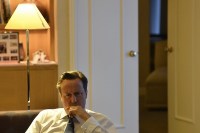
Following this afternoon’s statements I am certain that David Cameron is in a minority in the House of Commons in not wanting to create a statutory back-stop for a press regulator. But, so far, no one can explain how even an alliance of Labour, the Liberal Democrats and the Eustice Tories can force the Prime Minister to provide parliamentary time for a bill that he doesn’t want. Cameron got the tone and content of his statement right. I’m reassured that Cameron appreciates that while he set up an inquiry, he didn’t outsource his judgment to Lord Justice Leveson. He is also surely correct that a press law, however brief, would have worrying consequences. Just before the statement, a visibly agitated Miliband walked over to Cameron to talk to him.

Leveson report: Nick Clegg backs statutory underpinning

From our UK edition

As trailed on Coffee House over the past few days, Nick Clegg used his own separate Commons statement to declare his support for the statutory underpinning of the new independent press regulator. He said that nothing in the debate that he had heard so far suggested to him that there was a better system of regulation than the one before MPs today. 'The long grass is the last place that this problem should end up in,' he said, adding: 'I am convinced that he has made a case for legislation.' The Deputy Prime Minister said he acknowledged that 'we now need to show how that can be done in a workable way'. But he argued that it was a 'straw man' to suggest that law is always a threat to the freedom of the press.

Leveson press conference sketch: the supreme authority of the Lord

From our UK edition

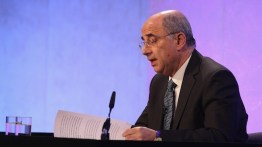
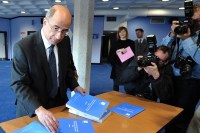
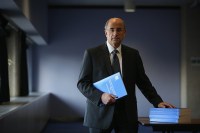
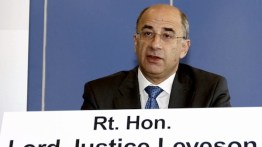
The conference platform was surrounded by screens tinted a deep and easeful blue. At just after 1.30 pm, Lord Leveson ambled forth, sporting a white shirt, a grey suit and a slight stoop. He peered out at the assembled pack of journalists from beneath his curmudgeonly black eyebrows. Then he sat at his desk. Microphones at either end bowed towards him like praying mantises. He began to speak. His quiet voice and his dense, circuitous prose suggest that he’s used to being listened to in awed silence. So he was. Occasionally he slowed the pace and upped the volume suddenly. A court-room device, perhaps, to jog a dozy juror awake. ‘The press, operating freely,’ he intoned, ‘is one of the true safeguards of our democracy.

Breaking: David Cameron says ‘I am not convinced statute is necessary’ for press regulation

From our UK edition

David Cameron has just told MPs that while he accepts Lord Leveson's recommendations for a new independent press regulator, he rejects statutory underpinning of the new regulatory system. The Prime Minister said: 'I accept these principles... The onus should now be on the press.' He said he was in favour of giving the press a period of time to implement the recommendations. But to roars of disapproval from MPs on the other side of the Chamber, he said: 'I am not convinced... that statute is necessary.' He also told MPs that he accepted Leveson's recommendations on the relationship between the police and the press. The Prime Minister also took care to praise Health Secretary Jeremy Hunt, who was cleared of wrongdoing by the Inquiry.

Leveson report: what the judge said about Jeremy Hunt

From our UK edition

Jeremy Hunt was one of the most controversial figures caught up in the Leveson Inquiry, with Labour calling for the then Culture Secretary to resign over contact between his office and NewsCorp lobbyist Fred Michel. But today Lord Justice Leveson's report finds 'no credible evidence of actual bias on the part of Mr Hunt', but the exchanges between the lobbyist and Mr Hunt's adviser Adam Smith gave rise to the perception of bias.

Leveson report: To pass a law you don’t just need a majority in parliament, but time too

From our UK edition

There’s understandable excitement about whether a pro-Leveson Commons majority could be formed. At first glance, this looks likely if you add Labour, the Lib Dems and a handful of the Eustice Tories together you can get to 326 quite easily. But, in terms of passing a bill, you need more than majority. You need time. The vast majority of parliamentary time remains in the government’s gift. If the Prime Minister won’t let the government bring forward legislation, then there almost certainly won’t be a press law passed. David Cameron has tweeted that he’ll give a ‘clear sense of direction’ in his statement at 3pm. We will then after that have Nick Clegg’s statement.

Leveson praises the media, then slaps it with ‘not statutory’ regulation underpinned by statute

From our UK edition

Lord Justice Leveson has just finished giving his statement to the Inquiry press conference, and told journalists that he would be 'making no further comment' about the report's contents. 'The ball is back in the politicians' court,' he said. We have 40 minutes until we find out how the politicians plan to play that ball. The judge took great pains to praise the media, saying: 'I remain firmly of the belief that the British press, I repeat, all of it, serves the country very well for the vast majority of the time. There are truly countless examples of great journalism, great investigations and great campaigns.' He was so fulsome in his praise that it sounded almost valedictory, and as the judge continued, it seemed that it was: 'But none of that means that the press is beyond challenge.

Leveson report recommends statutory underpinning of press regulation

From our UK edition

'This is not, and cannot be characterised as, statutory regulation of the press.' This is the headline from the Leveson report. That said, Lord Justice Leveson recommends substantial changes to the current self-regulatory system, including changes that empower the civil courts. The changes will be underpinned by legislation to validate the new regulator, to guarantee independence from the industry, parliament and government, and to ensure compliance with certain guidelines. These changes are the consequence of the failure of the existing regulatory system and widespread press malpractice. Indeed, the report damns Fleet Street.

Nadine Dorries: Why shouldn’t a working class MP take a few days off?

From our UK edition

Fresh from the jungle, Nadine Dorries is the Spectator's diarist for this week. As well as observing that each of her 11 fellow contestants on I'm a Celebrity: Get Me Out of Here! was 'probably more right wing than I am', she also explains why she thought it was acceptable for a 'working class woman to take a few parliamentary days off' to go on the show, writing: Many MPs take jollies from the House of Commons, but in seven years I have never spent a day away from my Westminster duties. This is why I thought I would be allowed to devote a few days of my holiday to a reality TV show. As far as I could see, the Conservative party is intensely relaxed about such absences. Some of its MPs have full-time careers in the City, others run family businesses or write books.

Nick Clegg to give separate Leveson statement

From our UK edition

Nick Clegg will make his own statement on Leveson in the Commons today after the Prime Minister has spoken. Party sources were saying yesterday that this would only happen if the two men disagreed on the government's response to the report. The Lib Dems want to back the rapid creation of a statutory backstop for newspaper regulation, while David Cameron does not want to back any press law, at least for now. This is probably the biggest clue we'll get as to the content of the Leveson report before the embargo lifts at 1.30pm. But it doesn't necessarily mean a big split over the outcome: the coalition cabinet committee will meet at noon to discuss the full response, and there may well be greater unity over this than initially appears.

The big flashpoints over Leveson

From our UK edition

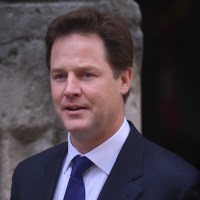
Nick Clegg and David Cameron will return, with their officials, to their speed reading exercise of the hefty Leveson report this morning. The Deputy Prime Minister wasn't giving much away unsurprisingly, when he spoke to journalists a short while ago as he left his home. He said: 'In this whole process, everybody wants two things: firstly a strong, independent, raucous press who can hold people in positions of power to account. And secondly to protect ordinary people, the vulnerable, the innocent when the press overstep the mark. That's the balance we're trying to strike, and I'm sure we will.' There is still the possibility that Clegg may give a second statement in the House of Commons later today if he and the Prime Minister fail to agree on the government's response to Leveson.

Bold Boles’ planning push is a key example of ‘spreading privilege’

From our UK edition

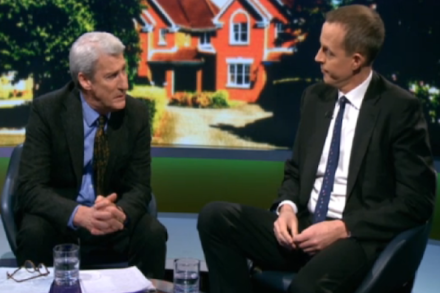
Nick Boles has just put in a fierce performance on Newsnight over his controversial remarks on planning. Amusingly, the minister's remarks aren't a million miles away from Nick Clegg's slightly less well-reported speech on housing last week, but Boles has a knack of going where other ministers fear to tread when he speaks about difficult issues. He was extremely impressive on why making development a priority does not mean England is going to turn into an enormous concrete jungle, saying: 'Under 10% of Britain, currently, 10% of England, is covered by urban development in any way. A very small amount. Over 85%, 88%, would still be rural, undeveloped countryside, and we would have completely solved our housing need for the next 20 years.

PMQs sketch: PM paints Work Programme a marvellous success

From our UK edition

While Leveson packs his sun-cream and flip-flops and prepares for a holiday in Australia, the nation holds its breath in anticipation of his report. One lucky citizen, the prime minister, is permitted a sneak glance at the findings of the great inquisitor into press malpractice. At 11.45 this morning, the monumental hardback landed with a thump on Number 10’s doormat. David Cameron barely had time to turn to the index and see how many name-checks he’d been given before he was whisked off to the Commons to answer questions from Ed Miliband. It was not a great occasion. The opposition leader challenged Cameron on the failure of the Work Programme, (b. June 2011), to terminate long-term unemployment. Reports yesterday revealed that just 3.

The Coalition split over Leveson

From our UK edition

I'm informed by someone involved in the coalition negotiations on the issue that the reason the Liberal Democrats want to be able to make their own statement on the Leveson Report is that they intend to back the rapid creation of a statutory back-stop for newspaper regulation. By contrast, I hear that David Cameron doesn’t want to back any press law, at least for now. The key moment tomorrow will come with a meeting of the Cabinet’s coalition committee at noon. It is scheduled for an hour and is meant to thrash out whether a common position can be agreed. Michael Gove, the government’s most passionate opponent of statutory regulation, is a member of it as are all five Liberal Democrat Cabinet Ministers and David Laws.

University applications fall 8%. But is that bad news?

From our UK edition

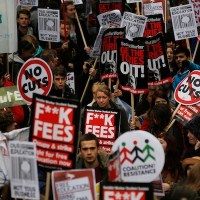
University admissions service UCAS published figures today showing the number of students applying early for university has fallen by 8 per cent on last year, following a drop of just under 13 per cent the year before. 'Oh dear,' tweeted Times Higher Education's news editor Simon Baker, adding that these figures are 'worrying' while NUS president Liam Burns said the data meant the government 'should now finally admit that its higher education policies are having a significant impact on application behaviour'. Universities themselves might be worried about the effect on their business models of a decline in the number of students, particularly for undersubscribed courses. But are these figures really an unsettling indication of the effects of the government's higher education reforms?

Grayling defends stand-off with ECHR on prisoner votes

From our UK edition

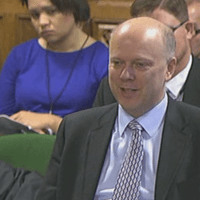
Chris Grayling today defended the Government's decision to square up to the European Court of Human Rights on prisoner votes. The Justice Secretary seemed to enjoy his hour and a half before the Justice Select Committee, and used it to make a number of typically forthright assertions about the criminal justice system. Labour MP Jeremy Corbyn attacked the minister for the government's decision to refuse to give prisoners the vote, saying: 'What message does this give to other countries if you are inviting the British parliament and judiciary to pick and choose which ECHR judgements it enacts or doesn't enact? In any event, you could easily agree with the ECHR by a very minimal level of prisoner voting.

Lib Dems seek alternative Leveson statement slot

From our UK edition

As teams in secure rooms in Downing Street pore over the half dozen copies of the Leveson report, which arrived this morning, the Liberal Democrats are already starting to work out what they'll need to do if David Cameron and Nick Clegg find they cannot agree on the government's response. The Lib Dems have approached the Speaker to find out whether there is a possibility that Nick Clegg could give his own separate statement following Cameron's own response in the Commons tomorrow afternoon. Sources say they hope that this is an unlikely scenario, but add that 'he would like to be able to make his position clear in Parliament' if he does take a different stance.