Uk politics

Justin Welby to face MPs and peers on women bishops row

From our UK edition

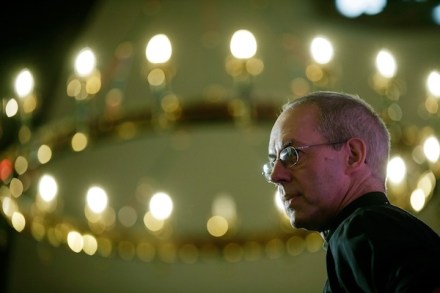
Justin Welby is certainly a bold chap: I understand the man set to take over from Rowan Williams as Archbishop of Canterbury is due to meet MPs and peers on Thursday to discuss their concerns about women bishops. I've picked up a flyer for the morning meeting in the House of Lords, where the current Bishop of Durham will 'discuss concerns of members regarding Women Bishops'. Chairing the meeting will be Sir Tony Baldry MP and the Bishop of Leicester, Tim Stevens, who is also the Convenor of the Bishops in the House of Lords. It's likely to be an extremely well-attended meeting, especially given some politicians have been pushing for the Church of England to be banned from making further appointments to the House of Lords until the issue of women bishops is resolved.
Ed Balls says Labour will oppose the Welfare Uprating Bill

From our UK edition

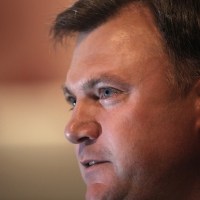
Ed Balls gave the clearest indication yet today that his party would vote against the government's plans to cap benefit rises to 1 per cent rather than in line with inflation. Speaking at Treasury Questions, the Shadow Chancellor said: 'It's important for members on both sides of the House know the answers to the questions I asked the Chancellor. First of all, 60 per cent of families hit by his tax and benefit changes are in work. And according to the IFS, as a result of the Autumn Statement measures, a working family, the average one earner couple will be £534 a year worse off by 2015, a working family worse off.

The Census demonstrates the importance – and benefits – of immigration – Spectator Blogs

From our UK edition

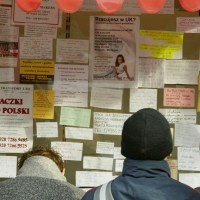
I suppose the confirmation that 13 per cent of the present population of England and Wales were born overseas will be the cause of some eye-brow raising and much spluttering from the usual suspects. It's too late to repel the foreign hordes. They are inside the castle already. Some 7.5 million people born overseas now live in England and Wales (but mainly England). Lucky old England, says I. Immigrants are drawn to and then help create economic prosperity. It is not, I suspect, a coincidence that depressed parts of northern England are also often those parts with the fewest numbers of foreign-born inhabitants. This makes sense: why would you leave Poland to claim benefits in Sunderland? No, you go where the work is.

Scottish Independence and Europe: Who does this Barroso guy think he is? – Spectator Blogs

From our UK edition

Today's Think Scotland column takes a gander at the rumpus over an independent Scotland's accession to the EU. Until recently the SNP promised that said accession would be automatic. Now it's simply "common-sense".  This is because Jose Manuel Barroso, the Spanish Iberian agent* at the heart of the EU Commission, has made an awkward intervention. Scotland would, he says, not be an automatic member of the club at all. Intuitively this is obvious just as Scotland would not be an automatic member of the United Nations. It would have to apply. Once it applied it's application would most probably be accepted. There are few plausible grounds upon which to reject it. With regard to Brussels, however, the truth is that no-one quite knows precisely what would happen.

Home Office minister: We can change snooping bill quickly

From our UK edition

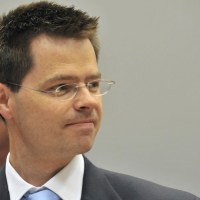
After Nick Clegg and Labour rejected the draft Communications Data Bill, Home Office minister James Brokenshire appeared on the Today programme to explain that while the Home Office accepts the 'substance' of the joint committee's report, he believes it won't take too long to redraft it. He said: 'We believe that the changes that meet the substance of these recommendations can be met in a reasonably short order, but in saying that what I am clear is that we know that we need to work this through with the coalition.' He pointed out, rightly, that the committee was clear that there was a need for the legislation, but that there were concerns about the balance between collecting data and individual privacy.

Communication problems: Back to drawing board for controversial snooping bill

From our UK edition

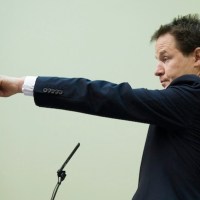
The joint committee examining the controversial draft Communications Data Bill has reported back, and it's not good news. The report's damning findings about the draft legislation from the Home Office has led Deputy Prime Minister Nick Clegg to call for it to be redrafted, and a hostile Tory MP to describe the plans to monitor internet users' activities as 'on life support'. The committee said: 'Our overall conclusion is that there is a case for legislation which will provide the law enforcement authorities with some further access to communications data, but that the current draft Bill is too sweeping, and goes further than it need or should.

The government and the European Court of Human Rights are on a collision course over prisoner votes

From our UK edition

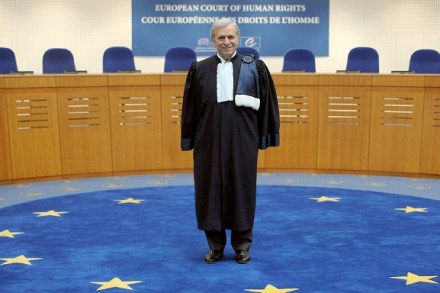
A showdown between the government and the European Court of Human Rights over prisoner votes drew that bit closer today. The government hoped that having parliament vote to uphold a blanket ban on prisoners voting would buy it some time, as the European Court of Human Rights would then have to start examining the issue all over again. But that hope was dashed today when the Council of Europe declared that a blanket ban 'cannot be considered compatible with the European Convention on Human Rights'. It also said that it expected to return to this case in September 2013. I expect parliament will still vote for the blanket ban, if it is given the option, meaning that parliament—which is sovereign in this country—and the court will be in conflict.

Liam Fox’s attack on Foreign Office peeves former ambassador

From our UK edition

Liam Fox sparked a row with a former diplomat today after accusing the Foreign Office of an institutional bias towards greater integration with the European Union. The former Defence Secretary is building up a reputation for himself as a rallying figure for the eurosceptic right wing of the Conservative party with a series of speeches on Britain's relationship with Europe, and today he attacked the civil service for having a weak spot for the continent. He told an Open Europe event at the Royal United Services Institute that the government's desire to renegotiate its EU position was impaired as a result of the FCO being 'totally wedded to the concept of ever-closer union, for whom integration into the EU is virtually an article of faith'.

Commons shadow boxing on gay marriage

From our UK edition

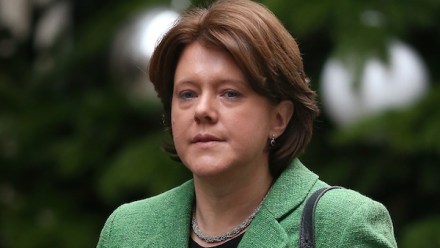
Today’s urgent question on gay marriage was largely shadow boxing for the statement on it, which has now been brought forward to tomorrow. Maria Miller insisted that the chance of a legal challenge to try and forces churches that don’t want to marry gay couples to do so was negligible. But Cameron’s comments about allowing those religious demoninations that want to marry gay couples to do so, led to Edward Leigh calling for another consultation on this issue. Interestingly, just before the urgent question started John Randall, the Conservative Chief Whip, and Greg Hands, another member of the whips office arrived in the chamber. The Tory questions on the issue were fairly evenly split between those in favour of same-sex marriage and those opposed.

David Cameron: It’s our fault voters don’t understand why austerity is necessary

From our UK edition

David Cameron paid a rare visit to those hacks that lurk in the Commons press gallery for lunch today. In between cracking jokes about how 'as you know, I have very little control over what Boris does', and tantalising us with references to his EU speech, which is coming 'soon', the Prime Minister made an interesting admission about the way his government is communicating with voters about the difficulties in the economy: 'They are not expecting miracles. I think what people hear is a rather hard, technocratic message. They are not hearing - in fact, this is our fault - they are not hearing enough about why this matters and who this is for.' He did say that the Autumn Statement did demonstrate that the government was on voters' side, with its measures on fuel and personal tax allowances.

Attorney General to reject warnings of gay marriage legal challenge

From our UK edition

I understand that when the gay marriage bill is published, the Attorney General will make clear that the chance of a legal challenge at the European Court of Human Rights to religious institutions that don’t want to marry gay couples is ‘negligible’.  As Isabel says, what wavering Tory MPs think of this legal opinion will be key to determining how they vote. The debate inside the Tory parliamentary party about this issue is becoming increasingly rancorous. There’s real fury among some MPs about the language being used by some of the opponents of same-sex marriage. David TC Davies decision to opine on whether parents want gay children has infuriated many MPs.

Labour could force vote on draft Leveson bill

From our UK edition

Labour will discuss its draft Leveson Bill with the Conservatives and Liberal Democrats at the next tranche of cross-party talks on Thursday. The Bill (which you can read here) is short and sweet, replacing Ofcom as the regulatory backstop recommended by Leveson with a panel headed by the Lord Chief Justice, and a press regulator called the Press Standards Trust. The party hopes to use the Bill as the basis of discussion for Thursday's talks, and has sent it to Culture Secretary Maria Miller, as well as Tory MPs who are spearheading calls within their party for statutory underpinning of press regulation including George Eustice, and Lord Wallace, who has been attending the cross-party talks on behalf of the Liberal Democrats.

A storm of nonsense: gay marriage opponents lose their wits – Spectator Blogs

From our UK edition

My word, the latest kerfuffle over gay marriage runs the gamut from dumb to dumber. Here, for instance, is Cristina Odone: He may get away with bullying a great many – perhaps the majority – into accepting his proposals. But in doing so Cameron will create a less liberal and tolerant society. Those who have held fast to their principles, will have to accept what the majority wants. But will the majority respect what the minority believes in? Not in Cameron's Britain, they won't. The moment the vicar or priest refuses to celebrate a gay marriage in their church, the aggrieved couple will see them in court — in Strasbourg.

Salmond caught on the rock of Europe

From our UK edition

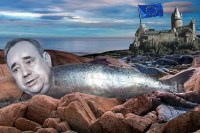
Europe, so often the rock on which Conservative hopes foundered, is now causing considerable trouble for Alex Salmond. The Scottish First Minister has long campaigned for Scottish separation under the slogan ‘independence in Europe’. Leaving aside his difficulty in justifying the departure from one Union only to become a junior member of another, this has always been a tricky proposal to sell. The main reason for the SNP’s vulnerability has been that no-one has really ever known how Scotland could leave an existing member state and automatically become another one in its own right – not without having to drop all the opt outs and advantages that the UK has squeezed out of Brussels over the decades.

No 10 insists churches are protected under gay marriage plans

From our UK edition

The government may be forced to explain its plans for gay marriage in the House of Commons today if an urgent question is granted. Chief among the questions from backbenchers will be the consequences for religious institutions that continue to oppose the idea and do not want to conduct such ceremonies. There are some Tory MPs who are viscerally opposed to the idea of gay marriage in any form, but others are wavering and need reassurance that they will not vote for something which leads to the situation where a vicar is forced as a result of a European Court judgement to conduct a same sex marriage against their will.

Tim Loughton attacks coalition’s failure to support married couples

From our UK edition

Tim Loughton was one of the surprise sackings in September's reshuffle: he was an able minister who knew his portfolio very well indeed. He's evidently reluctant to let that ability go to waste, and has already made interventions on child protection and benefit cuts. His speech later today for the Centre for Social Justice hits the nail on the head of a big Tory problem: marriage. Loughton isn't joining some of his colleagues in attacking gay marriage specifically, but rather the Conservative party's failure to reintroduce tax breaks for married couples. He has written of his dissatisfaction that the Autumn Statement contained no such measures in the Telegraph today: Family matters to Mr Cameron and to the Conservative Party. I hope that family still matters to this Government.

Drugs report looks destined to languish on ministers’ shelves

From our UK edition

The Home Affairs Select Committee spent a year on its drugs inquiry, and its hefty report is finally published today. During the inquiry, MPs heard from charities, ministers, and Russell Brand, who called committee member Michael Ellis his 'mate' during evidence. But the committee members haven't had such a matey response from ministers. The Home Office has already made clear that it doesn't believe the 'Drugs: Breaking the Cycle' report's central recommendations need to be enacted. The committee wanted a Royal Commission to 'consider the best ways of tackling drugs policy in an increasingly globalised world'. It also suggested that decriminalisation 'merits significantly closer consideration', the idea that has unsurprisingly received the most attention in the press this morning.

The only Labour business supporter that Chuka Umunna can name is a Labour peer

From our UK edition

Chuka Umunna’s interview on The Sunday Politics today highlighted several of the problems facing the Labour party. When Andrew Neil pressed him on whether he could name any heads of big companies backing Labour, the shadow Business Secretary could only name a Labour peer who the party ennobled in 1998. Here’s the exchange: AN: Tony Blair said that Labour can’t go into the next election without the support of a single chief executive from a big company. Can you name the boss of a big major company who’s backing Labour? CU: The Chairman of ASOS who is Waheed Alli. He has backed the Labour Party. AN: Is that a public company on the FTSE? CU: I’m not sure that ASOS is listed. It may be or it may be just outside the FTSE 100. AN: Any others? Any others?