Uk politics

Leaked Autumn Statement briefing for Tory MPs focuses on ‘global race’ and spending switch

From our UK edition

I've been passed the Tory 'lines to take' for MPs to use in media interviews for the Autumn Statement today. As I blogged a little earlier, the words 'global race' will be cropping up a lot over the next couple of years as a key Conservative phrase, and it looks as though today will be no exception, with the Chancellor using the image in his autumn statement. I note that MPs will also be expected to use it. The lines also focus on the decision to switch revenue to capital spending: 'Today the Chancellor and Chief Secretary have told Cabinet that they will announce at the Autumn Statement over £5 billion of capital investment to invest in the economy and equip Britain for the global race.

George Osborne’s race to persuade voters and colleagues to back his plan

From our UK edition

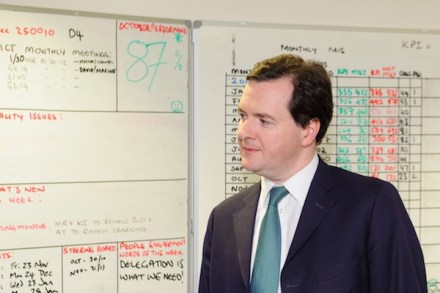
George Osborne has managed, so far, to manage the run-up to the Autumn Statement far better than he did the Budget. There have been no cat fights across the pages of the newspapers, and the briefing over the past few days has been disciplined. After being told about the £5bn of Whitehall spending cuts to fund 'shovel-ready' projects including new schools and investment in skills, science and transport yesterday, one hack jokingly asked whether 'this means that tomorrow's statement is going to be horrendous' given the news so far had been relatively positive.

Airports review is doomed to gather dust, British Airways chief warns MPs

From our UK edition

The government's airports review will simply end up on a shelf, and major airlines will still be operating from a two-runway airport at Heathrow in 2050. That was the stark warning delivered by the chief executive of British Airways' parent company IAG Willie Walsh this afternoon as he gave evidence to the Transport Select Committee. Walsh told the MPs on the committee: 'I think the decision of the government to establish the Davies commission has been seen by some as a step in the right direction.

Autumn Statement: What Osborne will say

From our UK edition

Lower growth, bigger deficits, targets missed — that'll be the backdrop to George Osborne's Autumn Statement tomorrow. So what medicine will he prescribe to make it all better? As usual, many of the policies have been leaked already: More capital spending, paid for by extra cuts elsewhere This was announced by Number 10 this morning: £5 billion extra spending on schools, science and transport over the next three years. That'll include an extra £1 billion for Michael Gove's academies and free schools programmes, to provide 50,000 new school places. It'll all be paid for by extra cuts in departments' resource budgets: 1 per cent more than planned next year and 2 per cent the year after (though Health, Education and International Development will be protected).

Theresa May makes a weak argument on the Communications Data Bill

From our UK edition

Despite a committee of both Houses of Parliament having yet to report after several months of inquiry, the Home Secretary took to the pages of the Sun yesterday to blast anyone who disagrees with her draft Communications Data Bill as a criminal, a terrorist or a paedophile. Hours later David Davis spoke in Parliament to ask why Theresa May had seen fit to traduce a large number of MPs. Aside from the Home Office panic the article revealed, the Blair-esque rhetoric of division was surpassed by the poor examples used by the minister in her interview. She cited two cases. One did not concern terrorism, paedophilia or a serious crime. Neither case requires the logging of every email, social media message and website visit we all make, every day.

Exclusive: Senior Lib Dems push for changes to secret courts bill

From our UK edition

Senior Lib Dem MPs are deeply concerned about the government's plans for secret courts, and will urge the government to accept changes made to the legislation in the House of Lords, I understand. The Justice and Security Bill will have its second reading in the House of Commons in the next few weeks, fresh from a series of embarrassing defeats on the secret courts measures in the House of Lords. Ken Clarke has said that some of the amendments brought in the upper chamber will need modifying at the very least. But the Liberal Democrat grassroots have been lobbying their parliamentarians to drop the Bill entirely ever since their conference voted on a motion calling for just that in September.

Nicola Sturgeon is ready for her close-up – Spectator Blogs

From our UK edition

In the rabid hamster-eating-hamster world of Scottish politics Nicola Sturgeon is a rarity: a politician of obvious competence who's respected by her peers regardless of their own political allegiances. There are not so many folk at Holyrood of whom that could be said. The Deputy First Minister is not a flashy politician but she's quietly become almost as important to the SNP as Alex Salmond. This, according to one sagacious owl, makes her one of the ten most interesting politicians in Britain. Hard though it is to imagine this, there are voters immune to the First Minister's charms. Part of Nicola's remit is to reach those parts of Scotland that are disgracefully reluctant to trust Mr Salmond. So Unionists should take Sturgeon seriously.

Don’t set different parts of the UK against each other

From our UK edition

Kelvin MacKenzie made what I assume is a tongue-in-cheek plea for the formation of a ‘Southern party' in the Telegraph yesterday. In the piece, he consistently resorts to crude caricature about anybody from North of the Watford Gap. According to MacKenzie, only people in the South East are 'hard-working clever and creative, Glasgow has 'unhealthy habits', which are subsidised by the 'people of Guildford' and if you took the South East out of the economy, 'it would be called Ethiopia'. MacKenzie's article is divisive, simplistic and wrong - ignoring the economic dynamism on display in many parts of the North and the fact that narrowing the North-South divide is necessary for the long term prosperity of the whole of the UK.

Osborne to back fracking and 30 new gas power stations

From our UK edition

Coalition tensions over energy won't relax with George Osborne's gas strategy, which he will launch alongside the Autumn Statement tomorrow. The Financial Times reports that the Chancellor's strategy will approve as many as 30 gas-fired power stations and - in a move that will delight those in his own party - a regulatory regime for shale gas exploitation. Fraser extolled the virtues of shale gas in his Telegraph column in September, describing it as 'the greatest single opportunity' facing the government, with the potential to transform energy supply. But Energy Secretary Ed Davey is less enthusiastic, arguing in May that Tory support for shale gas exploitation - known as fracking - was a means of undermining renewable energy generation.

Who do you think you are kidding mister computer hacker?

From our UK edition

The Big Society struggles on, making its mark yesterday in the unexpected realm of cyber security. In a written ministerial statement on the nation’s efforts to tackle cyber crime, Cabinet Office Minister Francis Maude announced plans to get the public involved in tackling (online) crime: ‘We are constantly examining new ways to harness and attract the talents of the cyber security specialists that are needed for critical areas of work. To this end, the MOD is taking forward the development of a ‘Cyber Reserve’, allowing the Services to draw on the wider talent and skills of the nation in the cyber field. The exact composition is currently in development and a detailed announcement will follow in 2013.

Cut housing benefit for under-25s? Yes, but be careful, say Tory members

From our UK edition

George Osborne might have failed to get his housing benefit cut for the under-25s past the Lib Dems in time for the Autumn Statement, but, as James reported in his Mail on Sunday column this week, the Tories will be keen to put it in their 2015 manifesto, partly to show voters what a majority Conservative government could achieve without the shackles of coalition. I understand the party has been consulting members on its welfare policy in the past few weeks, and unsurprisingly, the response has been enormous. In fact, the policy forum hasn't seen such interest from members since it asked them what they wanted to see in terms of local transport policy (apparently this really aerated those surveyed last winter).

Theresa May upsets the Lib Dems and David Davis in one fell swoop

From our UK edition

Theresa May has upset quite a few people from across the political spectrum with her comments in the Sun today about the Communications Data Bill. The Home Secretary told the newspaper: 'The people who say they're against this bill need to look victims of serious crime, terrorism and child sex offences in the eye and tell them why they're not prepared to give police the powers they need to protect the public. Anybody who is against this bill is putting politics before people's lives.' This irritated David Davis sufficiently for the Tory backbencher to raise May's comments as a point of order in the House of Commons this afternoon.

Ed Miliband’s Leveson response shows his weakness: he’s a follower, not a leader. – Spectator Blogs

From our UK edition

The biggest risk in punditry is the determination to see what you want to see. Confirmation bias is an ever-present clear and present danger to solid thinking. Nevertheless, though keeping this in mind, I wonder if Ed Miliband's reaction to the Leveson Report has been wise, far less a response that will help him win the next election. By "wise" I mean wise in a purely political sense, not "wise" as in appropriate, sensible or well-judged. The Labour leader's demand that Leveson's recommendations be implemented is, in its way, remarkable. This, after all, is a 2,000 page report published in four volumes. And yet within this mountain of ponderous, muddle-headed thumb-sucking Mr Miliband has not been able to - or has chose not to - identify a single passage with which he might quibble.

Aide to Europe minister calls for Parliament to beef up its engagement with EU

From our UK edition

Another day, another paper by a Tory MP about Britain's relationship with Europe. Except the latest paper, by Tobias Ellwood for think tank Open Europe, is actually not so much about what's wrong with Europe, but about what's wrong with how our Parliament in Westminster deals with the whole issue. Ellwood, who is PPS to Europe Minister David Lidington, doesn't believe Westminster politicians are actually very good at engaging with European Union policymaking, preferring instead a 'complain-but-don't-change' approach. He paints a discomfiting picture of the way MPs relate to Brussels, describing an alienation which leads to 'little appetite amongst MPs to understand fully how the EU actually works - and how to use Parliamentary power to change it or its policies'.

Pressure on the editors as Labour threatens own Leveson bill

From our UK edition

One of the foundations on which David Cameron based his decision to reject statutory underpinning of press regulation was that editors would set up a new system based on Lord Justice Leveson's recommendations which would prove far tougher than the Press Complaints Commission. The failure of the industry to reach consensus on a new body - and this is a real risk given the refusal of some publications to join the PCC - would pull the rug from under the Prime Minister's feet as he fights critics pushing for statute. Cameron is also facing claims that he is bowing to bullies in the press, and it is for these two reasons that the Prime Minister will be applying great pressure on editors as they meet Culture Secretary Maria Miller this week.

MPs criticise ‘voluntary’ tax arrangements for Starbucks and other big companies

From our UK edition

Danny Alexander might be glad that a PR panic before the Public Accounts Committee published its report into HMRC and the ability of multinational companies to avoid paying their share of corporation tax means he could be able to visit a Starbucks again in the near future. But his remarks on Radio 4 this morning show what a mess our tax system has got into. As PAC chair Margaret Hodge observed on Radio 5Live, there is now 'a danger that corporation tax is becoming a voluntary tax', and the Chief Secretary to the Treasury's remarks did little to diminish that impression.

The prisoner voting farce makes the case for Britain leaving the jurisdiction of the Strasbourg Court

From our UK edition

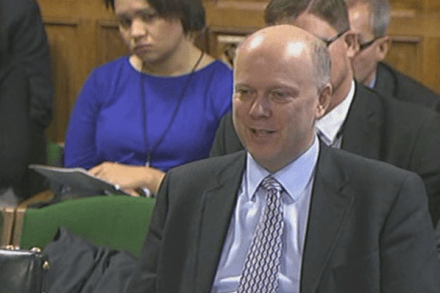
It is hard to watch Chris Grayling’s interview with Andrew Neil on BBC1's Sunday Politics and not conclude that Britain’s relationship with the European Court of Human Rights needs changing. The Justice Secretary effectively concedes that he can’t, as Lord Chancellor, vote to maintain the ban on prisoners voting. But ‘Parliament has the right to overrule the European Court of Human Rights.’ So we're not stuck, Britain can do what it likes. Or, more accurately, what Parliament votes for. It looks likely that we’ll end up with Parliament resolving to uphold the ban on prisoner voting, but with the Secretary of State - as Lord Chancellor - obliged to sit out the vote.

What shall we do with the drunken British?

From our UK edition

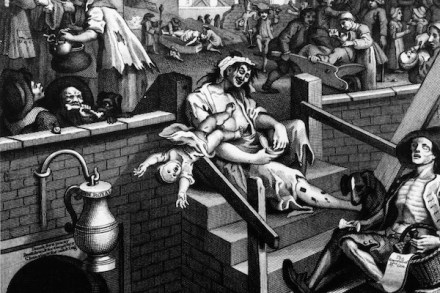
Being in government has forced the Liberal Democrats to decide whether they are liberal in the British sense of the word, or in the American, statist sense. Nick Clegg leans towards the latter, which is why he wants the state to regulate of the press. But Jeremy Browne, the Home Office minister, is emerging as a genuine Manchester-style liberal. In the Mail on Sunday today, he has come out against the illiberal strategy for the minimum pricing of alcohol. He can’t speak himself, but 'friends of Mr Browne' have this to say: 'Jeremy’s view is that the thug who has downed nine cans of lager is hardly going to think, “Oh dear, I can’t afford a tenth because of minimum pricing. I think I’ll go home to bed instead of starting a brawl.