Uk politics

Michael Gove’s schools ultimatum pushes up standards

From our UK edition

Michael Gove’s reformation of the education system from top to bottom has so far been unstoppable. Often though, the Education Secretary's detractors bellow there is a lack of proof that his reforms are doing any good. Today's news (£) that hundreds of primary schools have benefited from Gove's tougher approach to internal management adds credence to the view that his freeing up of our education system is working. This year, the number of schools below the government’s baseline target dropped by more than half: ‘League tables of this year’s primary school test results showed that 521 were beneath his minimum threshold. Of these, 37 have since been replaced by academies with new sponsors or governance, and seven have closed.

Why Ed Balls is so confident about benefit wars

From our UK edition

The debate over benefit uprating will run and run because both sides think they are winning. George Osborne thinks the public resent generous benefits rises. Liam Byrne and Ed Balls want to call this a 'strivers tax' and think blue collar workers will fall into their arms. Byrne told Coffee House yesterday that Labour will be hurt opposing to the Welfare Uprating Bill. I understand that the Shadow Cabinet reached its decision after YouGov's polling showing C2DE  voters  - the three lowest socio-economic groups - saying benefits should have been increased in line with inflation. Osborne's Bill would increase welfare by 1pc, behind expected inflation.

The easy language of opposition

From our UK edition

Isabel makes an excellent point about Ed Miliband's One Nation spiel. It soothes political minds to talk about society rather than economics, people rather than the state, the common good rather individual utility. Voters like it, too, because globalisation and technology make many of us feel lost and alone. But it is, as Isabel says, an easy language of opposition, even a facile one. In office, reality tends to preclude such grand posturing, particularly in an economic crisis. As it happens, last night I went to an interesting Centre for Social Justice lecture by Jon Cruddas, Labour's policy review chief, on the role of the state in the Good Society. Now I like Cruddas, even if he is a little too inebriated by the exuberance of his own verbosity.

How a properly ‘proalition’ coalition should work

From our UK edition

Have you noticed, recently, that the Coalition has changed the way it behaves in public? Two years ago, had Nick Clegg dropped his support for major Home Office legislation, spoken out about his own opinion on drugs policy and taken such a different position on a proposed dramatic change to the way newspapers are regulated within the space of a month, journalists would have gone into meltdown. Remember that in the early days of the Coalition, Simon Hughes saying he wasn't sure about something the Prime Minister had announced was enough to hold the front page. Now we're seeing differentiation on policies every day.

Gay marriage: no culture wars, please, we’re British

From our UK edition

Ever since the issue of gay marriage returned to British politics, we have seen the debate become crazier and crazier.  When Tony Blair handled this with his Civil Partnerships Act 2004, he did so with care and discretion, mindful of deeply-held opinions on either side of the debate. David Cameron seems to pursue gay marriage as some kind of defining mission statement, and seems to have driven his party quite mad. Nick Clegg released a speech drawing a distinction between the supporters of gay marriage and 'bigots'. He revoked the b-word, but his tactic was clear. We are witnessing an attempt to bring American-style culture war to a country that has never known it - and is utterly unsuited to it. I look at this in my Telegraph column today.

One Nation Labour can’t just be about reassuring voters

From our UK edition

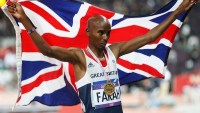
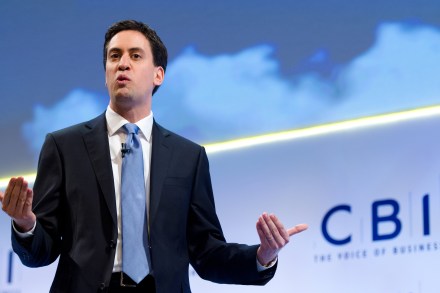
Ed Miliband is giving another one of his repositioning speeches today: this time about immigration and integration. We're going back to the Labour leader's school and his family again, as well as reminiscing about Olympics: none of which are exactly groundbreaking territory, given Ed explored the first two at length in his conference speech, has explored his family history at length in many speeches since becoming leader, and that all three party leaders used the Olympics for their own purposes in their autumn conference speeches. Mo Farah and Jessica Ennis should start charging politicians royalties for using their names in speeches about culture: they appear, alongside Zara Philips, in Miliband's speech today.

George Osborne isn’t clashing with Vince Cable: he’s starting to agree with him

From our UK edition

By this stage in the Coalition, everyone would have expected at least one major bust-up between George Osborne and Vince Cable. But his evidence to today's Treasury Select Committee suggested that the Chancellor isn't so much involved in a stand-off with the Business Secretary as he is taking on his point of view. It was significant how many times Osborne had to explain a softening in what were previously hard-and-fast economic rules, and hard-and-fast policies. His refusal to rule out replacing the Bank of England's inflation target with a growth target is the most significant sign of a coalescing between the two men.

The History Kids

From our UK edition

Martin Kettle has a column in today's Guardian lamenting the inadequacy of the teaching of English history in schools today. He suggests that "the English people are increasingly cut off from their own history." Is this so? Possibly! But then he makes the mistake of presuming the English are unusually unfortunate in this respect. To wit: It is a fair bet that today's young Scots know more about Scotland's history, today's young Welsh more about Wales, and today's young Irish more about Ireland than today's young English know about England. In fact the nature of their own historical experiences may mean that the Scots, the Welsh and the Irish also know more about England's history than the English do. I suspect most of this is pretty unlikely.

Nick Boles attempts to soothe planning critics

From our UK edition

Planning Minister Nick Boles admitted yesterday that he did not believe his controversial suggestion for Britain to build homes on two million acres of countryside should be put into practice. The new minister caused a storm last month when he supported a 3 per cent increase in UK-wide development to alleviate the housing shortages caused by high immigration. The plan was to build homes on green-field land, increasing development from 9 per cent to 12 per cent nationwide. But yesterday, Boles denied the claims, arguing that they were meant to illustrate a wider point about under-development rather than create a particular policy or target.

Liam Byrne interview: The welfare system is ‘completely out of whack’

From our UK edition

Liam Byrne is a modernising, Blairite Labour MP, and in case you were in any doubt about that, he conducts his interview with Coffee House sitting next to a framed photograph of him with Tony Blair. The party's Shadow Work and Pensions Secretary is well known for his modernising zeal, which has sometimes led him onto a collision course with his party grassroots and other MPs on the left. This week, though, he's on a collision course with the Conservatives, who hope they've managed to corner Labour into admitting it hasn't quite modernised its welfare policy enough to win voters back. The Welfare Uprating Bill, launched in last week's Autumn Statement, will see benefits rise by 1 per cent, rather than in line with inflation.

BBC vs Fracking

From our UK edition

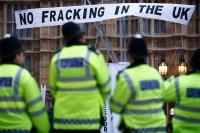
There was something odd about George Osborne offering tax breaks for fracking when it was still banned by another part of his government. The ban has been lifted and exploration can begin again in Lancashire, in what could be the most important piece of economic good news since the discovery of North Sea oil. But listening to the BBC reports this morning, it's striking how the corporation already seems to be against it. Fracking has begun, it says. And the two things is listeners need to know about fracking? That it has been accused of polluting water in America and causing earth tremors. The upside, especially for Blackpool and its environs, was not mentioned.

PMQs sketch: Ed Miliband, the political vulture

From our UK edition

PMQs today revealed just how dependent Ed Miliband is on Britain’s future performance. The public finances have shaped his entire career. In government, he watched Gordon Brown screw the economy. Then he watched the economy return the compliment. Now he hopes the economy will wreck the Coalition and propel him into Downing Street. But there’s a snag. The economy has to tank, and to carry on tanking, for Miliband’s Mission Zero to succeed. And today, in defiance of all the soothsayers, the economic news is good. Employment figures are rising. Nearly 30 million Britons are in work. And those tricky youth unemployment totals are moving into sunny territory too. Ed Miliband, the political vulture, will starve without fresh corpses on the savannah.

Insults fly at PMQs

From our UK edition

Today’s PMQs was visceral stuff. Ed Miliband accused the Prime Minister and the Chancellor of being Bullingdons Boy who were taking decisions about ‘people they’ll never meet, people, people whose lives they’ll never understand.’ Cameron gave as good as he got, attacking Labour as the ‘party of unlimited benefits’ and said that Miliband ‘only stands up for those who claim.’ These exchanges over the decision to limit the increase in working age benefits to 1% in the autumn statement cheered up both side of the House, the Lib Dem benches looked a bit glum though. Labour and the Tories are both comfortable with these battles lines—convinced that the public is with them.

The ‘Stop Boris’ Hunger Games: an interview with Michael Gove

From our UK edition

On Monday, I interviewed Michael Gove for the new Christmas double issue of The Spectator. It’s out tomorrow but here’s a longer version, arranged in subheadings so CoffeeHousers can skip over bits they’re not interested in. This is the picture that stands behind Michael Gove’s desk: an imposing McCarthy-era poster which saying: 'Sure, I want to fight Communism - but how?' In their less charitable moments, Tories may argue that his Department of Education is as good a place as any to start. The strength of its grip over state schools has long been the subject of political laments and Yes, Minister sketches. Confronting the educational establishment was too much for the Blair reformers and even the Thatcher government.

Michael Gove tells heads to dock the pay of ‘militant’ staff

From our UK edition

Michael Gove has written to schools across the country telling them that they can deduct a day's pay from staff who try to disrupt school time by carrying out 'work to rule' industrial action. This form of action involves teachers fulfilling their job description to the very letter, with the NUT and NASUWT issuing list of activities their members should refuse to undertake. These include refusing to submit lesson plans, refusing to agree to timetable changes, refusing to undertake clerical tasks or covering for colleagues' absences. Gove's letter, seen by Coffee House, says: 'I respect the right of teachers to take industrial action, but this action short of a strike lacks a clear purpose or even a set of coherent aims.

Downing Street defends Maria Miller’s special adviser

From our UK edition

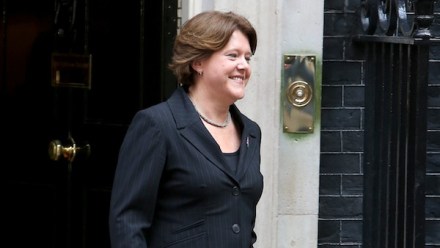
Downing Street has defended Maria Miller's special adviser over the way she warned the Telegraph about the Culture Secretary's connection to Leveson as it prepared a story on her expenses. The Prime Minister's official spokesman has just told the lobby: 'My understanding is that the special advice was raising legitimate concerns about the way in which the investigation had been handled. It was perfectly reasonable for her to do that. 'The Secretary of State raised these concerns directly with the editor. It is reasonable for someone in the government to raise these kinds of concerns about the way a newspaper is conducting an investigation.' Asked whether the Prime Minister still had confidence in Miller, the spokesman said: 'Yes.

Maria Miller’s adviser reminds us why politicians can’t be trusted with press regulation

From our UK edition

An email from an Asian friend last night pointed me to a piece in the Telegraph  saying: 'This is the kind of thing they do in Singapore! I’m amazed it’s happening in Britain.' She was referring to Maria Miller, the Culture Secretary, whose adviser told the Daily Telegraph to be careful about exposing her expenses because the minister now has power over press regulation. The story is here: a classic example of the 'chilling effect'. As soon as you give these politicians a hint of power over the press, they will abuse it. As Maria Miller’s case has shown, they will abuse it even before they get power. They will abuse it even while they decide whether to give themselves power of statutory regulation.