Uk politics

Ken Clarke’s concession on secret courts fails to calm Lib Dem fears

From our UK edition

Ken Clarke's announcement that the government will accept a major House of Lords amendment to the Justice and Security Bill might ease the legislation's passage through the Commons. The Lib Dems and several senior Conservative figures, including Andrew Tyrie, have been pressing the government to accept the amendment, which gives judges more discretion on whether a court should sit in secret. So those parliamentarians will be happy. But there is still a fight on the cards, albeit not in either chamber of Parliament. The Liberal Democrat grassroots remain horrified by the Bill's proposals for secret courts in general, even though they aren't currently getting much traction with their MPs when it comes to scrapping the legislation entirely.

Was the deputy chief whip just doing his job by passing on Mitchell concerns?

From our UK edition

The latest twist in the Andrew Mitchell story is particularly intriguing. The Guardian is reporting that news of the confrontation between the police and the chief whip was passed onto Downing Street by the deputy chief whip John Randall. Now, Randall and Mitchell were known not to get on and Randall played a key part in forcing Mitchell out by indicating that he was not comfortable working under him. This latest news threatens to inject yet more poison into the Tory bloodstream. If brother whips can treat each other like this, what hope party discipline? But one longstanding Conservative MP made the case to me just now that Randall’s behaviour is not as odd as it might seem.

A pact wouldn’t solve the Tories’ UKIP problem

From our UK edition

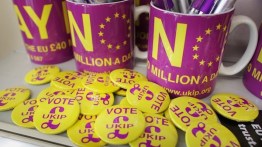
UKIP has seen a significant bump in support in the latest set of polls: it is up five points with Populus this morning. All of which makes Lord Ashcroft’s examination of why people are attracted to UKIP particularly timely. The Ashcroft polling confirms that the UKIP vote is only partly about Europe. It also reflects a wider anger with a political class that appears aloof from peoples’ concerns. Among those considering voting UKIP, the most frequently stated reason is to send a message to the big parties on Europe and immigration. It is also striking that any kind of Tory / UKIP pact seems unpopular. ‘The few voters who had heard the idea of a Conservative-UKIP pact thoroughly disapproved of the proposal.

Chris Grayling wants a robust response to the European Court, but will he get his way?

From our UK edition

It's a big day for Chris Grayling: the long awaited Commission on a British Bill of Rights reports today. But the Justice Secretary is already setting himself up for disappointment, with reports swirling in the press that the Commission has failed to reach a strong conclusion. In any case, as Grayling acknowledges in his op-ed in the Telegraph today, there isn't much he can do about reforming the rights landscape in this country while the Tories remain in Coalition with the Lib Dems. Grayling says he will 'read and digest the report of the Commission, and will see what help it gives me to deliver change in the short term'. But he adds that he will 'also be looking clearly towards the next election, and starting work on ensuring that we had a real plan for change then as well'.

Will the Lords really slay the gay marriage bill?

From our UK edition

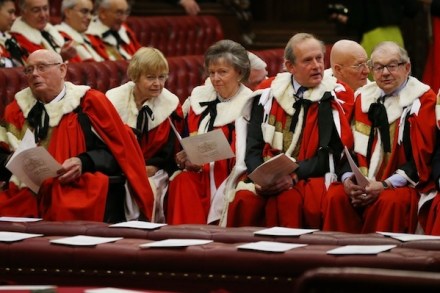
Think the Commons is in uproar at the moment over gay marriage? Just wait until the legislation makes its way into the House of Lords. The received wisdom is that equal marriage will go into the upper chamber, but never make it out alive after a savaging from socially conservative peers. But is that true? If it's uproar you're looking for, then you're unlikely to be disappointed, but the chances of angry words in the chamber translating into embarrassing defeats for the government aren't quite so high. Remember that after 13 years of Labour in power, the House has a large liberal-leaning majority. There are 224 Labour peers and 90 Lib Dems.

The Tories mustn’t make another silly pledge on benefits in 2015

From our UK edition

As the country approaches a general election, a party leader, desperate to reassure a key group of voters, makes a very silly pledge. He is as unequivocal as possible that, in spite of the big spending implications in a time of economic crisis, he will stick to this silly pledge to keep his target voters happy. Months later, a Coalition has formed, and those target voters are enraged because that promise turned out to be worth little more than the paper it was written on. We all know that this is what happened with the Lib Dems and their extraordinarily stupid pledge to block rises in tuition fees.

The gumming up of Whitehall

From our UK edition

Tony Blair is paying a visit to journalists in the Commons this week for a festive lunch. Last week, David Cameron complained to lunching hacks about the 'gumming up' of government; perhaps the former Prime Minister will wish to add his own thoughts today on the ingredients of that sticky gum that makes the progress of the Whitehall machine so glutinous. One of the gummy bits in Whitehall at the moment is the way permanent secretaries are appointed. Last week the Civil Service Commission blocked plans by Francis Maude to allow ministers to pick the most senior civil servants in their departments from a list of approved candidates, opting instead for an independent panel to recommend candidates.

The Liberal Democrat paradox

From our UK edition

Labour under a more left-wing leader, the Tories bearing right. These are circumstances in which you would expect the Liberal Democrats to flourish. But they are in government and haven’t benefitted from this moment. Instead, they are struggling in the polls, coming fourth too often for comfort. Part of the problem is that the public simply aren’t listening to Nick Clegg at the moment. As one Conservative Cabinet Minister sympathetic to the Liberal Democrats’ political strategy observes, ‘Clegg can say anything, he’s just not being heard.’ Those close to Clegg believe that this will turn round in time.

Nick Clegg wants gory government: so should the Tories

From our UK edition

There's nothing wrong with Nick Clegg putting some distance between his party and the Conservatives. Today the Liberal Democrat leader is going to open up about the gory details of government, explaining where his party has held the Tories back, and heralding a new era where he and colleagues are honest about what they actually think of policies. On Friday, I argued that this sort of honesty about the workings of coalition government was a good thing. But there is one caveat to this. Conservative MPs are pretty unhappy at present, and it's not just that they are overtired before the Christmas break.

A blank cheque to the baby boomers

From our UK edition

After more than a decade of wrangling, it seems that a deal is finally about to be struck on long-term care of the elderly, by adopting the package proposed by economist Andrew Dilnot.  George Osborne has apparently agreed to a proposal, to be announced as early as next month, to make sure no one pays more than £75,000 towards their care costs however wealthy they are. The threshold below which their equity is exempt will also be jacked up. The estimated cost of all this is £700 million - money that this government simply does not have. To offer this at a time of cuts to further education, aircraft carriers, local authorities and welfare would be extraordinary.

Shapps’ campaign skirmish

From our UK edition

There’s long been a sense on the Tory side that the party’s campaigning isn’t as sharp as it should be, that CCHQ isn’t up to the job. The Ashcroft target seats campaign was so valued not just because of the money but because of the organisational and management muscle behind it. The new Tory Chairman Grant Shapps was sent to CCHQ in the reshuffle with instructions to address the place’s institutionalised incompetence. The early signs are encouraging. When Labour announced that it was launching a campaign in the 60 seats where the number of people on working tax credits, which are only going up by 1%, was larger than the Tory majority, Shapps had a Tory response in place in each of those seats by the time Labour’s campaign actually launched.

Tensions in the tearoom on gay marriage

From our UK edition

This week's developments over gay marriage have left a febrile atmosphere in the Conservative party. As Fraser wrote yesterday, David Cameron seems to have driven his party 'quite mad' by pursuing the policy, and the mood in the tearoom after Maria Miller's statement on Tuesday certainly seems to have underlined that. I understand from a number of MPs that there was an 'excitable' confrontation between a member of the 2010 intake and one of the members of the Freedom to Marry group. The new MP was irritated by the position that his colleague had taken and was jabbing his finger angrily as he spoke.

Ed Miliband vs the working class

From our UK edition

Who's on the side of the strivers? Is it George Osborne, who's cutting benefits in real terms for the next three years, which he defends as 'being fair to the person who leaves home every morning to go out to work and sees their neighbour still asleep, living a life on benefits'? Or is it Ed Balls, who's opposing the move as Osborne 'making striving working families pay the price for his economic failure'? Both men are convinced that their stance will help win the votes of low- and middle-income workers. At least one of them is wrong. Isabel has explained the sources of Labour's confidence. One is a YouGov poll released on Sunday, showing 42 per cent of 'C2DEs' (working class and lower) think benefits should rise at least in line with inflation.

The political impact of immigration

From our UK edition

It won’t actually come as a surprise to anyone living in London that the census results from the Office of National Statistics this week showed that 'white British' are down to 45 per cent in the capital. There are bits of the capital whose look and feel suggests that the percentage is much higher – well, the figures are from people who filled in the census forms, which isn’t quite the same thing as the actual population. Remember that cover story in The Spectator a couple of months back, based on the premise that London was practically a city-state, radically different from most other parts of the UK?

Why Ed Balls is so confident about benefit wars

From our UK edition

The debate over benefit uprating will run and run because both sides think they are winning. George Osborne thinks the public resent generous benefits rises. Liam Byrne and Ed Balls want to call this a 'strivers tax' and think blue collar workers will fall into their arms. Byrne told Coffee House yesterday that Labour will be hurt opposing to the Welfare Uprating Bill. I understand that the Shadow Cabinet reached its decision after YouGov's polling showing C2DE  voters  - the three lowest socio-economic groups - saying benefits should have been increased in line with inflation. Osborne's Bill would increase welfare by 1pc, behind expected inflation.

The easy language of opposition

From our UK edition

Isabel makes an excellent point about Ed Miliband's One Nation spiel. It soothes political minds to talk about society rather than economics, people rather than the state, the common good rather individual utility. Voters like it, too, because globalisation and technology make many of us feel lost and alone. But it is, as Isabel says, an easy language of opposition, even a facile one. In office, reality tends to preclude such grand posturing, particularly in an economic crisis. As it happens, last night I went to an interesting Centre for Social Justice lecture by Jon Cruddas, Labour's policy review chief, on the role of the state in the Good Society. Now I like Cruddas, even if he is a little too inebriated by the exuberance of his own verbosity.

How a properly ‘proalition’ coalition should work

From our UK edition

Have you noticed, recently, that the Coalition has changed the way it behaves in public? Two years ago, had Nick Clegg dropped his support for major Home Office legislation, spoken out about his own opinion on drugs policy and taken such a different position on a proposed dramatic change to the way newspapers are regulated within the space of a month, journalists would have gone into meltdown. Remember that in the early days of the Coalition, Simon Hughes saying he wasn't sure about something the Prime Minister had announced was enough to hold the front page. Now we're seeing differentiation on policies every day.

Gay marriage: no culture wars, please, we’re British

From our UK edition

Ever since the issue of gay marriage returned to British politics, we have seen the debate become crazier and crazier.  When Tony Blair handled this with his Civil Partnerships Act 2004, he did so with care and discretion, mindful of deeply-held opinions on either side of the debate. David Cameron seems to pursue gay marriage as some kind of defining mission statement, and seems to have driven his party quite mad. Nick Clegg released a speech drawing a distinction between the supporters of gay marriage and 'bigots'. He revoked the b-word, but his tactic was clear. We are witnessing an attempt to bring American-style culture war to a country that has never known it - and is utterly unsuited to it. I look at this in my Telegraph column today.