Uk politics

Watch: Jacob Rees-Mogg’s revealing summary of the state of British politics

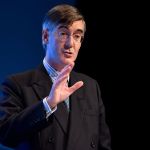
Jacob Rees-Mogg has just given a pretty accurate summary of the state of British politics. The leader of the House of Commons pulled no punches as he addressed the Tory faithful at party conference. Mogg said Corbyn is a 'weak man', likened shadow Brexit secretary Keir Starmer to Brutus and said the Lib Dems were 'extremists' over their Brexit stance. Still, at least Mogg did have some kind words to say about one politician: his sister, Annunziata: Like Gulliver tied down at Lilliput, we are tied down by a ragtag, motley collection of feeble, fickle, footling politicians. All in desperate pursuit of a single ignoble aim – to renege on the solemn promise they made to the British people and try to cancel the largest single democratic mandate in our history.

Liz Truss interview: ‘It’s important that we have robust honest debate’

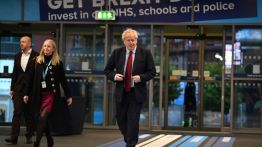
As the Tories gather in Manchester for their annual conference, Boris Johnson hopes to use the event to push post-Brexit opportunities – saying that if the government can get Brexit done, a bright future awaits. Among those opportunities are the new relationships the UK can forge with countries outside of the EU. On the latest episode of the Spectator Women with Balls podcast, I spoke to International Trade secretary Liz Truss about her current brief along with her new role of women and equalities.

The Tories only have themselves to blame for Labour’s threat to Universal Credit

The Labour Party is buzzing about in Iain Duncan Smith's constituency today, threatening both to unseat the former Conservative leader and scrap the reform he introduced: Universal Credit. Jeremy Corbyn made the promise, saying the changes to the benefits system have been an 'unmitigated disaster'. The party will first get rid of the most controversial aspects of UC - including the fitness-to-work tests, the two-child limit, and sanctions which dock benefits from claimants who miss appointments - before scrapping it entirely. This has naturally prompted protests from the Tories, including some of the many MPs who served as work and pensions Secretary at one point or another. But the truth is that the Conservatives have brought this on themselves with a series of avoidable mistakes.

The message behind this year’s Conservative party conference

The Conservatives head to Manchester for an unconventional party conference. After opposition MPs vetoed plans for a conference recess, the Tories will meet while parliament sits. No 10 is bullish that it will not let opposition MPs ruin its moment. Expect cars and helicopters on standby to ferry politicians at the last minute if a surprise vote is called. With a working majority in the region of -40, Conservative MPs are fairly sanguine about the practicalities. 'Frankly, it doesn’t matter if we are in London or Manchester. We can’t win votes even if we are all in Westminster,' says one cabinet minister. Ministers and MPs are determined to use the conference to set out their agenda ahead of an early election that they still expect to take place this year.

How the Tories intend to avoid a repeat of the 2017 manifesto disaster

The Tory plan was to fight the 2017 election as a Brexit election. But that strategy was derailed by a disastrous manifesto that alienated the Tory base and allowed Labour to change the subject to domestic policy. One of the problems with that manifesto was that it was written by a very small clique, meaning that problems weren’t spotted or ignored. To try and avoid a repeat of this, Boris Johnson has put a committee of Cabinet ministers in charge of overseeing the manifesto, I report in The Sun this morning. In line with the Pickles Review into what went wrong at the 2017 election, the Chancellor, the Home Secretary, the Foreign Secretary, the party chairman and the chief whip will all sit on this panel.

Has the Supreme Court handed Boris Johnson a Brexit escape route?

The Supreme Court's judgement is the latest constitutional perversion after the Benn act. But ironically it may assist the Government in achieving its objective of Britain leaving the EU by 31 October, without having to seek an extension to the Article 50 process. In paragraph 34, the Supreme Court states that its 'proper function' under our constitution is to give effect to the separation of powers (which justifies court intervention in relation to prorogation). Then, in what appears to be an innocuous sentence in paragraph 55, it says that it is to be “remember[ed] always that the actual task of governing is for the executive and not for Parliament or the courts.” Yet the Benn Act manifestly contradicts this principle.

Brexit voters do feel betrayed. So why can’t Boris say so?

Rarely has there been such a flagrant display of hypocrisy and cant as there was in the House of Commons last night. Opposition MPs stood up one after the other to denounce Boris Johnson for his use of apparently toxic and dangerous words like ‘surrender’ and ‘sabotage’. Such language is polluting the public sphere and making life hell for politicians, they claimed. Their ostentatious offence-taking would be a tad more convincing if they had ever said anything about the bile heaped on Brexit voters these past three years. Where were these people when it became positively vogue to refer to lower middle-class Brexit blokes as ‘gammon’?

Two flaws in the Supreme Court’s verdict

Now that more experts have had time to study the ruling, the legal validity of the Supreme Court decision on the prorogation of Parliament is unravelling with every passing day. The court cited two cases to justify its involvement in political decisions: the Case of Proclamations (1611) and Entick v Carrington (1765).  The Case of Proclamations laid down that the King could not make new laws by proclamation. The easiest way to study it is to look at the notes of the case by the presiding judge, Sir Edward Coke in his Selected Writings (p. 486 of the Liberty Fund online PDF version). The King wanted to prohibit building in London and to prohibit the making of starch from wheat.

Should the Scottish Tories join forces with the Lib Dems?

Scottish politics is stuck. As with Brexit across the wider United Kingdom, the 2014 independence referendum has permanently shifted attitudes of the majority of the population into Yes/No camps, with little room for compromise. The SNP government stumbles from one crisis of service delivery to another yet continues to consistently poll around 40 per cent. In first-past-the-post Westminster elections, this is sufficient to return a clear majority of MPs, and probably to still be returned as the largest party in the Scottish Parliament in the scheduled 2021 election. The problem for Scotland is that the SNP believe this to be a mandate to speak “for Scotland” in broader constitutional matters, like Brexit. Fair enough, you might say.

Boris Johnson and Jeremy Corbyn clash spectacularly in the Commons

Boris Johnson and Jeremy Corbyn have just clashed spectacularly in the House of Commons. Boris Johnson repeatedly goaded Jeremy Corbyn over his refusal to go for an election now.  This was not a Prime Minister acting like one who had been chastened by the Supreme Court’s decision, but one determined to set himself up as the man determined to deliver Brexit against a parliament that was trying to stop him. One of the most striking features of his speech was how frequently he declared that the public could tell what was really going on, that MPs were trying to block Brexit. In response, Jeremy Corbyn was not at his best. He failed to forensically examine the government’s position.

Watch: Geoffrey Cox slams MPs – ‘This Parliament is a disgrace’

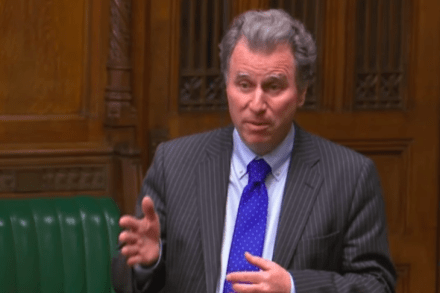
Geoffrey Cox is not a happy bunny. The Attorney General has just blasted MPs, telling them that Parliament is a 'disgrace'. Here's what he had to say in the Commons: 'This Parliament has declined three times to pass a withdrawal agreement. Then we now have a wide number of this house setting its face against leaving at all. And when this government draws the only logical inference from that position, which is that it must leave therefore without a deal at all. It still sets its face, denying the electorate its say in how this matter should be resolved. This parliament is a dead parliament. It should no longer sit. It has no moral right to sit on these green benches... ' Mr S. finds it difficult to disagree.

Is this the beginning of the end for Jeremy Corbyn?

Did Labour’s conference help or hinder Jeremy Corbyn’s chances of becoming prime minister? For some, Corbyn ended up stronger than ever. There will be a review of the post of deputy leader, one likely to see the authority of Tom Watson, his severest internal critic, greatly diminished. Corbyn also won a critical vote on Brexit which endorsed his position of neutrality going into a general election. The conference also passed a raft of policies that confirm support in the party for Corbyn’s desire to dramatically extend state intervention in the cause of promoting economic growth, greater equality and tackling climate change.

Corbyn takes aim at Labour’s favourite bogeymen in conference speech

Jeremy Corbyn has just delivered one of his better party conference speeches. It wasn't just because it was much shorter than the average political address, but also because it made clear that Labour knows what it wants to do when it gets into power. There were a lot of policies in there. Some had popped up in other speeches this week, like the plan for free personal care. Others were new and very significant indeed, like the plan to take on pharmaceutical companies. This is Labour's 'Medicines for Many' programme which will make government funding for medical research conditional on the drugs being offered at an affordable price to the NHS, and set up a state generic drugs manufacturer of patent medicines so they can be supplied at a much lower cost to the health service.

Brexiteers should cheer the Supreme Court

Ignore, with great respect, the people telling you today that the justices of the Supreme Court have waded into politics, exceeded their mandate and involved themselves in matters that belong to elected officials not the judiciary. Take five minutes to read the Court’s judgement on Boris Johnson’s prorogation of Parliament, where you will find a crystal-clear elucidation of principles that everyone – but perhaps especially those who favour leaving the EU – should celebrate and defend. Before I get to that, it appears to be necessary to point out what the Court has not done and not said. The judges have not ruled that Boris Johnson lied to the Queen, even though many people who really should know better are saying this. David Lammy, for instance: https://twitter.

Ken Loach: Tom Watson is the biggest threat facing Labour

What's the biggest threat facing the Labour party? The Tories? The Lib Dems? Brexit? All wrong, says pro-Corbyn film director Ken Loach. The Kes filmmaker reckons its the likes of Tom Watson and other Labour MPs failing to line up behind Jeremy that is the thing to worry about right now. Loach told Mr S's favourite paper, the Morning Star, that 'the right inside Labour are the biggest obstacle to a Labour government'. He said: 'The right wing of the Labour party is the biggest threat we face. These are the inheritors of Ramsay MacDonald, Neil Kinnock and Roy Hattersley, Blair and Brown. The right, embodied by Tom Watson, aims to destroy the socialist programme. In the party there is the leadership and a core of socialists backing it.

Corbyn to address Labour conference this afternoon

Time was when the box office attraction at Labour conference was going to be Tom Watson's speech this afternoon. The biggest drama would be activists who planned to walk out in protest at the deputy leader's constant undermining of Jeremy Corbyn. That was before the Supreme Court verdict, of course, and now Corbyn will be speaking at 4pm, having moved his speech forward from tomorrow so that he can head back to Westminster in time for parliament returning. But there's still some internal drama playing out: Labour's press team said Tom Watson would be speaking tomorrow afternoon to close conference, but Watson almost immediately said he wouldn't do this as he also wanted to be back in parliament. 'I'll have to save the speech until the next conference,' he said.

Watch: Red Len loses his temper in Sky News interview

Labour members are planning a mass walkout at Tom Watson's conference speech this afternoon. And as for Brexit, it's safe to say Labour remains divided on the issue of whether Britain should stay in or leave the EU. Not so, says Len McCluskey. The Unite boss was asked by Sky News's Beth Rigby about the split over Brexit currently tearing the Labour party apart. It's safe to say he did not take the question well: Rigby: 'Your friend Jon Lansman was really upset about this NEC statement. It's basically a stitch up' McCluskey: 'Don't be trying to cause division where no division exists. Jon Lansman never said that. Stop telling lies. You should be ashamed of yourself.' Oh dear. Another MSM plot to do down the Labour party...

Corbyn makes the most of Boris Johnson’s misfortune

The Supreme Court ruling has provided Jeremy Corbyn with his most positive outing at Labour conference. On hearing the news that the Prime Minister's prorogation of Parliament was unlawful, Corbyn took to the stage in a dramatic point of order – to rapturous applause. He called on Boris Johnson to 'in the historic words, consider his position'. The Labour leader said the judgment showed the Prime Minister's contempt for Parliament and promised to get in touch with House of Commons Speaker John Bercow immediately so that Parliament could be recalled (although the ruling suggests there is no need as in effect Parliament was never prorogued). Speaking to members and delegates, Corbyn said: 'A Labour government would want to be held to account. We wouldn’t bypass democracy.