Uk politics

Five key points from the Pollard Review evidence on Newsnight and Jimmy Savile

From our UK edition

There are over 3,000 pages of evidence in the cache of transcripts, emails, statements and texts for the Pollard Review released by the BBC today. Some of the interviews covered familiar old ground, such as Jeremy Paxman telling the inquiry that it was 'common gossip that Jimmy Savile liked, you know, young - it was always assumed to be girls'. But there are other points which are worth noting from today's release. There may well be others: some of the evidence, as the pictures below show, was heavily redacted. 1. Newsnight was poorly resourced This was a problem referred to by many of those who gave evidence to the inquiry.

Vicky Pryce and the Usefulness of the Not Proven Verdict

From our UK edition

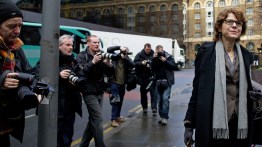
Like John Rentoul, I think much of the scoffing and chortling at the expense of the poor jury asked to consider Vicky Pryce's guilt (or innocence!) is misplaced. This was an unusual case. The questions* they asked - which have been much mocked - seem entirely reasonable to me. More than that, they're quite intelligent. "Reasonable doubt" for instance is not necessarily an obvious thing to measure or define. As for their conduct demonstrating that the Great British public is incapable of jury service, well, phooey to that. In any case, in both the legal systems that apply on these islands, the vast majority of trials do not involve juries at all. We do not actually believe juries are necessarily necessary for criminal proceedings.

Eric Pickles in Eastleigh: Lib Dems are holding Tories back

From our UK edition

All the evidence is pointing to a Lib Dem win in Eastleigh, but those Tories visiting are continuing to fight to the bitter end. Eric Pickles was down there today, and wasted no time at all in sinking his teeth into his Coalition partners. The Communities Secretary said: 'The Lib Dems are taking the people of Eastleigh for a ride. Their homes tax would hit hardworking families hardest – with ordinary people running the risk of seeing a £320 hike in their council tax. The Lib Dem candidate doesn’t understand that his new tax could not be introduced without a costly general revaluation of council tax bands. When Labour did this in Wales, four times as many homes moved up one or more council tax bands as moved down.

What the government must do to prepare for Romanian and Bulgarian migrants

From our UK edition

Ministers and MPs are nervous about a mass influx of Romanian and Bulgarian migrants putting the benefit system under strain next year. But ministers should beware, and learn from the political mistakes of the past. The failure to predict the scale of post-2004 migration to the UK from the EU caused major political problems for the Labour government. The public were left with the impression that the government was not in control of immigration and that Labour were contemptuous of public views and that they were even deliberately misleading them. The Conservatives have less to worry about on the second point – polling suggests the public broadly support them on immigration - but they have plenty to worry about on the first.

Big Brother cash machine campaign costs nearly £100k

From our UK edition

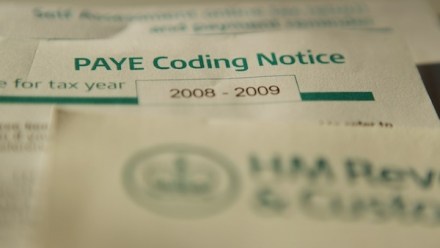
Remember those menacing HMRC eyes that Fraser found staring out at him from a cashpoint last month? Well, it turns out they're a pretty expensive pair of eyes. A Freedom of Information request by the TPA's Matt Sinclair returned this week, revealing that this cashpoint campaign on tax evasion cost just under £100,000. The response says: 'The total media spend for the Evasion ATM advertising campaign specified in your request was £95,930.40, excluding VAT. This amount was approved by the Cabinet Office. 'To set this figure in the correct context, the Government has made around £1 billion available to HMRC to tackle avoidance, evasion and fraud to bring in an extra £7 billion by 2014/15. The advertising in ATM machines is just one strand of this work.

Our brightest children are falling behind their peers in other countries

From our UK edition

Today’s jobs market is highly competitive and globalised. It is no longer enough simply to see if we are doing better than we did last year, or the year before, or 10 years ago. Far better to judge how we are doing against other countries – for our young people will be fighting for jobs against their peers from Singapore and China, from Canada and the US, from Sweden and Slovenia.That is why I such set stock by international league tables, and of analysis of them. We see how we compare against others – and we discover who we must learn from. So it is enormously worrying when respected researchers say that our brightest pupils, on a par with their peers in the world-leading education systems of the Far East at age 10, have fallen two years behind them by age 16.

Chancellor caught in the headlights on fuel prices

From our UK edition

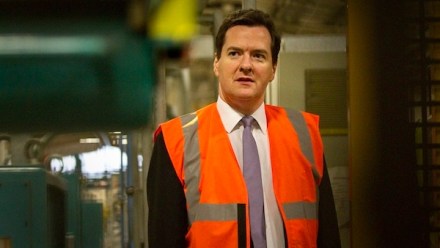
George Osborne is getting used to the twice-yearly battle that precedes an autumn statement or a budget when motorists, newspapers and some of his own MPs start haranguing him on fuel. It's the Times' splash today, with petrol prices expected to rise to their highest-ever levels, and campaigners calling once again for the Chancellor to cancel September's fuel duty increase when he makes his Budget statement next month. As I reported back in January, Tory MPs want this Budget to be another cost-of-living statement, which, like the autumn, allows the Coalition to demonstrate that it is doing all it can to hack away at the major pressures on voters' wallets.

Labour’s southern mission

From our UK edition

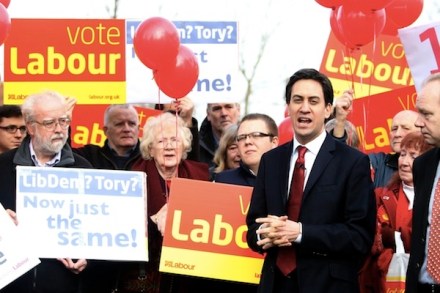
How can Labour win back voters in the South East? At the 2010 general election, Labour took ten southern seats outside of London, compared to four times that in 1997. Like the Tories in the North, Ed Miliband needs to offer policies that will ease the concerns of these lost southeastern voters; to convince them Labour is once again on their side. Miliband has tried to address the problem. The catalyst came from John Denham, who urged Miliband, as Giles Radice did with Neil Kinnock in 1992, to remember the ‘6:14 from Basingstoke’ voter and avoid using ‘north-south’ language. Instead, Denham suggested Labour should present policies that appeal across the whole country.

The decline of George Galloway

From our UK edition

The decay and decline of George Galloway was on full display in Oxford last night when he stormed out of a debate with a third-year PPE student from Brasenose College. The student’s crime was to be an Israeli, a discovery which led Galloway to declare: 'I don't debate with Israelis. I have been misled.' He then got up to leave. 'I don’t recognise Israel and I don’t debate with Israelis,' Galloway said as he exited the room. This is, of course, the old curmudgeon’s stock-in-trade. Galloway has made a career trading in the worst forms of sectarian and dog whistle politics.

Britain can’t afford an International Health Service

From our UK edition

Health tourism is raised every now again by politicians, but never has it been raised so forcefully by such a senior doctor. In this week's Spectator, Professor J.Meirion Thomas, a consultant surgeon with the NHS and one of Britain's leading cancer experts, speaks out about health tourism. He writes: I am frustrated at seeing the NHS targeted by patients who are ineligible for free care, but who usually get through the net. Specialist units may be especially vulnerable. Reluctantly, I have decided to share my concerns. The final trigger to write this article was a potentially ineligible patient who accused me of unethical behaviour because I would not promote his application with my Trust for immediate and free NHS care.

Deficit latest: Still £5 billion higher than last year

From our UK edition

Today's borrowing figures show that the government had a surplus of £11.4 billion in January. But before we get too excited, a bit of context is in order. There's (almost) always a surplus in January, thanks mainly to self assessment and capital gains tax receipts. And today's figure includes £3.8 billion transferred from the Bank of England's Asset Purchase Facility to the Treasury. Stripping that out gives a £7.6 billion surplus — an improvement on the £6.4 billion surplus in January 2012, but not enough to make up for higher borrowing in the rest of the year. Total borrowing in the ten months of the year so far is £97.6 billion (excluding the Royal Mail pension and APF transfers) — £5.3 billion higher than in the same period last year.

Eastleigh shows how difficult the 2015 Tory/Lib Dem fight will be

From our UK edition

The good news for Nick Clegg—and the bad news for David Cameron—is that the Liberal Democrats are racing certainties to hold Eastleigh in the by-election next Thursday. As I say in the magazine this week, the Liberal Democrats' base in the constituency - they hold every ward in the seat - has given them an insuperable advantage. This victory means that Clegg will be spared the Spring conference crisis that would have followed a defeat there; for if the Lib Dems could lose Eastleigh where they are so well dug in, they could lose anywhere. Cameron, by contrast, will have to deal with an intensely restless party. The Tories' failure to take Eastleigh in these circumstances highlights just how difficult it is going to be for the Tories to take seats off the Lib Dems in 2015.

Mitch’s pitch on Europe

From our UK edition

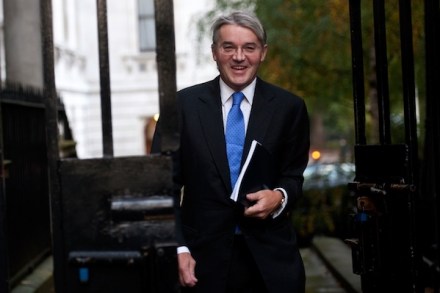
Andrew Mitchell’s piece in the FT today marks his return to normal politics post-Plebgate. Up to now, Mitchell has confined his post-resignation comments either to his old stomping ground of development or to the sequence of events that led to his premature departure from government. By contrast, today’s piece sees Mitchell getting involved in a frontline political issue, Britain’s relationship with Europe. The article is full of suggestions, joint-sittings of the UK-Polish parliament and meetings of the UK-Dutch Cabinets. But Mitchell is clearly determined to work within the framework set out by Cameron’s Europe speech. No one could say that the articles rocks the boat. But what makes it significant to my mind are two things.

Good news on employment, but don’t expect it to keep coming

From our UK edition

Today's jobs figures are pretty unambiguously good news. The number of people in work rose by 154,000 in the last three months of 2012 to a new record high of 29.73 million — surpassing pre-recession peak by 158,000. And unlike other recent rounds of employment growth, this wasn't driven by a rise in part-time workers (their number actually fell by 43,000). But there are still a couple of reasons cause to greet this good news with caution. Rising employment at a time of economic stagnation has come at the expense of earnings. Adjusted for CPI inflation, average weekly earnings have fallen by 7 per cent in the last five years, back to 2004 levels. And the Office for Budget Responsibility doesn't expect them to start rising again until late-2014.

Scottish Independence: Can’t We do Better Than This Dismal Campaign?

From our UK edition

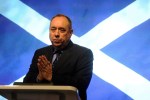
Mario Cuomo, former governor of New York state (and father of the present governor) is perhaps these days most famous for his quip that politicians campaign in poetry but govern in prose. Sometimes, anyway. Scotland's independence referendum campaign, at present, doesn't even rise to the level of William McGonagle's execrable verse. Most of the prose is stale and hackneyed guff too. This is the subject of my Think Scotland column this week. An argument that should, in theory, be mildly exciting is instead - at least for now - failing to deliver: My sense is that many of the people paying most attention to this campaign are the people most likely to be depressed by its current content. They ask "Is this all there is?

Labour could use Budget legislation to force mansion tax vote

From our UK edition

Labour's current plan to embarrass the Lib Dems over its clothes-stealing mansion tax policy is an Opposition Day debate in the Commons. But, in a mark of how serious the party is to score a political point on this matter, I understand that it is also considering tabling an amendment involving a mansion tax to the Finance Bill after the Budget. Labour sources tell me that this threat will be enacted if the government doesn't allocate time for an Opposition Day debate before the Budget. A source says: 'We want to be clear that we are serious about this. This is a test for the Lib Dems to see if they can keep just one of their promises. It's a test for Nick Clegg as leader.

Disappointing 4G auction income is bad news for Osborne’s deficit plans

From our UK edition

Oh dear. George Osborne's claim in December's Autumn Statement that 'the deficit is coming down this year, and every year of this Parliament' was already looking hubristic, even before today's news that the 4G mobile spectrum auction raised just £2.3 billion, rather than the £3.5 billion that the Office for Budget Responsibility had forecast. As Fraser blogged in November, there were hopes that Britain would — like Ireland — raise even more than expected from the auction. At the Autumn Statement, the OBR predicted that borrowing (once you strip out the effects of various one-off accounting changes, such as the transfer of Royal Mail pensions) would fall ever-so-slightly this year, from £121.4 billion in 2011-12 to £120.3 billion in 2012-13.