Uk politics

How a TARDIS could help the police

From our UK edition

If we had a time machine and could take a stroll down our local high street twenty years ago, we’d discover a place alive with activity. As well as shoppers hunting through famous outfits such as Woolworths, JJB Sports and Comet, we might see queues snaking at the local bank branch, someone waiting their turn outside the telephone box and couples scouring the travel agents’ window for a last minute, cut-price deal. Today, it’s a different story. We can browse the entire planet’s products on our phones, make an Amazon purchase with the swipe of a finger and track our order online with precision. We can drive to out-of-town shopping malls or supermarkets where we can park, stay dry and get everything we need all in one trip.

Voters hold Ukip to a different standard: there is no point in attacking their people or their policies

From our UK edition

Some of the coverage of the background and views of UKIP local election candidates has been met with a glee born of a belief that it might be the silver bullet to puncture the party's recent rise in support. I have an intrinsic suspicion that this will prove not to be so. Last night I was away from news and twitter. Before reading the papers in any detail I sent a tweet saying: 'Attacking UKIP over policy or people won't work. Genuinely responding to legitimate concerns of people tempted by them may well do.' I later read Lord Ashcroft’s perceptive observations that sum up my own views precisely.

Ministers burrow under the ring-fences for spending review

From our UK edition

Bids for the 2015/16 spending review will land on George Osborne's desk today from Secretaries of State across Whitehall. Some, like Iain Duncan Smith and Patrick McLoughlin, are signed up to the idea that their departments need further cuts. McLoughlin, as a former chief whip, prefers to avoid conflict, while Duncan Smith has made it known for some time that he'd like a bit of conflict with the Lib Dems over his budget, with a number of cuts sitting ready on his desk if only Nick Clegg and colleagues backed down on their refusal to touch Work and Pensions spending again.

Godfrey Bloom, women in the workplace, and the UKIP vote

From our UK edition

If UKIP thinks it is the victim of a smear campaign in the run-up to the local elections, then it needs to have a little think about whether the chief smearers hail from UKIP HQ itself, or CCHQ, as Paul Nuttall claimed they did when he appeared on the Sunday Politics earlier today. This evening, one of its internal smearers took to the airwaves to remind voters of a few other interesting aspects of the party's character. Godfrey Bloom, the party's MEP for Yorkshire and the Humber, gave John Pienaar an interview on his show this evening in which he reiterated his belief that businesses shouldn't employ women of a childbearing age.

Nick Clegg: No one has proposed to me that the UK should leave the European Court of Human Rights

From our UK edition

In a detailed interview on the Sunday Politics, Nick Clegg claimed that neither the Home Secretary nor Downing Street have ever proposed to him that Britain should temporarily leave the European Court of Human Rights so that it can deport Abu Qatada. Clegg was adamant that ‘no one has put a proposal to me.’ Under questioning from Andrew Neil, Clegg defended his decision to block any communications data legislation in the Queen’s Speech. He maintained that the proposals were ‘neither workable nor proportionate.’ Clegg conceded that the UKIP offer was ‘very seductive’ to voters. But he then attacked them for their flat tax proposal.

IDS highlights contradiction of pensioner perks as spending review deadline looms

From our UK edition

It isn't the first time that ministers have suggested wealthy pensioners might want to hand their universal benefits over to those who really need it, but Iain Duncan Smith's proposal in today's Sunday Telegraph that those who don't need their winter fuel allowances, bus passes or TV licences could hand them back voluntarily has an interesting political context. Tomorrow is the deadline for bids for the next Spending Review, and though ministers across the Coalition have argued that the government must look again at universal benefits for pensioners in order to be fair, David Cameron has stood his ground.

‘Please don’t mention Margaret Thatcher when you write to me’

From our UK edition

‘Arthur Negus’ — Tony Bray — is the only one of Margaret Thatcher’s early loves still alive, though sadly he is now in poor health. Once I had tracked him down, I found him happy to speak about those distant days at the end of the war when he danced with the future prime minister. But he was extremely anxious — 60 years later — that his wife (who is now dead) should not know of my inquiries. ‘If you ring up, please say nothing of your purpose,’ he said, ‘and if you write, please don’t do so in a Daily Telegraph envelope.’ When he married his wife, a couple of years after the relationship had ended, a similar sense of honour induced him to destroy all Margaret’s letters to him.

David Cameron and the married couple’s tax allowance

From our UK edition

The married couple’s tax allowance is back on the agenda. After Conservative Home’s exclusive yesterday, David Cameron has confirmed that he will introduce one before the end of this parliament. This would allow couples to share a proportion of their personal allowance, lowering the tax bill for those household where one person stays home to look after the children. Cynics will suggest that this is a good time to float a policy particularly popular with the party base given that there are county council elections on Thursday. But Cameron is a bigger enthusiast for recognising marriage in the tax system than most of his Cabinet colleagues. In opposition, George Osborne always worried that it looked like a measure designed to encourage mothers to stay at home.

Labour ignores reality with its political hunger games

From our UK edition

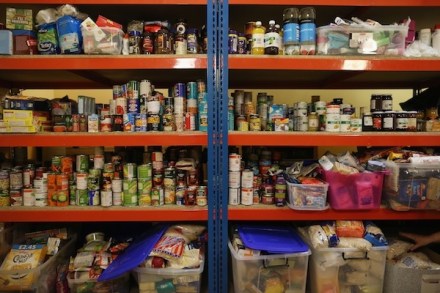
There are few things more frustrating in politics than attempts to shut down a valid debate about a real social problem using the speaker's personal circumstances. Today's victim appears to be Richard Benyon, scalded for suggesting in a low-key Westminster Hall debate that Britain has a food problem. The environment minister told the debate on Wednesday that the government would set targets for helping families cut the amount of food they waste, saying: 'We all know that we ought to be wasting much less food, that food wasted means fewer pounds in our pocket, that the energy and water used to produce the food has been wasted, and that the transportation and packaging costs have been wasted.

The report the Department for Education does NOT want you to read

From our UK edition

One of the better policies of this government is its offering massive databases up for public scrutiny. Sunlight is the best disinfectant, argues David Cameron, and outsiders can scrutinise what the government is doing and point to flaws. With commendable openness the Department for Education asked Deloitte to look at its massive pupil database last year, which has records on half a million kids factoring in exam results, postcode, ethnicity and poverty. And also the bizarre variation in English spending-per-pupil figures which vary from £4,500 to £10,000 per pupil (odd, given that teachers operate on national pay bargaining). Crucially, Deloitte was also asked to look at spending.

About that UKIP tax policy…

From our UK edition

Nigel Farage was on Question Time again last night. This was hardly unusual, but what was interesting was that the UKIP leader U-turned on one of his flagship policies. When he spoke at a press lunch on Tuesday, Farage accepted that UKIP's flat tax policy was 'incomplete', but that UKIP's aspiration was to have taxes as low as possible. Last night, asked whether he still wanted a flat tax, he said: 'It was in 2010, but it isn't now, and don't tell me about manifestos: you haven't even got one!' Simon Hughes pressed him on what his tax policy was, to which he replied: 'We will have no tax on the minimum wage and a mass simplification of the tax policy, with a lower rate. We will abolish National Insurance, roll it into tax because all it is is tax anyway.

Margaret Thatcher and the missing votes

From our UK edition

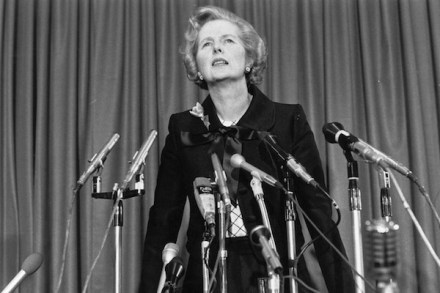
There was a startling late entry for the first volume of my biography of Margaret Thatcher. On the day after she died, I received an email from Haden Blatch. Mr Blatch’s father, Bertie, was the chairman of the Finchley Conservative Association when it selected her in 1958. I had asked Haden for information before, but he had not got round to it. Now he revealed that his father had come home from the Finchley selection meeting and explained that Mrs Thatcher had not really won the vote. Her rival, Thomas Langton, had just pipped her. Blatch senior, however, was very keen on Mrs Thatcher, and thought that Langton, who ‘was born with a silver spoon in his mouth’, would easily get in somewhere else, whereas she, being a woman with young children, would not.

Things are looking up for the Tories

From our UK edition

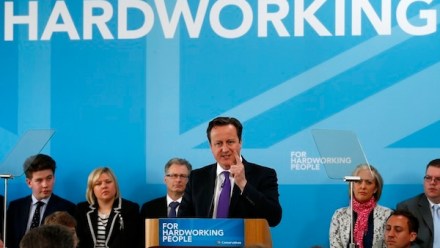
There’s a distinct sense of optimism in the Tory ranks today. First, there’s relief that a triple dip recession has been avoided. Dire economic news would have ended the rare outbreak of unity in the Tory party. Second, the changes to Number 10 and the newly announced policy board have gone down well with Tory MPs. Even those who have not been offered a role are pleased at this broadening of the Cameron operation; the recall of Peter Lilley to the colours has gone down particularly well. For the first time, there’s a feeling that Cameron is prepared to consult and listen to his party and that is prepared to be led. If this Tory unity can survive next week’s county council elections, then politics could get very interesting.

The only thing that remains of the Snooper’s Charter is unlikely to need legislation

From our UK edition

Even though Nick Clegg made a big song and dance this morning on LBC about blocking the Snooper's Charter, there is still a bit of confusion in Westminster about whether he has actually driven the fatal stake through its heart. The Prime Minister's official spokesman said this morning that discussions are still 'ongoing', while some of those fighting the legislation on the Tory benches were a little worried that what the Deputy Prime Minister actually said was that he was killing bits of the Bill that upset people the most, not the whole thing. This is what he told Nick Ferrari this morning: 'Well look, what people have dubbed the "snooper's charter", I just have to be clear with you, that's not going to happen.

GDP relief leaves spotlight on a Labour party under pressure

From our UK edition

Westminster has felt rather muted over the past few weeks: it may well continue to do so today, but for good reasons. That the first estimate of Q1 GDP figures recorded growth of 0.3 per cent means Labour spinners have to work much harder on falls in certain sectors in order to get their points across, and that George Osborne and David Cameron can relax, knowing they've just been gifted more good feeling in their party until at least the local elections. After the building tension over today's figures came a really rather good anti-climax. This means that the spotlight remains on Labour, and not the Conservative party. Len McCluskey's intervention yesterday - slapped down by Ed Miliband as 'reprehensible' - is just one of a number of cracks appearing in the party's unity.

No triple-dip: GDP up by 0.3%

From our UK edition

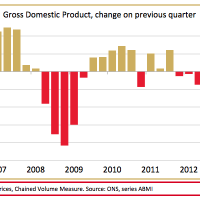
The UK seems to have avoided a triple-dip recession. According to today's estimate from the Office for National Statistics, the economy grew by 0.3 per cent in the first three months of 2013. But it is important to remember that this is just a first estimate, with a margin of error of ±0.7 points. So today's figure could still be revised down to show a triple-dip, or revised up to show stronger growth. This still leaves GDP 2.6 per cent below its pre-recession peak, five years after the downturn hit.

The View from 22 — Sex and success, Conservative vs. Labour unity and the two-wheeled tyranny of cyclists

From our UK edition

What do Margaret Thatcher, Sheryl Sandberg and Angela Merkel have in common? They are the ultimate alpha-female icons, according to Alison Wolf. In this week's Spectator cover feature, Alison examines the ultra-competitive female elites who are pulling ahead and leaving the rest of the 'sisterhood' behind. On this week's View from 22 podcast, the Spectator's deputy editor Mary Wakefield discusses with Alison what makes an alpha female, why they are only interested in alpha males and how feminism is response for this new divide. Melissa Kite and Gary Lingard also debate whether the world now revolves around cyclists. In this week's magazine, Melissa argues that beautiful country paths should stop be turned into tarmac cycle routes.