Uk politics

Miliband shores up his leadership at noisy PMQs

From our UK edition

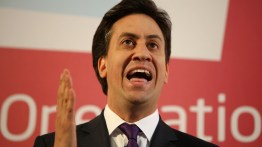
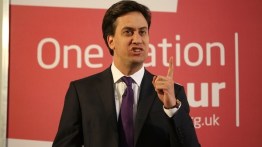
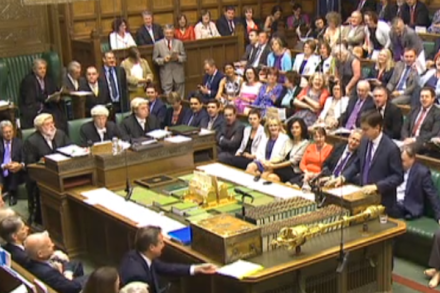
That was as loud as the Prime Minister’s Questions that immediately preceded the last election. The Labour benches were clearly determined to ensure that there was no repeat of last week’s mauling of Ed Miliband. They barracked David Cameron from the off, even chanting ‘weak, weak, weak’ during his answers and almost every Labour question was on the propriety of the Tories’ relations with their donors. This, combined with a far stronger performance from Ed Miliband, ensured that the session ended with Cameron, not Miliband, on the back foot. Cameron’s problem is that Miliband is turning this from a debate about union influence on Labour selections into one about money — and when it comes to money, no party looks good.

Can Theresa May avoid a Tory row on the European Arrest Warrant?

From our UK edition

Walk down a corridor in the Palace of Westminster today and you’ll likely be taken aside by a Tory backbencher who wants to vent their frustration about Britain opting back into the European Arrest Warrant. At the moment, the mood is of concern rather than rebellion — a reflection of the fact that Tory MPs are in a fairly positive frame of mind after a good couple of political weeks for the party. But what should alarm Downing Street is that it isn’t just the usual Eurosceptic crowd expressing concern. Indeed, some of those who are most concerned are those who David Cameron has relied on recently to defend his European policy. Off the record, Number 10’s view is that with Theresa May’s help they can avoid a full-on row.

Labour MP makes amusing attempt to wreck Tory EU referendum bill

From our UK edition

The Conservatives are a happy bunch at the moment. But for how much longer? They might be riding on the crest of a wave after the second reading of James Wharton's Private Member's Bill for an EU referendum. But already forces are at work to disrupt the happy harmony. Labour MP Mike Gapes has this week tabled a rather amusing series of amendments to the legislation which are almost certainly an attempt to sow division in the Tory ranks. They call for: - A referendum on the terms of Britain's membership of the EU rather than just on whether Britain should be a member. - A referendum on a date to be determined. - A referendum on a date to be decided by a Royal Commission on the future of the UK in Europe. - A referendum on 22 May 2014. - A referendum on 6 May 2015.

Politicians are finally being grown-up about government

From our UK edition

One of the promises from the last round of 'new politics' pledges when the Tories were in opposition was a cut in the number of special advisers in a government, on the grounds that SpAds are evil beasts who cost a lot of money. Like many 'new politics' pledges, though, this sounded superbly pious in opposition and turned out to be a real pain in the backside in government. It turns out that SpAds are actually really useful if you want to get things done as a minister, if you want to know what other ministers are trying to do to stop you getting things done, and if you want to have a hope of the public reading about you getting things done in the newspapers.

Miliband’s challenge is an opportunity for the Tories to reach out to union members

From our UK edition

The warm reception to Ed Miliband's speech yesterday was so eerily positive that it could never have lasted. Today we get the first taste of the real battle to come, with the GMB warning that they'd be 'lucky if 10% of our current affiliation levels say yes, they want to be members of the Labour party' and that as a result the union could disaffiliate from the party. This is a challenge for Ed Miliband to show that he is determined to force these changes, even if it means calling a party-wide ballot to overrule the union bosses But this is also an opportunity for the Conservatives. If the unions accept that few of their members would choose to join Labour too, then there is a reasonable argument to make for giving members an option to join the Tory party too.

What do the Tories think about zero hours contracts? They don’t seem very keen to tell us…

From our UK edition

MPs held a debate in Westminster Hall today about zero hours contracts. Actually, to be specific, Labour MPs held a Westminster Hall debate today, which Jo Swinson replied to as the employment minister. Adjournment debates aren't often that newsworthy, but what made this debate noteworthy was that it marks another example of the Conservatives failing to respond to a social phenomenon, instead leaving a vacuum for Labour to stamp their own argument on it. What do the Conservatives think about these contracts, under which workers are not guaranteed a set number of hours per week? You could probably guess that MPs on the right would say there is a compelling argument for labour market flexibility in a country with a comparatively generous welfare safety net.

Wot, no bad news? The bigger problem for Labour

From our UK edition

Journalists in the Westminster bubble like to point out on Big Speech Days like this that the public couldn't care a jot about whether Ed Miliband is having a Clause IV moment. They're right, but that doesn't stop everyone in the bubble getting rather overexcited about a speech in a sweaty room off Fleet Street as they did today. Miliband might be wiping his brow with relief this afternoon given his unions speech has gone down rather well with a surprising range of grandees, but he'll know only too well that the more awkward news has nothing to do with Len McCluskey. The International Monetary Fund announced this afternoon that, as expected, it was raising the UK's 2013 growth forecast from 0.7 per cent to 0.9 per cent.

Ed Miliband’s Surprisingly Bold Plan for A New Model Labour Party

From our UK edition

Tony Blair has welcomed Ed Miliband's "big speech" on reforming Labour's relationship with its Trade Union backers. And so has Len McCluskey, chief potentate at Unite, the Union whose allegedly nefarious activities in Falkirk have prodded Miliband towards reform. Blair expects Miliband's proposals to change everything; McCluskey, presumably, is confident any changes will prove largely cosmetic. They can't both be right. But, actually, it is a little unfair to put "big speech" in inverted commas. This was, or at least has the potential to be, a transforming moment for the Labour party. Granted, no-one is quite sure how this will happen  - and the detail matters - but everyone agrees something is afoot.

If Labour is to be democratised, Ed Miliband must reform how his party chooses its leader

From our UK edition

By insisting that trade unionists must opt-in to party membership, Ed Miliband has taken a bold and brave first step in reforming Labour’s troublesome relationship with its affiliated trade unions. At a stroke, he has gone far beyond the achievements of his modernising predecessors, John Smith and Tony Blair. Considerable fanfare accompanied the introduction of one member one vote for party elections in 1993 but John Smith’s initiative proved to be flawed – an outcome demonstrated by the role that trade union leaderships were able to play in the 2010 Labour leadership contest. The abolition of Clause IV in 1995 was little more than a symbolic reform.

Ed Miliband’s speech on reforming Labour’s relationship with trade unions: full text

From our UK edition

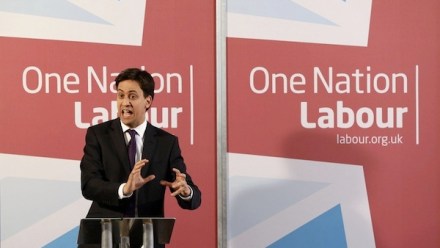
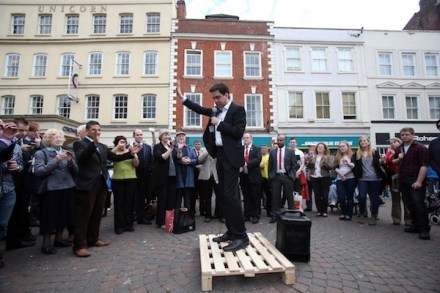
Let me start by saying how pleased I am to be here at the St Bride’s Foundation. Only a few hundred yards from where the Labour Party was founded over a century ago. And especially to be here with so many community organisers and Labour Party members from right across the country. I am here today to talk about how we can build a different kind of politics. A politics which is truly rooted in every community of the country. And reaches out to people across every walk of life. That is what I mean by One Nation. A country where everyone plays their part. And a politics where they can. It is about a politics that is open. Transparent. And trusted. Exactly the opposite of the politics we’ve recently seen in Falkirk. A politics that was closed.

Abandon all hope: the average voter thinks one in four Britons is a muslim

From our UK edition

Last month I wrote a post arguing that an awful lot of opinion polling is worthless. The public mood matters - and measuring it is important - but when it comes to the detail of actual government policy the public is, generally speaking, clueless. Well, whaddyaknow, but here's a new Ipsos-Mori survey which confirms my suspicions. The Great British Public may have many virtues and they may be able to tell you that poor Mr Clegg is a wrong 'un but when you peak beneath the bonnet you begin to fear that newspaper comment threads may not be quite as unrepresentative of the general public as you'd like to think they must be.

Who owns Labour? Unite turns on the Right

From our UK edition

Ed Miliband's speech today isn't an attempt to close down the row over Falkirk, but to get back on top of the issue, rather than appearing to be bounced along by events. What it will do is open a huge row with the union bosses: one the Labour leader needs to be seen to have won at the end of it all. Here is a briefing on what to expect from Miliband. The Tories are pleased this morning that Len McCluskey has written in this morning's Guardian that 'switching to an "opt-in" for the political levy wouldn't work… would debilitate unions' ability to speak for our members and would further undermine unions' status as voluntary, and self-governing, organisations'.

Ed Miliband’s ‘Clause IV moment’: what you need to know

From our UK edition

Ed Miliband is giving a speech tomorrow morning on 'the biggest Labour party reforms for a generation' to shake up the party's relationship with the unions. It's a 'One Nation Politics' speech, which shows the Labour leader thinks his 'One Nation' tag can even be applied to cleaning up a mess in your own party, and will contain what spinners are briefing is a 'radical' shake-up of the party. He will say that 'One Nation is a country where everyone plays their part and a politics in which they can'. This politics is the 'opposite of the politics we saw in Falkirk. Here's your guide to what he'll say tomorrow, and what appears to have been left out: 1. Opt-in arrangements for union members to choose whether or not to join Labour.

The long-term political benefit for both Coalition parties of Abu Qatada’s deportation

From our UK edition

If you had the misfortune to miss Theresa May's statement on the deportation of Abu Qatada this afternoon, it would hardly stretch your imagination to work out how the occasion went. It involved MPs cheering May, May making it clear that the government has done very well and then pointing out (again) that she does want reform (which the Lib Dems disagree with). MPs took care to praise the Home Secretary, mindful of all the chatter about Qatada's departure being good for her own leadership ambitions. Even if you're not on the TM4PM bandwagon, you might as well ingratiate yourself with her in case something unexpected happens. All pretty formulaic stuff.

Exclusive: How the Tories plan to attack Ukip

From our UK edition

Last week Lynton Crosby and David Cameron briefed Conservative MPs on the threat posed by Ukip. Their timing was impeccable: today's YouGov poll showing 19 per cent of Conservative members would seriously consider voting for Nigel Farage's party could have sent Tory MPs into orbit, but instead they have been reassured that the party has a proper plan to deal with the enemies to the right, rather than the messy 'fruitcake' strategy of the past few years. I am told by a number of MPs who were present that Crosby talked generally about what attracts people to Ukip, rather than the specific problem of next year's European elections. This was based on polling the party has been carrying out.

Mayor of London’s quiet attack on the creaking government machine

From our UK edition

It is interesting enough that Boris Johnson has attacked high-speed rail in today's Telegraph: the Mayor is undermining the priorities of the current government (while attacking Labour a little too), and reminding them that they are dithering on aviation policy. He warns that the project's costs will balloon to well over £70 billion. But the Mayor makes one very important comment about the government machine that should not go unnoticed. He writes: Talk to the big construction firms, and they will tell you the problem is not the cost of actually digging and tunnelling and putting in cables and tracks. Those are apparently roughly the same wherever you are in the world.

Heathrow is the answer – and we know how to make it work

From our UK edition

I realised I wanted to pilot Concorde the day I turned 25. I learnt to fly as a member of the Air Squadron at Birmingham University, but I wasn't sure I wanted to make a career of flying. But when I turned on the television on my 25th birthday and saw the first flight of the British Concorde, I thought 'that’s what I’ll do'. I became Concorde’s longest serving pilot: 27 years. Concorde has long since been retired, and I stepped down as Director of Flight Operations for British Airways a number of years ago. But the one problem that irked me throughout my flying career remains unresolved: what do we do about Heathrow? Heathrow is crucially important to the UK. It is responsible for 1 per cent of UK GDP and drives the economic competitiveness of London and the South East.