Uk politics

Miliband’s EU referendum dilemma

From our UK edition

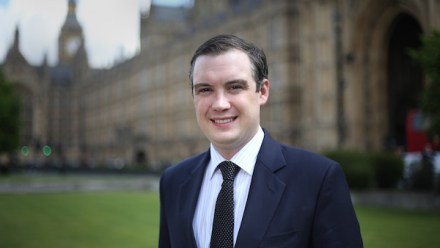
Friday’s vote on James Wharton’s EU referendum bill is going to push the whole Europe question right back up the political agenda. The Tories will try and use it to highlight their support for a vote and the opposition of the other major parliamentary parties. It will be very hard for Ed Miliband to go into the next election opposed to a referendum. It would look like he was opposed to giving the public a say. I also suspect that it will become almost politically impossible to oppose a referendum after the European Elections in 2014. Patrick Wintour reports today that Labour is toying with the idea of either amending the Wharton Bill to back an instant In / Out vote or committing to one within the six months of the next election.

The greatest scandal in Britain is the failure to give poor children a proper education.

From our UK edition

Earlier this week, I was part of a panel on Newsnight Scotland discussing the latest - some would say, belated - efforts designed to improve Glasgow's dismally underachieving state schools. That they need improvement is beyond doubt. In Scotland's largest city, only 7% of state-educated pupils leave school with five good Higher passes. In Scotland as a whole a mere 220 children from the poorest 20% of neighbourhoods achieved three As at Higher (the minimum grades required for admission to leading universities such as St Andrews). As I said on the programme, this should be considered a national scandal. More than that, a disgrace. (Like Fraser, I wish more people were angry about these things.) To be fair, Glasgow City Council is trying.

Denial is a River in Scotland

From our UK edition

Aye, the old ones are the best. You might think that George Osborne's decision to  leave the Scottish block grant more-or-less untouched in yesterday's spending review would be a cause for chuffedness north of the border. You'd think wrong. Osborne announced a 1.9% reduction in real-terms funds made available to the Scottish government. Alex Salmond's ministry will have to make do with £25.7 billion. All hail the Barnett formula since Mr Osborne's decision to protect health spending ensures that the funds available to Scotland are similarly guaranteed, minimising the ability to cut the block grant even if that were deemed economically - or, rather, politically - wise.

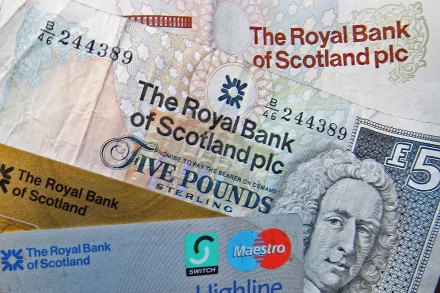
If they want another woman to depict on bank notes, how about Margaret Thatcher?

From our UK edition

Jane Austen is a ‘contingency character’, we have just learnt. In his last appearance as Governor of the Bank of England before the Treasury Select Committee of the House of Commons, Sir Mervyn King explained that the great novelist rather slightingly so described stands in reserve to feature on any of our bank notes if too many people succeed in counterfeiting the current occupants. She is also in the running for the ten-pound note when Charles Darwin relinquishes it. This is a hot issue, because the notes do not feature enough women, we are told — despite the fact that since 1952, 100 per cent of them have featured a woman (the Queen).

Food banks and political failure

From our UK edition

Are food banks a scandal? For this week's Spectator, I visited the Salisbury food bank, set up in 2000, to find out what causes families to turn to these charities. I must admit that when I arrived at the headquarters of the Trussell Trust, which runs many of the food banks in this country, I was expecting to meet more angry people, spitting fire about the cruel government. Instead I interviewed Chris Mould, the Trust's chief executive, who was so unremittingly positive about the work that food banks do that I ended up writing a rather different piece than the one I set out to do. True, Mould was unimpressed with some of the government's benefit cuts, which he worries will have unintended and costly consequences.

Spending review 2013: Crossrail 2 is a clear win for Boris Johnson

From our UK edition

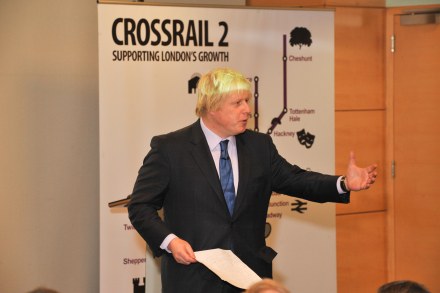
Boris Johnson's powers of persuasion have once again wooed George Osborne. In today's spending review, the Chancellor has put aside £2 million to investigate Crossrail 2 — a new underground line for London. The fact the Mayor was able to bag another win from Osborne — Crossrail 1 was protected from funding cuts in 2010 — is testament to the political power of both the Mayor and the capital. Boris doesn't even have re-election to think about this time. Crossrail 2 is key to Boris' London legacy.

PMQs sketch: Tasered choirboys and hilarious failings

From our UK edition

listen to ‘Spending review 2013: the Coffee House analysis’ on AudiobooShock news at PMQs. Miliband scored a hit. He succeeded in making Cameron look silly. True, he enjoyed his triumph a little too much, but his performance will have cheered his party enormously. For weeks they’ve had to watch their leader bungling at the despatch-box like an octopus trying to make a pancake. Miliband’s weapon of choice: statistics. It’s hard to use mere mathematics to hurt a politician but Miliband handled his materials with deadly aplomb. He uncovered woeful failures in government programmes. And the revelations weren’t just bad. They were hilariously bad.

Ed Balls’ shouty spending review response avoids difficult dividing lines

From our UK edition

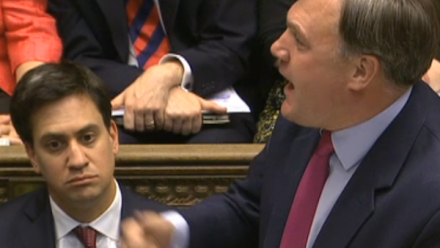
listen to ‘Spending review 2013: the Coffee House analysis’ on AudiobooEd Balls had a rather shouty time in the Commons this afternoon when he responded to George Osborne's spending review statement. It was a shame, because his lack of variation in tone and pace from 'angry bellow' level made what wasn't a bad response a little difficult to follow. These responses to budgets, autumn statements and spending reviews are very difficult for any shadow chancellor or opposition leader to carry off well: you have no warning of what the Chancellor will say, and just the length of the speech itself to re-shape your pre-crafted speech and collect your thoughts.

Spending review: George Osborne finds a way to put welfare front and centre – again

From our UK edition

listen to ‘Spending review 2013: the Coffee House analysis’ on Audioboo The Liberal Democrats insisted that they wouldn’t accept any more welfare cuts. But George Osborne still found a way to put welfare at the centre of his statement today as he sought to put, what he calls, the ‘welfare party’ on the back foot.  It was a reminder that he remains a thoroughly political Chancellor. There were a series of tough conditionality measures. The most headline-grabbing of these was that the around 100,000 people who claim JSA but aren’t proficient in English will have to learn the language or lose their benefits. The state, though, will pay for their language lessons.

Councils need to reform, not bemoan their lack of money

From our UK edition

We know that local government is looking at a 10% reduction in today’s Spending Review. So the traditional game played by some councils of bemoaning the lack of money is even more pointless than usual. It’s now down to us as local authorities to behave differently when it comes to delivering services, and that covers everything from social finance schemes to early intervention on troubled families. The government has done much in recent years to drive forward public service reform, but today will make it still clearer that we can’t take our foot off the gas.

Spending review: the dividing lines

From our UK edition

listen to ‘Spending review 2013: the Coffee House analysis’ on Audioboo George Osborne loves a good dividing line: he sees it as his job to 'weaponise' policies in a way that benefits his party. So what were the key divisions that he set out in today's Spending Round statement? 1. The full package Clearly the Chancellor wanted to make Labour as uncomfortable as possible as he set out the cuts for each department. Once Ed Balls finished his response, the Chancellor started prodding him on whether Labour would match the package. 'Hands up on the Labour benches who wants to match our spending cuts?' he cried. Ed Balls suddenly became strangely interested in his water carafe and in an urgent conversation with Ed Miliband.

Spending review dividing lines: who and what to watch

From our UK edition

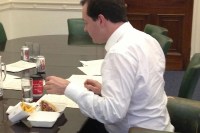
One set of businesses are already feeling the pain from the successful completion of the spending review. Westminster pizza outlets have come to rely on large orders from the Treasury the night before a spending review or Budget announcement, but the deal was sealed on Sunday night, and so all was calm last night in Westminster. George Osborne still snuck in a cheeky burger and chips (and thought it a good idea to tweet a slightly unappetising picture of himself tucking in), but that was as he made his finishing touches to the speech itself, rather than an attempt to keep going through last-minute negotiations with an angry Cabinet colleague. Parliament will be buzzing, but we're unlikely to get much more detail today beyond how much each department will cut.

Tory Wreckers Will Shipwreck David Cameron on the Coast of Belgium

From our UK edition

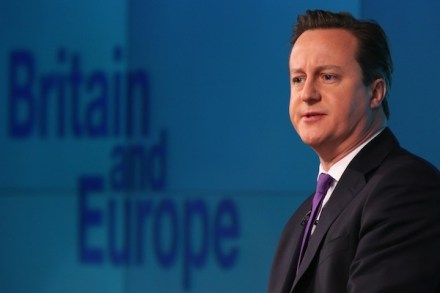
Do you understand what David Cameron's Europe policy is supposed to achieve? If so, you're way ahead of me. I've said before that I think Europe will cripple Cameron unless Ed Miliband gets there first and nothing has happened since to change my mind. Isabel's scoop published today, revealing the results of the Tory party's internal consultation help make the folly of Cameron's policy even clearer. With some understatement Isabel concludes that the results "underline how big the expectations are on Cameron to bring about big change in Europe". Indeed they do. Tory members are telling the Prime Minister that the European parliament should be abolished. This may not be the worst idea in the world but it is one of the most fanciful.

Conservative members send ministers EU reform shopping list

From our UK edition

David Cameron will come under increasing pressure in the next few months to publish his 'shopping list' of reforms he wants from a renegotiation of Britain's relationship with Europe. Even those who want to know what the Prime Minister is really thinking accept that this is not a good idea, as he would neither satisfy the spectrum of views across his party, nor impress them when he returned with only 14 out of 20 demands granted (even if those 14 reforms were very impressive ones). But the Tory party has been consulting its members on the powers that they would like to see returned to national governments. I've got hold of the results, which underline how big the expectations are on Cameron to bring about big change in Europe.

Tories use Let Britain Decide campaign to hunt voters’ data

From our UK edition

The Tories have earned rare praise for their LetBritainDecide campaign for James Wharton's Private Member's Bill. Everyone accepts that the slick website and social media campaign are (surprisingly) impressive. But there's another — largely unnoticed — aspect to this campaign which has a lot less to do with change in Europe and more to do with change in CCHQ's campaigning methods. The clever 'co-sponsorship' option allowing anyone to add their names to the bill doesn't just create hype, it also allows CCHQ to build a large database of the names, email addresses and postcodes of voters with a particular interest in European affairs. Why is this important? The data allows CCHQ to target voters with specific campaign messages that interest them personally.

Focusing on borrowing means mutually-assured humiliation for Labour and the Tories

From our UK edition

Strangely, both sides at Treasury questions today wanted to talk about something that does their own party no favours at all to mention. The Labour whips had sent their loyal backbenchers out in force to ask about Friday's borrowing figures, while George Osborne and Conservative colleagues were very happy indeed to talk about how much the Opposition would have to borrow, too. Labour wanted to tell off the government for borrowing more. The government wanted to remind Labour that it would borrow even more.

Most opinion polls are junk: blame the ignorant general public for that.

From our UK edition

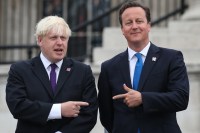
One of the very good things about Lord Ashcroft is that he is happy to commission large-scale opinion polls. Sometimes these are mischievous. Take today's example, for instance. It is always useful to be reminded that most members of the public can only recognise a handful of politicians. One would expect David Cameron and Boris Johnson to be at the top of the public recognition table. They are the only politicians in Britain recognised - and correctly identified - by more than 90% of those surveyed. 89% of respondents claim to recognise Ed Miliband but only 77% can actually identify him (some think he's actually his brother which, given David has been out of the public eye for the best part of three years does not say much for Ed).