Uk politics

Lib Dems face challenge to show Trident review is being taken seriously

From our UK edition

The Trident Alternatives Review hasn't even been published and already the Conservatives are attacking any proposals the Liberal Democrats might have cooked up to water down the nuclear deterrent. The Prime Minister's official spokesman told the morning lobby briefing that the Prime Minister has 'seen no evidence that there is a way of providing an alternative to a like-for-like replacement' of Trident, while in his Daily Mail article today, Defence Secretary Philip Hammond says 'there is no alternative to Trident that provides the same level of protection and ability to deter an aggressor'.

Liam Byrne changes tack to say benefit cap isn’t tough enough

From our UK edition

Liam Byrne's attack on the workless benefit cap this morning is interesting, because he's trying to position himself as tougher than the Conservatives on out-of-work benefits. Labour's shadow work and pensions secretary said: 'The benefit cap is a good idea in principle but it's already fallen apart in practice. Ministers have bodged the rules so the cap won't affect Britain's 4,000 largest families and it does nothing to stop people living a life on welfare. The government needs to go back to the drawing board, design a cap without holes and put a two-year limit on the time you can spend on the dole, like Labour's compulsory jobs guarantee.

Benefit cap’s polling success paves way for tough 2015 promises

From our UK edition

The government's £26,000 benefit cap is one of the most popular policies pollsters have ever come across. No wonder, then, that CCHQ is putting this infographic about to underline the political power of this emblematic policy as it is rolled out nationwide today. Of course, it's not entirely true that Labour supports limitless benefits, as the party is considering some kind of regional benefit cap, with more money paid to recipients in London to reflect the higher cost of living. But Liam Byrne and Ed Miliband's decision to lead the party into voting against the cap in the end makes it very easy for the Conservatives to slap Labour with the 'limitless' tag.

New Tory group ‘Renewal’ calls for union members to be allowed to donate their affiliation fee to any party

From our UK edition

The Conservative party hasn’t won a parliamentary majority for more than twenty years. If it is to start doing so again, then it will have to need to expand its pool of potential voters. Renewal, run by former Policy Exchange deputy director David Skelton, is a new Tory ginger group trying to focus the party’s attention on this problem. It launches tomorrow and, I suspect, that at least one of its idea will immediately catch the eye of the Tory leadership. It is proposing that the law should be changed so that not only should union members have to opt in to affiliate to a political party but they should also have a choice of which party to affiliate to. This would mean that those union members who choose to could donate to parties other than Labour.

MPs don’t deserve a punishment beating over pay

From our UK edition

Four years ago I was in a windowless room within the parliamentary estate. I was working in David Cameron’s opposition office at the time and a number of Tory political advisers had been corralled into said room to go line-by-line, page-by-page through the expenses forms for all Tory MPs. This was in the middle of the corrosive drip-dripping of expenses stories, and British politics had hit its nadir. Since then I’ve spent a lot of time living and working in SE Asia, which has enabled me to peer at the Westminster ant farm with a bit more perspective. On my last visit back to SW1, just over a month ago, I found it gripped by the Mercer and Yeo lobbying scandals. Disproportionality so, I thought.

Motorists deserve a full inquiry into fuel price-fixing allegations

From our UK edition

Everybody knows that the price of motoring fuel is too expensive. Often, this is blamed on the taxman: at nearly 60 per cent of the cost of fuel, it is a toxic tax that affects the price of everything. Of course, we should recognise that fuel duty is 13p cheaper in tax terms thanks to actions by the Chancellor, but fuel duty needs to be a top priority for tax cuts as soon as financial conditions allow. But the desire to see lower fuel taxation often means that the wider debate on the price of fuel is overshadowed. This changed in May this year when it was announced that the European Union had raided the offices of several oil giants to look into allegations of price fixing. Many have long suspected that there may be some manipulation of oil prices.

Justin Welby, a very political Archbishop

From our UK edition

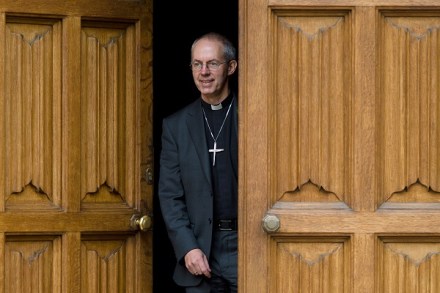
In this increasingly secular age, you would expect the Archbishop of Canterbury to be a figure of diminishing importance. But Justin Welby is fast becoming the most politically influential Archbishop since the war. Part of Welby’s influence stems from the fact that both the Conservatives and Labour think that he is, secretly, one of them. I remember within days of his appointment being approacedh by a Tory minister and then by one of those closest to Ed Miliband. They both wanted to explain how Welby was going to help move public debate in their direction. One never had this kind of conversation about Rowan Williams whose views were thought not to be of this world.

Parents vs. the system: which side is Labour on?

From our UK edition

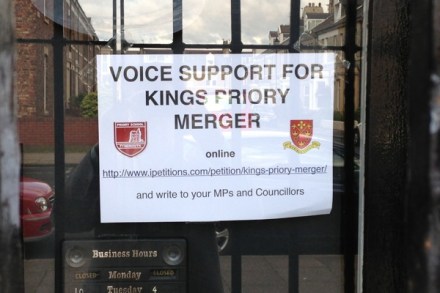
Should Labour support private schools joining the state sector? Yes, is probably your immediate response but in reality, Labour’s position is unfathomable. A case in point is the battle for The King’s School, which I've written about in this week’s Spectator. The King's School is due to move into the state sector this September and merge with the local Priory Primary School to create the all-new King's Priory Academy. North Tyneside, where both schools reside, is one of the poorest boroughs in the country. Opening up an excellent fee-paying school to parents who (like mine) can't afford a £10,000 per-year education should be welcomed by all. But Labour, locally and nationally, have failed to back the merger.

Sarah Wollaston: Tories are ‘pandering to election strategists’ on plain packaging

From our UK edition

Sarah Wollaston is angry. Again. This time it's about plain packaging on cigarettes. She told the World at One that the decision to stall introducing plain packaging was 'pandering to election strategists' and that this was a 'very sad day for public health'. You can listen to the full interview below:- Now, this is obviously deeply annoying for the Tory leadership as it hardly helps them tackle the narrative that they're always caving into their friends in big business. Even more annoying, perhaps, for Anna Soubry, who unlike Wollaston had to back the decision in the Commons this morning even though she personally supports plain packaging.

The War on Drugs kills another seven Britons. How many more must die for a bankrupt idea?

From our UK edition

Another summer, another reminder of the consequences of our drug laws: A man has been arrested in connection with the death of an 18-year-old who had taken fake ecstasy tablets. The woman died in Alexandria, West Dunbartonshire, on Tuesday. She and three friends had taken green tablets with a Rolex Crown logo on them. Similar tablets have been linked to the deaths of six other people in the west of Scotland in the past two months. Of course, no-one needs to purchase ecstasy and primary responsibility for these horrid deaths lies with the people who manufactured these pills. Nevertheless, unscrupulous (and stupid) suppliers are not the only culpable actors in this sorry tragedy. Parliamentarians share some blame too.

We know Andrew Mitchell was framed. Now, give him his old job back

From our UK edition

Andrew Mitchell was forced to resign as the Tory Chief Whip last autumn because he called policemen at the Downing Street gates ‘plebs’. Then it turned out, as I suggested at the time, that he had not done so. It emerged that there was a conspiracy — quite how deep has not yet been made public — by police and accomplices to attribute to Mr Mitchell words which he did not speak. People pretending to be by-standing members of the public said how shocked they were by Mr Mitchell’s remarks, and then it turned out that no bystanders had been within earshot of whatever it was that Mr Mitchell had said. Eventually, there was an investigation.

Reshuffle gossip points to ‘innocents’ and women

From our UK edition

There's just a week left of the Parliamentary term to go before MPs go back to their constituencies to mull that awkward pay rise over the summer. But one thing that's keeping Tory MPs from relaxing is the possibility of a ministerial reshuffle next week. The word from reliable sources is that it will take place next Thursday with a sign-off meeting this Monday. This is a minister-of-state-level reshuffle. The names of supposedly vulnerable ministers are circulating. They include housing minister Mark Prisk, energy minister Greg Barker, universities minister David Willetts, and employment minister Mark Hoban. They're known as the 'innocents': ministers who are all thought to be doing a good job and who have not messed up but who are not considered likely to move up into the cabinet.

Why partisan columnists (like me) are doomed

From our UK edition

An email exchange with a Conservative-leaning friend this week left me feeling sheepish. But if shameful my behaviour be, I’m not alone in the shame. I thought it worth sharing the conversation. We were corresponding about Ed Miliband’s stand-off with the Unite trade union. In a message to my friend, I remarked: ‘It’s reaching the point where (paradoxically) EM’s tendency to take the line of least resistance may actually push him into confronting Unite.’ And that’s true: worms turn and it’s not always good politics to corner people. But it is the next part of the message that I’m hard-put to defend.

David Cameron and Nick Clegg move like sharks to keep the coalition going

From our UK edition

If a shark stops moving it dies. In the Prime Minister and deputy Prime Minister’s office, they believe that the same applies to the coalition. Their view is that if it is going to make it to 2015, it needs to be doing things right up until parliament is dissolved and the election called. To this end, as I reveal in the column this week, they’ve commissioned Oliver Letwin, David Laws and Jo Johnson to sit down and see what else the coalition can do between now and 2015. One of those involved in the talks says ‘we’re pretty confident we can still do deals on various things.’ The hope is that a few more big policy initiatives will act as a counterweight to the temptation for the coalition parties to pull apart as the election approaches.

Why Universal Credit delay is a good thing, not a political failure

From our UK edition

'Iain Duncan Smith must now ask himself if he is fit for purpose.' That's what Liam Byrne thinks of the Work and Pensions Secretary's admission that the roll-out of Universal Credit is being delayed. The original plan was for all new claims for out-of-work support to go into the universal credit rather than the current benefits system from October 2013. But a written ministerial statement yesterday said the pilots of the new benefit will be extended to six hub JobCentres instead. Labour says the 'we have final confirmation that the welfare revolution we were promised has collapsed'. If deep down you don't want universal credit to succeed, then you must be quite chuffed with the slowing of the timetable. But its supporters should be happy, too. Why?

The unpleasant truth about shale gas: it’s in my back yard

From our UK edition

One great advance for the environment is shale gas, though for some reason Greens do not see it that way. It will make us — and has already made America — far less dependent on high carbon-emitting sources of energy. It is lucky for those trying to extract it in this country that it is in places like Ellesmere Port and Blackpool where there are not many spoilt, rich people to complain about damage to the landscape. The problem is that successful extraction requires quite a lot of ‘frack pads’ each covering an area larger than a football pitch. These attract little attention in enormous, dull, empty areas of the United States, and will probably be accepted in our impoverished north-west.

Five things you need to know about the MPs’ pay rise

From our UK edition

Today’s recommendations from IPSA on MPs pay have been with met the condemnation we've come to expect regarding our politicians — snouts in troughs, out of touch political class, etc. But it's not simply MPs giving themselves more money. Here are the key five points of what the independent recommendations are actually proposing: 1. Overall cost of politics will increase Despite the reshuffling of MPs’ remuneration (see point 4 for details), IPSA estimates the overall spend will increase £0.5 million by 2015. The headline figure that the cost of politics is going up is just the sort of story MPs like Conor Burns are keen to avoid.

The public would find an eye watering £10,000 pay increase for MPs unacceptable

From our UK edition

It has often been said that there is no perfect time for an increase in MPs’ pay. If that is true then surely now would be the most imperfect time. All MPs who are doing their job to any percentage of excellence know that our constituents are feeling very concerned for the future. Any spare money they have is going into repairing domestic debt and yet with rising petrol prices, food costs and utility bills not that many have much spare money at all. So this week with the backdrop of Conservative tearing lumps out of Labour on cash and influence and Labour responding by attacking the Conservatives on funding from business we may see the independent body responsible for setting MPs pay recommend a £10,000 pay increase.