Uk politics

This is the first time in a decade the government can do what it wants

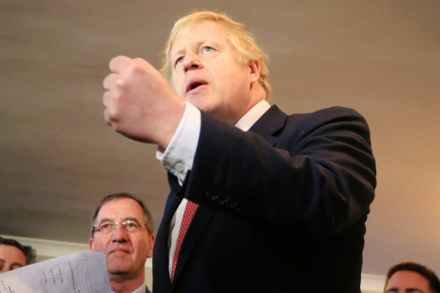
There wasn't much pomp around today's Queen's Speech, despite the fact that this second speech of the autumn is the one that will actually get delivered. With a majority, Boris Johnson is able to say confidently that his government is going to introduce all the policies listed in the Speech and that they will pass too. This means that the government can transmit its key messages for the voters it has just won over without fear that its own MPs will scupper those policies before they have a chance to be implemented. In his introduction to the speech, Johnson writes: 'I am humbled by the trust millions of voters placed in this government last week. The work to repay that trust starts here.' And it's a weighty list of policies, too.

Keir Starmer looks and sounds middle class precisely because he’s working class

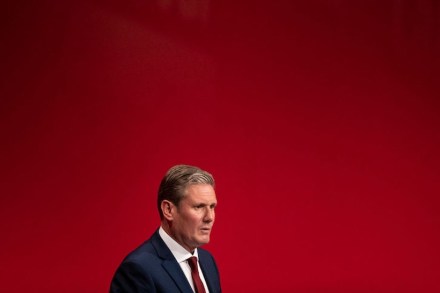
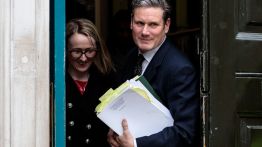
Despite being beaten by an Old Etonian with 'de Pfeffel' as his middle name, the Labour Party has descended into a rather predictable round of the Four Yorkshiremen, with competing factions arguing variously that voters in former 'red wall' seats will only return to Labour if it is led by a northerner, a woman and preferably someone who grew up in a cardboard box. Sir Keir Starmer doesn't appear to be any of those things. He may end up being the only man standing against a group of female contenders. He is a Northerner only in London terms, and as former Director of Public Prosecutions, doesn't sound like he's come from a tough background.

Ghosts of Labour’s past and future gather in Commons as MPs return

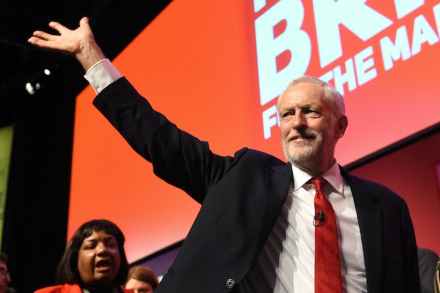
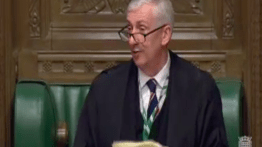
Boris Johnson and Jeremy Corbyn have just faced one another in the Commons for the first time in this new Parliament, though it is highly unlikely to be the last. The pair were responding to the election of the new Speaker, Lindsay Hoyle, and both chose to use their statements to make a few remarks about the election itself. Naturally, Johnson was greeted with a huge cheer from his MPs when he rose, and told the Speaker that 'I mean absolutely no disrespect to those who are no longer with us - but I think this Parliament is a vast improvement on its predecessor'. He then promised that 'this Parliament is not going to waste the time of the nation in deadlock and division and delay', and that on Friday MPs would vote on the Withdrawal Agreement Bill.

Ex-MP Nicky Morgan kept on as Culture Secretary in minor Cabinet reshuffle

With a majority of 80, Boris Johnson has his pick when it comes to forming his new look government. However, for now the Prime Minister is contenting himself with a mere minor reshuffle – with plans for a wide-ranging reshuffle in the new year. Today he has filled vacancies in his Cabinet made from MPs standing down, resigning or losing their seat. Simon Hart has been appointed Secretary of State for Wales replacing Alun Cairns who stood down from the role in November over allegations that a former aide sabotaged a rape trial. Hart – the MP for Carmarthen West and South Pembrokeshire – entered parliament in 2010 and is well-liked across the party.

Why splitting the Home Office up makes sense

We won't see the full scope of what Boris Johnson plans to do for life after Brexit until the new year. There will be a few appointments this afternoon to replace gaps in the government, and then the Queen's Speech will introduce the legislative agenda on Thursday. But the full launch of the new government won't be until February. What we do know is that Johnson and his senior aide Dominic Cummings have got Whitehall in their sights, and are hoping to reshape government departments to make them work better. One of the biggest changes is carving up the Home Office so that it loses its responsibility for immigration and border security, with a new ministry carrying out that function.

What happens to ex-MPs?

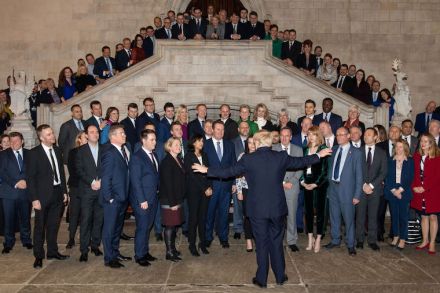
Parliament returns tomorrow - without 47 of the people who were MPs just a few weeks ago. Some, like those standing as independents, had a pretty good hunch that they'd be booted out by the electorate on Thursday. Others had less notice, and realised only as the campaign wore on that their constituencies, many of which had been solidly Labour for decades, were turning away from them. Many of them will be in Westminster in the next few days to clear out their offices and make their staff redundant. You can usually tell the difference between a re-elected MP and one of their colleagues who lost as you watch them walk through the corridors of parliament.

The Tories know they must deliver for their new voters

‘If Darlington high street isn’t visibly better in four years’ time, we’ll be in trouble’, one of Boris Johnson’s confidants told me the other day. Boris Johnson and his team are, as I say in The Sun this morning, acutely away that if they are going to make Thursday night’s electoral shift permanent then they are going to have to deliver for those places that swung to the Tories in this election. Part of Boris Johnson’s answer will be improving the infrastructure serving these places. In his interview with The Spectator during the campaign, he indicated that he was going to rip up the Treasury’s rules on capital spending to ensure that more gets built outside of London and the South East.

Can Labour’s moderates learn from all their mistakes?

Labour’s defeat is so terrible that it provides the kind of creative destruction that could save the party. It will be extremely difficult for the Corbynites to argue with much authority that one more push or slightly nicer newspapers would have got them over the line when the party hasn’t had a result this bad since 1935. But does the failure of Jeremy Corbyn necessarily mean that the ‘moderates’ in the party are going to be able to rescue it? In 2015, centre-left Labour MPs were confident that the members were so bruised by what they’d heard on the doorstep that they would happily elect a leader who took the party back to the middle ground of politics.

Boris Johnson promises to ‘unite and level up’ the UK. Can he really achieve that?

Boris Johnson's victory speech in Downing Street was aimed at the voters unsure about his government, whether they be the voters who backed his party for the first time, or Remainers who didn't vote Tory. In an acknowledgement of how difficult it will have been for many traditionally Labour voters to turn away from their party, he said: 'To all those who voted for us, for the first time, all those whose pencils may have wavered over the ballot and who heard the voices of their parents and grandparents whispering anxiously in their ears, I say thank you for the trust you have placed in us and in me and we will work round the clock to repay your trust and to deliver on your priorities.

Jo Swinson’s election nightmare

The Liberal Democrats have capped off a bad campaign with a disastrous results night. The party is on course for a mere 11 seats. To put that into perspective they won 12 seats in 2017. Jo Swinson started the campaign suggesting she could be prime minister. Instead, she has lost her seat. The Lib Dem leader lost her seat of East Dunbartonshire to the SNP. Meanwhile, high profile defectors from the two main parties failed to win their seats, with Chuka Umunna, Luciana Berger and Sam Gymiah all missing out. Long-standing Lib Dems have also suffered. Tom Brake lost his seat of Carshalton and Wallington to the Tories. He has held that seat since 1997. This comes after a tricky campaign which saw the Lib Dems squeezed by Labour.

Two big blunders that will be remembered from this election

The two stand-out moments of the campaign? 1) Jeremy Corbyn refusing to say sorry to the Jewish community, in Andrew Neil’s BBC interview, for the hurt and anxiety he caused by failing for years to eliminate anti-Semitism from the Labour party. https://www.youtube.com/watch?v=0oB2OcXAjSc 2) Boris Johnson’s refusal to look at a picture of a four-year-old with suspected pneumonia lying on the floor of Leeds General Infirmary, which ITV News' Joe Pike tried to show him on his phone, and then Johnson’s pocketing of Pike’s phone. https://twitter.com/itvcalendar?ref_src=twsrc%5Etfw Each leader showed a wilful refusal to take personal responsibility for the consequences of their respective party’s actions.

Tory lead more than halved in final YouGov MRP poll

When the first YouGov MRP poll of the election campaign was published last month, it was a cause of anxiety in Conservative Campaign Headquarters. The projection of a Tory majority of 68 was seen as overly optimistic – and there were concerns that it could lead to complacency in the polling booth. The second – and final – YouGov MRP poll of the election campaign does not carry the same baggage. With two days to go until polling day, it now suggests the Tories are on course for a small majority of 28. Were the election held tomorrow, YouGov forecasts that the Conservatives would win 339 seats with Labour on 231, the Lib Dems on 15 and the SNP on 41. The previous MRP poll had Labour losing 44 seats to the Conservatives – this has now been reduced to 29.

What are the parties trying to tell voters in their leaflets?

What's the point of political leaflets, anyway? Many voters in target seats will be asking that very question on an almost daily basis, as they shovel the latest snowdrifts of election literature into their recycling bin. We have social media, party election broadcasts and phone banks to reach voters. Who needs leaflets? There is a (I believe only half-serious) 'test' that some Liberal Democrat campaigners apply to the amount of information they think it is possible for a voter to absorb from a leaflet they're carrying from the letterbox to the bin. Given the parties keep sending them, particularly in those marginal seats where it's just not clear where the result is going to go, it's worth having a look at what they think is going to appeal to voters as they trudge once more to the bin.

Labour’s succession battle is well underway

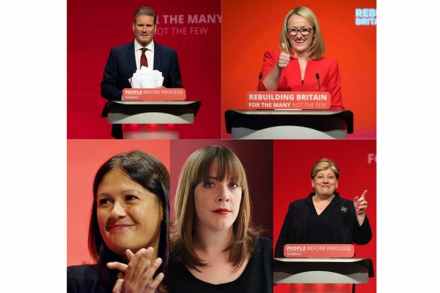
John McDonnell was insisting this morning that Labour was going to win a majority, but just in case, insiders are suggesting that the Shadow Chancellor is planning to take over as interim leader if Jeremy Corbyn resigns after a general election defeat. McDonnell has long championed Rebecca Long-Bailey as a future leader, and there is speculation that he could install her as his shadow chancellor in order to boost her credentials. This explains why those around Corbyn were so keen to try to abolish Tom Watson as deputy leader in September. They tried to force a rule change at the party's ruling National Executive Committee meeting which would scrap the post.

Labour double down on NHS attack lines in election broadcast

It's been a hectic election day for the two main parties. Labour managed to move the conversation to their preferred turf – the NHS – following the story of a four-year-old boy forced to sleep on the floor of an overcrowded A&E unit. As Isabel reports, Boris Johnson's refusal to look at a photo of the boy during an interview has escalated the story further. Health Secretary Matt Hancock was then sent in to calm things down. But that only ignited tensions further after a row ensued over unconfirmed claims a Tory aide was punched leaving a Leeds hospital with Hancock – which were later shown to be false. Labour has released a new party election broadcast this evening which attempts to keep this topic in focus.

Boris Johnson gives himself a hospital pass as he avoids picture of sick child

Is Boris Johnson a robot? I ask this advisedly, given the connotations of that word in the political arena, but the way the Prime Minister responded to questions from a journalist this afternoon does suggest he might be turning into one. He was asked by ITV's Joe Pike for a response to the photo of a young boy with suspected pneumonia lying on the floor of Leeds General Infirmary, waiting for a bed. It's a difficult photo for anyone to look at without an emotional response, and Johnson initially refused to see it at all, taking the reporter's phone out of his hand, and shoving it in his own pocket.

How the Conservative strategy is faring across the country

It's the week of the election and Boris Johnson is to spend the final days of the campaign visiting every region in England and Wales – starting off with a tour of Leave-voting Labour marginals. The polls vary in the size of the Tory lead – starting from a 6pt lead and going up to a 14pt lead. Anything below seven points suggests that a majority is not guaranteed and the Tories could find themselves in hung parliament territory. The Conservative result rests on how successful their electoral strategy is in different parts of the country. As ConHome's Paul Goodman recently said on the Spectator's Edition podcast, it's like a fruit machine – if they hit all three lemons the majority will be sizeable, if they only have one then things start to look shaky.

Tories benefit from no-show at chaotic TV debate as election enters final days

Believe it or not, there was yet another televised election debate tonight, this time on Channel 4, called the 'Everything But Brexit' debate. The Tories had refused to take part, and while their decision will have been partly down to their ongoing battle with the broadcaster, which they have accused of being biased, they will also have viewed tonight's programme as an opportunity for them to make their central election pitch without even turning up. This debate worked in the Conservatives' favour because it was chaotic, with the representatives of the five parties who did turn up constantly talking and even shouting over each other and the presenter Cathy Newman. At times it sounded like a school playground at the end of term when everyone is tired, including the teacher.

There are only two likely outcomes to this election

There are, as I say in the Sun this morning, two possible outcomes to this election: a Tory majority or a hung parliament. The seats where Labour are now concentrating their resources show that they don’t think they can win outright. Instead, their hopes rest on stopping Boris Johnson from getting to 326 seats. Right now, the Tories are on course for a majority. I understand that their own internal numbers indicate a working majority. But these margins are very fine, and victory could slip away if voters don’t turn out. If Boris Johnson does win a majority next week, it will be because he has presented himself as change. Not just the person who can break the deadlock, but a leader with a different agenda to the one that the Tories have had these last nine years.

Why I feel sorry for Jo Swinson’s Lib Dems

Interviewing Boris Johnson last night on my show, I ended up feeling a bit sorry for Jo Swinson, leader of the Liberal Democrats. Because for him the election is a proxy for another referendum. His whole mantra is 'get Brexit done, and move on'. Swinson's position of 'revoke and move on' is a wholly rational response in the context of Johnson's framing. But apparently what is democracy in action for Johnson is anti-democracy when the Lib Dems react. We are truly in the 'age of unreason'. Some of you will be screaming that 'we had a referendum, so the only legitimate way to cancel it is to hold another one'. Except under our unwritten constitution referendums have no legal force, and are certainly inferior in their democratic weight to general elections.