Uk politics

Lindsay Hoyle was a breath of fresh air at PMQs

From our UK edition

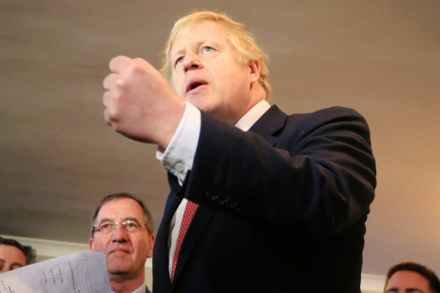
New year. New parliament. New speaker of the House of Commons. The change was palpable immediately. Former speaker John Bercow found it impossible to say nothing even when he had nothing to say, which was most of the time. His successor Lindsay Hoyle has the contrary virtue of terseness. He got through the session without uttering a word, other than to state the name of each MP as he called them. Jeremy Corbyn, newly elected member for Tehran South, fretted about the legality of Qassem Soleimani’s assassination. ‘Not our operation,’ said Boris. He noted that Corbyn had failed to condemn any of Soleimani’s military operations, even though ‘that man had the blood of British troops on his hands.

Keir Starmer wins big union backing in Labour leadership contest

From our UK edition

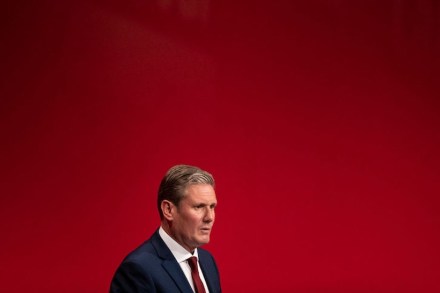
Keir Starmer, clearly the frontrunner in the Labour leadership contest, has just secured the backing of trade union Unison. This is the first union endorsement in the contest and is a huge boost to a campaign that is already going very well. Unison was among Jeremy Corbyn's backers in the 2016 contest, and has the potential to deliver more votes than the other affiliated trade unions. Starmer is also steaming ahead with nominations from MPs and MEPs, with 23 members publicly backing him. Far behind him in second place is Rebecca Long Bailey, with seven nominations currently.

How will new Tory MPs deal with constituency problems?

From our UK edition

MPs are back in Parliament today after the Christmas recess, and for some of them, this is the first real week of work after spending their first few days in the Commons reeling after winning their seats. New MPs are still waiting to be given offices, and are starting to hire new staff so they can start up with constituency work and trying to understand what's happening next on the parliamentary agenda. All new members go through a period of trying to work out what sort of MP they're going to be, but it's a particularly interesting question for the Conservative MPs who won former Labour 'red wall' seats in the December election.

Rebecca Long Bailey goes continuity Corbyn in leadership pitch

From our UK edition

After weeks of speculation, Rebecca Long Bailey has finally announced that she is entering the race to be the next Labour leader. In an article for Tribune magazine, Long Bailey says she is standing for election on the grounds that Labour needs a 'proud socialist' to lead who is 'driven by their principles and an unwavering determination to see democratic socialism in our lifetime': 'For all of these reasons and more, I have decided to stand for election to become the next leader of our Party. I don’t just agree with the policies, I’ve spent the last four years writing them.

Labour leadership contest: the state of the race so far

From our UK edition

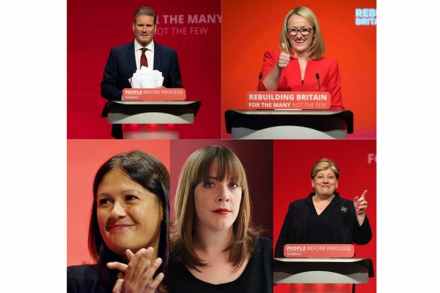
The candidates to replace Jeremy Corbyn have been busily launching their campaigns and giving political interviews this weekend, with the party deciding the rules for the contest at a meeting of its ruling National Executive Committee tomorrow. There are still a couple of candidates left to launch their official campaigns, including Rebecca Long-Bailey, who appears to have disappeared to a location far more secretive than any prime ministerial holiday, and Ian Lavery. But here's what we know so far about each of the candidates: Keir Starmer: considered the frontrunner in the contest, the shadow Brexit secretary launched his campaign last night with a moving video.

Podcast: Jess Phillips – My family left Labour over Blair and Iraq

From our UK edition

Jess Phillips is viewed as an outside bet when it comes to the Labour leadership race. While she has a good chance of making it through the parliamentary round, Phillips will have her work cut out among the membership. The Labour MP for Birmingham Yardley has been openly critical of Jeremy Corbyn and also once told key Corbyn ally Diane Abbott to 'f--- off' (see Steerpike for full details of the incident). Another issue is that in comparison to some of the candidates (as Isabel noted on Coffee House) less is known of Phillips's political beliefs in terms of policy. I sat down with Phillips last year to record an episode of the Spectator's Women With Balls podcast.

Sajid Javid: it’s time to tear up the old investment rules

From our UK edition

The next Budget will signal some pretty big changes in the way government spending is distributed, with investment directed towards the parts of the country that have tended to be denied it. The shift in policy was first disclosed by the Prime Minister to James Forsyth and Katy Balls in an interview during the election campaign. The Treasury, he said, judged potential infrastructure projects in a way that always tended to point investment to London and the South East. 'I take a different view. That this country is so underprovided for in brilliant infrastructure that you can make a good business case for many things.' A few days later, Sajid Javid elaborated on this argument in an interview with me, only part of which was published in the magazine.

What does Jess Phillips actually believe in?

From our UK edition

Jess Phillips is expected to launch her bid for Labour leader this evening, having only said up to this point that she is seriously considering a bid to take over from Jeremy Corbyn. She is both the candidate most identified with the 'moderate' side of the party and the most high-profile, but that doesn't mean she is launching with a particularly well-formulated policy platform. In fact, while Phillips is well-known for her dislike of Corbyn and her altercation with Diane Abbott pretty early on as an MP, it's not quite as easy to work out what she thinks. Phillips has largely exerted her influence in Parliament in two ways. The first is as a campaigner on issues she knows a great deal about from her pre-parliamentary life, including domestic abuse and cuts to school funding.

Ian Lavery to the rescue

From our UK edition

Oh dear. It's not even 2020 yet and already the Labour leadership contest has descended into farce. Despite numerous private conversations over Jeremy Corbyn's successor ahead of Labour's election disaster, the Corbynistas have so far been unable to unite around one candidate. John McDonnell's preferred successor Rebecca Long-Bailey has taken so long to get her campaign going that seeds of doubt has begun to grow among what ought to be like-minded supporters. Rumours abound that her flatmate Angela Rayner – who had been expected to back Long-Bailey – could be considering her next move. Long-Bailey has today at least finally confirmed that she is interested in the leadership with an op-ed in the Guardian promising 'progressive patriotism'.

Can Jolyon Maugham be prosecuted for clubbing a fox to death?

From our UK edition

Jolyon Maugham QC got up early on Boxing Day morning, put on his wife’s satin kimono, went into his garden and bludgeoned a fox to death with a baseball bat. He then announced what he had done on Twitter. There is no mystery about why he killed the fox. It had come to eat his chickens, which he keeps in his central London garden. It became trapped in the chicken-netting. Rather than try to disentangle it or call the RSPCA, he killed it with the baseball bat that he keeps at home, mainly to deter intruders. I doubt that he relished the task of killing the fox, and he tweeted, again infelicitously, that he “did not especially enjoy killing it.” It is quite possible that he acted in the heat of the moment and from the most compassionate of motives.

Jolyon Maugham QC and the dead fox

From our UK edition

In previous years, Boxing Day has proved an occasion in which high profile Tories can find themselves in the firing line for taking part in various fox hunts across the country. However, this Boxing Day, it's another political figure making headlines for their interactions with a fox. Step forward Jolyon Maugham QC. The Remain-supporting lawyer and campaigner took to social media this morning to share his thoughts for the day. Only it wasn't a message that related to the UK's impending departure from the EU. Instead, Maugham announced that he had kicked off Boxing Day by killing 'a fox with a baseball bat' after it tried to get inside his hen house and became trapped in the process: https://twitter.com/JolyonMaugham/status/1210110735189233665?s=20 https://twitter.

How the Tories plan to hold together their new electoral coalition once ‘Brexit is done’ and Corbyn gone

From our UK edition

The thumping majority by which both the second reading and the programme motion for the Withdrawal Agreement Bill passed yesterday, confirmed that Boris Johnson will have no problem taking the UK out of the EU on January 31st. This sums up the remarkable position that this government is in. It will have done the main thing that it was put in power to do within less than two months of taking office. The danger for the Tories, as I say in The Sun this morning, is that their new electoral coalition was held together by a desire to ‘Get Brexit Done’ and fear of Jeremy Corbyn, and both of those issues will soon be resolved.

Boris Johnson passes withdrawal agreement bill with huge majority

From our UK edition

After four failed attempts and one ousted prime minister, the Withdrawal Agreement Bill has comfortably passed the Commons at second reading. In fairness, this is not the first time this has happened. In the last parliament, Boris Johnson narrowly managed to pass the WAB at second reading – however, the government then pulled it when the programme motion (which set out a speedy timetable to pass the next stages) was voted down. This time it's a different story. The WAB passed second reading with a large majority of 124  – at 358 votes for to 234 against – while the programme motion passed comfortably at 353 votes to 243 against. This means the UK is firmly on course to leave the EU by 31 January.

Why Boris Johnson is talking about ‘ten years’ time’

From our UK edition

One of the most striking things about the government's Queen's Speech was Boris Johnson's focus on where the country could be in ten years’ time: 'Mr Speaker, this is not a programme for one year, or one Parliament it is a blueprint for the future of Britain. Just imagine where this country could be in ten years’ time. Trade deals across the world, creating jobs across the UK, 40 new hospitals, great schools in every community, and the biggest transformation of our infrastructure since the Victorian age.' Rather than simply focus on what his government would do in the five-year term he won last week, the Prime Minister talked about longer term change. This chimes with what Johnson allies privately hope for – a fifth term for the Tories.

This is the first time in a decade the government can do what it wants

From our UK edition

There wasn't much pomp around today's Queen's Speech, despite the fact that this second speech of the autumn is the one that will actually get delivered. With a majority, Boris Johnson is able to say confidently that his government is going to introduce all the policies listed in the Speech and that they will pass too. This means that the government can transmit its key messages for the voters it has just won over without fear that its own MPs will scupper those policies before they have a chance to be implemented. In his introduction to the speech, Johnson writes: 'I am humbled by the trust millions of voters placed in this government last week. The work to repay that trust starts here.' And it's a weighty list of policies, too.

Keir Starmer looks and sounds middle class precisely because he’s working class

From our UK edition

Despite being beaten by an Old Etonian with 'de Pfeffel' as his middle name, the Labour Party has descended into a rather predictable round of the Four Yorkshiremen, with competing factions arguing variously that voters in former 'red wall' seats will only return to Labour if it is led by a northerner, a woman and preferably someone who grew up in a cardboard box. Sir Keir Starmer doesn't appear to be any of those things. He may end up being the only man standing against a group of female contenders. He is a Northerner only in London terms, and as former Director of Public Prosecutions, doesn't sound like he's come from a tough background.

Ghosts of Labour’s past and future gather in Commons as MPs return

From our UK edition

Boris Johnson and Jeremy Corbyn have just faced one another in the Commons for the first time in this new Parliament, though it is highly unlikely to be the last. The pair were responding to the election of the new Speaker, Lindsay Hoyle, and both chose to use their statements to make a few remarks about the election itself. Naturally, Johnson was greeted with a huge cheer from his MPs when he rose, and told the Speaker that 'I mean absolutely no disrespect to those who are no longer with us - but I think this Parliament is a vast improvement on its predecessor'. He then promised that 'this Parliament is not going to waste the time of the nation in deadlock and division and delay', and that on Friday MPs would vote on the Withdrawal Agreement Bill.

Ex-MP Nicky Morgan kept on as Culture Secretary in minor Cabinet reshuffle

From our UK edition

With a majority of 80, Boris Johnson has his pick when it comes to forming his new look government. However, for now the Prime Minister is contenting himself with a mere minor reshuffle – with plans for a wide-ranging reshuffle in the new year. Today he has filled vacancies in his Cabinet made from MPs standing down, resigning or losing their seat. Simon Hart has been appointed Secretary of State for Wales replacing Alun Cairns who stood down from the role in November over allegations that a former aide sabotaged a rape trial. Hart – the MP for Carmarthen West and South Pembrokeshire – entered parliament in 2010 and is well-liked across the party.

Why splitting the Home Office up makes sense

From our UK edition

We won't see the full scope of what Boris Johnson plans to do for life after Brexit until the new year. There will be a few appointments this afternoon to replace gaps in the government, and then the Queen's Speech will introduce the legislative agenda on Thursday. But the full launch of the new government won't be until February. What we do know is that Johnson and his senior aide Dominic Cummings have got Whitehall in their sights, and are hoping to reshape government departments to make them work better. One of the biggest changes is carving up the Home Office so that it loses its responsibility for immigration and border security, with a new ministry carrying out that function.

What happens to ex-MPs?

From our UK edition

Parliament returns tomorrow - without 47 of the people who were MPs just a few weeks ago. Some, like those standing as independents, had a pretty good hunch that they'd be booted out by the electorate on Thursday. Others had less notice, and realised only as the campaign wore on that their constituencies, many of which had been solidly Labour for decades, were turning away from them. Many of them will be in Westminster in the next few days to clear out their offices and make their staff redundant. You can usually tell the difference between a re-elected MP and one of their colleagues who lost as you watch them walk through the corridors of parliament.