Uk politics

The political implications of the Commonwealth Games in Glasgow

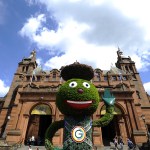
Several people have asked me to write something about the politics and potential implications of the Commonwealth Games which open tonight in Glasgow. As is sometimes the case, I am happy to oblige. There aren't any. To think otherwise is to insult the great Scottish public. I am often prepared to do this, not least because it often needs to be done but in this instance, and not for the first time, the people are liable to be more sensible than the pundits. Back in the day, it was sometimes claimed that the campaign for (modest) home rule in 1979 was scuppered by Scotland's woeful (yet epic!) misadventure in the 1978 World Cup. I've always thought that theory insulted the electorate.

A game of loyalties: the Scottish independence debate is about belonging, not policy

It's less than two months until the referendum on Scottish independence. Two months to decide the future of two (or, if you prefer, four) countries. No pressure and it's not a small thing at all. Sensible Unionists (the qualification is, alas, eternally required) can, indeed do, acknowledge that something was lost in 1707 and that this something mattered. They might also agree that independence in 2014 would bring some benefits. Something real would be recaptured, if you like. In any case, the sky would not fall; some things would probably improve. We should expect them to. Only a dolt assumes everything must be worse after independence. (There are some dolts out there.

Cameron’s Lords mess

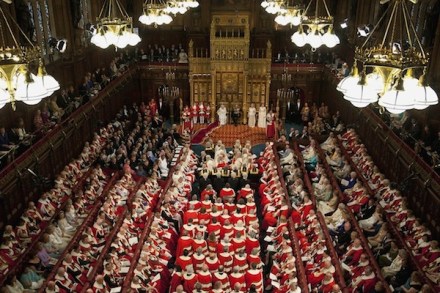
In the last reshuffle, David Cameron made Tina Stowell the leader of the House of Lords. But, astonishingly, he didn’t make her a full member of the Cabinet, giving her only the right to attend. This, understandably, outraged peers; they quite rightly feel that the leader of the second chamber should be in the Cabinet. It also led to jibes that Cameron was paying a woman less to do the same work as a man, her predecessor Jonathan Hill had been a full Cabinet minister and had the salary to go with it. In an attempt to dampen this story down, it was announced that Stowell’s salary would be topped up from Tory party funds. But this, again, angered peers.

Britain has very little to fear from the ECHR. So why are so many Tories so afraid of it?

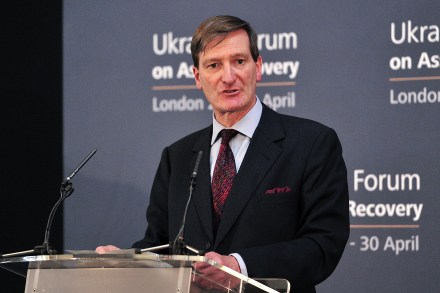
On matters domestic (England and Wales division) I was sad to see Dominic Grieve turfed-out of the cabinet in last week's reshuffle. Today he pops up in the Times to remind us (well, me) why his departure has lowered the average level of decency in the cabinet. According to the former Attorney-General, the Prime Minister's plans to rework Britain's relationship with the European Court of Human Rights are the kind of cockamamie scheme that would, quite correctly, be considered laughable if it were copied by, say, Vladimir Putin.

The carnival is over for the Notting Hill set

It is the Sunday after the reshuffle before. Today’s papers are brimming with post reshuffle stories; and not of the kind that Downing Street will like. The Mail on Sunday reveals that Philip Hammond demanded an assurance that he wouldn’t just be keeping the seat warm for George Osborne at the Foreign Office. While the Sunday Times reports on how Owen Paterson and Liam Fox plan to ‘rough up’ the Prime Minister over Europe. The animosity of the right towards Cameron is, perhaps, to be expected. But one of the most striking things about the reshuffle is that it has severed the emotional bonds between Cameron and the modernisers who propelled him to power.

Miliband’s message: I’m neither New Labour nor Old Labour

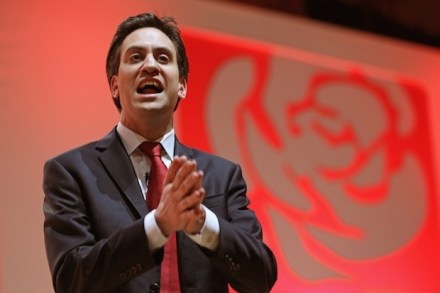
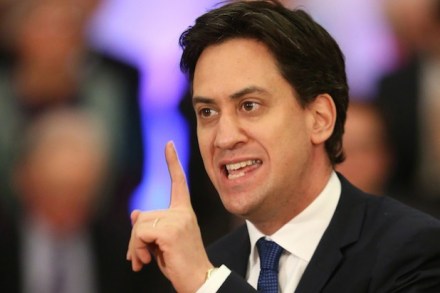
On the hottest weekend of the year, few people would want to be stuck inside in Milton Keynes. But that is where the Labour hierarchy finds itself. For this weekend is the party’s national policy forum. Ed Miliband’s speech today is meant to try and show that while he has moved on from New Labour he is not old Labour. There will be much talk of how fiscal restraint will have to continue and how Miliband knows there can be no return to the free spending ways of the past. One aide sums the message up as, ‘We know there is no money to spend.’ But it’ll be fascinating to contrast Miliband’s speech today with the one that Tony Blair is giving on Monday to mark the 20th anniversary of his election as Labour leader.

Exclusive: Senior Tory backbenchers to push Cameron further on Europe

Key eurosceptic MPs are planning to push David Cameron further on his plans for European reform next week, Coffee House has learned. Leading members of a powerful group of right-wing Conservative MPs, who meet regularly to discuss strategy, will call on the Prime Minister to set out more detail on giving power back to Parliament and his plans for reform. 'The ECHR isn't enough,' says one source. 'We need to hear more detail from the Prime Minister and we will ask for that as soon as next week.

Reshuffle 2014: where is the radicalism?

One of the more dispiriting things about this reshuffle has been the way in which important policy areas appear to have been downgraded. This week's leading article in The Spectator lambasts the decision to move Michael Gove from Education, arguing that it means his reforms will slow and future politicians will still be able to criticise the number of Old Etonians in the Cabinet: The Prime Minister and his coterie embody the problem. Gove was out to fix it, fighting a battle on behalf of the state school pupils -a battle that even Thatcher shied away from. Cameron has now decided that he’d rather this battle was not fought. His decision to abandon this battle and move Gove to become Chief Whip puts party before pupils.

Tories to keep Gove on tight leash

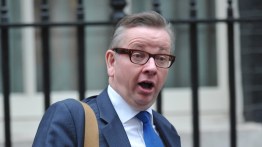
Why is Michael Gove a minister for the Today programme when he was removed as Education Secretary because of his poor poll ratings? This paradox has amused some in Westminster, but it's not quite as confusing as it seems. I hear that the new chief whip and enhanced Conservative campaigner will not be given quite such a free rein as it might seem. Indeed, those at the centre of the party are acutely aware of the dangers of sending out a man who already likes to have his say on many things that had nothing to do with education. They think that by bringing him into the centre, they can better control his outbursts.

Andrew Lansley’s international role in public service remains a mystery

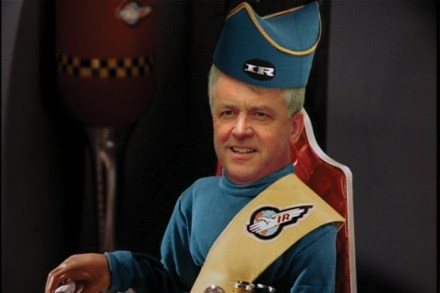
Coffee House apologises unreservedly for keeping readers in suspense for two days about Andrew Lansley's mysterious international role in public service. Yesterday, Number 10 did tell us that discussions were 'ongoing', which could suggest advisers are still discussing what on earth they could give to the ex-minister. His valedictory letter may have been the first that Downing Street had heard about this international role in public service. But today William Hague gave us a further glimmer of hope when he paid tribute to his predecessor as Leader of the House. He said: 'I would also like to thank my predecessor as leader of the House, my right honourable friend the member for South Cambridgeshire… I wish him well for the future and a continuing major contribution to public life.

Right-wing women are sexier

[audioplayer src="http://traffic.libsyn.com/spectator/TheViewFrom22_17_July_2014_v4.mp3" title="Cosmo Landesman and Margaret Corvid discuss whether right-wing women are sexier" startat=1454] Listen [/audioplayer]Not long ago I was out drinking with a group of friends and we started playing the If-You-Had-To game. The idea is to present players with two people they would never want to sleep with — and then make them choose which they’d sleep with. Here are some of the fiendish alternatives I had to face: Imelda Marcos or Wallace Simpson? Ayn Rand or Yoko Ono? Gertrude Stein or Virginia Woolf? Then one joker said: Theresa May or Jemima Khan? Everyone laughed at this no-contest choice. Everyone except me.

Reshuffle 2014: How will Labour attack?

How will Ed Miliband deploy the reshuffle at Prime Minister's Questions today? The Labour leader may not use it as his main theme, but he has plenty of elements from yesterday's surprisingly big shake-up to work with. He could probe on just how good a reshuffle this has been for equality. Most of the focus is on gender equality, but some appointments yesterday were about more than just the ladies in waiting for a Cabinet post. Stephen Crabb, for instance, was raised by a single parent in a council house, although there seems to be more interest in his minority status as a bearded Cabinet minister.

Andrew Lansley, international man of mystery

Earlier today, Andrew Lansley was just very cross. He wasn't Leader of the House anymore, and he wasn't the UK's nomination for European Commissioner. But in a few hours, the former Health Secretary has gone from just being grumpy to being an international man of mystery. Read his exchange of letters with David Cameron on his departure from the government - and the end of his parliamentary career. I have emphasised a particular point of interest in each. FROM ANDREW LANSLEY: Dear Prime Minister, For nearly nine years, I have been a member of your Shadow Cabinet and Cabinet. This has been a great privilege and I am grateful to you for this.

Reshuffle 2014: where is the new centre of gravity in the Tory party ?

After a night of firing, we should start to see a round of hiring in David Cameron's government from around 8.30 this morning. Only one post has been filled - Philip Hammond moving to the Foreign Office - and yet some observers are already trying to pin down the new centre of gravity in the Tory party. Labour seems to have given its MPs a line to take that the is a lurch to the right and the end of moderate Tory governing. Without wishing to begrudge the Opposition a decent, disciplined line on a day when it's very difficult to attract attention away from the other party doing the shuffling, it is far too early to make this sort of judgement, and there is insufficient evidence to do so.

Farewell Ken Clarke, last of the Tory Big Beasts

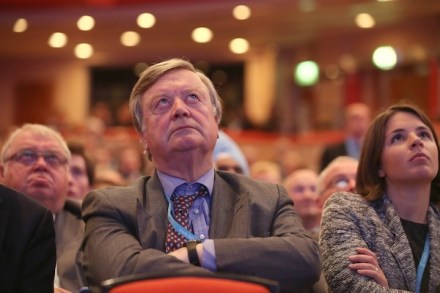
But for Europe, eh? It is a mark of how thoroughly the European issue has poisoned Tory waters that many party activists - and MPs - will be celebrating the end of Ken Clarke's ministerial career tonight. Not before time, many of them will doubtless froth. Well, maybe. But it bears remembering that the Tories who hated Clarke the most tend, more often than not, to be the Tories the public hates most. The kind of Conservatives good at losing elections and rather less good at winning them. That does not mean Clarke was always right or that his judgement was necessarily routinely sound. Nevertheless it is something to be kept in mind. Would the Conservatives have been better or worse off these past 20 years with more or with fewer politicians like Ken Clarke?

Lady Butler-Sloss steps down from child abuse enquiry

It is not a surprise that Lady Butler-Sloss has stepped down as chair of the independent inquiry panel into child abuse: a critical mass of stories had built up against her which meant it was impossible for her to continue leading an inquiry that is partly about conspiracy theories without herself becoming the target of conspiracy theories which would eventually weaken her findings. A resignation before the inquiry has even kicked off is a serious blow to the government, which had been trying so hard to play conspiracy whack-a-mole, to stay ahead of the critics by acting fast and appointing big names to lead big investigations into historic allegations. But it is not quite right to say that this is a blow to David Cameron's authority.

Reshuffle 2014: Cameron’s key challenges

What does David Cameron need his reshuffle to do? As has been the case with every reshuffle in this Parliament, the changing of the guard, which is expected to start later today (Coffee House will have a liveblog full of the action and gossip when it all kicks off), is being billed as a 'reshuffle of the women'. But as I explained in my post last night about the Prime Minister considering voluntary all-women shortlists, even the incredibly talented crop of female Conservative MPs can't stop Labour billing any shuffle as a disappointment for women, which it is ready doing before any jobs have changed hands. Cameron also needs to shore up his relations with the Eurosceptic right wing of his party.

Cameron could introduce ‘voluntary’ all-women shortlists

David Cameron could introduce 'voluntary' all-women shortlists if the Conservatives continue to struggle to recruit female MPs, senior Tory sources have said. The Prime Minister has also set party chairman Grant Shapps 'on the case' to remedy the current situation, whereby women are less likely to be selected for safe seats. But he is also interested in local associations using all-women shortlists on a voluntary basis after the next election if his party fails to make sufficient advances. Cameron does not want to impose shortlists on constituency parties, although of course 'voluntary' can cover a multitude of sins: many people 'voluntarily' work longer hours than those stipulated on their contract, but have little choice about the matter.

Mental health and benefits: ministers get the wrong end of the stick

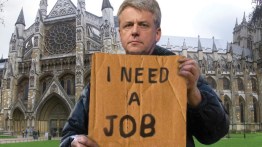
Every so often when ministers are considering a policy, they send a little kite up to see how it's received. Sometimes it gets hit by a lightning bolt of fury from a party's target voters, and is never heard of again. Sometimes it flutters about and no-one plays a blind bit of notice. And sometimes the kite gets rapturous applause. There seems to be a mixed response to the kite flown today that people with anxiety and depression could be forced to have a talking therapy such as cognitive behavioural therapy or risk losing their benefits. On the one hand, it's welcome that ministers want to help people with mental health conditions that can be managed so that someone can go back to work. Unemployment is hardly conducive to good self-esteem and strong mental health.

Nigel Farage hints at how a Tory / Ukip electoral pact might work

Vote Farage, get Miliband might not have quite as much resonance with voters as the Tories would like. But it is certainly effective with donors. If Ukip is seen as Ed Miliband’s passport to Number 10, it will be far harder for it to raise the money it needs to fight a successful general election campaign. So when Nigel Farage spoke to the Midlands Industrial Council—a group of right-wing business people who have in the past donated substantial sums to the Tories—after the European Elections, most of the questions were about how to avoid a split on the right letting Labour back into government.