Uk politics

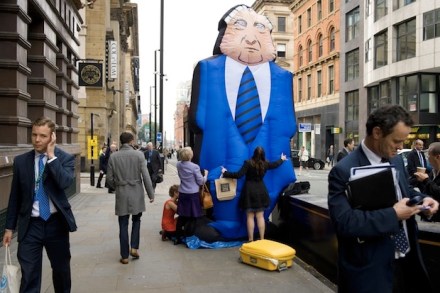
The lefties are right: we really do pay our bosses too much

From our UK edition

The FTSE100 index stands precisely where it did in the first week of December 1999. Whichever way you look at it, shareholders — including pension funds — have had a rotten run on the economic rollercoaster of the past 15 years. So it’s reasonable to keep asking whether the rise in executive pay over that same period is justified: a report from the High Pay Centre says remuneration of the average FTSE100 chief executive is now at a multiple of 143 times that of the average worker in the same companies. In 1998 that multiple was 47, indicating a tripling of top pay relative to workforce earnings while shareholder returns have stayed flat. Of course this argument is not that simple.
No partnership with Assad (and no scrutiny till summer’s up)

From our UK edition

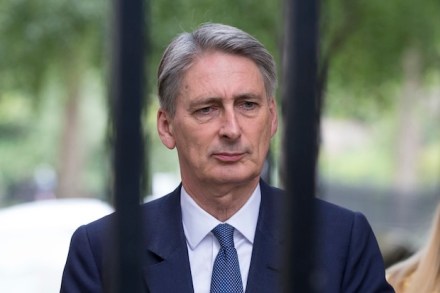
Philip Hammond this afternoon ruled out Britain working with President Assad in the fight against Isis, arguing that simply being aligned against a common enemy 'doesn't make us friends with someone'. It is nearly a year since the Commons rejected intervention in Syria against the Assad regime, and now figures such as Sir Malcolm Rifkind and Lord Dannatt are arguing that there may need to be some kind of alliance against the Syrian leader in order to defeat Isis. But the Foreign Secretary said: 'We may very well find that we are aligned against a common enemy, but that doesn't make us friends with someone It doesn't make us able to trust them, it doesn't enable us to work with them.

Housebuilding is up: is that good news?

From our UK edition

Good news on housing: this government is building more homes. New figures from the Communities and Local Government department show housing starts in the second quarter of 2014 increased by 18 per cent on the same quarter a year earlier and now stand at 36,230. Housing starts are the best picture we can get of how healthy housebuilding is right now. Completions, which naturally reflect an earlier situation but can also be affected by sudden changes in the economy that leave homes half-built (as in Ireland's ghost estates) are also up by 7 per cent on the same quarter last year and up by 6 per cent from the previous quarter. Annual housing starts in the year to June 2014 were 137,780, which is a 22 per cent rise on the previous year. Completions for the year were 114,440, up 7 per cent.

English voters send a message to Scotland: we can’t go on living like this

From our UK edition

Way back in the olden days, Scottish Labour won the 1999 elections to the Scottish parliament, at least in part, on the back of the slogan Divorce is an Expensive Business. (The SNP's promise to raise income tax - the naffly named 'Penny for Scotland' - helped too. The Nationalists have never since risked making an overt case for higher taxes.) Anyway, these costs run both ways. That's made clear by new polling from England in which the extent of the oft-threatened, never-yet-delivered, English backlash to devolution is revealed. It makes depressing reading for Unionists. True, only 19% of those surveyed think the UK would be better off without the troublesome, whining, Jocks.

Breaking: David Cameron returns to Downing Street after journalist beheaded

From our UK edition

Downing Street has announced that David Cameron is returning to Westminster from his holiday. A Number 10 spokesperson said: 'If true, the brutal murder of James Foley is shocking and depraved. 'The Prime Minister is returning to Downing St this morning. He will meet with the Foreign Secretary and senior officials from the Home Office, Foreign Office and the agencies to discuss the situation in Iraq and Syria and the threat posed by ISIL terrorists.' That the apparent murderer of James Foley spoke with a British accent was not, according to Philip Hammond this morning, a surprise to those tracking radicalised Britons joining the conflict. But this development still has big implications, surprise or not. More to follow...

My enemy’s enemy: Philip Hammond on Isis and Assad

From our UK edition

Philip Hammond made quite clear on the Today programme that this government is 'utterly opposed' to everything that Isis stands for: it's difficult to say anything else when militants who clearly luxuriate in evil have beheaded a journalist who was covering their monstrous deeds. The Foreign Secretary was asked whether this country was prepared to 'wage war' on Isis. He dodged saying that the West was waging war, but explained that as Isis was doing this, we have to deal with them on that basis. Here's his full quote: 'Oh look, it's far too late for that debate: we are very clear that we are utterly opposed to the evil ideology of this organisation and the barbaric, cruelty that they have displayed.

Lib Dems reinstate Lord Rennard and drop disciplinary process

From our UK edition

The Lib Dems are not taking any disciplinary action against Lord Rennard and have reinstated his membership, the party said this evening. Lord Rennard had been suspended from the party as part of the aftermath of allegations about his inappropriate conduct towards a number of women. A party spokesperson said: 'The Regional Parties Committee met this week to consider whether the party had been brought into disrepute by statements made by Lord Rennard, or on his behalf, following the publication of Alistair Webster’s conclusions. 'It decided not to proceed with the disciplinary process against him. This brings the matter to a close and means the suspension of his membership is lifted.

Britain abandons foreign policy. And abandons debates about foreign policy too.

From our UK edition

Cynics have long suspected that Britain's foreign policy is as independent as its nuclear deterrent. Cynics have a point. Perhaps, as some suggest, it's time to concede the game's a bogey and cease even pretending to pretend this remains a country of at least some modest importance and influence. Except, if we choose to, we do retain some influence, even some importance. Nevertheless, we certainly do not have an Iraq policy at present. Nor do we really have an ISIS policy. The Foreign Secretary is long on what we're not doing and very short on what we are. Of course this reflects past misadventures. Not just those pertaining to Iraq but others too, including last year's parliamentary determination to avoid having a Syria policy too. So, yes, Prudence runs foreign policy these days.

David Cameron: Britain is not going to get involved in another war in Iraq

From our UK edition

That there are just two weeks now until MPs return from summer recess to discuss Britain's response to the events in Iraq, Palestine and Syria will give Downing Street some hope that a recall of Parliament is now unnecessary. That as may be, but the new British stance outlined by David Cameron and Michael Fallon yesterday would be the subject of an urgent statement and lengthy debate were the Commons sitting. Events and British involvement are changing fast and the legislature is getting no more opportunity to probe what the executive is up to than the rest of us.

What are David Cameron’s plans for the fight against Isis?

From our UK edition

David Cameron warns today that Britain must act against Isis in order to prevent terrorist attacks on this country. But what does he actually intend to do? In his article in the Sunday Telegraph, the Prime Minister argues that a 'broader political, diplomatic and security response' is needed, but also says that 'we should avoid sending armies to fight or occupy'. He writes: 'Britain – our economy, our security, our future – must come first. After a deep and damaging recession, and our involvement in long and difficult conflicts in Iraq and Afghanistan, it is hardly surprising that so many people say to me when seeing the tragedies unfolding on their television screens: “Yes, let’s help with aid, but let’s not get any more involved.

Are ministers better off today?

From our UK edition

From the Barometer in this week's Spectator. Home Office minister Mark Simmonds resigned this week, complaining he couldn’t afford to live in London on his junior minister’s salary of £89,435. His resignation echoes that of Lord Gowrie, who resigned as minister for the arts in September 1985 complaining he couldn’t live in London on £33,000 a year. Are ministers better off now than they were then? — If you uprate Lord Gowrie’s 1985 salary with the Retail Prices Index (which the government now regards as overstating inflation), it would be worth £85,000, less than the sum earned by Simmonds.However, Lord Gowrie’s was a cabinet post and would now carry a salary of £134,565.

The Tories should give their members more power

From our UK edition

Politics is an expensive game. You might get paid three times the average salary once you're in Parliament, but you can spend so much on your way there that only those with a fair bit of their own dosh have a good chance of making it. In this week's Spectator, I examine how the exorbitant cost of being a candidate is preventing many fine potential politicians from making Westminster more representative of the country it is supposed to represent. But it's not just expensive for those who want a taste of power: if you're a party member, you can shell out around £700 to attend autumn conference - and once you're there, discover that you're not really all that welcome.

Mark Simmonds was just saying what a lot of MPs think

From our UK edition

I feel some sympathy for Mark Simmonds, the Conservative MP who’s resigned as a minister and is stepping down at the end of this Parliament because he can’t support his family. His announcement has been greeted with scorn and derision by the chattering classes — how dare he complain that an MP’s salary isn’t enough to live on? — even though most of them are earning far more than him. Any politician who utters a murmur of dissent about the terms and conditions of his or her employment is an instant pariah. In fact, if you can be bothered to read beyond the headlines, Simmonds’s complaint seems pretty reasonable.

After Scotland, whither Britain? Divorce is a costly business.

From our UK edition

If, like me, you missed Andrew Neil's BBC programme exploring What the Hell Happens to the United Kingdom if Scotland Votes for Independence Next Month you might be interested to know that it remains available on the BBC iPlayer here. Prudently, dear reader, I liked it. It's a film best viewed as a companion piece to James Forsyth's Spectator cover story published last month. A call to arms to England - and Westminster in particular - to ponder the consequences and implications of Scottish independence. There is little sign that much thought has been devoted to these issues.

It costs £34,000 to become an MP. No wonder they expect higher pay

From our UK edition

Mark Simmonds has been in politics long enough to know not to expect much sympathy from his constituents. He resigned as a Foreign Office minister this week because his £89,435 ministerial salary was not enough — at least, not enough for him to keep a family home in London. Many of those who live and work in the capital may sympathise with this struggle, but hearts will not be bleeding in his constituency, Boston and Skegness, where the average wage is £17,400. So he is not seeking re-election, and will leave politics next year. Simmonds was one of the lucky ones. He managed to find enough money to make it into parliament in the first place, which many would-be MPs cannot.

Nigel Farage’s immigration deluge hasn’t arrived. But it doesn’t matter.

From our UK edition

So Nigel, where's your flood? You know, the one involving Bulgarians and Romanians that you predicted last year. That deluge? You got it wrong, didn't you? Ner-ner-di-ner-ner. It must be very tempting for people who don't like Nigel Farage to spend today chuckling, scrolling through the ONS website and waving their mouse with a satisfied flourish at the finding that the number of people from these countries who are employed in the UK has risen by 13,000 from the same period last year, when transitional controls were still in place. The Ukip leader had predicted 5,000 a week, but his forecasts look as good as David Silvester's attempts at dabbling in meteorology. It has given Farage's critics another opportunity to accuse him of 'scaremongering'.

Westminster plays recall tennis

From our UK edition

Now that David Cameron has returned from his Portuguese fish-shopping exploits, the game of recall tennis that Westminster has been playing for the past few days has stepped up a few notches. Now it's not just Philip Hammond, Michael Fallon and other Cabinet members leaving COBR meetings who can be asked whether or not they think Parliament should return from recess to debate the situation in Iraq, but the Prime Minister himself. It's running like this: another Tory MP writes to the Prime Minister to say there should be a recall, or a senior party figure from the Lib Dems or Labour says there should be one.

Jobs figures: good news on unemployment, bad news on wages

From our UK edition

Today's labour market figures have enough in them for both sides of the political debate to feel they've got something to run with. First, the jobs: the overall unemployment rate fell to 6.4% in the second quarter of this year, the lowest since the end of 2008. There are 820,000 more people in work than a year ago. The number of young people out of work is 200,000 lower than last year, which is the biggest fall since records began 30 years ago. And the Bank of England has just upgraded its growth forecast for the UK this year from 3.4% to 3.5% and from 2.9% to 3% for next year. Good news for the Coalition. But the Labourish piece of bad news is that real wages are shrinking. Today's figures reveal that average weekly earnings excluding bonuses fell 0.

‘These people want a holocaust’: pressure grows on PM for recall over Iraq

From our UK edition

Downing Street remains resolute that there will not be a recall of Parliament over the situation in Iraq. But Conor Burns, a Tory backbencher who resigned as a ministerial aide over Lords reform, has just joined calls for a recall by writing to David Cameron warning that helping to evacuate the religious minorities at risk is not enough. His letter, seen first by Coffee House, is pretty strong stuff. Burns tells Cameron that 'these people want a holocaust of everyone who does not share their brutal ideology. It simply cannot be enough to try and evacuate those [ISIS] want to kill and then leave them, as the Pentagon admitted last night, undiminished to continue their terror' and that 'there is more that we could be exploring to deal with the problem's source'.

Nicky Morgan’s challenge: stop Gove becoming a useful bogeyman

From our UK edition

Tristram Hunt announces today that he wants to put a stop to the policy of overhauling A-levels. That means that Labour isn't going to do something that the Coalition says it is going to do. If the party wins next year's General Election, it will not abolish AS-levels and will delay the overall reforms to consult further and allow schools to get used to the new GCSEs. Hunt's announcement is interesting for two reasons. The first is that it is yet another example of how the old education big tent has lost a lot of its pegs and poles, and Labour thinks it can pitch a rival tent elsewhere, whether that be Michael Gove's fault, or someone else's. The second is that naturally Hunt is badging this as a break with Michael Gove's school reforms, even though Gove is no longer in place.