Uk politics

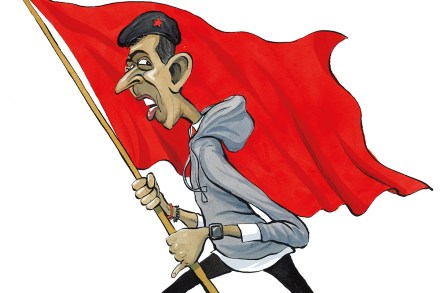
Red Rishi

From our UK edition

39 min listen

On this week’s episode: Price caps are back in the news as the government is reportedly considering implementing one on basic food items. What happened to the Rishi Sunak who admired Margaret Thatcher and Nigel Lawson? In her cover article this week, our economics editor Kate Andrews argues that the prime minister and his party have lost their ideological bearings. She joins the podcast, together with Spectator columnist Matthew Parris, who remembers the last time price caps were implemented and writes about it in his column. We also take a look at the experience of being addicted to meth. What is it like, and is it possible to turn your life around after that? The translator Eva Gaida has managed it, and writes powerfully about her experience in this week’s issue.

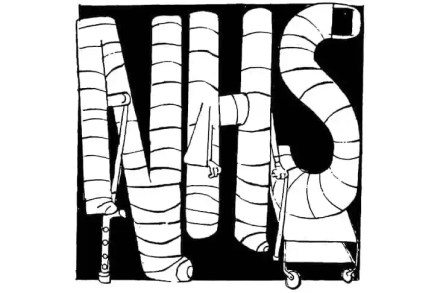
‘Protect the NHS’: The nanny state is waging war on life’s pleasures

From our UK edition

British political discourse has barely progressed since David Cameron told voters in 2010 that he represented the ‘party of’ our revered healthcare service.  Over the past few weeks we’ve heard pledges – all clearly with an election in mind – ranging from the inconsequential to the ridiculous. Tired promises about community-led treatment. Receptionists-turned-‘care navigators’. School leavers working as doctors. But more often than not, they have been laced with the same pernicious message: that it is the behaviour of the British public that must change, rather than our healthcare model. That people must be regulated, even though failure is in the NHS’s DNA. This is nothing new, of course.

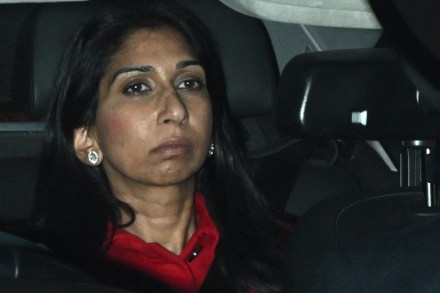
Sunak can’t afford to lose Braverman

From our UK edition

Back in the early days of the Blair governments, Alastair Campbell was reputed to have a rule for resignations: once a scandal had been in the news for ten consecutive days, a minister had to go. It was a stupid rule because it merely encouraged parliamentary lobby journalists to keep a story going until the limit was up in the expectation of claiming another ministerial scalp. Since then Alastair has claimed, possibly truthfully, that he cannot remember imposing this rule and had probably come up with it when the Tories were still in power as a means of further stoking up the atmosphere of crisis around John Major.

The Tories would be lost in opposition

From our UK edition

It is widely observed that many Conservatives are preparing to lose power at the next general election.  The Conservative Democratic Organisation and National Conservatism meetings last week are generally regarded as preparation for the leadership battle that would likely follow Rishi Sunak’s departure from No. 10. Most (though not all) Tories appear to assume that Sunak could not remain leader after that exit, nor want to. Privately too, even the most optimistic Tories will concede that leaving government after 14 years – they’ve just beaten the New Labour tenure – has to be considered a real possibility. What would the Conservatives do in opposition? This is not a trivial question.

Oliver Dowden’s textbook turn at PMQs

From our UK edition

Oliver Dowden had 20 years and four Tory leaders to prepare him for his understudy moment at PMQs. He’s helped a series of leaders work out their attack lines, their defences and their jokes – so it’s unsurprising that his chance at the despatch box sparring with Angela Rayner was so textbook that he should probably offer it in a seminar on a Skills in Politics Course for aspiring Tory leaders. It was anatomically perfect: there was the opening joke about the opposition (‘I was, though, expecting to face the Labour leader’s choice for deputy prime minister if they win the election, so I'm surprised that the Lib Dem leader isn’t taking questions today’) and a compliment to his opponent about what a pleasure it was to be facing her.

Rishi’s ECHR battle at the Council of Europe

From our UK edition

11 min listen

The Prime Minister has gone to Iceland today to see the Council of Europe, where he has been talking about immigration and the ECHR with other European leaders. On the episode, Katy Balls explains his mission to get other leaders on board with the UK's hardline approach to immigration. Cindy Yu also talks to James Heale about the second day of the National Conservatism Conference and Michael Gove's recommendation for conservatives. Produced by Cindy Yu.

A Lib-Lab coalition would be hilarious

From our UK edition

Talk of a new Labour-Lib Dem coalition is in the air. This is piquantly nostalgic to those of us whose earliest political memories were forged in the fire of the red-hot excitement of David Steel and Jim Callaghan’s short-lived Lib-Lab pact of 1977-78. My initial reaction, along with many others I’m sure, was a guttural ‘oh God no’. But a moment later a different aspect of it occurred to me, in a fine example of what the young people call ‘cope’. My banter senses started to tingle. Because, yes, it would drag out and exacerbate the country’s current despairing decline. But it would also be hilarious. PR might very well remake British politics, but not in the way that the progressives intend There is something inherently funny about coalitions.

Britain is stuck in a fertility trap

From our UK edition

Pope Francis wants you to have sex. Or at least he wants Italians to have more sex. The country, he says, is facing a ‘Titanic struggle’ against demographic doom. Last year, the population dropped by 179,000 people – and Italy is projected to lose another five million by 2050.  What’s happening in Italy is, to a greater or lesser extent, being repeated across the western world. In the UK in 2020, there were four workers per retiree. By 2041, the ONS projects there will be just three. We’re getting older, there are fewer of us and, all other things being equal, we’ll poorer for it. Either we tax the declining population more to maintain the same level of welfare or we will have to cut back on things like care and pensions.

What if Rishi fails to deliver all five pledges?

From our UK edition

When Rishi Sunak delivered his five key pledges at the start of January, the latest data we had for the inflation rate was for last November. It was up 10.7 per cent on the year, having fallen from a peak of 11.1 per cent the month before. Everyone thought this was the start of a fast and spectacular fall, with virtually all forecasts showing a welcome decline in the rate of inflation. Off the back of those forecasts, the Prime Minister oozed confidence when he promised to ‘halve inflation’ by the end of this year. Speaking to an audience in Stratford, Sunak promised that an ‘ease’ to the cost-of-living crisis and greater ‘financial security’ was on its way.

The UN is wrong about Britain’s treatment of trans people

From our UK edition

Is Britain a hostile environment for trans people? The United Nations’ independent expert on sexual orientation and gender identity has delivered his verdict – and it isn’t good. Victor Madrigal-Borloz, a lawyer from Costa Rica, said following a ten-day visit to the country: ‘I am deeply concerned about increased bias-motivated incidents of harassment, threats, and violence against LGBT people, including a rampant surge in hate crimes in the UK.’ But his statement was stronger on rhetoric than evidence. An unnamed ‘elected officer’ in Belfast told him that ‘I have never seen so much unadulterated hatred as currently directed toward the trans community’.

Where next for Richard Tice and Reform?

From our UK edition

The local elections last week proved to be a disappointing night for Reform UK. Prior to polling day, its leader Richard Tice had talked up the 'huge appetite' among voters for Reform but the party averaged a mere six per cent of the vote in the wards where it stood. It won just half a dozen seats on on Derby City Council out of 471 hand-picked seats. Ukip, its effective forerunner, lost all its remaining councillors, going from almost 500 in 2016 to zero. Tice's response was to argue that 'Rome wasn't built in a day' and to focus instead on the next electoral test: the London mayoralty. Petrolhead Howard Cox, the founder of the Fair Fuel UK campaign, is running as Reform's candidate in the capital.

What the local election results really mean

From our UK edition

The last twelve months have been traumatic for the Conservative Party. It has elected and deposed two party leaders. It has found itself caught in a financial crisis of its own making. And most recently it has faced a still largely unresolved ‘winter of discontent’ from a public sector workforce that, like much of those who are reliant on them, is unhappy about the state of public services.  The opinion polls have long since registered their estimate of the damage this sequence of dramas has inflicted on the party’s popularity. But the local elections last week provided us with the first firm evidence from across the country of actual choices in real ballot boxes.  The results make uncomfortable reading for the Conservatives.

Did the Tories ‘kill the dream of homeownership’?

From our UK edition

11 min listen

In today's Prime Minister's Questions, Keir Starmer accused the Prime Minister and his party of having 'killed the dream of homeownership'. With news this week that Rishi Sunak is considering reintroducing 'Help to Buy' while Michael Gove is sued for blocking a new housing development in Kent, does Starmer actually have a point? Katy Balls talks to Kate Andrews and Fraser Nelson. Produced by Cindy Yu.

Could Sue Gray-gate backfire on Keir Starmer?

From our UK edition

17 min listen

The Cabinet Office has published its written statement into the resignation of Sue Gray, stating that it has given a 'confidential assessment' to the Advisory Committee on Business Appointments (Acoba) about whether she broke civil service rules in taking up a job from Keir Starmer while still a senior civil servant. On the episode, Cindy Yu talks to Katy Balls and the UK In A Changing Europe's Jill Rutter, who is also a former civil servant, about the implications for the civil service if Gray is found to have broken the rules. Produced by Cindy Yu.

Can Britain become the Saudi Arabia of carbon capture?

From our UK edition

Boris Johnson wanted to make Britain ‘the Saudi Arabia of wind’. But Grant Shapps is keen to send Britain's green agenda in a new direction. Speaking at The Spectator’s Energy Summit on 26 April, the Secretary of State for Energy Security and Net-Zero announced the government’s ambitions for Carbon Capture, Utilisation and Storage – CCUS – where carbon dioxide is sucked out of the air with the aid of solvents and either put to use or buried deep in the ground where – hopefully – it will remain locked up forever after. The technology does not merely offer the chance to cut future emissions but also to remove past emissions from the air.

Sunday shows round-up: Tories should make ‘significant gains’ in local elections, says Starmer

From our UK edition

This week both parties have been attempting to manage expectations ahead of the imminent local elections. The Secretary of State for Transport Mark Harper has been reiterating the worst-case prediction that the Conservatives could lose up to 1000 seats. But Keir Starmer told Sophy Ridge he thought the Conservatives should be making ‘significant gains’, given their result in the last local elections in 2019 was their second worst ever: https://www.youtube.com/watch?v=vCWZfXIPaxk ‘Are you embarrassed when you look at that map?’ Mark Harper was questioned by Laura Kuenssberg over his record with the HS2 rail project, which has been plagued by soaring costs and delays.

BBC chairman Richard Sharp resigns – what next? 

From our UK edition

Richard Sharp has resigned as BBC chairman following a report into the circumstances of his appointment after claims that he had helped to facilitate a £800,000 loan for Boris Johnson while he was in 10 Downing Street. The report - by Adam Heppinstall KC - found that he had breached the code on public appointments by failing to declare his connection to the loan, which his acquaintance Sam Blyth (a distant cousin of Johnson’s) guaranteed for the former prime minister.  The whole affair is leading to questions over the role performed by Simon Case Announcing his resignation this morning, Sharp said that he accepted he had breached the ‘governance code’.

Is Keir Starmer soft on crime?

From our UK edition

14 min listen

Prime Minister's Questions was a punchy affair today. Rishi Sunak fought back against accusations that the Conservatives have failed on tackling crime, calling Keir Starmer 'Sir Softy' to turn the attack back around on Starmer, for his track record as the Director of Public Prosecutions. But was it an effective attack? Cindy Yu talks to Katy Balls and Kate Andrews. Produced by Cindy Yu.

How much does the investigation into Sunak matter?

From our UK edition

14 min listen

The investigation into Rishi Sunak leads several papers today, but how much does it really matter? On the episode, James Heale talks to Katy Balls and Conservative Home editor Paul Goodman about why the episode is unlikely to hurt Sunak in the long run. They also discuss the coming report on Dominic Raab's alleged workplace bullying and the centenary of the 1922 committee. Produced by Cindy Yu.

Violent extremists won’t spoil Joe Biden’s visit to Northern Ireland

From our UK edition

What can violent extremists do to wreck Joe Biden’s first visit to Northern Ireland? The answer is precious little. The President’s visit has been denied the electoral fairy dust of a functioning Executive as he blows in to hail 25 years of the Good Friday Agreement. While that might disappoint some local politicians keen to bathe in some harmless warm platitudes, it will be less of a security headache for those charged with keeping him safe. So what of the known arrangements and the risks? Biden will land at Belfast International Airport this evening and be taken, one assumes by air, to a venue in the city for some glad-handing.