Uk politics

What holds Jeremy Corbyn’s frontbench team together

Jeremy Corbyn surfaced last night to do his first round of broadcast interviews since becoming Labour leader. The two key lines were on Europe and Trident, and though the interviewers were interested in these issues, Corbyn also had an interest in being as clear as he possibly could be on them as they play a large part in holding his Shadow Cabinet together. Labour MPs spent a lot of time chatting with one another and debating whether it was the right thing to join the Corbyn frontbench as he assembled it on Sunday night. They reached different conclusions, with some fearing they would be tainted by a hopeless administration that

Podcast: the death of the left and Jeremy Corbyn’s first few days as leader

What has happened to the left-wing of British politics? On this week’s View from 22 podcast, Nick Cohen discusses his Spectator cover feature with Fraser Nelson on why he is resigning from the left, following the election of Jeremy Corbyn as Labour leader. Why have some activists become intolerable of views that differ slightly from their hard-left perspective? Should those who have had enough of the Labour party join the Conservatives? And is Labour’s shift to the left a temporary blip or a longer trend? James Forsyth and Isabel Hardman also discuss Corbyn’s first week as Labour leader and whether his new take on PMQs is something that will stick. Has Corbyn’s

Labour’s lost thinker

Shortly before the last election a group of Labour MPs approached Ed Miliband to ask him what he would do if he lost. They suggested he could provide stability by staying on as leader for a while, as Michael Howard had done, and that his last duty should be to oversee an inquiry into what went wrong at the general election. Miliband, still convinced he would win, did not entertain the idea, to the dismay of his policy chief, Jon Cruddas. After the election, Cruddas decided to go ahead and do an inquiry anyway. The results will infuriate the Labour left. The inquiry found that Labour’s anti-austerity message put voters

The Living Wage is nifty politics – but let’s see more help for small business too

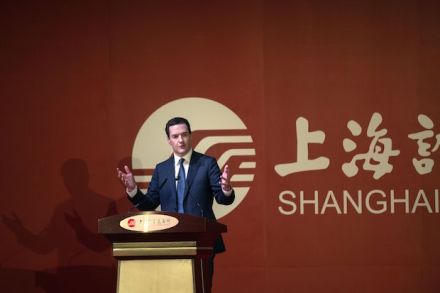
What is George Osborne’s Living Wage? Is it a ploy to shift cost from the taxpayer to the employer by reducing in-work benefit claims; or a sop to Tory MPs who were bombarded with angry questions about earnings inequality during the election, as well as a neat way of turning one of Labour’s few effective lines of attack? Or is it a principled act of fairness, acknowledging that the lowest earners bore the brunt of the recent recession? Knowing how the Chancellor operates, it is probably all of the above except the last: he is, as Sir Samuel Brittan once remarked, ‘one of those people who do the right things

The tax credit revolt has only just begun

Even though the Tories got their way on yesterday’s vote on tax credits, in which they managed to get a laws-of-physics-defying majority of 35, they cannot regard this matter as settled. Indeed, there is still a serious threat of a revolt on this matter. George Osborne held individual meetings with each of the handful of Tory MPs who were seriously worried about the policy, which lowers the threshold for withdrawing tax credits from £6,420 to £3,850 and speed up the rate of withdrawal as pay rises. That strategy of wearing down each MP on their own rather than allowing them to work as a group clearly worked as in the

PMQs sketch: Jeremy Corbyn’s master plan

Jezza! What a genius. The master plan is clear at last. You spend four days plumbing new depths of political incompetence with bungled cabinet appointments, surly refusals to talk to reporters, tedious waffly platform-speeches and grumpy scowls during a service at St Pauls. And then, when your reputation can dwindle no lower, you spring forth and dazzle everyone with a political revolution. Cameron was grinning sheepishly before the Labour leader rose to the despatch box. He smirked sideways at his new opponent, through half-closed eyes, like a shy girl about to enter a forced marriage. Corbs looked relaxed and far sprucer than before. He might have been a civics teacher

David Cameron’s PMQs answer with £60bn price tag

PMQs today was interesting for all sorts of reasons. But one answer to a question which may have a longer-lasting impact than all the new politics stuff (which though quite welcome did feel a bit like someone making a show of going to the gym in January) may have completely escaped most people’s attention. It was this, from David Cameron in response to Jeremy Corbyn’s question about cutting rents: ‘What I would say to Steven, and to all those who are working in housing associations and doing a good job, is that for years in our country there was something of a merry-go-round. Rents went up, housing benefit went up,

Corbyn’s new kind of politics is going to lead to confusion

Jeremy Corbyn wants to forge a new kind of politics, answering public discontent with the way things are done in Westminster. One of the things that voters often say they don’t like about politicians is the way they appear to abandon their principles in exchange for power. The idea that power acts as a sort of fire extinguisher on principles has been debated rather exhaustively through the leadership election. But Corbyn won that contest in part because people admired his ability to stick to his principles even when that appeared inconvenient. As an obscure backbencher being principled to the point of unpopularity was easy. Corbyn is discovering this week that,

Government gets majority of 35 after Labour whipping shambles

The government has a working majority of 16. But today it managed to win a tricky vote in the House of Commons that its own MPs were threatening to rebel on, and that the DUP had said it wouldn’t help the government on. The measure was on tax credits, and the government got a majority of 35. Why didn’t Labour manage to get its act together? It has a new leader and its whips are just getting to work. I understand the Labour whips sent a panicked text message in the middle of this afternoon asking their MPs if they were on the estate. But this was a bit too late, and not

Labour defends Jeremy Corbyn’s ‘respectful silence’ during the National Anthem

Labour has issued a line on why the party’s leader didn’t sing the National Anthem at today’s Battle of Britain memorial service: ‘Jeremy attended today’s event to show respect for those who fought in conflicts for Britain. ‘As he said in the words issued this morning, the heroism of the Royal Air Force in the Battle of Britain is something to which we all owe an enormous debt of gratitude. ‘He stood in respectful silence during the anthem.’ It’s not quite clear what the difference between respectful silence and stony silence is. But what this tells us is that the new Leader of the Opposition is currently prepared to display his

George Osborne could revolutionise welfare – but does he know what he’s doing?

Have we ever had a more political Chancellor of the Exchequer? I doubt it. The political skills of George Osborne were on full display in July’s Summer Budget. Here he tweaked Labour’s tail particularly violently by pinching the party’s higher minimum wage strategy that all too many within Labour thought would be a winning card at the last election. I still wonder whether he sees the revolutionary potential of his Labour-baiting initiative, the ‘National Living Wage’. With a little more development it could become the most important game changer in Britain’s post-war welfare debate. A little over two centuries ago, with the rise of a dual agricultural and industrial society, those

Corbyn rewrites the rules to claim gender balance in Shadow Cabinet

After being criticised for not involving enough women in his shadow cabinet, Jeremy Corbyn has brought more women in by creating cabinet roles. He has promoted ‘young people and voter registration’ to a Cabinet role and given the job to Gloria de Piero, who will be terrific at it given her interest in non-voters and political apathy, but who may be surprised by the whooshing promotion that the role has received. Similarly, Luciana Berger is Shadow Minister for Mental Health, which is now a Cabinet position too. Perhaps it’s a good thing that mental health, so overlooked and underfunded, is a Cabinet role – though it’s not arepa rate department

DUP fury over McDonnell appointment could increase Cameron’s majority

Funnily enough, the DUP aren’t particularly happy that Labour’s new Shadow Chancellor praised the ‘bravery’ of the IRA. They were already – as reported on Coffee House – nervous about Jeremy Corbyn becoming Labour leader. But a party source says: ‘Corbyn was a punch to roll with. He was elected after all. And ultimately he’s a “holy fool” of the left; it’s not to say he’s harmless, just that he’s fundamentally naive. But McDonnell? He was *chosen*. It’s sending us a message loud and clear and we’ve heard it.’ It could be that Corbyn’s victory and McDonnell’s appointment effectively increases Cameron’s majority, if the DUP refuses to vote with Labour

Meet your Shadow Chancellor: John McDonnell’s greatest hits

Given few knew who Jeremy Corbyn was before the summer, chances are that few will know who John McDonnell is either. Well, here’s your quick guide. He was first elected in 1997, having previously served on the Greater London Council as member for Hayes and Harlington (the constituency he represents in Parliament). He is chair of the Socialist Campaign Group of Labour MPs, and worked as a researcher and official for the National Union of Mineworkers and the TUC. And here’s what else you need to know about the new Shadow Chancellor: 1. John McDonnell is quite the Commons performer. He famously grabbed the mace in the Chamber to express

John McDonnell is the Shadow Chancellor

These are the latest appointments to Jeremy Corbyn’s Shadow Cabinet: Shadow Chancellor John McDonnell MP Shadow Chief Secretary to the Treasury Seema Malhotra MP Shadow BIS Angela Eagle MP This tells us two things about Corbyn. One is that he is loyal to his friends. He and McDonnell have worked together for years, with Corbyn focusing on foreign policy while his friend stuck to economic policy. McDonnell wanted to be Shadow Chancellor, even though Angela Eagle clearly also fancied the job – and was a more credible candidate. Corbyn’s friend won. The second thing is that Corbyn is clearly keen to push the party as far left as quickly as

Burnham and Benn take Shadow Cabinet jobs

In the past few minutes, more details of Jeremy Corbyn’s Shadow Cabinet team have been announced. Andy Burnham is the new Shadow Home Secretary, and is replaced by Heidi Alexander in the Shadow Health Secretary. This is intriguing, as Burnham has quite different views on immigration to Corbyn. Hilary Benn is the Shadow Foreign Secretary: a boost for Corbyn given Europe will be such a big issue in the next few years. Lord Falconer is the Shadow Justice Secretary and Shadow Lord Chancellor, while Yvette Cooper will chair a taskforce on refugees: something she will bring a great deal of passion and expertise to. What these announcements do show is

How big will Jeremy Corbyn’s frontbench be?

It was always obvious from the moment he won that Jeremy Corbyn’s frontbench team would look very different to the one that Labour had last week. What’s more surprising than those stepping back from the Shadow Cabinet, including Chuka Umunna, is who from a different wing of the party to Corbyn agrees to take a frontbench role. Angela Eagle and Andy Burnham are the biggest names likely to work in Corbyn’s team, though Corbyn is struggling with John McDonnell, who wants to be Shadow Chancellor instead of Eagle. Rosie Winterton remains as chief whip: which is a huge boost to Corbyn given how popular she is in the party. Umunna

Labour moderates try to stop the march of the Left after Corbyn victory

Naturally, today is not a good day if you’re a Labour moderate. The Blairites’ troubles have been well publicised, but the old right, or moderate, wing of the party, represented by Labour First, is licking its wounds too. The faction did see Tom Watson elected Deputy Leader (which shows firstly that Watson and Corbyn are not from the same part of the party at all, and secondly that ‘moderate’ is quite a wide term), but it tried to encourage members to fight Corbyn every way they could, particularly by blocking him using second and third preferences. Labour First is now trying to stop the Corbynites taking control of the policymaking

Jez, he did – Jeremy Corbyn is the new leader of the Labour Party

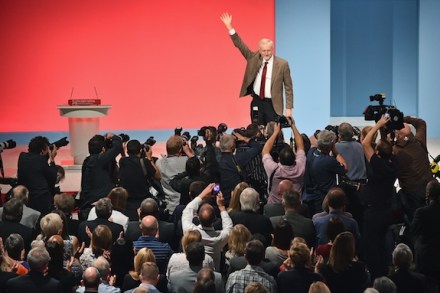
Jeremy Corbyn has won the Labour leadership in the first round with an extraordinary 59.5 per cent of the vote. Andy Burnham came second. This is the result everyone was expecting: or at least what they had come to expect after initially expecting Corbyn to be at worst the joke candidate and at best the figure who enabled a debate about the ideas of the Left. We are not surprised today that a backbencher from Islington has won the party leadership, but the party is still trying to work out how it has changed this much, and how its conventional leaders in waiting failed to inspire the membership in the