Uk politics

Vote Leave changes board after infighting: will this calm the Out camp down?

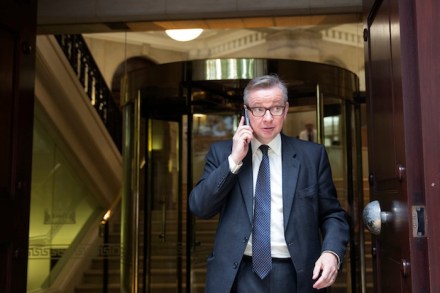
[audioplayer src=”http://rss.acast.com/viewfrom22/fightingovercrumbs-euroscepticsandtheeudeal/media.mp3″ title=”James Forsyth and Vote Leave’s Stephen Parkinson discuss Euroscepticsm”] The Monty Python-esque scrapping in the ‘Leave’ camps may calm down a little after the Vote Leave campaign this evening announced a number of changes that will satisfy some of its rather agitated MP members. As well as appointing Lord Lawson as the chairman of the board, Vote Leave is changing the members of that board, with Matthew Elliott, Dominic Cummings and Victoria Woodcock stepping down. They remain in their roles as the CEO, campaign director and company secretary respectively, and will continue to attend and contribute to board meetings, but their departures represent the ‘material changes’ that Conservatives for

Labour delays Shadow Cabinet row on Trident

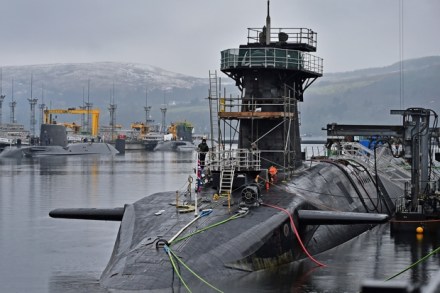
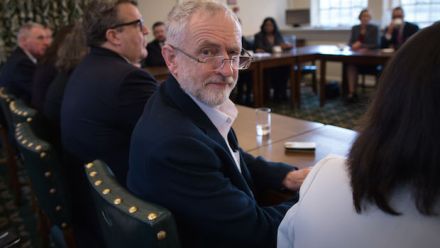
Labour has delayed its Shadow Cabinet discussion of the party’s Trident review until next week, after yesterday’s meeting ran out of time for the discussion. Emily Thornberry was due to give a presentation on the nuclear deterrent yesterday, but longer discussions on parliamentary business and other matters, along with Jeremy Corbyn needing to attend his urgent question on the EU renegotiation in the Commons, meant that she merely offered a few words on the importance of the decision for the party, before promising to return to speak again. Thornberry is also due to address the next meeting of the parliamentary Labour party on Monday, where she is likely to face

Theresa May helps David Cameron with strong hint she’ll support ‘Remain’ campaign

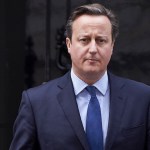
Theresa May’s decision to say that the draft settlement for Britain’s relationship with the EU forms ‘a basis for a deal’ has made David Cameron’s rather difficult day – which has involved the Prime Minister trying to insist that he has got the deal he was after, even though his demands on benefits in particular have been watered down – a little easier. It is the strongest indication yet that the Home Secretary will campaign to stay in the EU after all. This is the statement she released this evening: ‘EU free movement rules have been abused for too long and EU law has stopped us deporting dangerous foreign criminals.

Briefing: What is the EU ‘red card’ and will it make any difference at all?

The ‘red card’ on proposed EU legislation has been hailed by David Cameron as a breakthrough; the ‘Stronger In’ campaign have put it at the top of their list of renegotiation successes. But it already pretty much exists. The very similar ‘orange card’ was introduced by the 2009 Lisbon Treaty. (The European Commission’s website explains how it works.) Here’s a comparison of the two: Numbers ORANGE CARD: 51% of the 28 EU parliaments can force a review by the European Commission. RED CARD: 56% of the 28 EU parliaments can force a review by the EU Council. Time limit ORANGE CARD: 8 weeks RED CARD: 12 weeks Effects ORANGE CARD: The European Commission decides whether ‘to maintain, amend

Scottish Labour attacks SNP from left with tax rise plans

Those of you who live in the rest of the UK will have no idea what a relief it is for us Scots to have some real politics to deal with at last. Scottish Labour’s announcement today that it wants to raise income tax for everybody in Scotland is terrific – simply because it means that this year’s election will be a real contest about real policies. For the first time in years we are going to get an election which is not about the constitution. The tax powers which Scotland is going to get in April are fairly inflexible. A lock-step has been imposed which means that, if you want to raise one

David Cameron’s two problems: benefits and Poland

From his speech and question session on today’s draft EU deal, it’s clear that David Cameron plans to spend the next two weeks promoting his negotiation success, rather than focusing on improving it. He naturally needs to persuade voters – and his colleagues – that this is a good deal that will make a big difference to Britain’s relationship with Europe. But as the press questions following the speech showed, this is going to be extremely difficult. The Prime Minister was insistent that he had secured a good deal on in-work benefits for EU migrants, saying ‘what I’ve got is basically something I’ve asked for’. He was then asked repeatedly about

Draft EU deal: five things you need to know

David Cameron is insisting that there is more work that needs to be done on the draft deal for Britain’s relationship with Europe published by Donald Tusk today. But here are the key points about that draft deal so far: 1. Cameron has got a weaker benefits deal. As explained here, the Prime Minister has not got his four year ban on in-work benefits for migrants that he originally set out to get, nor has he got the ‘emergency brake’ that he was pushing for over the weekend. Instead, Britain will be able to limit in-work benefits for new EU migrants over a four year period, starting with no benefits at

Draft EU deal waters down Cameron’s migrant plan

Donald Tusk’s draft proposals for Britain’s EU renegotiation are out – and the focus is on whether David Cameron has got what he was after on benefits. The settlement includes the ‘emergency brake’ on in-work benefits for migrants, which would allow Cameron to ‘limit the access’ to benefits for four years. But this limit is not an outright ban: instead, it would be a gradual increase in eligibility starting with a total ban at the start of someone’s employment followed by ‘gradually increasing access to such benefits to take account of the growing connection of the worker with the labour market of the host Member State’. The draft document spells

Britain’s new EU relationship to be revealed: but is it that different?

Today at 11am we will find out what Britain’s new relationship with the EU will look like. Downing Street insists that the draft renegotiation outline being published by European Council president Donald Tusk is still a draft, and there may well be changes to it (though presumably not all of them beneficial to Britain) in the next few weeks.  But it looks as though the European Council summit on 18 and 19 February will be discussing and signing off this renegotiation, and that therefore the June referendum is on.  The biggest challenge that David Cameron, who will give a speech later today on the proposals, has to overcome is any

Donald Tusk to table Britain’s draft EU deal tomorrow at noon

This is the analysis of the latest EU referendum negotiations in tonight’s Evening Blend email, a free round-up of the day’s political events. Click here to subscribe. Today in brief The EU renegotiation entered its endgame, with European Council president Donald Tusk saying he will publish proposals for a draft deal tomorrow at noon… …as eurosceptics continued to attack the plans for an emergency brake on in-work benefits for migrants. The British Medical Association announced next week’s junior doctors’ strike will be going ahead. A committee of MPs blasted the ‘catastrophic’ conditions that failed charity Kids Company had been allowed to operate in – read Miles Goslett’s original scoop exposing

Who will join Mark Pritchard in the reluctant Inners club?

Tory MPs have been buzzing today about Mark Pritchard’s announcement that he would be supporting the campaign for Britain to remain in the European Union. The well-known eurosceptic MP wrote a significant piece for the Sunday Times yesterday setting out his reasons for becoming a reluctant Inner, which include the risk of weakening Nato, and an end to ‘Britain’s political and diplomatic counterbalance to France and Germany’s strategic clumsiness’. What’s interesting about Pritchard’s intervention is that he had actually made up his mind on the matter in March 2015, and had told his staff and Downing Street that he would be backing the Remain campaign then. Most of his colleagues

Newsnight deserves an award for its superb follow-up to the Spectator’s scoop

It’s great to see Newsnight once again nominated for an award for its coverage of the Kids Company scandal, and I hope that it wins this time. When Miles Goslett broke the story in The Spectator in February last year, he had all of the details: the full horror of Camila Batmanghelidjh and her bizarre modus operandi, her dodgy finances and – crucially – how No10 overrode concerns from civil servants who had wanted to pull the plug on the venture. The story was there, on a plate: Miles Goslett had written the scoop of the year. He and Mary Wakefield, our commissioning editor, made sure it was bombproof – she

Emergency brake breakthrough, claims Downing Street

[audioplayer src=”http://rss.acast.com/viewfrom22/whysexmatters-thedeathofsportandistheeusinkingwhetherbrexithappensornot-/media.mp3″ title=”Isabel Hardman, James Forsyth and Fraser Nelson discuss whether the European project is in grave danger – regardless of Brexit happening or not” startat=1420] Listen [/audioplayer] Donald Tusk will not circulate the proposed draft UK/EU deal tomorrow. It had been thought that Tusk would put out a draft on Monday after final talks over supper with Cameron this evening. Instead, there will be further meetings between UK and EU diplomats, before Tusk decides whether or not to circulate a draft text to the other member states on Tuesday. In a statement tonight, Downing Street has said that the European Commission accepts that the current UK immigration situation would

Cameron seeks to beef up ’emergency brake’ as eurosceptics fight each other

David Cameron and Donald Tusk have been discussing Britain’s beef with the European Union over a dinner of beef this evening. The European Council president has just left, telling reporters there was ‘no deal’. Top of the Prime Minister’s menu was the issue of benefits that has been so chewy for him during his renegotiation. Cameron now appears to be seeking to beef up (sorry) the emergency brake offer that his eurosceptic critics described only on Friday as a ‘sick joke’, arguing that it must come into force straight after the referendum result, that the present levels of EU migration to the UK could be sufficient to trigger it, and that

Barack Obama doesn’t talk about Britain? That’s a good thing.

As was often the case, Oscar Wilde was clever and witty but mistaken. There are worse things than being talked about but not being talked about is one of them. For evidence of this we need do little more than consult this graphic compiled by our friends at Politico. Derived from an analysis of more than 2,000 speeches made since he became President, it shows how often various countries have been mentioned by Barack Obama. You will notice that the United Kingdom does not feature. This is a very good thing indeed. Of course, it has not been treated as such by some. See this, eh? So much for the so-called

David Cameron is plain wrong about Oxford and race. Here’s why

I applaud the Prime Minister for pointing out the scandalous lack of black students at Britain’s top universities, but he’s wrong about whose fault it is – at least when it comes to Oxford, his alma mater. Yes, it’s true that Oxford only admitted five black British Caribbean applicants in 2013, a disgracefully low number, as David Cameron points out, but there’s no evidence to suggest that the cause is ‘ingrained, institutional and insidious’ attitudes, i.e. racism, on the part of Oxford’s admission authorities. How do I know this? Because Oxford already publishes a wealth of data about admissions – the new law Cameron is drafting to force universities to

Downing Street expects draft EU deal to disappoint

We are only days away from seeing Donald Tusk’s proposed text for the UK/EU deal. The President of the European Council is expected to circulate a draft early next week following his Sunday night supper with David Cameron. But, as I write in The Sun this morning, Downing Street is keen to stress that the publication of this draft doesn’t mean that the renegotiation is over. They are adamant that Cameron will have a chance to toughen up the terms at the European Council on February the 18th. Cameron’s problem is that he would like a deal at the February Council, so that he can have a referendum in June.

With an 18-point lead in the latest poll, momentum is with the EU ‘in’ campaign. 

Why is David Cameron having such trouble persuading Jean-Claude Juncker to give in to his minimal demands for EU reform? The Prime Minister pledged, in a Tory manifesto, to restrict welfare for migrants for the first four years they’re in Britain: not as an ‘emergency’, but as a matter of routine. He was returned with a majority, and under British democracy this means it ought to happen. If the Lords were to try to frustrate this, the PM would overrule them because it was a manifesto pledge, voted on by the public. Why accept a veto from the EU? But the polls show a clear lead for ‘in’ – a ComRes

England named worst in developed world for literacy. So yes, school reform is needed.

Today’s OECD study of basic skills ranks England lowest in the developed world for literacy, and second lowest for numeracy. We knew that our schools might struggle to compete with the likes of Singapore and South Korea, but this puts the problem in a whole new perspective. It’s the delayed results of a study taken four years ago where 5,000 in each country were sampled so, to some extent, it’s a hangover from the days when a far greater share of children left school without five decent passes. But the report also found that England has three times more low-skilled people among those aged 16-19 than the best-performing countries like